Truth to Power
Eskom's former chief executive on why South Africa's power supply can't be fixed.
Insider: the Eskom CEO on why the power supply cannot be fixed.
Summary
De Ruyter became chief executive of Eskom, South Africa's power utility, in January 2020 and soon saw why it was called the toughest job in the country. Besides neglected equipment, ageing power stations and an eroded skills base, he found corruption on a staggering scale. Fake fuel oil deliveries at one power station cost Eskom R100 million a month; kneepads that retail for R150 a pair were bought for R80,000; billions of rands of equipment supposedly in storerooms was missing.
When the police did not act, he launched a private investigation that exposed at least four criminal cartels feeding off Eskom, and he entered a world of spies, safe houses, bulletproof vests and bodyguards. He also faced political interference, absurd regulations, municipalities that did not pay, accusations of racism he calls unfounded, wildcat strikes, sabotage and a poisoning attempt. He takes readers into boardrooms and government meetings where ministers pulled in different directions, argues that renewable energy is the cheapest and quickest answer to the power crisis despite opposition from coal interests, and reflects on his successes, failures and reasons for leaving.
Key takeaways 4
- Eskom suffered from ageing plant, lost skills and corruption on a large scale.
- At least four criminal cartels were feeding off the utility.
- Political interference and conflicting ministers obstructed reform.
- De Ruyter argues that renewable energy is the cheapest and quickest fix for South Africa's power shortage.
Who should read it
Investors in South Africa who want the former Eskom chief executive's account of why the power supply is so hard to fix.
Similar books 6
Chosen by shared topics, the entries that hold them, and the people who recommended both.
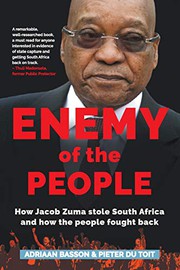
The Zuma years in South Africa told as one account of state capture.
The old guard of South Africa's ruling party and the graft it fights to keep.
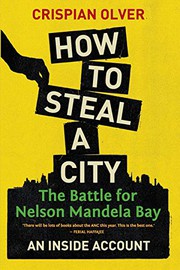
Corruption in municipal tenders, reconstructed from inside the city government.
How South Africa's state was captured, traced through procurement documents.
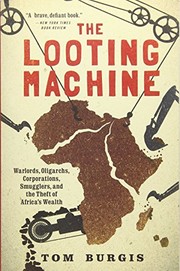
How Africa's oil and minerals are extracted in ways that leave its people poorer.
The Gupta family's state-capture network and its grip on South Africa's state firms.