
GEICO
Bethesda, Maryland auto insurer Leo and Lillian Goodwin founded in San Antonio in 1936; the third-largest US auto insurer and a wholly owned subsidiary of Berkshire Hathaway.
| Berkshire Hathaway | Charlie Munger, Warren Buffett | 41 | 1979–2024 |
| Stone Sentinel Capital | 1 | 2025–2025 | |
| Wesco Financial | Charlie Munger | 1 | 1985–1985 |
| Berkshire Hathaway Chairman’s Letter 2024 | Warren Buffett's 2024 letter explains what Berkshire's owners own and how its managers think, beyond the figures the annual report must contain. | Berkshire Hathaway | Warren Buffett | 2024 |
| Berkshire Hathaway Chairman’s Letter 2020 | Warren Buffett explains Berkshire's 2020 GAAP earnings of $42.5 billion: $21.9 billion operating, $4.9 billion realised gains, $26.7 billion unrealised gains and an $11 billion write-down. | Berkshire Hathaway | Warren Buffett | 2020 |
| Berkshire Hathaway Chairman’s Letter 2018 | Warren Buffett explains Berkshire's 2018 GAAP earnings of $4.0 billion, including a $3.0 billion impairment from Kraft Heinz. | Berkshire Hathaway | Warren Buffett | 2018 |
| Berkshire Hathaway Chairman’s Letter 2016 | Warren Buffett reports Berkshire's 2016 net worth gain of $27.5 billion, a 10.7% rise in book value per share, compounding at 19% a year for 52 years. | Berkshire Hathaway | Warren Buffett | 2016 |
| Berkshire Hathaway Chairman’s Letter 2015 | Warren Buffett reports Berkshire's 2015 net worth gain of $15.4 billion, a 6.4% rise in book value per share, compounding 19.2% a year for 51 years. | Berkshire Hathaway | Warren Buffett | 2015 |
| Berkshire Hathaway Chairman’s Letter 2014 | Warren Buffett marks 50 years of Berkshire, with 2014 book value per share up 8.3% and compounding 19.4% a year since 1965. | Berkshire Hathaway | Warren Buffett | 2014 |
| Berkshire Hathaway Chairman’s Letter 2013 | Warren Buffett reports Berkshire's 2013 net worth gain of $34.2 billion, after $1.8 billion of charges from buying the minorities in Marmon and Iscar. | Berkshire Hathaway | Warren Buffett | 2013 |
| Berkshire Hathaway Chairman’s Letter 2012 | Warren Buffett reports a 2012 shareholder gain of $24.1 billion, $1.3 billion of it spent on buybacks, and book value per share up 14.4%. | Berkshire Hathaway | Warren Buffett | 2012 |
| Berkshire Hathaway Chairman’s Letter 2011 | Warren Buffett reports Berkshire's book value per share up 4.6% in 2011, compounding 19.8% a year over 47 years. | Berkshire Hathaway | Warren Buffett | 2011 |
| Berkshire Hathaway Chairman’s Letter 2010 | Warren Buffett reports book value per share up 13% in 2010 and calls the purchase of Burlington Northern Santa Fe the year's highlight. | Berkshire Hathaway | Warren Buffett | 2010 |
| Berkshire Hathaway Chairman’s Letter 2009 | Warren Buffett reports Berkshire's 2009 net worth gain of $21.8 billion and book value per share up 19.8%, compounding 20.3% over 45 years. | Berkshire Hathaway | Warren Buffett | 2009 |
| Berkshire Hathaway Chairman’s Letter 2008 | Warren Buffett reports Berkshire's 2008 book value per share fell 9.6%, its decline in net worth $11.5 billion, in the year of the financial crisis. | Berkshire Hathaway | Warren Buffett | 2008 |
| Berkshire Hathaway Chairman’s Letter 2007 | Warren Buffett reports Berkshire's 2007 net worth gain of $12.3 billion, an 11% rise in book value per share, compounding 21.1% over 43 years. | Berkshire Hathaway | Warren Buffett | 2007 |
| Berkshire Hathaway Chairman’s Letter 2006 | Warren Buffett reports Berkshire's 2006 net worth gain of $16.9 billion, an 18.4% rise in book value per share. | Berkshire Hathaway | Warren Buffett | 2006 |
| Berkshire Hathaway Chairman’s Letter 2005 | Warren Buffett reports Berkshire's 2005 net worth gain of $5.6 billion, a 6.4% rise in book value per share. | Berkshire Hathaway | Warren Buffett | 2005 |
| Berkshire Hathaway Chairman’s Letter 2004 | Warren Buffett reviews Berkshire's change from a struggling textile business in 1964 into a diversified enterprise worth far more than book by 2004. | Berkshire Hathaway | Warren Buffett | 2004 |
| Berkshire Hathaway Chairman’s Letter 2003 | Warren Buffett argues per-share intrinsic value, not book value, is what counts, and reviews Berkshire's change since 1964. | Berkshire Hathaway | Warren Buffett | 2003 |
| Berkshire Hathaway Chairman’s Letter 2002 | Warren Buffett reports Berkshire's 2002 net worth gain of $6.1 billion, a 10.0% rise in book value per share. | Berkshire Hathaway | Warren Buffett | 2002 |
| Berkshire Hathaway Chairman’s Letter 2001 | Warren Buffett reports Berkshire's 2001 loss in net worth of $3.77 billion, a 6.2% fall in book value per share. | Berkshire Hathaway | Warren Buffett | 2001 |
| Berkshire Hathaway Chairman’s Letter 2000 | Warren Buffett judges that Berkshire's 2000 gain in per-share intrinsic value moderately exceeded its gain in book value. | Berkshire Hathaway | Warren Buffett | 2000 |
| Berkshire Hathaway Chairman’s Letter 1999 | Warren Buffett reports Berkshire's 1999 book value per share rose only 0.5%, its worst year relative to the S&P 500. | Berkshire Hathaway | Warren Buffett | 1999 |
| Berkshire Hathaway Chairman’s Letter 1998 | Warren Buffett reports Berkshire's 1998 net worth gain of $25.9 billion, a 48.3% rise in book value per share, including the General Re merger. | Berkshire Hathaway | Warren Buffett | 1998 |
| Berkshire Hathaway Chairman’s Letter 1997 | Warren Buffett reports Berkshire's 1997 net worth gain of $8.0 billion. | Berkshire Hathaway | Warren Buffett | 1997 |
| Berkshire Hathaway Chairman’s Letter 1996 | Warren Buffett reviews 1996, when Berkshire bought FlightSafety and the rest of GEICO and issued Class B shares. | Berkshire Hathaway | Warren Buffett | 1996 |
| Berkshire Hathaway Chairman’s Letter 1995 | Warren Buffett argues there is no reason to do handsprings over 1995's gains, a year any fool could make money. | Berkshire Hathaway | Warren Buffett | 1995 |
| Berkshire Hathaway Chairman’s Letter 1994 | Warren Buffett predicts Berkshire's future performance won't come close to its past. | Berkshire Hathaway | Warren Buffett | 1994 |
| Berkshire Hathaway Chairman’s Letter 1992 | Warren Buffett reports Berkshire's 1992 net worth rose $1.52 billion, over 98% from earnings and portfolio gains. | Berkshire Hathaway | Warren Buffett | 1992 |
| Berkshire Hathaway Chairman’s Letter 1990 | Warren Buffett explains Berkshire's lacklustre 1990 growth: its four major stock holdings, including Capital Cities/ABC, barely changed in value. | Berkshire Hathaway | Warren Buffett | 1990 |
| Berkshire Hathaway Chairman’s Letter 1989 | Warren Buffett argues intrinsic value, what Berkshire's businesses are rationally worth, is what counts in 1989. | Berkshire Hathaway | Warren Buffett | 1989 |
| Berkshire Hathaway Chairman’s Letter 1988 | Warren Buffett reiterates in 1988 that intrinsic business value, not book value, is what counts. | Berkshire Hathaway | Warren Buffett | 1988 |
| Berkshire Hathaway Chairman’s Letter 1987 | Warren Buffett argues the rate of gain in per-share business value, not book value, is what counts, in 1987. | Berkshire Hathaway | Warren Buffett | 1987 |
| Berkshire Hathaway Chairman’s Letter 1986 | Warren Buffett notes Berkshire's book value has understated intrinsic business value, in his 1986 letter. | Berkshire Hathaway | Warren Buffett | 1986 |
| Berkshire Hathaway Chairman’s Letter 1985 | Warren Buffett reviews 1985, including the end of Berkshire's textile business. | Berkshire Hathaway | Warren Buffett | 1985 |
| Berkshire Hathaway Chairman’s Letter 1984 | Warren Buffett argues the gain in per-share intrinsic business value is the measure that counts, in 1984. | Berkshire Hathaway | Warren Buffett | 1984 |
| Berkshire Hathaway Chairman’s Letter 1983 | Warren Buffett reports Berkshire's shareholders grew from about 1,900 to 2,900 in 1983 after the Blue Chip Stamps merger. | Berkshire Hathaway | Warren Buffett | 1983 |
| Berkshire Hathaway Chairman’s Letter 1982 | Warren Buffett reports deteriorating insurance underwriting and growing equity capital in 1982. | Berkshire Hathaway | Warren Buffett | 1982 |
| Berkshire Hathaway Chairman’s Letter 1981 | Warren Buffett reports 1981 operating earnings of $39.7 million, 15.2% of beginning equity, and a new shareholder-designated giving plan. | Berkshire Hathaway | Warren Buffett | 1981 |
| Berkshire Hathaway Chairman’s Letter 1980 | Warren Buffett reports 1980 operating earnings of $41.9 million, with return on equity down to 17.8%. | Berkshire Hathaway | Warren Buffett | 1980 |
| Vice Chairman’s Thoughts – Past and Future (Berkshire Hathaway 2014 Annual Report) | Charlie Munger lists the 15 elements of the 'Berkshire system' Warren Buffett set up, explains Berkshire's 50-year results, and predicts it stays better than normal after Buffett, naming Ajit Jain and Greg Abel. | Berkshire Hathaway | Charlie Munger | 2014 |
| Wesco Financial Corporation letter to shareholders 1985 | Charlie Munger explains that a one-off gain from selling General Foods stock produced most of Wesco's 1985 net income. | Wesco Financial | Charlie Munger | 1985 |
| Q2 2025 Letter to Partners: My Short Tribute to Warren Buffett | Marcel Gozali marks Warren Buffett's retirement as Berkshire Hathaway's CEO by drawing from his quotes that investors must think for themselves and seek disconfirming evidence, and reports that FinVolution offers about a 30% free cash flow yield. | Stone Sentinel Capital | Stone Sentinel Capital | Q2 2025 |
| Berkshire Hathaway Chairman’s Letter 1979 | Warren Buffett explains the new rule carrying insurers' equity securities at market value, in his 1979 letter. | Berkshire Hathaway | Warren Buffett | 1979 |
| Berkshire Hathaway Chairman’s Letter 2023 | Warren Buffett opens his 2023 letter with a tribute to Charlie Munger, whom he calls the architect of Berkshire Hathaway, and reviews Berkshire's year. | Berkshire Hathaway | Warren Buffett | 2023 |
The value of GEICO was obvious to Buffett.Show at the source ↗
Q2 2025 Letter to Partners: My Short Tribute to Warren Buffett · Stone Sentinel Capital · Q2 2025
In five years, Todd Combs has reshaped GEICO in a major way, increasing efficiency and bringing underwriting practices up to date.Show in the letter ›
Berkshire Hathaway Chairman’s Letter 2024 · Berkshire Hathaway · page 4 · 2024
Before that lucky day – aside from an almost unbelievably wonderful experience with GEICO that began early in 1951 and will never end – I was largely wandering in the wilderness, as I struggled to build our insurance operation.Show in the letter ›
Berkshire Hathaway Chairman’s Letter 2023 · Berkshire Hathaway · page 14 · 2023
You know the rest of the story: Berkshire eventually became the 100% owner of GEICO, which at 84 years of age is constantly fine-tuning – but not changing – the vision of Leo and Lillian.Show in the letter ›
Berkshire Hathaway Chairman’s Letter 2020 · Berkshire Hathaway · page 7 · 2020
By my estimate, Tony’s management of GEICO has increased Berkshire’s intrinsic value by more than $50 billion.Show in the letter ›
Berkshire Hathaway Chairman’s Letter 2018 · Berkshire Hathaway · page 10 · 2018
GEICO’s low costs create a moat – an enduring one – that competitors are unable to cross.Show in the letter ›
Berkshire Hathaway Chairman’s Letter 2016 · Berkshire Hathaway · page 9 · 2016
When I was first introduced to GEICO in January 1951, I was blown away by the huge cost advantage the company enjoyed compared to the expenses borne by the giants of the industry.Show in the letter ›
Berkshire Hathaway Chairman’s Letter 2015 · Berkshire Hathaway · page 11 · 2015
GEICO’s underwriting expenses in 2015 were 14.7% of premiums, with USAA being the only large company to achieve a lower percentage.Show in the letter ›
Berkshire Hathaway Chairman’s Letter 2015 · Berkshire Hathaway · page 21 · 2015
And all of GEICO came into Berkshire, followed by a quadrupling of GEICO’s market share.Show in the letter ›
Vice Chairman’s Thoughts – Past and Future (Berkshire Hathaway 2014 Annual Report) · Berkshire Hathaway · page 3 · 2014
Best known is GEICO, the car insurer Berkshire acquired in full at yearend 1995 (having for many years prior owned a partial interest).Show in the letter ›
Berkshire Hathaway Chairman’s Letter 2013 · Berkshire Hathaway · page 3 · 2013
GEICO’s cost advantage is the factor that has enabled the company to gobble up market share year after year.Show in the letter ›
Berkshire Hathaway Chairman’s Letter 2013 · Berkshire Hathaway · page 8 · 2013
Since 1995, when we obtained control, GEICO’s share of the personal-auto market has grown from 2.5% to 9.7%.Show in the letter ›
Berkshire Hathaway Chairman’s Letter 2012 · Berkshire Hathaway · page 3 · 2012
The librarian, however, steered me to a large compendium of insurers and, after reading the page on GEICO, I decided to visit the company.Show in the letter ›
Berkshire Hathaway Chairman’s Letter 2010 · Berkshire Hathaway · page 8 · 2010
We then purchased the remaining 50% of GEICO at the beginning of 1996, which spurred Davy, at 95, to make a video tape saying how happy he was that his beloved GEICO would permanently reside with Berkshire.Show in the letter ›
Berkshire Hathaway Chairman’s Letter 2010 · Berkshire Hathaway · page 8 · 2010
Equally important, GEICO has operated at an underwriting profit in 13 of the 14 years Berkshire has owned it.Show in the letter ›
Berkshire Hathaway Chairman’s Letter 2009 · Berkshire Hathaway · page 6 · 2009
When Tony became CEO in 1993, GEICO had 2.0% of the auto insurance market, a level at which the company had long been stuck.Show in the letter ›
Berkshire Hathaway Chairman’s Letter 2008 · Berkshire Hathaway · page 7 · 2008
As we view GEICO’s current opportunities, Tony and I feel like two hungry mosquitoes in a nudist camp.Show in the letter ›
Berkshire Hathaway Chairman’s Letter 2008 · Berkshire Hathaway · page 7 · 2008
Therefore a formidable barrier such as a company’s being the lowcost producer (GEICO, Costco) or possessing a powerful world-wide brand (Coca-Cola, Gillette, American Express) is essential for sustained success.Show in the letter ›
Berkshire Hathaway Chairman’s Letter 2007 · Berkshire Hathaway · page 5 · 2007
Between yearend 2003 and yearend 2006, the number of GEICO policies increased from 5.7 million to 8.1 million, a jump of 42%.Show in the letter ›
Berkshire Hathaway Chairman’s Letter 2006 · Berkshire Hathaway · page 2 · 2006
Today, GEICO spends far more on ads than any of its competitors, even those much larger.Show in the letter ›
Berkshire Hathaway Chairman’s Letter 2006 · Berkshire Hathaway · page 2 · 2006
One statistic stands out: In just two years, GEICO improved its productivity by 32%.Show in the letter ›
Berkshire Hathaway Chairman’s Letter 2005 · Berkshire Hathaway · page 2 · 2005
Our retention rate there for new policyholders is running higher than in any other state, and by sometime in 2007, GEICO is likely to become the third largest auto insurer in New Jersey.Show in the letter ›
Berkshire Hathaway Chairman’s Letter 2005 · Berkshire Hathaway · page 6 · 2005
Auto policies in force grew by 12.1% at GEICO, a gain increasing its market share of U.S. private passenger auto business from about 5.6% to about 6.1%.Show in the letter ›
Berkshire Hathaway Chairman’s Letter 2005 · Berkshire Hathaway · page 6 · 2005
Between 1936 and 1975, GEICO grew from a standing start to a 4% market share, becoming the country’s fourth largest auto insurer.Show in the letter ›
Berkshire Hathaway Chairman’s Letter 2004 · Berkshire Hathaway · page 8 · 2004
But we believe GEICO offers the lowest price more often than any other national company that serves all segments of the public.Show in the letter ›
Berkshire Hathaway Chairman’s Letter 2004 · Berkshire Hathaway · page 8 · 2004
Lou Simpson manages about $2½ billion of equities that are held by GEICO, and it is his transactions that Berkshire is usually reporting.Show in the letter ›
Berkshire Hathaway Chairman’s Letter 2004 · Berkshire Hathaway · page 18 · 2004
Indeed, during the 38 years we have run the company’s affairs, gains from the equities we manage at Berkshire (that is, excluding those managed at General Re and GEICO) have exceeded losses by a ratio of about 100 to one.Show in the letter ›
Berkshire Hathaway Chairman’s Letter 2002 · Berkshire Hathaway · page 15 · 2002
GEICO’s premium volume grew 6.6% last year, its float grew $308 million, and it achieved an underwriting profit of $221 million.Show in the letter ›
Berkshire Hathaway Chairman’s Letter 2001 · Berkshire Hathaway · page 9 · 2001
Normally, Lou does not tell me what he is buying or selling, and I learn of his activities only when I look at a GEICO portfolio summary that I receive a few days after the end of each month.Show in the letter ›
Berkshire Hathaway Chairman’s Letter 2001 · Berkshire Hathaway · page 15 · 2001
Last year I enthusiastically told you that we would step up our expenditures on advertising in 2000 and that the added dollars were the best investment that GEICO could make.Show in the letter ›
Berkshire Hathaway Chairman’s Letter 2000 · Berkshire Hathaway · page 9 · 2000
Consequently, State Farm had an underwriting loss last year from auto insurance (including rebates to policyholders) of 18% of premiums, compared to 4% at GEICO.Show in the letter ›
Berkshire Hathaway Chairman’s Letter 2000 · Berkshire Hathaway · page 10 · 2000
When Berkshire purchased GEICO at the beginning of 1996, we handed the keys to Tony and asked him to run the operation exactly as if he owned 100% of it.Show in the letter ›
Berkshire Hathaway Chairman’s Letter 1999 · Berkshire Hathaway · page 5 · 1999
It’s with sadness that I report to you that Lorimer Davidson, GEICO’s former Chairman, died last November, a few days after his 97th birthday.Show in the letter ›
Berkshire Hathaway Chairman’s Letter 1999 · Berkshire Hathaway · page 7 · 1999
At both GEICO and Executive Jet, our best source of new customers is the happy ones we already have.Show in the letter ›
Berkshire Hathaway Chairman’s Letter 1999 · Berkshire Hathaway · page 8 · 1999
Here’s an impartial scorecard on how we shape up: In New York, our largest-volume state, the Insurance Department recently reported that GEICO’s complaint ratio in 1997 was not only the lowest of the five largest auto insurers but was also less than half the average of the other four.Show in the letter ›
Berkshire Hathaway Chairman’s Letter 1998 · Berkshire Hathaway · page 4 · 1998
Despite the pathetic technical skills of your Chairman, I’m delighted to report that GEICO, Borsheim’s, See’s, and The Buffalo News are now doing substantial business via the Internet.Show in the letter ›
Berkshire Hathaway Chairman’s Letter 1998 · Berkshire Hathaway · page 15 · 1998
One important caveat: Because we were lucky in our super-cat insurance business (to be discussed later) and because GEICO's underwriting gain was well above what we can expect in most years, our 1997 operating earnings were much better than we anticipated and also more than we expect for 1998.Show in the letter ›
Berkshire Hathaway Chairman’s Letter 1997 · Berkshire Hathaway · 1997
The huge rewards that GEICO has heaped on Berkshire would not have materialized had it not been for his generosity and wisdom.Show in the letter ›
Berkshire Hathaway Chairman’s Letter 1997 · Berkshire Hathaway · 1997
Moreover, our acquisition of GEICO materially increases the probability that we can continue to obtain "free" funds in increasing amounts.Show in the letter ›
Berkshire Hathaway Chairman’s Letter 1996 · Berkshire Hathaway · 1996
The GEICO plan exemplifies Berkshire's incentive compensation principles: Goals should be (1) tailored to the economics of the specific operating business; (2) simple in character so that the degree to which they are being realized can be easily measured; and (3) directly related to the daily activities of plan participants.Show in the letter ›
Berkshire Hathaway Chairman’s Letter 1996 · Berkshire Hathaway · 1996
As Davy made clear, GEICO's method of selling - direct marketing - gave it an enormous cost advantage over competitors that sold through agents, a form of distribution so ingrained in the business of these insurers that it was impossible for them to give it up.Show in the letter ›
Berkshire Hathaway Chairman’s Letter 1995 · Berkshire Hathaway · 1995
Checking back, I find that I purchased GEICO shares on four occasions during 1951, the last purchase being made on September 26.Show in the letter ›
Berkshire Hathaway Chairman’s Letter 1995 · Berkshire Hathaway · 1995
But in the next 20 years, the GEICO stock I sold grew in value to about $1.3 million, which taught me a lesson about the inadvisability of selling a stake in an identifiably-wonderful company.Show in the letter ›
Berkshire Hathaway Chairman’s Letter 1995 · Berkshire Hathaway · 1995
We will look for ways to expand our participation in the business, either indirectly as we have done through GEICO or directly as we did by acquiring Central States Indemnity.Show in the letter ›
Berkshire Hathaway Chairman’s Letter 1992 · Berkshire Hathaway · 1992
Essentially, GEICO's policyholders, in aggregate, pay the company interest on the float rather than the other way around.Show in the letter ›
Berkshire Hathaway Chairman’s Letter 1990 · Berkshire Hathaway · 1990
However, our share of the retained earnings of these investees totaled about $212 million last year, not counting large capital gains realized by GEICO and Coca-Cola.Show in the letter ›
Berkshire Hathaway Chairman’s Letter 1989 · Berkshire Hathaway · 1989
Even more threatening to GEICO is the possibility that similar pricing actions will be taken in other states, through either initiatives or legislation.Show in the letter ›
Berkshire Hathaway Chairman’s Letter 1988 · Berkshire Hathaway · 1988
Our permanent holdings - Capital Cities/ABC, Inc., GEICO Corporation, and The Washington Post Company - remain unchanged.Show in the letter ›
Berkshire Hathaway Chairman’s Letter 1988 · Berkshire Hathaway · 1988
In any event, at our three marketable-but permanent holdings, this point is moot: With Tom Murphy and Dan Burke at Cap Cities, Bill Snyder and Lou Simpson at GEICO, and Kay Graham and Dick Simmons at The Washington Post, we simply couldn't be in better hands.Show in the letter ›
Berkshire Hathaway Chairman’s Letter 1987 · Berkshire Hathaway · 1987
Similarly, Our GEICO stock was purchased in 1976, 1979 and 1980 at an average of $6.67 per share, and after-tax operating earnings per share last year were $9.01.Show in the letter ›
Berkshire Hathaway Chairman’s Letter 1987 · Berkshire Hathaway · 1987
If our retained earnings - and those of our major investees, GEICO and Capital Cities/ABC, Inc. - are employed in an unproductive manner, the economics of Berkshire will deteriorate very quickly.Show in the letter ›
Berkshire Hathaway Chairman’s Letter 1986 · Berkshire Hathaway · 1986
GEICO also continued to repurchase its own shares and ended the year with 5.5% fewer shares outstanding than it had at the start of the year.Show in the letter ›
Berkshire Hathaway Chairman’s Letter 1986 · Berkshire Hathaway · 1986
No one understands this moataround-the-castle concept better than Bill Snyder, Chairman of GEICO.Show in the letter ›
Berkshire Hathaway Chairman’s Letter 1986 · Berkshire Hathaway · 1986
GEICO, 38%-owned by Berkshire, reported an excellent year in 1985 in premium growth and investment results, but a poor year - by its lofty standards - in underwriting.Show in the letter ›
Berkshire Hathaway Chairman’s Letter 1985 · Berkshire Hathaway · 1985
The object of these restrictions is to make sure that our block does not get sold to anyone who is a large holder (or intends to become a large holder) without the approval of management, an arrangement similar to ones we initiated some years ago at GEICO and Washington Post.Show in the letter ›
Berkshire Hathaway Chairman’s Letter 1985 · Berkshire Hathaway · 1985
We have prospered in a very major way - as have other shareholders - by the large share repurchases of GEICO, Washington Post, and General Foods, our three largest holdings.Show in the letter ›
Berkshire Hathaway Chairman’s Letter 1984 · Berkshire Hathaway · 1984
Our ownership in GEICO at yearend amounted to 36% and thus our interest in their direct property/casualty volume of $885 million amounted to $320 million, or well over double our own premium volume.Show in the letter ›
Berkshire Hathaway Chairman’s Letter 1984 · Berkshire Hathaway · 1984
In its core business - low-cost auto and homeowners insurance - GEICO has a major, sustainable competitive advantage.Show in the letter ›
Berkshire Hathaway Chairman’s Letter 1984 · Berkshire Hathaway · 1984
The special GEICO distribution reported in the table arose when that company made a tender offer for a portion of its stock, buying both from us and other shareholders.Show in the letter ›
Berkshire Hathaway Chairman’s Letter 1983 · Berkshire Hathaway · 1983
Fortunately, GEICO, whose policies I do not influence, simply shot the lights out.Show in the letter ›
Berkshire Hathaway Chairman’s Letter 1983 · Berkshire Hathaway · 1983
There are a few exceptions to this rule; e.g., we own about 35% of GEICO Corporation but, because we have assigned our voting rights, the company is treated for accounting purposes as a lessthan-20% holding.Show in the letter ›
Berkshire Hathaway Chairman’s Letter 1982 · Berkshire Hathaway · 1982
Conversely, if GEICO had earned an additional $100 million - and retained it all - our reported earnings would have been unchanged.Show in the letter ›
Berkshire Hathaway Chairman’s Letter 1982 · Berkshire Hathaway · 1982
For example, $79 million of our $208 million gain is attributable to an increased market price for GEICO.Show in the letter ›
Berkshire Hathaway Chairman’s Letter 1982 · Berkshire Hathaway · 1982
In Lou Simpson, additionally, GEICO has the best investment manager in the property-casualty business.Show in the letter ›
Berkshire Hathaway Chairman’s Letter 1982 · Berkshire Hathaway · 1982
We believe that GEICO Corporation, our major non-controlled business operating in this field, is, by virtue of its extreme and improving operating efficiency, in a considerably more protected position than almost any other major insurer.Show in the letter ›
Berkshire Hathaway Chairman’s Letter 1981 · Berkshire Hathaway · 1981
GEICO is a brilliantly run implementation of a very important business idea.Show in the letter ›
Berkshire Hathaway Chairman’s Letter 1981 · Berkshire Hathaway · 1981
Our largest non-controlled holding is 7.2 million shares of GEICO Corp., equal to about a 33% equity interest.Show in the letter ›
Berkshire Hathaway Chairman’s Letter 1980 · Berkshire Hathaway · 1980
The value of these retained earnings will be determined by the skill with which they are put to use by GEICO management.Show in the letter ›
Berkshire Hathaway Chairman’s Letter 1980 · Berkshire Hathaway · 1980
GEICO may appear to be an exception, having been turned around from the very edge of bankruptcy in 1976.Show in the letter ›
Berkshire Hathaway Chairman’s Letter 1980 · Berkshire Hathaway · 1980
GEICO was designed to be the low-cost operation in an enormous marketplace (auto insurance) populated largely by companies whose marketing structures restricted adaptation.Show in the letter ›
Berkshire Hathaway Chairman’s Letter 1980 · Berkshire Hathaway · 1980
(And, in addition, we have a very large indirect interest in two truly outstanding management groups through our investments in SAFECO and GEICO.)Show in the letter ›
Berkshire Hathaway Chairman’s Letter 1979 · Berkshire Hathaway · 1979
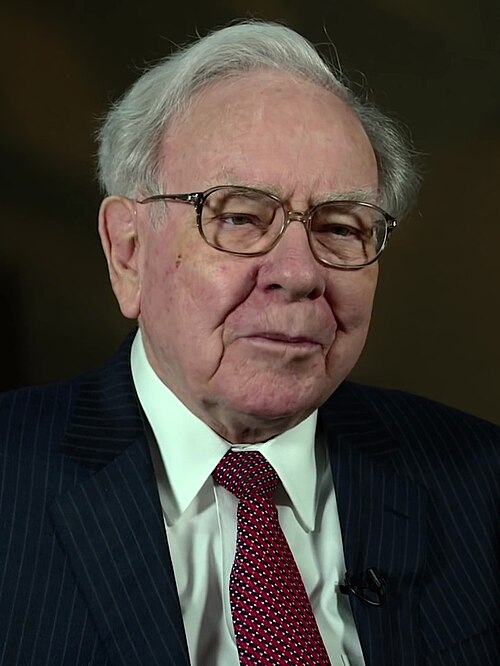 Warren Buffettdiscussed it in 40 letters
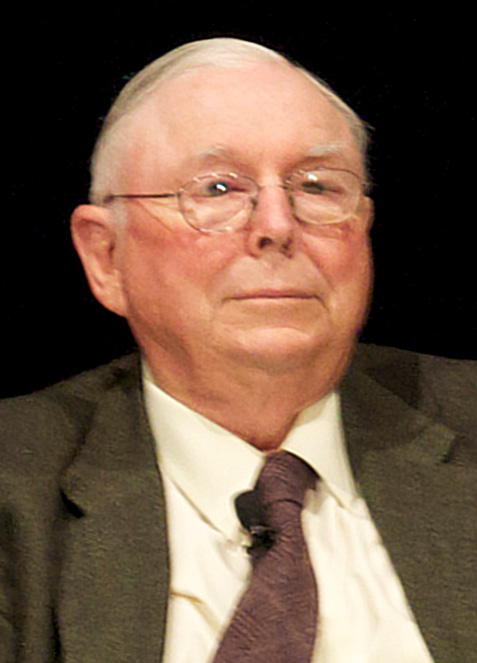 Charlie Mungerdiscussed it in 2 letters
| Warren Buffett's Wealth-Building Secrets REVEALED! w/ Robert Hagstrom (TIP635) | Robert G. Hagstrom | The Investor's Podcast (We Study Billionaires) - The Investor’s Podcast Network | 2024-06-02 | 1:15 | Kyle Grieve chats with Robert Hagstrom about reflections from Warren Buffett’s early investing mistakes, why GEICO’s insurance float has been setup so perfectly for use by Warren Buffett, why low turnover portfolio’s outperform other options, why looking at stocks as abstractions is such a powerful mental model, how Warren Buffett has made thinking long-term into his own competitive advantage, a detailed history on modern portfolio theory, and why it’s so pervasive today, why investors should focus on certainties in their investing strategy, and a whole lot more! IN THIS EPISODE YOU’LL LEARN: 00:00 - Intro 05:30 - Details on Warren's mistakes on Berkshire Hathaway (textile mill) and subsequent mistakes with the Dexter Shoe acquisition. 08:44 - Why low turnover portfolios tend to outperform. 16:20 - Why you can outperform the market over the long term while underperforming the market 50% of the time. 18:29 - The importance of thinking of stocks as abstractions. 27:55 - How Warren Buffett has evolved his investing methods while staying true to his deeply held principles. 43:07 - Benjamin Graham's two most influential concepts Warren still abides by today. 43:07 - The history of modern portfolio theory and why it's so pervasive today. 54:28 - The single most important characteristic that has produced so much of Warren Buffett's success. 59:36 - The characteristics required to outperform the market. |
