
Princeton University
universityPrivate
Private Ivy League university in Princeton, New Jersey, founded in 1746 as the College of New Jersey; the fourth-oldest college in the United States.
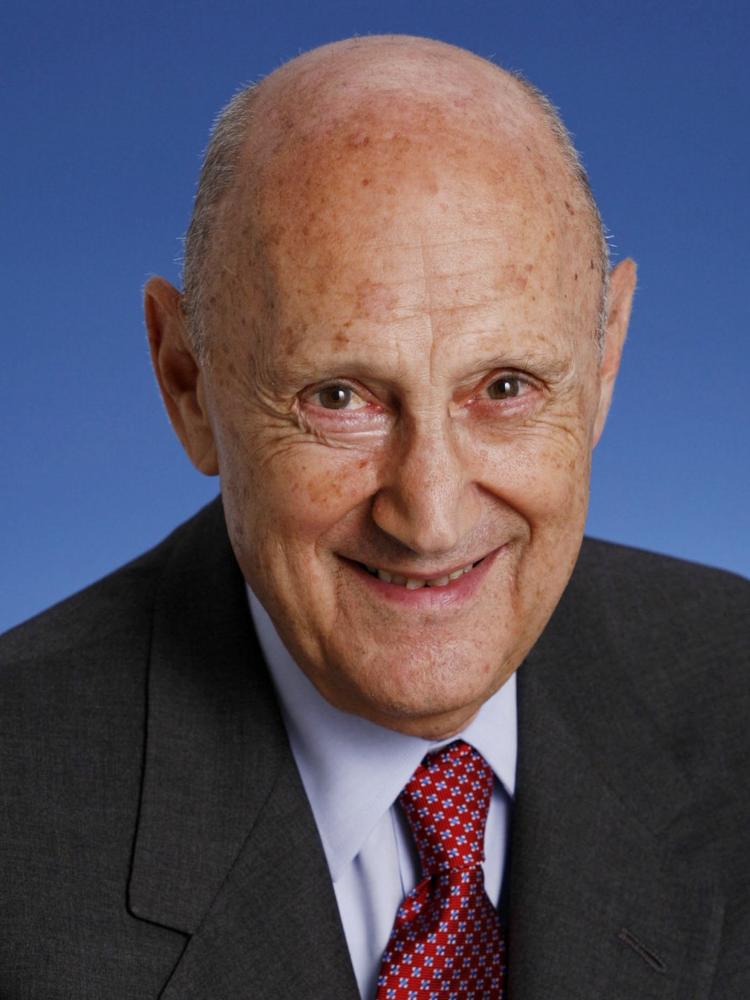
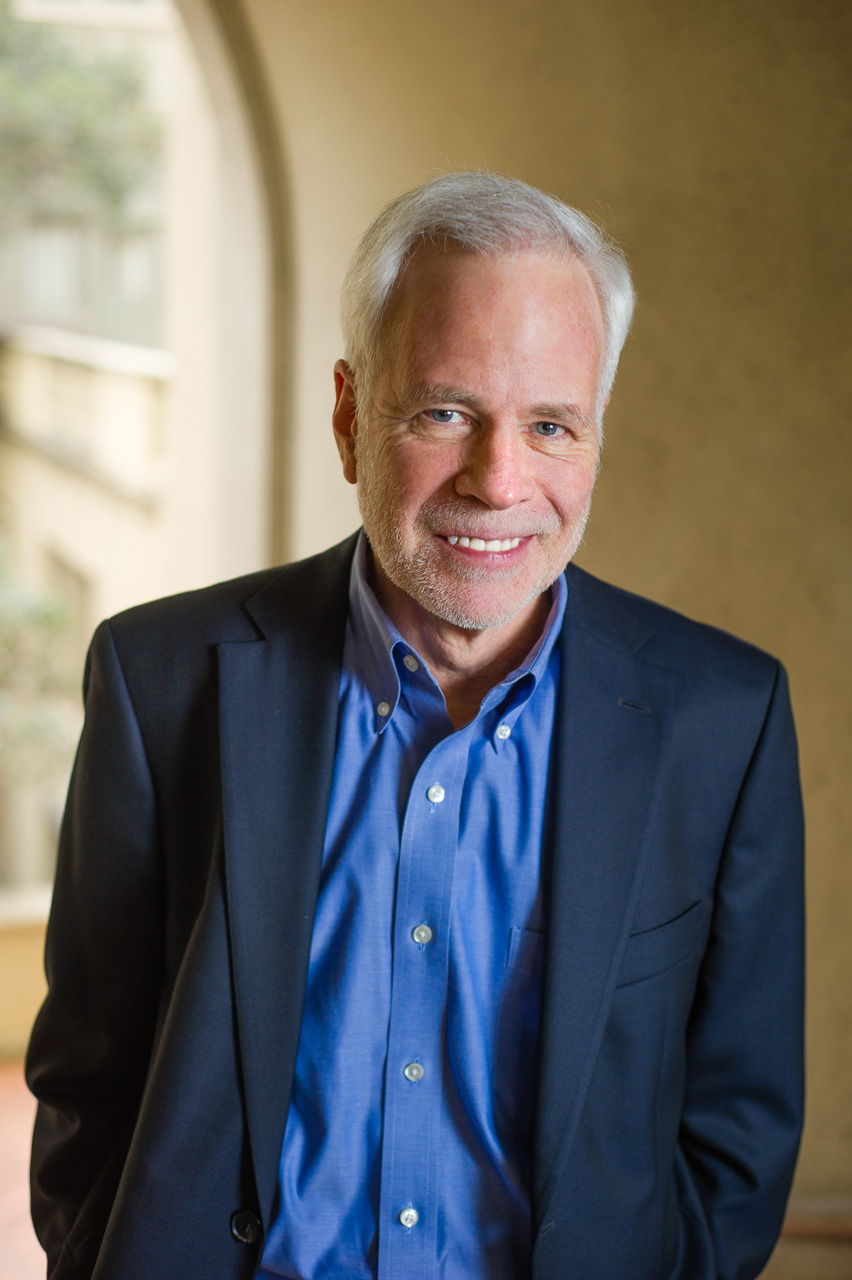 Barry Eichengreennamed it in 1 interview“Money Beyond Borders: Global Currencies from Croesus to Crypto (Princeton University Press, 2026) recounts how Greek and Roman coins became the first true international currencies.” — Money Beyond Borders with Barry Eichengreen (New Books in History, 2026)
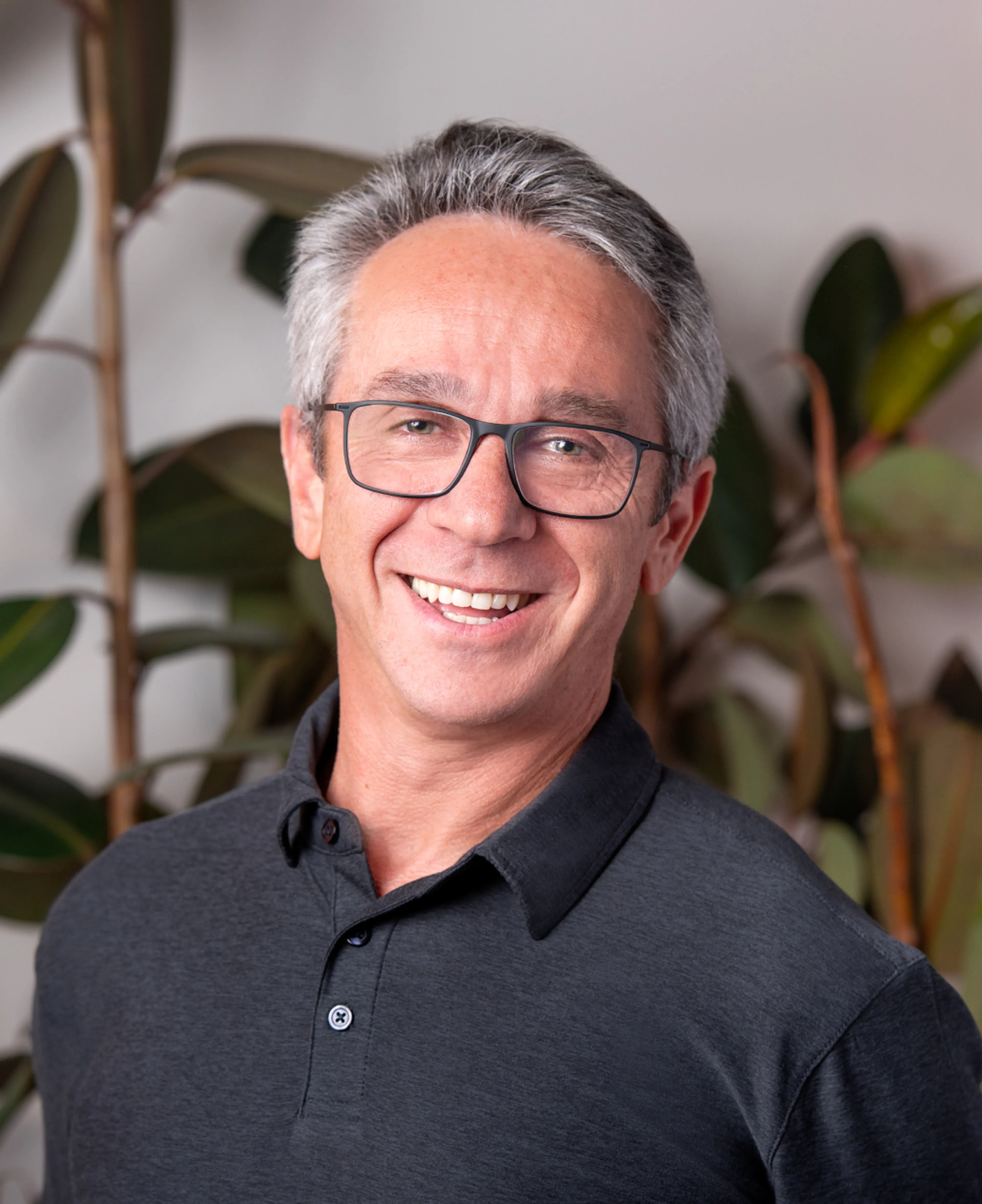 Josh Kopelmannamed it in 1 interview“From there he worked at Princeton University’s endowment fund where he got his start in venture before moving onto The Investment Fund for Foundations (TIFF).” — Chris Douvos of Ahoy Capital on the art of investing in Emerging VC funds, Venture Unlocked 013 (Venture Unlocked: The playbook for venture capital managers, 2020)
| Money Beyond Borders with Barry Eichengreen | Barry Eichengreen | New Books in History | 2026-04-13 | 1:00 | Doubts about the international dominance of the dollar are only growing amid worries about tariffs, political dysfunction, and fraying international alliances. Will the dollar continue to reign supreme? In Money Beyond Borders , the leading authority on international currencies, Barry Eichengreen, puts the dollar's prospects in deep historical perspective by chronicling the entire history of cross-border currencies, from the invention of coins in the seventh century BCE to the cryptocurrencies of today and the central bank digital currencies of tomorrow. Money Beyond Borders: Global Currencies from Croesus to Crypto (Princeton University Press, 2026) recounts how Greek and Roman coins became the first true international currencies. It tells how the Florentine gold florin became the "greenback of the Renaissance," and how it was succeeded by Spanish silver and a Dutch fiat currency. The book explains why the British pound dominated the international economy in the nineteenth century, why the dollar rose to the top during World War II, and why the dollar has survived predictions of the imminent loss of its preeminence since the 1970s. The long history of international currencies shows that the same factors that encourage their widespread use eventually lead to their abandonment. Money Beyond Borders makes a powerful case that the dollar is now on the downside of this cycle, and it considers who the winners and losers will be when there is flight away from the greenback. |
| Is India the perfect Emerging Market? 12/20/23 | Burton G. Malkiel | ETF Edge | 2023-12-20 | 31 min | CNBC’s Bob Pisani sat down with Burton Malkiel, Chemical Bank Chairman’s Professor of Economics at Princeton University and author of the legendary investing text, A Random Walk Down Wall Street ; Kevin Carter, chief investment officer of EMQQ Global and the India Internet & Ecommerce ETF (INQQ), and Todd Sohn, ETF & Technical Strategist at Strategas Securities. They discussed investing in India’s emerging market and the reasons why it has had a great year compared to other countries. They also look into the differences between China and India, past market performances, and where each stand today. Hosted by Simplecast, an AdsWizz company. See pcm.adswizz.com for information about our collection and use of personal data for advertising. |
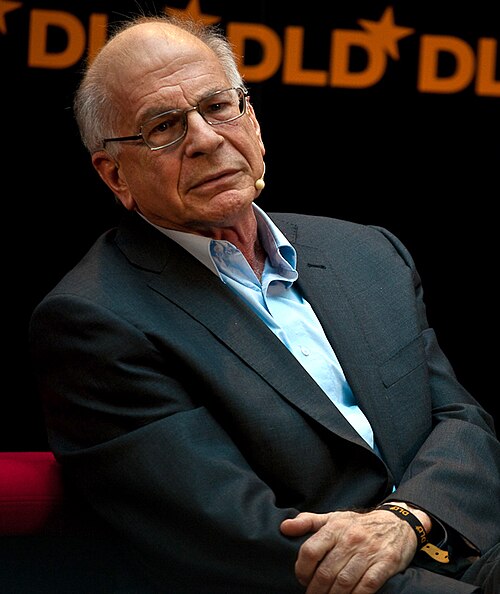
| Daniel Kahneman - Adversarial Collaboration | Daniel Kahneman | EdgeCast | 2022-02-24 | 33 min | DANIEL KAHNEMAN is Eugene Higgins Professor of Psychology Emeritus, Princeton University, author of Thinking, Fast and Slow , and co-author (with Cass R. Sunstein and Olivier Sibony) of Noise . He is the winner of the 2013 Presidential Medal of Honor, and the recipient of the 2002 Nobel Prize in Economic Sciences. The Conversation: https://www.edge.org/conversation/daniel_kahneman-adversarial-collaboration |
| Daniel Kahneman on Behavioral Economics (Podcast) | Daniel Kahneman | Masters in Business | 2021-05-14 | 51 min | Bloomberg Opinion columnist Barry Ritholtz speaks with behavioral economics expert Daniel Kahneman, who wrote the bestselling book "Thinking, Fast and Slow" and won the Nobel Prize in economics. Kahneman is a professor emeritus of psychology and public affairs at Princeton University and a fellow of the Center for Rationality at the Hebrew University of Jerusalem. His latest book, coauthored with Olivier Sibony and Cass Sunstein, is "Noise: A Flaw in Human Judgment." See omnystudio.com/listener for privacy information. |
| A Random Walk Down Wall Street with Burton Malkiel | Burton G. Malkiel | The Marketplace: Online Business | Marketing | Finance| Lifestyle | 2021-05-10 | 39 min | This has been a long time coming for me and someone that I've admired as an investor for a very long time. There aren't many books about investing that remain relevant over 40 years after they were first published. Burton Malkiel's A Random Walk Down Wall Street , first published in 1973 and now in its twelfth edition, is one. Burton Malkiel, professor emeritus of economics at Princeton University and author of the seminal finance book "A Random Walk Down Wall Street," told CNBC's "ETF Edge" that investors would be wise to "sit tight" and "stay the course" in light of the stock market's latest sell-off. Malkiel's book , now in its 12th edition, kickstarted the investing industry's foray into indexing, influencing top minds including Vanguard founder Jack Bogle , the creator of the index fund. |
| Daniel Kahneman – Why We Contradict Ourselves and Confound Each Other | Daniel Kahneman | On Being with Krista Tippett | 2021-05-06 | 51 min | The classic economic theory embedded in western democracies holds an assumption that human beings will almost always behave rationally in the end and make logical choices that will keep our society balanced on the whole. Daniel Kahneman is the psychologist who won the Nobel Prize in Economics for showing that this is simply not true. There’s something sobering — but also helpfully grounding — in speaking with this brilliant and humane scholar who explains why none of us is an equation that computes. As surely as we breathe, we will contradict ourselves and confound each other. Daniel Kahneman received the Nobel Prize in Economics in 2002. He’s best known for his book, Thinking, Fast and Slow and is now releasing a new book, Noise: A Flaw in Human Judgment , written with Olivier Sibony and Cass R. Sunstein. He’s the Eugene Higgins Professor of Psychology Emeritus at Princeton University, Professor of Psychology and Public Affairs Emeritus at the Princeton School of Public and International Affairs, and a fellow of the Center for Rationality at the Hebrew University in Jerusalem. Find the transcript for this show at onbeing.org. This show originally aired on October 5, 2017. |
| Chris Douvos of Ahoy Capital on the art of investing in Emerging VC funds, Venture Unlocked 013 | Josh Kopelman | Venture Unlocked: The playbook for venture capital managers | 2020-12-15 | For daily thoughts on the venture landscape, follow me @samirkaji on Twitter. Chris Douvos is the Founder of Ahoy Capital , a boutique Fund of Funds that focuses primarily on allocating into early-stage venture capital funds, while selectively co-investing directly into companies. Chris started his career at Morgan Stanley while still at Yale earning his MBA. From there he worked at Princeton University’s endowment fund where he got his start in venture before moving onto The Investment Fund for Foundations (TIFF). At TIFF he decided that the right strategy was to make “heroic investments” and invest in very early stage, and often unproven managers. This method paid off as Chris was one of the first institutional Limited Partners to back First Round Capital (and remains so). Chris then went on to Venture Investment Associates (VIA) prior to spinning out to start Ahoy Capital in 2018. Ever engaging, Chris covers a whole host of emerging VC topics and he and I discuss the following: 6:20 Why Chris started a fund that invests in emerging managers and how he’s arbitraging people’s inattention to get to true outsized returns. 9:00 The process for raising a FoF, and what his LP’s are looking for. 10:59 Ahoy’s portfolio model on managers, and why he thinks concentration is the right avenue for them. 11:54 Why looking at past performance shouldn’t always be the leading indicator in evaluating firms, and why he looks at other specific factors. | |
| Special Episode: Investing Legend Burton Malkiel | Burton G. Malkiel | ETF Edge | 2020-10-26 | 45 min | CNBC's Bob Pisani spoke with Burton Malkiel, professor emeritus of economics at Princeton University and author of “A Random Walk Down Wall Street,” and Dave Nadig, chief investment officer and director of research at ETF Trends. They discussed the evolution of retail trading, ESG, the market sell off and what investors should expect going into the end of the year. In the 'markets 102' portion of the podcast Bob will continue his exclusive interview with investing legend Burton Malkiel. Hosted by Simplecast, an AdsWizz company. See pcm.adswizz.com for information about our collection and use of personal data for advertising. |
| Burton Malkiel: 'I Am Not a Big Fan of ESG Investing' | Burton G. Malkiel | The Long View | 2020-08-05 | 58 min | Our guest this week is Dr. Burton Malkiel. Dr. Malkiel is the Chemical Bank chairman's professor of economics at Princeton University. And he's also author of the widely influential investment book, "A Random Walk Down Wall Street." He's also the Chief Investment Officer at Wealthfront. He's a longtime professor in economics at Princeton, where he was also chairman of the economics department. Before that, he was the dean of the Yale School of Management, and William S. Beinecke Professor of Management Studies there from 1981 through 1988. Dr. Malkiel has served on boards of directors of several firms, including the Vanguard Group and on the investment committees of Active Investment Advisors, and the American Philosophical Society. Dr. Malkiel began his career in the investment banking department of Smith Barney & Co. He holds a BA and MBA degrees from Harvard and a PhD from Princeton University. Bio and Background Dr. Malkiel's bio Malkiel. B.G. 2020. “A Random Walk Down Wall Street: The Time-Tested Strategy for Successful Investing” (Twelfth Edition).” (New York: W.W. Norton & Co.). Dr. Malkiel’s WealthFront blog Retirement Income The 4% spending rule 10-year Treasury yield Asset Allocation Riquier, A. 2020. "Investing legend Burton Malkiel on day-trading millennials, the end of the 60/40 portfolio and more.” MarketWatch. July 15, 2020 . Wealthfront portfolio construction methodology Malkiel, B.G. 2015. |
| Take the Deal! With Guests Daniel Kahneman, Colin Camerer & Luis Green | Daniel Kahneman | Choiceology with Katy Milkman | 2019-10-21 | 43 min | In this episode of Choiceology with Katy Milkman , we look at how framing a decision based on what you stand to lose versus what you stand to gain affects your tolerance of risk. Luis Green was a contestant on the popular TV game show Deal or No Deal . The game is largely one of chance, but there are moments during play where the contestant has an option to accept a cash offer to quit. At one point in the game, Luis was offered $333,000 to simply walk away. A guaranteed win! It seems like an obvious choice. But as you’ll hear from the story, there are other factors that influenced his decision. Katy illustrates these factors with a version of a famous experiment. Volunteers are presented with two differently worded but mathematically identical scenarios. A simple shift from framing the scenario as a potential gain to one of potential loss results in starkly different choices from the volunteers. Next, Katy speaks with special guest Daniel Kahneman about the underlying theory that explains human behavior in these types of situations. Daniel Kahneman is a professor of psychology and public affairs emeritus at the Woodrow Wilson School and the Eugene Higgins Professor of Psychology Emeritus at Princeton University . He was awarded the 2002 Nobel Prize in Economics for his pioneering research with Amos Tversky . Their work helped establish the field of behavioral economics. Kahneman is also the author of the bestselling book Thinking, Fast and Slow. |
| Interview With Daniel Kahneman: Masters in Business (Audio) | Daniel Kahneman | Masters in Business | 2016-08-04 | 1:06 | August 4 (Bloomberg) -- Bloomberg View columnist Barry Ritholtz interviews Daniel Kahneman, who is a professor emeritus of psychology and public affairs at Princeton University and a fellow of the Federmann Center for the Study of Rationality at the Hebrew University of Jerusalem. This commentary aired on Bloomberg Radio.\u0010\u0010(Barry Ritholtz is a Bloomberg View columnist. The opinions expressed are his own.) See omnystudio.com/listener for privacy information. |
 NMoney Beyond Borders with Barry EichengreenNew Books in History · 2026-04-13
 EIs India the perfect Emerging Market? 12/20/23ETF Edge · 2023-12-20
 EDaniel Kahneman - Adversarial CollaborationEdgeCast · 2022-02-24
 MDaniel Kahneman on Behavioral Economics (Podcast)Masters in Business · 2021-05-14
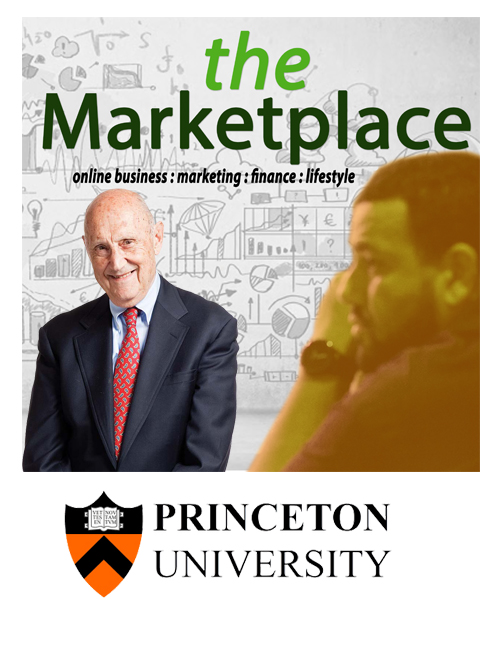 TA Random Walk Down Wall Street with Burton MalkielThe Marketplace: Online Business | Marketing | Finance| Lifestyle · 2021-05-10
 ODaniel Kahneman – Why We Contradict Ourselves and Confound Each OtherOn Being with Krista Tippett · 2021-05-06
 VChris Douvos of Ahoy Capital on the art of investing in Emerging VC funds, Venture Unlocked 013Venture Unlocked: The playbook for venture capital managers · 2020-12-15ESpecial Episode: Investing Legend Burton MalkielETF Edge · 2020-10-26
 TBurton Malkiel: 'I Am Not a Big Fan of ESG Investing'The Long View · 2020-08-05
 CTake the Deal! With Guests Daniel Kahneman, Colin Camerer & Luis GreenChoiceology with Katy Milkman · 2019-10-21MInterview With Daniel Kahneman: Masters in Business (Audio)Masters in Business · 2016-08-04
| Policy Punchline | Video series | Policy Punchline, video series from Princeton University, hosted by Policy Punchline; 2 episodes in the reference; on YouTube. | 2 | 3 Jan 2022 |