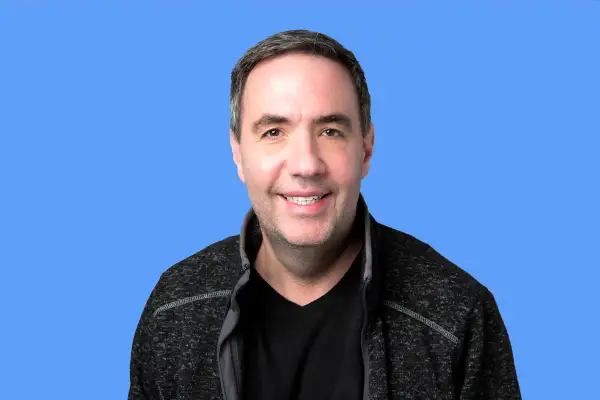
| How Genomics and AI Could Transform Drug Development with Anthony Philippakis | Health & Veritas: Yale's Healthcare and Health Policy Podcast | 2026-11-05 | | Howie and Harlan are joined by physician, scientist, and entrepreneur Anthony Philippakis to discuss his efforts to bring precision medicine to heart disease and other common conditions, and what he's learned about turning scientific breakthroughs into successful businesses. Howie takes stock of the midterm election results and what they could mean for healthcare policy; Harlan calls for a new national strategy to strengthen American scientific research at a time of extraordinary opportunity. Show notes: After the Election "Midterm election live updates: Trump shifts blame after GOP midterm losses" "Missourians reject ballot proposal that would have re-imposed an abortion ban" "Idaho Voters Reject Referendum to Lift State's Abortion Ban" "Nevada voters back abortion rights ballot measure second election in a row" "Abortion and fertility care secured in Virginia vote" "Proposition 40: California billionaire tax appears headed for defeat" Genomics and Innovation Roger Howe The Human Genome Project GV (Google Ventures) Broad Institute David Altshuler All of Us Research Hub "What is a field programmable gate array (FPGA)?" |
| Calico’s Cynthia Kenyon on The Science of Aging | Theory and Practice | 2022-04-19 | | For millennia, humans have believed that aging is inevitable. Yet thirty years ago, the work of Professor Cynthia Kenyon and her colleagues showed that a single gene mutation in a worm doubled its lifespan and postponed the diseases of aging. Recent work on the naked mole rat, a mammal like us, has shown that risk of death need not increase with age. In the final episode of this season of Theory and Practice, we explore the genetic, cellular, and molecular basis of aging with Professor Kenyon and ask what harnessing this knowledge means for the future of healthcare. Theory and Practice is a presentation of GV and Google AI . This season we'll dive deep into the languages of life through explorations of the "dark genome", genome editing, protein folding, the future of aging, and more. Hosted by Anthony Philippakis (Venture Partner at GV) and Alex Wiltschko (Staff Research Scientist with Google AI), Theory and Practice opens the doors to the cutting edge of biology and computer science through conversations with leaders in the field. |
| Geoffrey Hinton on the Exploration of Thought | Theory and Practice | 2022-04-12 | | What is a thought? Some may think that question is quite abstract, but it has huge implications for science and computer design. If we cannot define a human thought, how can we know if a computer can think? Only then can true Artificial Intelligence be achieved. This week we speak to the “godfather of deep learning”, Professor Geoffrey Hinton , a cognitive psychologist and computer scientist. He is now an emeritus Professor at the University of Toronto, and an engineering fellow at Google. Our wide-ranging discussion reflects on Professor Hinton’s journey into this field, his instrumental role in the deep learning revolution, and an analysis of when, if ever, computers might achieve the next level of intelligence. Theory and Practice is a presentation of GV and Google AI . This season we'll dive deep into the languages of life through explorations of the "dark genome", genome editing, protein folding, the future of aging, and more. Hosted by Anthony Philippakis (Venture Partner at GV) and Alex Wiltschko (Staff Research Scientist with Google AI), Theory and Practice opens the doors to the cutting edge of biology and computer science through conversations with leaders in the field. |
| The Future of Psychiatry with Professor Karl Deisseroth | Theory and Practice | 2022-04-05 | | Psychiatry is changing and will be unrecognizable in the next 10-20 years, given our new understanding about the role of brain circuits in the generation of emotions and behavior. This week we talk to Professor Karl Deisseroth, D.H. Chen Professor of Bioengineering and of Psychiatry and Behavioral Sciences at Stanford University and the Howard Hughes Medical Institute. We discuss his work on optogenetics and the insights it has given into the workings of the human brain. Professor Deisseroth also explains the potential for the future of psychiatry: including deep brain stimulation, transcranial magnetic stimulation, and the use of our smartphone and digital data, known as our “digital exhaust”. Will these methods become a regular part of psychiatric practice in the future? Theory and Practice is a presentation of GV and Google AI . This season we'll dive deep into the languages of life through explorations of the "dark genome", genome editing, protein folding, the future of aging, and more. Hosted by Anthony Philippakis (Venture Partner at GV) and Alex Wiltschko (Staff Research Scientist with Google AI), Theory and Practice opens the doors to the cutting edge of biology and computer science through conversations with leaders in the field. |
| An Exploration of Protein Folding with Professor David Baker | Theory and Practice | 2022-03-29 | | Using machine learning to predict how a protein folds helps solve a riddle in biology. But it is just the start. These algorithms open up new opportunities to explore the physiological processes that have eluded research, adapt and create proteins for therapeutic purposes, and even power nano-molecular machines. This week we speak with Professor David Baker about the enormous scope for making new proteins and how that translates into practical uses to tackle diseases, such as Covid-19. We also discuss the “technological molecular design revolution” and how nanomachines could work like tiny vacuum cleaners to clear arteries from atherosclerosis or our brains from Alzheimer’s amyloid plaques. David Baker also explains why none of this is possible without a sense of community in the lab. Theory and Practice is a presentation of GV and Google AI . This season we'll dive deep into the languages of life through explorations of the "dark genome", genome editing, protein folding, the future of aging, and more. Hosted by Anthony Philippakis (Venture Partner at GV) and Alex Wiltschko (Staff Research Scientist with Google AI), Theory and Practice opens the doors to the cutting edge of biology and computer science through conversations with leaders in the field. |
| The Future of Cancer Medicine with Dr. Jay Bradner, President of Novartis Institutes for BioMedical Research | Theory and Practice | 2022-03-22 | | In the last 20 years or so, many new cancer treatments have emerged that provide greater precision and targeting of cancer cells. Today, we have a better understanding of the genetic components of cancer. Through novel technology and cutting-edge science, we’re now able to understand how the accumulation of molecular alterations in the genome leads to the coding of proteins that can promote uncontrolled cell division. New treatments are emerging at the genetic and molecular level, along with novel approaches to targeting the new microenvironment that cancers create. On this episode of Theory and Practice, we explore the future of cancer medicine, and there’s no better leader to turn to for that discussion than Dr. Jay Bradner . Since 2016, he’s been president of the Novartis Institutes for BioMedical Research , where he leads the discovery and development of life-changing therapies to benefit patients. Theory and Practice is a presentation of GV and Google AI . This season we'll dive deep into the languages of life through explorations of the "dark genome", genome editing, protein folding, the future of aging, and more. Hosted by Anthony Philippakis (Venture Partner at GV) and Alex Wiltschko (Staff Research Scientist with Google AI), Theory and Practice opens the doors to the cutting edge of biology and computer science through conversations with leaders in the field. |
| Breaking Barriers in Gene Editing with Harvard Professor David Liu | Theory and Practice | 2022-03-15 | | Gene editing is the process by which alterations are made to DNA. There are three major challenges: make precise edits at a chosen site, make edits that do not result in subsequent mutations, and have an editing process flexible enough to address the mutations which cause human disease. This week we talk to Professor David Liu of Harvard University’s Department of Chemistry and Chemical Biology . They discuss the progress that has been made to overcome these challenges, following the development of the base editing and prime editing methods in his lab. Theory and Practice is a presentation of GV and Google AI . This season we'll dive deep into the languages of life through explorations of the "dark genome", genome editing, protein folding, the future of aging, and more. Hosted by Anthony Philippakis (Venture Partner at GV) and Alex Wiltschko (Staff Research Scientist with Google AI), Theory and Practice opens the doors to the cutting edge of biology and computer science through conversations with leaders in the field. |
| The "Dark Genome" with Dr. Rosana Kapeller-Lieberman | Theory and Practice | 2022-03-08 | | For the third season of Theory and Practice , we wanted to ask: what lies ahead for the intersection of life sciences and data sciences in the next ten years? In this episode, we explore the vastness of the "dark genome" and why "junk DNA" has been overlooked for so many decades. Our guest is Dr. Rosana Kapeller-Lieberman , A GV Fellow and the CEO of Rome Therapeutics with over 25 years’ experience in science and therapeutics. Rosana discusses her team's scientific approach, and how they have tackled investigating the 60% of our genome that we previously thought was just filler, or repeatable DNA. Theory and Practice is a presentation of GV and Google AI . This season we'll dive deep into the languages of life through explorations of the "dark genome", genome editing, protein folding, the future of aging, and more. Hosted by Anthony Philippakis (Venture Partner at GV) and Alex Wiltschko (Staff Research Scientist with Google AI), Theory and Practice opens the doors to the cutting edge of biology and computer science through conversations with leaders in the field. |
| Bonus: The Patient's Perspective with Julia Vitarello | Theory and Practice | 2021-06-10 | | We first shared Julia's daughter's story a few weeks ago in our interview with Dr Timothy Yu about the first "N of 1" drug trial. Tim recounted the journey in developing her treatment, and the intellectual and operational challenges that he faced in order to find a therapy and get it approved. Today we hear Julia's perspective, as a parent who desperately looked for ways to help her child, Mila. All too often in these cases, there are no readily available therapies, and most patients don't have the benefit of extraordinary physicians like Tim, who refuse to accept conventional wisdom about what's impossible. Julia Vitarello is the mother of Mila Makovec, and the Founder and CEO of Mila’s Miracle Foundation . Theory and Practice is a presentation of GV and Google AI . Hosted by Anthony Philippakis (Venture Partner at GV) and Alex Wiltschko (Staff Research Scientist with Google AI), Theory and Practice opens the doors to the cutting edge of biology and computer science through conversations with leaders in the field. |
| Genentech’s Aviv Regev on the Promise of Single Cell Genomics | Theory and Practice | 2021-06-03 | | It's rare to meet a true visionary, someone who sees where the world can go before anyone else sees it. And it's even rarer to meet someone who not only recognizes the opportunity, but also has the conviction and energy to make it a reality. For us, the person who most exemplifies these characteristics is Dr. Aviv Regev , who leads Genentech's Research and Early Development (gRED) team. Human genetics has had a transformative impact on drug development. Single cell genomics is at a similar place to where human genetics was ten years ago, and I can't imagine a better person than Aviv to lead us on this journey. Theory and Practice is a presentation of GV and Google AI . Hosted by Anthony Philippakis (Venture Partner at GV) and Alex Wiltschko (Staff Research Scientist with Google AI), Theory and Practice opens the doors to the cutting edge of biology and computer science through conversations with leaders in the field. |
| Dr. Amy Abernethy on Closing the Gap Between Clinical Practice and Clinical Research | Theory and Practice | 2021-05-27 | | Physicians make very big decisions in people's lives. Whether or not to put in a heart valve, whether to do a stent or surgery, what chemotherapy to dose. We often make these big decisions with very little data for decision support. This has to change. As we discuss in this episode, the future of medicine will involve advanced machine learning to improve clinical decision making, and better ways to match patients to personalized therapies. Dr. Amy Abernethy is an oncologist, specialist in palliative care medicine, researcher, previous Professor of Medicine at Duke University School of Medicine, previous Scientific and Medical Chief Officer of Flatiron Health, and previous Principal Deputy Commissioner of the FDA. Theory and Practice is a presentation of GV and Google AI . Hosted by Anthony Philippakis (Venture Partner at GV) and Alex Wiltschko (Staff Research Scientist with Google AI), Theory and Practice opens the doors to the cutting edge of biology and computer science through conversations with leaders in the field. |
| Dr. David Altshuler on Translating the Human Genome Project Into Benefits for Human Health | Theory and Practice | 2021-05-20 | | David Altshuler is Executive Vice President, Global Research and Chief Scientific Officer at Vertex Pharmaceuticals. I first met David when I was a medical student, and I spent my last year of my MD-PhD working in his lab at Massachusetts General Hospital. At the time, a new type of DNA sequencer ( Solexa , soon to be acquired by Illumina ) had just arrived at the Broad , and I raised my hand to be one of the people in his lab to get it up and running. At the time, most of David's lab was working on genome-wide association studies ( GWASs ), but David believed that sequencing was the next horizon. This gave me the opportunity to work with him closely, and figure out how next-generation sequencing could impact human genetics. Theory and Practice is a presentation of GV and Google AI . Hosted by Anthony Philippakis (Venture Partner at GV) and Alex Wiltschko (Staff Research Scientist with Google AI), Theory and Practice opens the doors to the cutting edge of biology and computer science through conversations with leaders in the field. |
| Dr. Tim Yu on Running the First “N of 1” Drug Trial | Theory and Practice | 2021-05-13 | | Every so often, someone comes up with a new idea that is truly visionary. The first time you see it, you may not immediately appreciate how transformational it might become. As an attending physician in Boston Children's Hospital's Division of Genetics and Genomics , Tim was caring for a young patient with a devastating genetic mutation. He suspected her condition could be treated with an adaptation of an existing class of therapies, and he also knew that she was likely the only person in the world who would benefit from that drug. Instead of accepting the conventional wisdom that N of 1 means you don't have a valid experiment, Tim asked himself a bold question: "Why not try to give her the therapy?" Tim went to the FDA, created a toxicology package, got it approved, manufactured it, and created a lifetime supply for his patient. Theory and Practice is a presentation of GV and Google AI . Hosted by Anthony Philippakis (Venture Partner at GV) and Alex Wiltschko (Staff Research Scientist with Google AI), Theory and Practice opens the doors to the cutting edge of biology and computer science through conversations with leaders in the field. |
| Introducing The Data Pulse, featuring Anthony Philippakis (GV + Broad) | The Data Pulse | 2020-07-26 | | Welcome to The Data Pulse, a podcast that explores the growing role that data science and computation play in the latest biotechnology and biomedical innovations. Join me as I speak with pioneers in the space, to learn more about how they use data-driven tactics to advance biology and medicine, to understand the principles that guide their work, and to better equip yourself with the language and thinking essential to effectively contributing to this space. I’m your host, Anika Gupta, a PhD student in Bioinformatics at Harvard and the Broad Institute. To introduce the podcast, I'm joined by Anthony Philippakis, Chief Data Officer of the Broad Institute and a Venture Partner at GV (formerly Google Ventures). We discuss his unique journey and roles, why this intersection is promising, and what the key ingredients for innovation in this space are. To bring you each episode, I’ve been fortunate to tap into the wisdom of many of my mentors and peers who are trailblazing at this convergence. In addition to my conversations, I’ve created a glossary of terms, definitions, and links to references (bit.ly/datapulse-glossary) that my guests mention. |
| S4E1: Being Human in the Age of AI: How to Responsibly Introduce AI into Healthcare | GV (Google Ventures) | | | |
 GV
 HHow Genomics and AI Could Transform Drug Development with Anthony PhilippakisHealth & Veritas: Yale's Healthcare and Health Policy Podcast · 2026-11-05
 TCalico’s Cynthia Kenyon on The Science of AgingTheory and Practice · 2022-04-19
 TGeoffrey Hinton on the Exploration of ThoughtTheory and Practice · 2022-04-12
 TThe Future of Psychiatry with Professor Karl DeisserothTheory and Practice · 2022-04-05
 TAn Exploration of Protein Folding with Professor David BakerTheory and Practice · 2022-03-29
 TThe Future of Cancer Medicine with Dr. Jay Bradner, President of Novartis Institutes for BioMedical ResearchTheory and Practice · 2022-03-22
 TBreaking Barriers in Gene Editing with Harvard Professor David LiuTheory and Practice · 2022-03-15
 TThe "Dark Genome" with Dr. Rosana Kapeller-LiebermanTheory and Practice · 2022-03-08
 TBonus: The Patient's Perspective with Julia VitarelloTheory and Practice · 2021-06-10
 TIntroducing The Data Pulse, featuring Anthony Philippakis (GV + Broad)The Data Pulse · 2020-07-26
 GS4E1: Being Human in the Age of AI: How to Responsibly Introduce AI into HealthcareGV (Google Ventures)