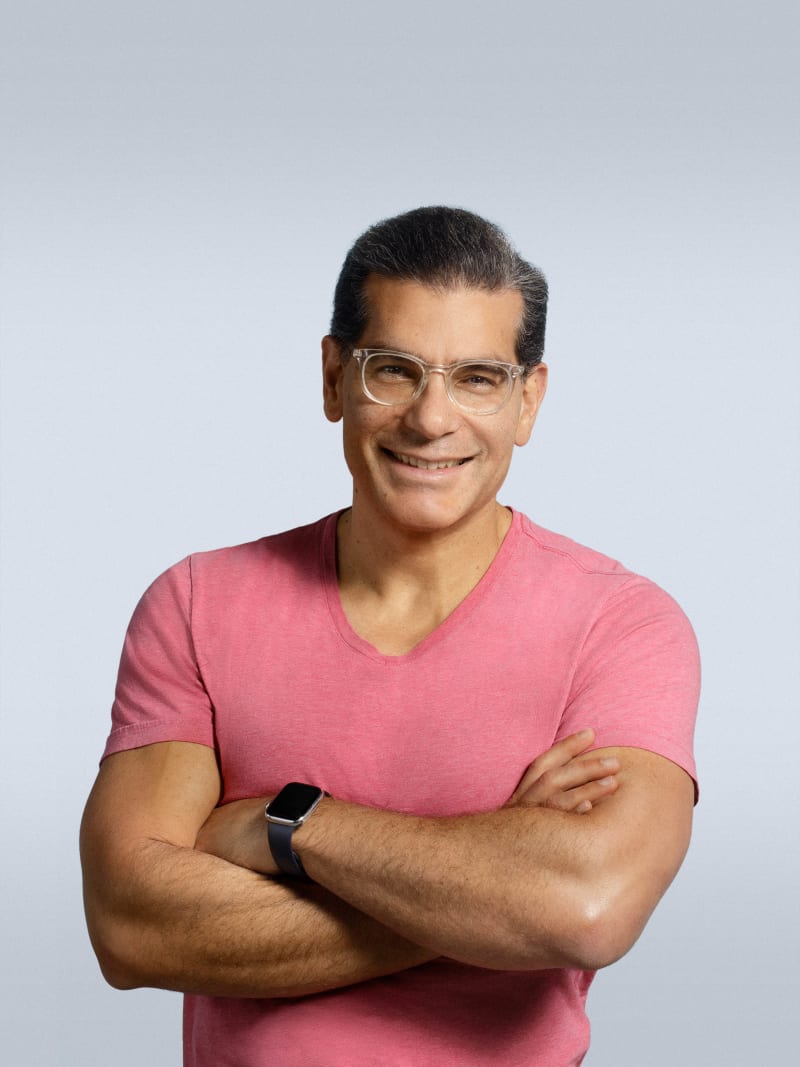
Shahin Farshchi
Creates, funds and advises engineering companies for Lux Capital; learned BASIC on a PC he built at his aunt's computer store.
 Lux Capital
| Lux Capital’s Shahin Farshchi on Opportunities in Neuro | Business Trip | 2026-11-02 | Shahin Farshchi, partner at Lux Capital, joins us to talk about investing in the next generation of neural interfaces. Lux is currently investing out of a $1.5B fund, and its portfolio includes Anduril, Hugging Face, Zoox, and CTRL-Labs. Shahin likes to say neural interfaces have been “five years away” for 20 years. But something has changed. Tune in to find out what. In this episode, we discuss: How Shahin evaluates brain-computer interface companies His thesis behind investing in Flourish Labs and Unconventional Voice as the next major interface How he spots the next tech wave before it arrives Credits: Created by Greg Kubin and Matias Serebrinsky Host: Matias and Greg Produced by Nico V. Rey Find us at businesstrip.fm and psymed.ventures Follow us on Instagram and X ! Theme music by Dorian Love | |
| Bullish on Automation and Robotics, but not Humanoid Robots | Shahin Farshchi | Bankless | 2026-08-31 | Robotics hype is everywhere, but are humanoids actually the main event? Lux Capital partner Shahin Farshchi joins David to explain why the bigger opportunity may be AI-powered automation hiding inside factories, warehouses, and other industrial settings. --- 📣SPOTIFY PREMIUM RSS FEED | USE CODE: SPOTIFY24 https://bankless.cc/spotify-premium --- BANKLESS SPONSOR TOOLS: 🔓NEAR | TRADE CONFIDENTIALLY, GET 20% BACK https://bankless.cc/near-pod 🔑BITKEY | GET 10% OFF USE CODE: BANKLESS | #bitkeypartner https://bankless.cc/bitkey 📊BITGET | TOKENIZED STOCKS 2.0 https://bankless.cc/bitget-stocks 🎯THE DEFI REPORT | ONCHAIN INSIGHTS https://thedefireport.io/bankless 👑BANKLESS CONTENT MCP https://www.bankless.com/premium --- TIMESTAMPS 0:00 Is the Robotics Hype Justified? 2:02 Why Humanoids Aren’t the Main Story 8:14 Robotics vs. Automation 12:20 Specialized Robots vs. Generalists 19:24 Making Robotics Accessible 22:25 AI Unlocks New Robotic Tasks 24:52 Robotics’ Internet Moment 27:52 Robots, Jobs, and Cheap Labor 31:28 What Automation Does to the Economy 39:07 What Still Holds Robotics Back 42:30 How AI Actually Powers Robots 50:49 The Robotics Data Bottleneck 53:34 Robotics Companies to Watch --- RESOURCES Shahin Farshchi https://x.com/Farshchi --- Not financial or tax advice. See our investment disclosures here: https://www.bankless.com/disclosures | |
| The Compute 100: Shahin Farshchi, General Partner at Lux Capital. | The Compute 100 | 2026-07-22 | Today's guest is Shahin Farshchi, General Partner at Lux Capital. Shahin's path into venture started with a failed startup. After a PhD at UCLA designing low-noise amplifiers to capture brain signals, he bootstrapped a wireless biosignal monitoring company and learned the hard way that hospitals wanting a product and hospitals paying for one are very different things. A mentor told him he should raise venture money next time – his response: "What's venture capital?" With no network to speak of, he cold-emailed a list of VC firms offering to scout semiconductor deals. Lux Capital, the first hit on a Google search for "nanotechnology venture capital," wrote back the same day, and he joined full-time in 2006. Nearly 20 years later, he's one of the firm's most active investors in deep tech, backing companies like Majestic Labs, Cognichip, and Unconventional AI. Lux just closed Fund IX at $1.5B, its largest ever, bringing total AUM to roughly $7B. We're thrilled to have Shahin on the podcast for a conversation about the semiconductor cycle, the case for younger founders in chips, and the shrinking universe of venture-scale outcomes. Shahin: https://www.linkedin.com/in/shahinf Lux Capital: https://www.luxcapital.com/ The Compute 100 is led by Brian Schechter and Gaby Lorenzi , compute-focused investors at Primary . Primary is a pre-seed and seed-stage venture firm that backs founders building across markets including compute, industrials, healthcare and vertical AI. | |
| The Future of AI: Agents, Defense, Space & Trillion-Dollar Startups with Shahin Farshchi & Ann Bordetsky | RiskReversal Pod | 2026-05-20 | Dan Nathan sits down with Lux Capital partner Shahin Farshchi and AI investor Ann Bordetsky from the RBC Private Tech Conference to explore what comes after ChatGPT — and where the next wave of AI is headed. From defense, robotics, semiconductors, and space infrastructure to AI agents, enterprise software, and the future of work, these conversations break down the technologies, companies, and trends shaping the next decade. They also discuss trillion-dollar valuations, venture capital, hyperscalers, and what separates breakout AI winners from the rest. — FOLLOW US YouTube: @RiskReversalMedia Instagram: @riskreversalmedia Twitter: @RiskReversal LinkedIn: RiskReversal Media | |
| In Conversation with Shahin Farshchi at Lux Capital, $7B Fund Accelerating SciFi | We The Builders | 2026-04-08 | Special conversation with Shahin Farshchi at Hill & Valley Forum 2026 now available wherever you get your podcasts. Lux Capital has deployed over $7B in deeptech and have been accelerating us towards SciFi future for over 20 years. Shahin has invested in companies manufacturing in space (Varda), building autonomous transportation systems (Zoox), providing robots as a service (Formic), automating industries (Covariant), using space to revolutionize the Earth observation industry (Planet), 3D printing rockets (Relativity Space) and many more. Watch on YouTube This is a public episode. If you would like to discuss this with other subscribers or get access to bonus episodes, visit wethebuilders.us | |
| Why People Matter More Than Science in Deep Tech with Shahin Farshchi | The Library of Minds | 2026-01-08 | Have your own questions? Continue the conversation with Shahin's Delphi: https://www.delphi.co/shahin-farshchi Create your own digital mind: https://www.delphi.co/auth What actually makes a startup succeed in deep tech? In this episode of The Library of Minds, we sit down with Shahin Farshchi, General Partner at Lux Capital, to unpack how elite investors evaluate founders, risk, and conviction in the hardest categories of technology. Shahin’s path - from PhD in electrical engineering, to founder, to long-time deep-tech investor - offers a rare perspective on why most breakthroughs fail to become businesses, and why people matter more than the underlying technology. 📌 The Library of Minds is brought to you by Delphi - create a digital version of your mind, scale your thinking, and connect with others interactively. Learn more at https://www.delphi.co/ | |
| How compute and AI will create next-gen superapps | Riskgaming | 2025-09-10 | The launch of OpenAI’s GPT-5 has ushered in a panoply of views on the future of AGI and end-user applications. Does the platform’s aggressive router presage a future of lobotomized AI responses driven more by compute efficiency than quality? Will new chip models be able to make up the difference? And how will OpenAI, which recently hired Fidji Simo from Instacart to become CEO of Applications, expand its revenue beyond API calls and consumer subscriptions?These are huge questions which will ricochet throughout the tech economy. Thankfully, we have a veteran hand this week to go over it with us in the form of Dylan Patel , founder, CEO, and chief analyst of Semianalysis . He’s the guru everyone reads (and listens to), covering the intricacies of chips and compute for a readership of hundreds of thousands of subscribers.Joining host Danny Crichton as well as Lux’s Shahin Farshchi and Michelle Fang , the quartet discuss the questions above plus how Mark Zuckerberg is transitioning Meta Reality Labs, the hopes and dreams of new chip startups, the future of AI workloads, and finally, Intel after the U.S. government’s purchase of 10% of its shares. | |
| E1: Shahin Farshchi: Investing at Lux Capital and Accelerating a Sci-Fi Future | We The Builders | 2025-07-26 | This is it—the very first episode of We The Builders . Earlier this year, I sat down with Shahin Farshchi in LA. He is a General Partner at Lux Capital, a venture fund with $5B AUM. To kick us off, who better than the man who was investing in hard tech 18 years before it was cool: Shahin has invested in companies manufacturing in space (Varda), building autonomous transportation systems (Zoox), providing robots as a service (Formic), automating industries (Covariant), using space to revolutionize the Earth observation industry (Planet), 3D printing rockets (Relativity Space) and many more. The Jetsons Future I thought I would be living in 2025 is partly being built. We have a long way to go but this is exactly how we inspire the next generation. If someone from 1900 woke up and read this, they would call it science fiction. Thank you Shahin, for believing in and being a partner to these incredible companies and founders. Shahin is an incredibly kind soul, helpful, accessible and a role model for younger aspiring venture capitalists. From what I have personally observed and heard from friends building companies, he will cheer you on and have incredible empathy for the fact that you had the courage to build. In many cases, more than capital, that is what you need most. Hope you enjoy the conversation! | |
| 6,800 Harvard students barred, OpenAI UAE megahub, EU €40M defense push | Venture Daily | 2025-05-23 | Featured Guests: Shahin Farshchi , partner, Lux Capital | Connor Love , partner, Lightspeed Venture Partners The Trump administration has banned Harvard University from enrolling foreign students, seriously threatening the admission status of 6,800 Harvard students, OpenAI is building a mega AI hub in Abu Dhabi, its first “Stargate” outside the U.S., and the European Union just made its first ever bet on defense startups with a €40M fund. DOWNLOAD PUBLIC: Public.com/venture Invest in everything—stocks, options, bonds, crypto. You can even earn some of the highest yields in the industry—like the 7% or higher yield you can lock in with a Bond Account. Public is a FINRA-registered, SIPC-insured platform that takes your investments as seriously as you do. Fund your account in five minutes or less at public.com/venture and get up to $10,000 when you transfer your old portfolio. All investing involves the risk of loss, including loss of principal. Brokerage services for US-listed, registered securities, options and bonds in a self-directed account are offered by Public Investing, Inc., member FINRA & SIPC. Public Investing offers a High-Yield Cash Account where funds from this account are automatically deposited into partner banks where they earn interest and are eligible for FDIC insurance; Public Investing is not a bank. | |
| 49. Shahin Farshchi Ph.D, General Partner at Lux Capital | Tech. Cars. Machines. | 2025-03-25 | Lux Capital General Partner Shahin Farshchi, PhD, talked with me about his background, Lux’s history, and how the firm came to position itself as the leading investor in hard-tech. A focus on outstanding teams, market readiness, patience and taking the lead from entrepreneurs on the “next great sector” has led to investments such as Anduril, Aurora, Databricks, Hugging Face, Matterport, Nirvana, Planet Labs, Zededa and Zoox. Note the “skip to” audio time stamps below. You can read the related article here in 3 minutes. Links to Lux Capital and Shahin . Host: Ali Tabibian of GTK Partners . On some podcast players you can click to jump to the timestamps below. (1:44) Introduction to Lux (6:14) Shahin’s background and initiative in managing your career (20:49) Investment selection process (34:30) Focusing on the long-term (37:33) The next big things | |
| Future Building: Investment Insights with Lux Capital's Shahin Farshchi | Venture with Grace | 2024-03-20 | Inspired by Knight Rider and Star Trek, Shahin grew up with a passion to endow superpowers to humanity through feats of engineering. He learned BASIC on an IBM PC XT clone he built at his aunt’s computer store and used to dial into Bulletin Board Systems when he was in the 4th grade. He learned about engines by taking apart an Alfa Romeo at his Uncle’s repair shop a few years later. He aspired to design microchips, software, and systems that could someday amount to the fictional K.I.T.T., and build warp drives that could propel humanity to far corners of the galaxy. Shahin has had the privilege of partnering with amazing founding teams for over two decades. After working for several software startups, he built his first startup in 2004 building upon his PhD research designing chips, systems, and software to capture and interpret brain signals. He later had the pleasure of meeting Lux’s founding team, who invited him to partner with them in 2006, where he has cofounded and led Lux’s investments into companies that have gone on to become publicly traded (e.g., NYSE:AEVA and NYSE:PL), and acquired by the likes of Intel (Nervana), Amazon (Zoox), Silicon Laboratories (Silicon Clocks), and Lattice Semiconductor (SiBeam). Topics: - Building and Scaling Deep Tech Startups: Challenges and Opportunities - Collaborating with Founders to Drive Innovation in Complex Technologies - Exploring the Influence of AI and Robotics #VentureCapital #AI #Robotics #DeepTech #Innovation | |
| Futureforming the World, with Shahin Farshchi (Lux Capital) | Valley of Depth | 2023-12-12 | Every quarter, Lux Capital, a leading venture capital firm known for investing in hard science and deep tech startups, publishes their investor letter offering a unique opportunity to gain insight into the firm's investment thesis and strategy. The firm has been an early supporter of the space industry with early bets in companies like Relativity Space, Epsilon3, Impulse Space, Astranis, Kymeta, Varda, Planet, and Hadrian. This week’s Pathfinder features a deep dive on the firm’s latest Q3 letter with General Partner Shahin Farshchi. In addition to Shahin’s own background, the conversation covers: Lux’s fundraise success having recently closed Lux 8, a $1.15B venture fund The firm’s investment thesis emphasizing the importance of non-consensus hypotheses Geopolitical shifts and how they’re impacting long-term investing The role of media and the importance of informative and nuanced reporting And much more… Lux's Q3 Investor Letter: https://drive.google.com/file/d/1s5xiwjG9psi6xRQPsAcI-I7-g6k5Pe--/view This episode is brought to you by SpiderOak, a US-based software company that builds space cybersecurity products and solutions for civilian, military, and commercial space operations. | |
| AI: Disruption, Regulation, and the Road Ahead | Riskgaming | 2023-11-17 | In this episode of “ Securities ” by Lux Capital, host Danny Crichton joins guests Brian McCullough , host of the Techmeme Ride Home podcast and General Partner at the Ride Home Fund ; Shahin Farshchi , General Partner at Lux Capital; and Matthew Lynley , founder and writer of the Supervised newsletter to discuss regulation and competition in AI, questioning whether open-source or proprietary AI will dominate the future. With discussions ranging from the impact of large language models to AI’s encroachment on government agendas, this episode touches upon the battles shaping AI’s future. Are we on the brink of an AI utopia or a dystopia? This episode is a crucial listen for anyone wanting a snapshot of AI’s as it stands today. | |
| Ep 100: Lux Capital, IVP, and Insight Partners Talk Responsible AI Protocol | Venture Daily | 2023-11-15 | Featured Guests: Shahin Farshchi , general partner, Lux Capital | Somesh Dash , general partner, IVP | Ganesh Bell , managing director, Insight Partners Special 100th episode : One story featuring three guests. Yesterday over 40 VC firms including Lux Capital, IVP, and Insight Partners signed a pledge to establish responsible AI protocol for their portfolio companies. VCs from those firms join the show. Read our newsletter : https://venture-daily.beehiiv.com/subscribe | |
| Ep. 88 - Shahin Farshchi | Homeroom Podcast | 2023-07-12 | ||
| The Business of Building, the Power of People, and Investing in the Future ft. Shahin Farshchi, Partner at Lux Capital | Dare to be Legendary by Daversa Partners | 2022-06-29 | Shahin Farshchi, Partner at Lux Capital, is on a mission to accelerate humanity towards a brighter future through feats of engineering that sit on the outermost edges of what is possible. From AI, robots, space, cars, and engines - he sits down with us to discuss what it takes to build a company and how Lux invests in inventors that challenge the status quo and the law of nature to bring futuristic ideas to life. https://luxcapital.com/ | |
| Investing in Sci-Tech Futures | Futurized - thought leadership on the future | 2021-11-30 | In episode 145 of the Futurized podcast ( @futurized2 ), the topic is: Investing in Sci-Tech Futures. Our guest is Shahin Farshchi ( @Farshchi ), Partner, Lux Capital. In this conversation, they talk about investing in emerging science and technology ventures at the outermost edges of what is possible, what his thesis is on the future of autonomous vehicles + automation, space technology, etc., and how he arrives at that thesis. Trond's takeaway Investing in sci-tech futures will always be risky, exhilarating, and important. The impact of deep tech is never given, and even one wrong turn can be costly, both for VCs and for society. The future is also uncertain. Having said that, engaging with the future in this tangible way is the only way to explore what might be and what might become. As Shahin says, it takes unconventional investors to partner with iconoclastic founders. Thanks for listening. If you liked the show, subscribe at Futurized.org or in your preferred podcast player, and rate us with five stars. If you like this topic, you may enjoy other episodes of Futurized, such as episode 110, The Metaverse Reality , episode 98, Practicing Multimodal AI , or episode 31, The Future of Commoditized Robotics . Hopefully, you'll find something awesome in these or other episodes. If so, do let us know by messaging us, we would love to share your thoughts with other listeners. Futurized is created in association with Yegii, the insight network. | |
| Lux Capital - Shahin Farshchi #2 | The Autonomous Vehicles Podcast | 2021-11-11 | Today’s guest is Shahin Farshchi, Partner at Lux Capital. In this episode we discuss Amazon’s acquisition of Zoox, how the AV market has changed over the last 3 years, and the ripple effects R&D associated with AVs will have on the broader market. | |
| Shahin Farshchi -- Lux Capital | LA Venture | 2021-01-06 | Lux invests in emerging science and technology ventures at the outermost edges of what is possible. Lux will write $10- 15M checks and they are not afraid to invest pre-product and sometimes pre-company. Shahin has fascinating insight on automation, autonomous cars, AI and more. | |
| Venture Capital is the fuel that helps entrepreneurs launch their rocket ships | The Pulse of AI | 2020-02-04 | On this podcast, I sit down with Shahin Farshchi of Lux Capital and we talk about his career journey, explore questions around the current and future state of AI, and dig down into just a few of Lux's many investments including Braid Health, Zoox, aeva, mythic and planet. | |
| Lux Capital - Shahin Farshchi | The Autonomous Vehicles Podcast | 2019-01-17 | Today's guest is Shahin Farshchi, Partner at Lux Capital. In this episode we discuss his investments in Zoox and Aeva, the evolution of the automotive industry, regulatory and public adoption challenges, and his predictions for the next 5-10 years on the autonomous vehicles space. | |
| Shahin Farshchi, Partner at Lux Capital, on leading the deep tech boom & science vs engineering risk | Seed to Scale | 2018-12-10 | Founding General Partner Vic Singh sits down with Shahin Farshchi, a Partner at Lux Capital, to discuss his path to venture capital, by way of Detroit, a Ph.D. in electrical engineering and founding a company that stemmed from his research in wireless, vital sign monitoring. Shahin speaks to how Lux spearheaded investments in science and deep tech when most venture capitalists were interested in adtech, cloud, and SaaS. He shares the mistakes he made and lessons learned along the way, such as that time and money are grossly underrepresented when bringing a product to market and how important it is to build out a company, not just the technology. He also discusses the common mistakes investors make when “placing bets” on general themes and why Lux’s strategy is to identify amazing talent and let that talent drive you. He says, “We tend to find new investment themes at the fringes of our existing companies.” Shahin shares advice for founders with backgrounds rooted in science or technical founders on the transition to becoming a CEO as the company grows and matures, and when it makes sense to help recruit a CEO that has the skills to take the company to the next level. Lastly, he speaks to what it was like being a teenager in Iran and how it shaped his worldview. Send comments to seedtoscale@eniac.vc and tweet us @seedtoscale. | |
| Is Your Company Digitally Relevant with Shahin Farshchi of Lux Capital | DTV- Digital Transformation Channel | 2018-03-19 | In this DTV Interview, Shahin Farshchi, VC at Luck Capital, and Leila Modarres of Infostretch discuss how VCs judge whether a company is going to be successful in today's digital environmental and be able to monetize their initiatives, the factors considered to label you a disruptor or a follower, his views on what's coming down the pike and some the emerging technologies to look out for. | |
| Shahin Farshchi of Lux Capital | Smarter Cars | 2017-05-04 | In this episode of Smarter Cars, we talk with Shahin Farshchi of Lux Capital. We discuss the potential business models for deployment of autonomous vehicles, Lux Capital’s investment in Zoox and its plans to create a robo-taxi service, his views on the per-vehicle model versus the per-mile service model for autonomous vehicles, how to think about when AVs will be safe enough to deploy, and other thoughts about the state of the industry. | |
| Shahin Farshchi, Partner at Lux Capital - Interview | Flyover Labs Podcast | 2016-11-17 | In this podcast I had the opportunity to talk with Shahin Farshchi, Partner at Lux Capital. | |
| In conversation with Shahin Farshchi, Partner at Lux Capital, $7B DeepTech Fund Accelerating SciFI | We The Builders | |||
| Shahin Farshchi, Lux Capital | theCUBE + NYSE Wired: AI Factories - Data Centers of the Future | SiliconANGLE theCUBE | |||
| E1: Shahin Farshchi: Investing at Lux Capital, $5B AUM venture fund and Accelerating a Sci-Fi Future | We The Builders | |||
| Moving from Academia to VC | Lux Capital Investor Shahin Farshchi | DraperTV | |||
| Lux Capital's Investment Criteria | Lux Capital Investor Shahin Farshchi | DraperTV | |||
| How Lux Values a Company | Lux Capital Investor Shahin Farshchi | DraperTV | |||
| Is your Company Digitally Relevant with Shahin Farshchi, Lux Capital | DTV - Digital Transformation Channel | |||
| Shahin Farshchi, Partner Lux Capital: Collaborating with your Investors for Success | PitchPerfect Silicon Valley | |||
| Shahin Farshchi of Lux Capital: venture capital in semiconductors / nanotechnology, Part 1 | nanolearning | |||
| Shahin Farshchi of Lux Capital: venture capital in semiconductors / nanotechnology, Part 2 | nanolearning |
 BLux Capital’s Shahin Farshchi on Opportunities in NeuroBusiness Trip · 2026-11-02
 BBullish on Automation and Robotics, but not Humanoid Robots | Shahin FarshchiBankless · 2026-08-31
 TThe Compute 100: Shahin Farshchi, General Partner at Lux Capital.The Compute 100 · 2026-07-22
 RThe Future of AI: Agents, Defense, Space & Trillion-Dollar Startups with Shahin Farshchi & Ann BordetskyRiskReversal Pod · 2026-05-20
 WIn Conversation with Shahin Farshchi at Lux Capital, $7B Fund Accelerating SciFiWe The Builders · 2026-04-08
 TWhy People Matter More Than Science in Deep Tech with Shahin FarshchiThe Library of Minds · 2026-01-08
 RHow compute and AI will create next-gen superappsRiskgaming · 2025-09-10WE1: Shahin Farshchi: Investing at Lux Capital and Accelerating a Sci-Fi FutureWe The Builders · 2025-07-26
 V6,800 Harvard students barred, OpenAI UAE megahub, EU €40M defense pushVenture Daily · 2025-05-23
 T49. Shahin Farshchi Ph.D, General Partner at Lux CapitalTech. Cars. Machines. · 2025-03-25
 VFuture Building: Investment Insights with Lux Capital's Shahin FarshchiVenture with Grace · 2024-03-20
 VFutureforming the World, with Shahin Farshchi (Lux Capital)Valley of Depth · 2023-12-12
 RAI: Disruption, Regulation, and the Road AheadRiskgaming · 2023-11-17VEp 100: Lux Capital, IVP, and Insight Partners Talk Responsible AI ProtocolVenture Daily · 2023-11-15
 HEp. 88 - Shahin FarshchiHomeroom Podcast · 2023-07-12
 DThe Business of Building, the Power of People, and Investing in the Future ft. Shahin Farshchi, Partner at Lux CapitalDare to be Legendary by Daversa Partners · 2022-06-29
 FInvesting in Sci-Tech FuturesFuturized - thought leadership on the future · 2021-11-30
 TLux Capital - Shahin Farshchi #2The Autonomous Vehicles Podcast · 2021-11-11
 LShahin Farshchi -- Lux CapitalLA Venture · 2021-01-06
 TVenture Capital is the fuel that helps entrepreneurs launch their rocket shipsThe Pulse of AI · 2020-02-04
 TLux Capital - Shahin FarshchiThe Autonomous Vehicles Podcast · 2019-01-17
 SShahin Farshchi, Partner at Lux Capital, on leading the deep tech boom & science vs engineering riskSeed to Scale · 2018-12-10
 DIs Your Company Digitally Relevant with Shahin Farshchi of Lux CapitalDTV- Digital Transformation Channel · 2018-03-19
 SShahin Farshchi of Lux CapitalSmarter Cars · 2017-05-04
 FShahin Farshchi, Partner at Lux Capital - InterviewFlyover Labs Podcast · 2016-11-17
 WIn conversation with Shahin Farshchi, Partner at Lux Capital, $7B DeepTech Fund Accelerating SciFIWe The Builders
 SShahin Farshchi, Lux Capital | theCUBE + NYSE Wired: AI Factories - Data Centers of the FutureSiliconANGLE theCUBE
 WE1: Shahin Farshchi: Investing at Lux Capital, $5B AUM venture fund and Accelerating a Sci-Fi FutureWe The Builders
 DMoving from Academia to VC | Lux Capital Investor Shahin FarshchiDraperTV
 DLux Capital's Investment Criteria | Lux Capital Investor Shahin FarshchiDraperTV
 DHow Lux Values a Company | Lux Capital Investor Shahin FarshchiDraperTV
 DIs your Company Digitally Relevant with Shahin Farshchi, Lux CapitalDTV - Digital Transformation Channel
 PShahin Farshchi, Partner Lux Capital: Collaborating with your Investors for SuccessPitchPerfect Silicon Valley
 nShahin Farshchi of Lux Capital: venture capital in semiconductors / nanotechnology, Part 1nanolearning
 nShahin Farshchi of Lux Capital: venture capital in semiconductors / nanotechnology, Part 2nanolearning