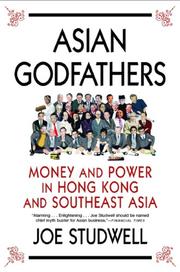
Asian Godfathers
Places Li inside the Hong Kong and Southeast Asian tycoon system.
Summary
Studwell examines the ethnic Chinese tycoons who dominate the economies of Hong Kong, Singapore, Malaysia, Indonesia, Thailand and the Philippines, and argues that their fortunes come from political rent rather than entrepreneurial productivity. He names the individuals, traces their holdings and describes the mechanism: a licence, concession or cartel granted by the state, protected from competition, generating cash that is then deployed into property.
The historical argument runs from colonial revenue farming through the post-independence period, when new governments needed intermediaries who had capital but no political base of their own. Ethnic Chinese businessmen fitted because they were economically capable and politically vulnerable, which made them safe partners for indigenous elites. Studwell shows the pattern repeating across countries with different politics, and documents how the resulting groups are typically opaque, run through offshore vehicles, financed by related-party bank lending, and managed far less competently than their public reputations suggest.
The evidence is company filings, court records from the Asian financial crisis, and interviews. The book is genuinely useful for anyone underwriting Southeast Asian assets, because it explains why reported group profitability often has nothing to do with operating skill and why succession is the point of maximum risk. Its argument is contested. Critics note that Studwell understates real operating achievement at firms such as Hutchison and some of the Singaporean groups, and the ethnic framing makes some readers uncomfortable. The book also predates the rise of genuinely competitive regional technology and consumer companies, so the claim that the region produces no world-class firms reads less well now than it did in 2007.
Key takeaways 7
- Southeast Asian tycoon fortunes originate in state-granted licences, concessions and cartels rather than in productive innovation.
- Political and business elites in the region formed a stable bargain in which politicians supplied protection and ethnically vulnerable businessmen supplied capital and deniability.
- Property development is the standard terminal use of cash for these groups because it converts political access into a cash-generating asset.
- Group structures are deliberately opaque, using offshore holding vehicles and related-party lending to move value away from minority shareholders.
- The 1997 Asian financial crisis exposed how much of the region's reported corporate profitability depended on cheap dollar debt and asset inflation.
- The region's fastest real economic gains came from export manufacturing built by small firms and foreign investment, not from the tycoon conglomerates.
- Family succession routinely destroys value in these groups because political relationships do not transfer to the next generation.
Who should read it
Investors underwriting Southeast Asian conglomerates or joint ventures who need to distinguish operating quality from political rent.
About Joe Studwell
Journalist and author on East Asian business and development; founding editor of the China Economic Quarterly.
How Asia Works argues that Japan, Korea, Taiwan and China grew by sequencing three policies - household-scale land reform, export discipline imposed on manufacturers, and finance directed to both - and explains why Southeast Asian states that skipped the sequence stalled. Asian Godfathers documents how the region's tycoon conglomerates earn returns from licences, property and cheap deposits rather than from operating skill.
Where it sits in the reference 6
Similar books 6
Chosen by shared topics, the entries that hold them, and the people who recommended both.