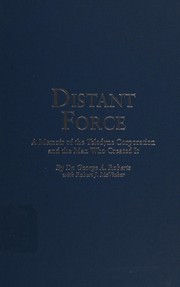
Distant Force
Teledyne from the inside; the conglomerate that actually compounded.
Summary
Roberts served as president of Teledyne and wrote this privately published memoir of the company and of its founder Henry Singleton. Teledyne is studied by investors because Singleton's capital allocation record is among the best documented in American corporate history.
The operating history covers the founding in 1960 with George Kozmetsky, the acquisition programme that assembled roughly one hundred and thirty companies in electronics, aerospace, specialty metals, insurance and industrial products between 1961 and 1969, and the subsequent operation of the group as a decentralised collection of businesses with a very small corporate staff.
The capital allocation record is what matters. Singleton acquired companies using Teledyne's own highly rated shares while the multiple was high, stopped acquiring entirely when the multiple fell, and then repurchased roughly ninety percent of the company's outstanding shares across eight tender offers between 1972 and 1984, at prices he judged below value. He paid no dividend for most of the company's life. He also used the insurance subsidiaries' float to build a concentrated equity portfolio. The compound return to shareholders who held throughout was extraordinary.
The book is a participant's memoir, privately published, and it is affectionate rather than analytical. The reference has not verified its specific figures. Roberts describes what was done without examining why it worked, which limits its use. Investors seeking the analysis should read the Teledyne chapter in Thorndike's The Outsiders, which covers the same record with the returns quantified.
Key takeaways 7
- Singleton acquired companies with Teledyne shares while the market multiple was high and stopped acquiring completely when it fell.
- He repurchased roughly ninety percent of Teledyne's outstanding shares across eight tender offers between 1972 and 1984, at prices he judged below value.
- Issuing shares when they are expensive and repurchasing them when they are cheap is the same decision applied in both directions, and almost no management does both.
- Teledyne operated as a decentralised group of businesses with a very small corporate staff and no attempt at operating synergy between them.
- Insurance subsidiary float was used to fund a concentrated equity portfolio, which added a second source of return beyond the operating businesses.
- The company paid no dividend for most of its life, on the reasoning that retained capital could be deployed at better returns than shareholders would achieve.
- The reference has not verified the specific figures in this privately published memoir, and Thorndike's The Outsiders quantifies the same record.
Who should read it
Investors studying capital allocation who want the insider account of Teledyne, with Thorndike's analysis as the quantified treatment.
Where it sits in the reference 2
Who recommended it 1 · 1 direct
Similar books 6
Chosen by shared topics, the entries that hold them, and the people who recommended both.


