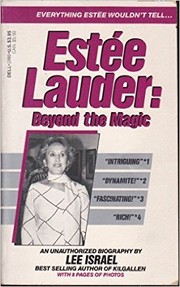
Estée Lauder: Beyond the Magic
Unauthorised; Lauder rushed out her own memoir to pre-empt it.
Summary
The reference has not verified this book in detail; the summary states only what the title, author and subject establish.
Israel wrote this unauthorised biography of Estee Lauder in 1985, published shortly before Lauder's own memoir appeared.
The business content covers the building of the company. Estee Lauder, born Josephine Esther Mentzer in Queens to immigrant parents, started by selling face creams her uncle formulated, demonstrating them personally in beauty salons and then in department stores. The commercial decisions that built the business include securing counter space in prestige department stores rather than selling through drugstores, which positioned the products as luxury; the personal demonstration and touch selling technique she taught her sales staff; the gift with purchase promotion, which the company originated and which became standard across the industry; the launch of Youth Dew as a bath oil rather than a perfume, which women bought for themselves rather than waiting to receive as a gift, and which transformed the company's revenue; and the creation of multiple brands including Clinique, positioned as allergy-tested and dermatologist-developed with a distinctly clinical presentation, which reached customers the main brand did not.
Israel also covers the family, the social ambition, and the reinvention of Lauder's own origins, which the biography documents against the account Lauder told.
Two cautions apply. The book is unauthorised, was written without cooperation and was disputed by the family. More importantly, Lee Israel was later convicted of forging and selling literary letters, and wrote a memoir about it; this does not establish anything about this book, which was published decades earlier and was not implicated, but readers should be aware of the author's subsequent record when weighing uncorroborated claims.
Key takeaways 7
- Securing counter space in prestige department stores rather than selling through drugstores positioned the products as luxury from the start.
- Personal demonstration and touch selling were taught as a technique to sales staff rather than left to individual style.
- The gift with purchase promotion originated with this company and became standard across the industry.
- Youth Dew was launched as a bath oil rather than a perfume, which women bought for themselves instead of waiting to receive.
- Clinique was created as a separate brand with clinical positioning to reach customers the main brand could not.
- Operating multiple brands with distinct positioning under one company reached segments a single brand would have had to compromise to serve.
- The book is unauthorised and disputed, and the author's later conviction for literary forgery is context readers should hold.
Who should read it
Consumer brand operators interested in the commercial decisions that built a prestige beauty company, treating uncorroborated claims cautiously.
Where it sits in the reference 2
Similar books 6
Chosen by shared topics, the entries that hold them, and the people who recommended both.




