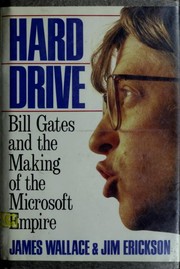
Hard Drive
Subtitled Bill Gates and the Making of the Microsoft Empire.
Summary
Wallace and Erickson wrote the first substantial critical biography of Bill Gates and the early history of Microsoft, published in 1992 without cooperation from Gates or the company. It covers the Lakeside School computer access, the Traf-O-Data venture, the Altair BASIC deal with MITS, the founding with Paul Allen, the 1980 IBM operating system agreement, and the rise through Windows.
The most consequential business material concerns the IBM deal. Microsoft did not have an operating system when IBM approached, bought QDOS from Seattle Computer Products for a small sum, and licensed it to IBM on a non-exclusive basis that permitted Microsoft to license the same product to the manufacturers of IBM-compatible machines. Wallace and Erickson document how this term, more than any technical achievement, produced the company's position.
They also document the per-processor licensing arrangements with manufacturers, which required payment for every machine shipped regardless of whether it carried the operating system, and which later became the basis for antitrust action. The book covers the conflicts with Paul Allen, including the ownership split and Allen's departure after his cancer diagnosis, and the competitive practices with Apple, Digital Research and others.
The portrait of Gates is unflattering and Microsoft objected to the book. It predates the internet era, the antitrust trial, and Gates' philanthropy entirely, ending in 1992. Later histories cover the company more completely. This remains the clearest account of how the licensing terms in a single 1980 agreement created the outcome.
Key takeaways 8
- Microsoft did not have an operating system when IBM approached and acquired one from another company for a small sum.
- The non-exclusive licensing term in the IBM agreement, which allowed Microsoft to sell the same product to compatible manufacturers, produced the company's position.
- IBM's willingness to accept a licence rather than demand ownership reflects its assessment that hardware rather than software was the valuable component.
- Per-processor licensing required manufacturers to pay for every machine shipped regardless of whether it carried the software, which foreclosed competitors.
- Gates understood the software business as a licensing business from the beginning, including his 1976 letter arguing that copying software was theft.
- Control of the standard rather than technical superiority determined which operating system prevailed.
- The founding equity split between Gates and Allen was negotiated early and set the ownership outcome permanently.
- The book ends in 1992 and predates the internet, the antitrust trial and everything that shaped the company's later reputation.
Who should read it
Founders and investors who want the account of how contract terms rather than technology produced a dominant position.
Where it sits in the reference 2
Who recommended it 5 · 2 direct
Similar books 6
Chosen by shared topics, the entries that hold them, and the people who recommended both.