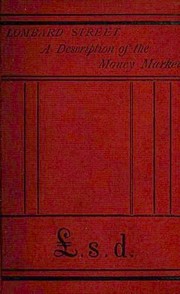
Lombard Street
The founding description of a money market and the lender of last resort.
Summary
Bagehot, editor of The Economist, described how the London money market actually worked in the 1870s and what the Bank of England's responsibilities were during a panic. It is the founding statement of central banking practice.
His description of the system's structure is the analytical foundation. Bagehot showed that the English system had concentrated its cash reserve in a single institution, the Bank of England, so that the entire banking system's liquidity depended on one balance sheet, and that this was a historical accident rather than a design, but that it had to be managed as the reality it was. He argued the Bank had never acknowledged the responsibility this created.
The rule he set out is the book's legacy: in a panic the central bank should lend early, freely, at a high rate of interest, against good collateral valued at pre-panic prices. Each element carries weight. Lending freely stops the panic, since the knowledge that money is available removes the reason to demand it. The high rate ensures the facility is used only by those who need it and protects the reserve. Good collateral ensures the central bank lends to the solvent but illiquid rather than to the insolvent. Announcing the willingness in advance is what makes the mechanism work.
The book also covers the bill market, the discount houses and the structure of English banking. Its institutions are Victorian and the specifics are historical. The rule has been the reference point for every central bank crisis response since, including 2008, and the difficulty of distinguishing illiquid from insolvent in real time remains exactly as Bagehot left it.
Key takeaways 7
- In a panic a central bank should lend early and freely, at a high rate, against collateral that would be good in ordinary times.
- Lending freely stops a panic because the knowledge that money is available removes the reason to demand it.
- A high rate of interest ensures the facility is used only by those who need it and protects the reserve from being drained by opportunists.
- Lending only against good collateral is what distinguishes supporting an illiquid institution from rescuing an insolvent one.
- The willingness to lend must be announced in advance, since an unstated policy provides no reassurance and therefore does not prevent the panic.
- The English system concentrated the whole banking system's cash reserve in one institution, which created a responsibility the Bank of England had never acknowledged.
- Money will not manage itself, and a system that depends on a single reserve requires someone to accept explicit responsibility for managing it.
Who should read it
Investors, bankers and policy readers who want the original statement of lender of last resort doctrine that every crisis response since has referenced.
Where it sits in the reference 4
Similar books 6
Chosen by shared topics, the entries that hold them, and the people who recommended both.




