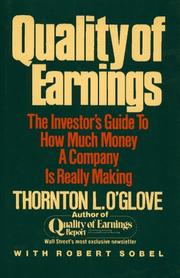
Quality of Earnings
Separating reported earnings from the recurring, cash-backed kind.
Summary
O'glove worked as a forensic analyst and wrote this in 1987 as a practical guide to determining whether reported earnings represent economic reality. Its central claim is that reported earnings are a product of accounting choices and that an analyst must reconstruct them.
His specific techniques include comparing the tax books to the shareholder books, since a company reporting high earnings to shareholders while reporting low income for tax purposes is using accounting choices rather than generating cash; examining changes in accounting policy and calculating their effect separately; analysing the relationship between accounts receivable and sales, since receivables growing faster than revenue indicate either aggressive recognition or collection problems; analysing inventory relative to sales for the same reason; examining non-operating and non-recurring income that has been included in operating results; and reading the footnotes, which he argues carry the information the statements conceal.
He also covers the differential disclosure between what a company tells shareholders and what it tells the Securities and Exchange Commission, and the specific practice of reading both. His treatment of the sell side is direct: he argues that analysts are structurally unable to publish negative conclusions and that their earnings estimates are anchored on management guidance.
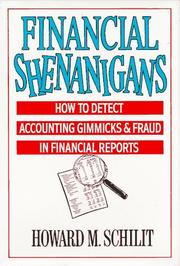
The book is from 1987 and the accounting standards have changed substantially, including the treatment of many specific items he discusses. The general method of reconstructing earnings from primary disclosures, and the specific ratio checks, transfer completely. Schilit's Financial Shenanigans covers similar ground with more recent cases. O'glove is more concise and more focused on the analyst's working method.
Key takeaways 8
- Reported earnings are a product of accounting choices and must be reconstructed rather than accepted.
- Comparing the earnings reported to shareholders with the income reported for tax purposes reveals how much of the reported figure comes from accounting choices.
- Receivables growing faster than sales indicate either aggressive revenue recognition or deteriorating collections, and both are warnings.
- Inventory growing faster than sales indicates either falling demand or costs being capitalised that should be expensed.
- Non-operating and non-recurring items included in operating results must be identified and removed before any comparison is meaningful.
- Footnotes carry the information the primary statements conceal, and an analyst who does not read them has not read the accounts.
- Companies disclose different information to shareholders and to regulators, and reading both reveals what the shareholder version omits.
- Sell-side analysts are structurally unable to publish negative conclusions and anchor their estimates on management guidance.
Who should read it
Analysts and investors who want a concise working method for reconstructing earnings from primary disclosures.
Where it sits in the reference 4
Who recommended it 2 · 1 direct
Similar books 6
Chosen by shared topics, the entries that hold them, and the people who recommended both.