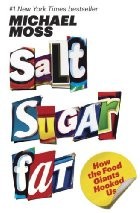
Salt Sugar Fat: How the Food Giants Hooked Us
Industry-wide, with Nestlé among the main companies examined.
Summary
Moss, an investigative reporter, examined how processed food companies formulate products to maximise consumption, working from internal documents, from interviews with former executives and food scientists, and from the industry's own research.
The technical content concerns product formulation. Moss documents the bliss point, a concept developed by the market researcher Howard Moskowitz, meaning the concentration of sugar at which liking is maximised, and the systematic testing companies run to find it for each product. He covers the industry's work on mouthfeel and on what food scientists call vanishing caloric density, where a product dissolves quickly enough that the brain does not register the calories consumed, which permits continued eating. He explains the role of fat in carrying flavour and in producing the sensory experience that drives repeat consumption, and the role of salt in making otherwise unpalatable processed products acceptable and in creating an acquired preference that rises with exposure.
The corporate history covers specific episodes. A 1999 meeting of chief executives at which one presented evidence of the industry's contribution to obesity and was effectively dismissed. Philip Morris's ownership of Kraft and General Foods, which brought tobacco marketing methods and eventually tobacco-derived caution into food. The competitive dynamic in which any company reducing salt, sugar or fat loses share to those that do not, which Moss presents as the reason unilateral reform fails.
The book is reporting rather than nutrition science, and its causal claims about processed food and obesity are stated more firmly than the nutritional literature supports, particularly the addiction framing, which remains contested among researchers. The documentation of what the companies knew and how they formulated is the strongest part and rests on primary sources.
Key takeaways 7
- Food companies systematically test formulations to find the sugar concentration at which consumer liking peaks.
- Products engineered to dissolve quickly prevent the brain from registering the calories consumed, which permits continued eating.
- Salt is used to make processed products palatable and creates an acquired preference that increases with exposure.
- Fat carries flavour and produces the sensory experience that drives repeat purchase, which is why reducing it damages sales.
- Any company unilaterally reducing salt, sugar or fat loses share to competitors that do not, which prevents voluntary industry reform.
- Industry executives were presented with internal evidence of their products' health effects and chose not to act on it.
- Tobacco company ownership of major food brands transferred consumer marketing methods directly into the food industry.
Who should read it
Operators in consumer packaged goods and investors in the sector who want a documented account of how product formulation drives consumption.
Where it sits in the reference 3
Similar books 6
Chosen by shared topics, the entries that hold them, and the people who recommended both.