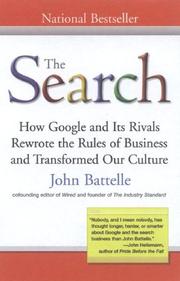
The Search
Google set inside the wider history of search and the database of intentions.
Summary
Battelle, who founded Wired and The Industry Standard, wrote the first substantial account of the search industry, covering the pre-Google search engines, Google's founding and rise, the invention of paid search at GoTo and Overture, and the implications of search data.
The business history is the strongest part. Battelle documents that the auction-based paid search model was invented by Bill Gross at GoTo, not by Google, and that Google adopted and improved it after initially resisting advertising entirely. He explains why the earlier portals failed to build search businesses, since they treated search as a feature that sent users away rather than as the product, and he covers the AdWords quality score innovation that made the auction rank by expected revenue rather than by bid alone.
His broader concept is the database of intentions, meaning the accumulated record of everything people have searched for, which he argues is a new kind of artefact: a continuously updated record of collective and individual desire, held privately by companies, with commercial and political consequences nobody had yet worked out. That framing anticipated much of the subsequent debate about data and platforms.
The book was published in 2005 and is dated in every particular: Google's later products, mobile, social platforms and the current advertising structure are all absent, and Battelle's speculations about where search would go were mostly wrong in detail. It is worth reading for the origin of paid search economics and for the database of intentions concept, which is the most useful idea in it.
Key takeaways 7
- The auction model for paid search was invented at GoTo by Bill Gross, and Google adopted it after initially refusing to mix advertising with results.
- Ranking search advertisements by expected revenue rather than by bid alone was the change that made the auction produce better results and more money at once.
- Portal companies failed at search because they treated it as a feature that sent users away rather than as the product itself.
- The accumulated record of what people search for is a new kind of artefact, held privately, that reveals intention rather than merely behaviour.
- Search advertising works because it captures demand that already exists rather than creating it, which is why its economics differ fundamentally from display advertising.
- Google's refusal to sell placement in organic results was a commercial decision that protected the credibility on which the advertising business depended.
- Concentration of search intent data in a single company creates commercial and political power that existing regulation was not designed to address.
Who should read it
Founders and investors in advertising or marketplace businesses who want the origin of paid search economics and the earliest statement of the intent-data argument.
Where it sits in the reference 2
Who recommended it 2
Similar books 6
Chosen by shared topics, the entries that hold them, and the people who recommended both.