The Snowball: Warren Buffett and the Business of Life
Authorized biography; the standard life-and-firm account.
Summary
Schroeder, a former insurance analyst who covered Berkshire, was given full access by Buffett over five years, including his files and instruction to friends to speak candidly. The book is around eight hundred pages and covers his life from childhood through 2008.
The investment material benefits from Schroeder's professional background. She explains the partnership arithmetic, the insurance operations and the reinsurance business with a precision that general biographers do not achieve. The account of the 1998 General Re acquisition, the Salomon Brothers rescue and the long avoidance of technology stocks are all handled analytically.
The personal material is what makes the book distinctive and what caused the falling out between Schroeder and Buffett after publication. She documents his emotional dependence on Susan Buffett, the arrangement by which Susan moved to San Francisco and introduced Astrid Menks into the household, his absence from his children's lives, his difficulty with confrontation which meant he avoided firing people, and the compulsive quality of his interest in money from early childhood. The inner scorecard, meaning judging yourself by your own standards rather than by external opinion, is Schroeder's framing device and comes from Buffett's own language.
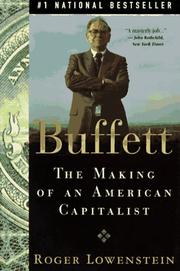
The length is a real barrier and the early chapters move slowly. Schroeder includes a great deal of family material that readers seeking investment content will skip. Buffett reportedly disliked the portrait, which suggests the access did not compromise the result. Lowenstein's biography is shorter and more focused on the investments. This is the fuller account of the person and of how the temperament produced the record.
Key takeaways 8
- Buffett's advantage came substantially from reading company filings and manuals exhaustively from adolescence onward, accumulating knowledge nobody else held.
- He judged himself by an inner scorecard rather than by external opinion, which allowed him to hold positions and avoid activity that others could not.
- His emotional dependence on his wife and later on Astrid Menks was total, and the domestic arrangement that resulted is documented here in detail.
- He avoided confrontation to the point of not firing underperforming managers, which he handled by acquiring businesses whose managers he would never need to remove.
- The insurance float mechanism, and the deliberate acceptance of underwriting discipline over volume, is the structural reason for Berkshire's compounding.
- Buffett kept nearly all of his wealth in Berkshire stock and lived on a small salary, which aligned his position with shareholders completely.
- He intervened at Salomon Brothers because reputational damage could destroy the firm faster than any trading loss, and he ran it personally during the crisis.
- His treatment of his children, particularly his refusal to provide substantial financial support, was a deliberate position he stated and defended.
Who should read it
Readers who want the full account of Buffett including the personal cost and the temperament, with investment analysis by someone who covered the company professionally.
Where it sits in the reference 5
Who recommended it 8 · 4 direct
Similar books 6
Chosen by shared topics, the entries that hold them, and the people who recommended both.