The Supermodel and the Brillo Box
Sequel with more on auction guarantees and price formation.
Summary
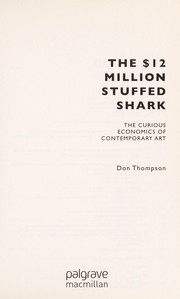
Don Thompson is an economist who writes about the contemporary art market, and this follows his earlier book The Twelve Million Dollar Stuffed Shark. It examines how prices are formed in a market with no intrinsic value anchor.
His analysis identifies the mechanisms. Branding: the identity of the artist, the dealer, the auction house and the previous owner all carry price information independent of the object, and Thompson traces how each is constructed. Scarcity engineering: dealers ration access to artists' work, maintain waiting lists and select buyers, which converts purchase into a privilege. Auction house practice: guarantees, in which the house or a third party commits to a minimum price, irrevocable bids, and the strategic placement of lots within a sale. Chandelier bidding, in which the auctioneer calls bids that do not exist, up to the reserve. And the freeport storage system in which works are held untaxed and never displayed.
Thompson covers specific sales and specific price movements, including the Brillo Box and the Damien Hirst auction that bypassed his dealers. His broader argument is that contemporary art functions as a positional and financial asset whose price depends on the confidence of a small number of participants, and that the market's opacity is deliberate and defended. He writes as an amused outsider with good access. The book is anecdotal rather than quantitative, and readers wanting return data should go to the academic art market literature.
Key takeaways 7
- Prices in contemporary art derive from the branding of artist, dealer, auction house and previous owner rather than from the object.
- Dealers ration access to artists' work and select buyers, which converts purchase into a privilege and supports price.
- Auction guarantees transfer price risk from seller to the house or a third party and distort the signal a sale result provides.
- Chandelier bidding means auctioneers call bids that do not exist up to the reserve, which is legal and undisclosed to most participants.
- Freeport storage holds works untaxed and undisplayed, which makes art function as a financial rather than a cultural asset.
- The market's opacity is deliberate and defended by the participants who benefit from it.
- Contemporary art prices depend on the confidence of a small number of participants, which makes the market thin despite its headline values.
Who should read it
Investors curious about how a market with no intrinsic value anchor forms prices, and anyone considering art as an asset class.
Where it sits in the reference 2
Similar books 6
Chosen by shared topics, the entries that hold them, and the people who recommended both.