Think Twice: Harnessing the Power of Counterintuition
Summary
Mauboussin identifies eight recurring mistakes that experienced decision-makers keep making, and prescribes a specific correction for each. The mistakes include treating the outside view as irrelevant, mistaking correlation for causation, applying the wrong mental model to a system, misreading the role of skill versus luck, and failing to account for how systems behave differently at scale than their parts do.
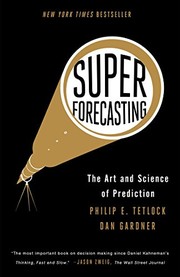
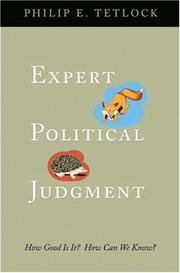
The evidence comes from cognitive psychology, from complex-systems research at the Santa Fe Institute, and from finance. Mauboussin draws heavily on Kahneman and Tversky's base-rate work, on Philip Tetlock's expert-prediction studies, on Gigerenzer on heuristics, and on his own work at Legg Mason and Credit Suisse. The core prescription is procedural: build a reference class before forecasting, keep a decision journal to separate process quality from outcome quality, use checklists in domains where the base rates are stable, and identify whether the situation you face is closer to a game of skill or a coin flip before deciding how much weight to give to track record.
The book is short and the structure makes it usable as a checklist rather than a narrative. It works best for investors evaluating their own process and for operators making infrequent, high-stakes choices where feedback arrives slowly. Some of the underlying psychology has weakened since 2009. Several priming and social-influence studies Mauboussin cites failed to replicate, and the general Kahneman framing has been contested. The finance material and the skill-versus-luck argument, which Mauboussin developed further in The Success Equation, have held up better.
Key takeaways 7
- Decision-makers should build a reference class of similar past cases and start from its base rate before adjusting for the specifics of their own case.
- Outcome quality is a poor guide to decision quality in any domain where luck plays a significant part, so process must be judged separately.
- The greater the role of luck in an activity, the faster results revert to the mean and the less predictive any track record is.
- Applying a model built for one type of system to a different type produces confident and wrong answers, and the most common error is treating a complex adaptive system as a linear one.
- Aggregate behaviour in crowds and markets cannot be inferred from the behaviour of individual participants, because interaction changes the outcome.
- Experts underperform simple statistical rules in domains with stable structure, and are useful mainly where the situation is novel.
- Keeping a written decision journal that records the reasoning and the expected outcome is the only reliable defence against hindsight bias.
Who should read it
Investors and executives who want a short, structured audit of the decision errors that recur in their own process.
About Michael Mauboussin
Head of Consilient Research, Counterpoint Global, Morgan Stanley Investment Management; previously Chief Investment Strategist at Legg Mason and Chief U.S. Investment Strategist at Credit Suisse
His research reports and Expectations Investing are primary sources that other investors, academics and strategists build directly on.
Where it sits in the reference 3
Who recommended it 2 · 2 direct
Similar books 6
Chosen by shared topics, the entries that hold them, and the people who recommended both.