 B
Podcast · 3 episodes in the reference, 2025 to 2026
Backtest
Published by Daniel Gamboa, Matt Harris
Episodes
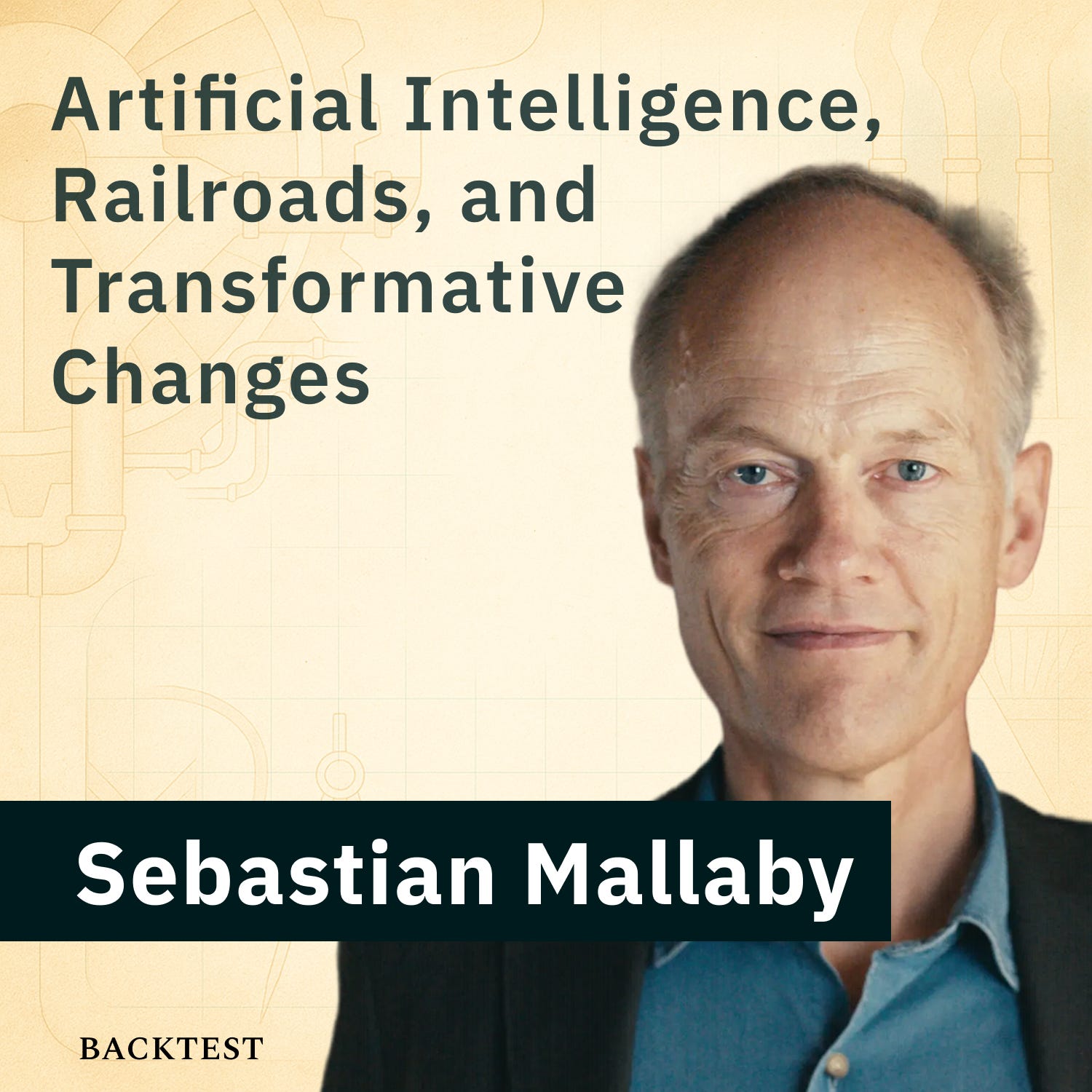 Sebastian Mallaby on Artificial Intelligence, Railroads, and Transformative Changes | Sebastian Mallaby | 25 September 2026 | 1:17 | From iron horses to infinity machines, every great technological revolution starts with a curious mind chasing discovery for its own sake. Discoveries lead to technological breakthroughs that, when commercialized, change the capital markets, organizational structures, and living conditions. As a follow up to our railroad series, we chat with Sebastian Mallaby—Paul A. Volcker Senior Fellow for International Economics at the Council on Foreign Relations, co-host of The Spillover podcast, and author of books on hedge funds ( More Money Than God ), Alan Greenspan ( The Man Who Knew ), and venture capital ( The Power Law ). His latest book, The Infinity Machine , is a riveting biography of DeepMind’s Demis Hassabis. Railroads changed more than transportation—they changed corporate scale, financing, market power, the social contract, and the relationship between technological progress and investor returns. Measured as a share of GDP, the railroads were the largest capital investment wave in history. AI is on pace to overtake them. We explore how the market history of railroads helps frame the AI era. We also contrast the similarities and differences between the AI boom and railroads by exploring market power, competitive dynamics, and capital formation. You can find Sebastian at the Council on Foreign Relations ( https://www.cfr.org/experts/sebastian-mallaby ) and on X ( @scmallaby ). |
| The 80s on Wall Street: Howard Marks and Bruce Karsh Cultivate Cycles (Part 5) | Bruce Karsh | 7 April 2026 | The final chapter in our 80s on Wall Street series bridges the story from the rise of high yield bonds and leveraged buyouts to the birth of modern distressed debt investing. At the center of it are two legendary investors: Howard Marks and Bruce Karsh. Howard Marks grew up in Queens, studied finance at Wharton, and trained under the Chicago School’s efficient market hypothesis before watching the Nifty 50 collapse early in his career. He learned that it’s not what you buy, it’s what you pay. He eventually moves into high yield bonds and becomes one of the first institutional investors in the market. Bruce Karsh was a rising star as a lawyer before stepping out to work for Eli Broad analyzing investments and structuring transactions. His work on the Johns-Manville asbestos bankruptcy planted the seed of an idea that would evolve into distressed investing. By 1988, the two had found each other at TCW in Los Angeles with a shared philosophy around investing at the right price, tracking the market cycle, and finding good companies with bad balance sheets to invest in. By 1990, with high yield default rates above 10%, Drexel bankrupt, and collapsing demand for bonds, Howard and Bruce were on their way to building a reputation as legendary credit investors. | |
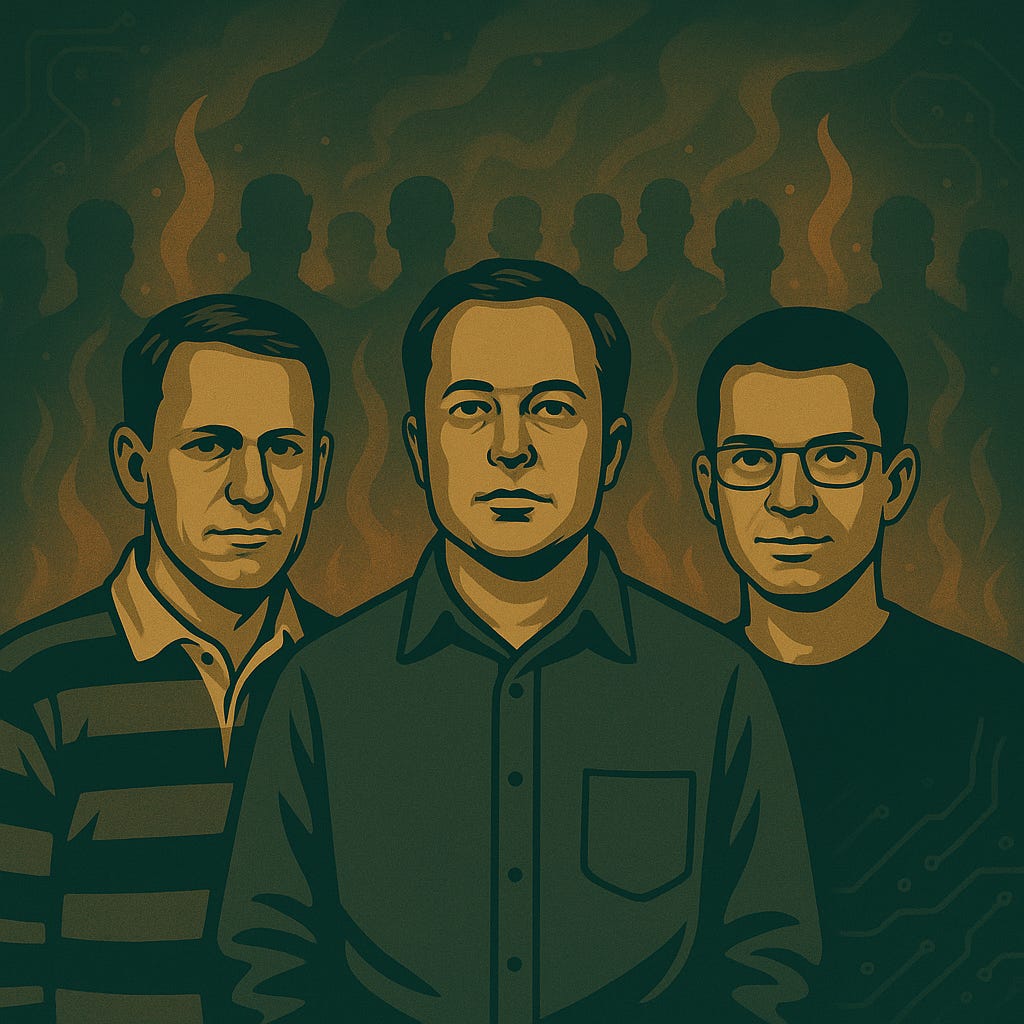 The Dot Com Boom: Max Levchin, Peter Thiel, and Elon Musk Walk into the Fire and Create PayPal (Part 4) | Max Levchin | 30 October 2025 | 59 min | Imagine starting a company to change the world of finance right before an epic stock market crash. Elon Musk famously said that PayPal wasn’t a hard company to create. It was a hard company to keep alive. In 1999, three future titans of technology—Max Levchin, Peter Thiel, and Elon Musk—charge straight into the blaze to bring payments and finance into the internet age. This is the story of how a handful of brilliant founders and their team navigate from crisis to crisis, face constant near-failure, and create the first successful internet payments solution. From the wreckage of the dot com bubble, they emerged refined—the founders, investors, and builders who would go on to shape the next two decades of Silicon Valley—and a lot of the world we live in today. Chapters (01:20) Mr. Buffett on the Stock Market (02:17) The stock market in 1999 (05:21) Intro to Max and Peter (09:49) Intro to Elon (15:45) Why they choose to do startups this late in the cycle (20:51) Insight of eBay as a perfect market for p2p payments (22:51) Competition between Confinity and X (26:55) Confinity and X merge (34:09) Novel business model & technology innovation (37:29) The stock market crash dynamics (43:25) How PayPal navigates post-9/11 slump with an IPO (48:42) The PayPal Mafia (50:40) Nature vs. |
BSebastian Mallaby on Artificial Intelligence, Railroads, and Transformative ChangesSebastian Mallaby · 25 September 2026BThe 80s on Wall Street: Howard Marks and Bruce Karsh Cultivate Cycles (Part 5)Bruce Karsh · 7 April 2026BThe Dot Com Boom: Max Levchin, Peter Thiel, and Elon Musk Walk into the Fire and Create PayPal (Part 4)Max Levchin · 30 October 2025