Updates

  1. 137 new fund letters and reports, each with its own page: Kayne Anderson Rudnick (48 market briefings, KayneCast episodes and TV commentaries), Shelton Capital Management (48 shareholder reports and a commentary), Lakehouse Capital (10 Small Companies Fund letters), Smead (5 newsletters), RIT Capital Partners (5 monthly commentaries), Kovitz, Legal & General, Generation, Hosking, Marram, Munro, Oldfield and others.
  2. 200 new fund letters and reports, each with its own page: Spheria (41 monthly reports), Peapack Private (41 weekly recaps and planning newsletters), Fort Washington (23), Polen Capital (15), Aristotle Pacific (14), Riverwater (13), Chou (10), Apollo Asia Fund (8, back to 1998), Personal Asset Trust, Rockwood Strategic, J Capital Research, I/O Fund, Penn Davis McFarland, Pomona and others.
  3. Investor pages have one Investments tab with shares, changes, % owned, class, market cap and Market cap and Status filters, a Funds tab listing each fund the firm runs, and assets under management from Form ADV. The Investors table shows AUM and current investments, and its search finds investors by what they hold.
  4. Filters, search and sort stay as you left them when you come back to a section. Person cards look like book cards. Company pages name their Investors tab Ownership. Kind and Sector filters use four kinds and GICS sectors with industries. Dead links left the Links tabs.
  5. 190 more investors from fiscal.ai's list, with their sites, letters, partners and 13F holdings; 556 more partner descriptions. Experts now lists only people.
  6. Fund letters lists 144 new documents from 23 firms, each with its own page: a summary, key insights and quotes. Among them: 37 BlackRock articles, 21 Value Partners monthly notes, eight Baron Capital letters, six Stone Sentinel letters to partners, seven Value Line portfolio manager Q&As, BNY's 2026 earnings releases and Starboard Value's 2026 conference presentations.
  7. 584 more investors, with their websites, 6,776 letters from their own sites, 1,385 partners with pages and the 13F holdings of 213 firms. New letters arrive daily from 290 more archives.
  8. Media and Companies filter by GICS sector and industry group, taken from the companies an episode or page names. 1,860 more company pages show a logo, the SEC's list included.
  9. The home page counts what the platform holds and lists features such as the document reader, the player and saved marks. Settings sits at the foot of the rail. Book cards are a quarter wider, so rows hold fewer. Companies drops the Named in filter, and the Role list in your account runs A to Z.
  10. Investor pages of 13 firms show their newsroom's latest posts. New 13F filings are read as the SEC publishes them.
  11. Investor pages have an Investments tab: 13,975 holdings for 105 investors, from their 13F filings with the SEC and their own portfolio pages, with status and sector. 7,338 more companies have a page of their own.
  12. A podcast or YouTube episode keeps playing while you move around the site, in a bar with skip, speed and volume. Media tables show each episode's length and description.
  13. Press releases come from each company's own newsroom (167 companies); SEC filings sit on the Filings tab. Tickers name their exchange, and a company's Experts tab includes guests whose episode description names it.
  14. Letter types now include Market commentary, Fact sheet, Interim report, Annual report, Proxy circular and Governance document. The reader opens over the whole window.
  15. Partners of investment firms have 2,836 appearances and 580 pieces of writing on their pages; Derek Sivers's page lists every book he rates, with his rating.
  16. Fund letters lists three Akre Focus shareholder reports: the ETF's annual report for the year to July 2026, its semi-annual report to January 2026 and the fund's semi-annual report to January 2025, each with its own page: a summary, key insights and quotes.
  17. 837 partners of 73 investment firms now have their own pages, with title, description, photograph and social accounts; Andreessen Horowitz partners' pages also list their writing on a16z.com.
  18. Company pages have a Press releases tab: 8,229 releases for 203 companies, from SEC filings and company newsrooms. Companies filter by For-profit or Non-profit. Own media is a table with filters. Media filters by sector and industry. Publication pages link their publisher in the description.
  19. The Unilever page's Letters tab shows what each fund letter says about Unilever, word for word with its page, and whether the letter is bullish, bearish, mixed or neutral. Filter by sentiment, and see 10 letters at a time.
  20. 492 more fund letters and 3,183 more articles show the day they were published, read from each letter's first page or each article's own page.
  21. The PDF reader has a search box: type words to see every match in the document and step through them. About 540 letters that were web pages, among them Oakmark's commentaries, Bill Miller's letters and Howard Marks's memos, now open in the reader.
  22. Person pages: recommendations open with tier 1 books; one button per organisation; transcripts sit on their episodes; the books on 129 reading lists joined the Recommends tabs.
  23. Companies lists every company with a ticker on the SEC's list, with a Source filter. A quote on a company page opens the letter at that page with the words marked. A company's Media tab lists only episodes that name it, and a new Own media tab lists its podcasts, publications and YouTube channel. Show pages link their publisher. A page opened from a table no longer shows that table's filters beside it.
  24. Company, investor and person pages show more of their social accounts: Facebook, TikTok, Bluesky, Medium, GitHub, Discord and podcast shows. Investor pages list every partner the firm's own team page names: 965 people across 73 investors, 98 for Andreessen Horowitz.
  25. About 170 more letters and papers open in the reader: Mohnish Pabrai's letters and transcripts from his site's new folder, and free copies of papers by Asness, Harvey, Altman, Lo and others from their own or their schools' sites.
  26. Every company a fund letter names has a page, with the letters and quotes that name it: 47 new pages, among them Atom Computing, Hugging Face, Rolls-Royce Holdings and Westinghouse Electric. Company pages have a Quotes tab.
  27. A person's Writing tab has a Type column and filter (Article, Essay, Transcript, Speech, Foreword, Interview and the rest), and Publication names only the publication that published each piece.
  28. Fund letters opens on the newest published letter, and a letter or paper found by search opens its own page here instead of the publisher's site.
  29. A letter or paper with a copy on the site opens its PDF over its page, with a button to open it in a new tab. Select text to highlight or underline it; signed-in readers keep their marks in their account. Each quote opens the PDF at its page with its words marked, and a Source link leads to the publisher's original.
  30. Fund letters lists 61 more documents, each with its own page: Fairfax's 2025 and 2026 interim reports, proxy circulars and 2025 annual report (with their French editions), 26 Charlie Munger meeting transcripts, talks and essays, Third Point's 2026 monthly reports and Malibu Life's interim results, and a Seth Klarman interview. Papers adds Richard Thaler's two 2020 editorials on nudges.
  31. Fund letters lists Lux Capital's letters for Q2 and Q3 2026, by Josh Wolfe, each with its own page: a summary, key insights and quotes.
  32. Fund letters lists Brookfield's letter to shareholders for Q3 2026, by Bruce Flatt, with its own page: a summary, key insights and quotes.
  33. Fund letters lists Howard Marks's memo of 11 November 2026, A Layman Thinks About AI, with its own page: a summary, key insights and quotes.
  34. Fund letters lists 118 more letters, each with its own page: 44 weekly commentaries by Jeremy Siegel from 2026, 31 issues of Van Tharp's newsletter from 2018, 23 Pabrai Investment Funds letters from 2021 to Q3 2026, 13 Efficient Frontier essays by William Bernstein, Oakmark's three 3Q 2026 commentaries, two Lindsell Train reports, a John Hussman comment and Third Point's Q3 2026 letter.
  35. 2,027 more books carry a one-line description in the Books table and on their pages; 7,067 of 7,715 have one, every tier 1, 2 and 3 book among them.
  36. Fund letters lists 187 more letters from 19 firms, among them Permanent Equity, Social Capital, Lux Capital, Square Peg, Bestinver, Cobas, Sequoia Fund, Marketfield and EquityCompass; each shows on its investor's page and has a page of its own.
  37. 2,928 more books carry a one-line description in the Books table and on their pages, so every tier 1, 2 and 3 book has one; 5,040 in all.
  38. Every publication on Newsletters has its own page: its writing, its writers, its staff and who recommends it. Investor pages have a Management tab; a company's Experts tab now leaves out its own people, who list under Management. Tabs on a phone move sideways only.
  39. Every fund letter and research paper has its own page: the thesis, the PDF, the companies and books it names, and for 176 letters and 24 papers so far a summary, key insights and quotes with their page.
  40. 99 books that no page listed now sit under their topics in Books, among them Caste, American Prometheus and Pale Blue Dot.
  41. Newsletters lists every newspaper, magazine, investment newsletter, journal and blog the reference holds, 442 in all, with the people who write there. The search box keeps your last 20 searches. You can create an account.
  42. 283 books that fund managers recommend in their letters are on the shelf, each with the letter's own words and page; investor pages have a Recommends tab.
  43. Person, company, investor and show pages link their own accounts on X, Threads, Instagram, LinkedIn, YouTube and Substack: 275 people, 552 companies and organisations, 88 investors and 478 shows.
  44. 716 more book recommendations name their source: the person's own reading list, letter, blog post, speech or interview, or an article that reports it. 232 of them quote the person's own words about the book, on the book card and on the book's page.
  45. Every US-listed company has a page with its SEC filings. Company pages list their experts and their management, past and present. Fund managers sit under Investors. Each show has a page of its episodes, and an episode page names its guests and hosts. Biographies lists groups, then people. Breadcrumbs show where a page sits.
  46. Media lists every podcast episode, video, interview and talk, over 10,000, by person, company, publisher and event; each filter searches its own choices. Books opens on its table, then Browse, then Authors and Recommenders. A filter's count no longer covers its arrow.
  47. A book that no company, country or subject page lists shows its topics under Where it sits in the reference. On a phone, a page's tabs scroll sideways only. Descriptions read the same on every page. See them in the Experts tab lists every expert the page names.
  48. Every podcast episode, video and interview has its own page with a video or audio player and a link to the source. Investor pages show each company's sector and market cap; firms such as Berkshire Hathaway have one page that holds their letters and their company tabs. Letters tabs filter by company and search the theses. Companies filter by Public, Private and Defunct and link each company's website.
  49. Every tab, view and search has its own address, such as /books/table/asset or /letters/companies, so Back works and a link opens the same place. Page addresses no longer end in .html. Fund letters, Investors, Companies and Papers load about a fifth of the data they did.
  50. Fund letters has a Companies tab: every company the letters name, with its market cap, sector, country, and how many letters and investors name it. Investor pages link each investor's website. Lists in table cells end with “… and N more” at every width.
  51. 1,120 more book summaries; descriptions for 373 papers; pages for 137 more companies, each with the fund letters that discuss it; 215 official photographs; search has its own page.
  52. 411 more books have a summary; person pages list 930 more of the books they wrote; 147 people show their official photograph.
  53. Every investor has a page with its letters and the companies they discuss; company pages list the investors whose letters name them.
  54. A Companies section at the top of the rail lists every company the books, experts and fund letters name.
  55. Person pages list letters, writing, profiles and links as sortable tables with filters, and show each person's companies as links; Fund letters show each letter's description in its own column.
  56. Experts show a checked job title and a short description of each person; 30 more people have photographs.
  57. Every company, fund, university and publication the experts work for has a page listing the people there.
  58. Fund letters show each letter's thesis and filter by it; 225 person pages list the essays, columns and newsletter issues the person wrote.
  59. Person pages list every essay and newsletter issue a person wrote, and their own books as a table in List view.
  60. Recommends shows the five largest kinds of book and the rest under More; browse pictures load sooner.
  61. Podcasts and talks link the original episode, filter by Audio and video or Press, and list each publisher once.
  62. Pages are wider, Recommends has List and Grid, and a filter clicked again turns off.
  63. Book cards sit in a ruled grid with Open Library and Goodreads links and each book's one-line note.
  64. Funds is now Investors; each investor's styles are buttons that filter the table.
  65. Podcasts and talks on a person's page filter by year and publisher and show as a list or a grid of pictures.
  66. Quotes show only people's own words: 472 summaries written by list sites are gone.
  67. Country pages open from Browse again, and every link on the shelf lands on a page.
  68. Subject and person pages show their sections as tabs, and each book appears once on a person's page.
  69. Book cards show the quote, who said it and the source; grids show five cards to a row.
  70. On a phone, a menu holds the sections, search, Updates, Feedback and dark mode.
  71. Feedback takes a screenshot of the page with no browser prompt, opens a screenshot full size when you click it, and clears itself once sent.
  72. Book cards are centred, search names the topic each book sits in, and any text cut short shows whole on hover.
  73. Search groups its results by kind: people, companies, geographies, subjects, topics, books, funds, fund letters and papers.
  74. The Books table lists who recommended each book by name, and the browser tab names the section you are in.
  75. Feedback can take a screenshot of the page, or one you paste or choose, and opens in the corner beside Updates.
  76. Each rail button reopens its section where you left it, and Browse, Table and People show on every book and subject page.
  77. Filters grey out choices that hold nothing instead of hiding them, and Books › People filters by authors or recommenders.
  78. Feedback takes a subject line and up to three screenshots.
  79. Biographies are grouped by the person they are about: 41 new pages, from Abraham Lincoln to Lee Kuan Yew.
  80. Sport splits into 23 sports, and Religion into one topic per faith.
  81. Book lists show as cards: the cover, one recommendation quote and every recommender by name.
  82. Seventeen subjects that had two or three pages under different names now have one page each.
  83. Every page lists its Experts as authors and recommenders, with a link to them on the Experts tab.
  84. Economics, Financial history, Financial panics and Accounting are subjects of their own, with one page per financial crisis.
  85. Book, person and subject pages open inside the app, so the tabs stay in view.
  86. 996 more book covers, and photographs or logos for 227 more people and companies.
  87. Books › Browse shows every subject as cards, and the rail holds Fund letters, Papers, Experts, Books and Funds.
  88. Every topic over 150 books splits into narrower topics, each with a page of its own.

Send feedback

What is it?
Screenshots, up to 3 (optional)
or paste one with Ctrl+V

We use your email only to reply to you.

D

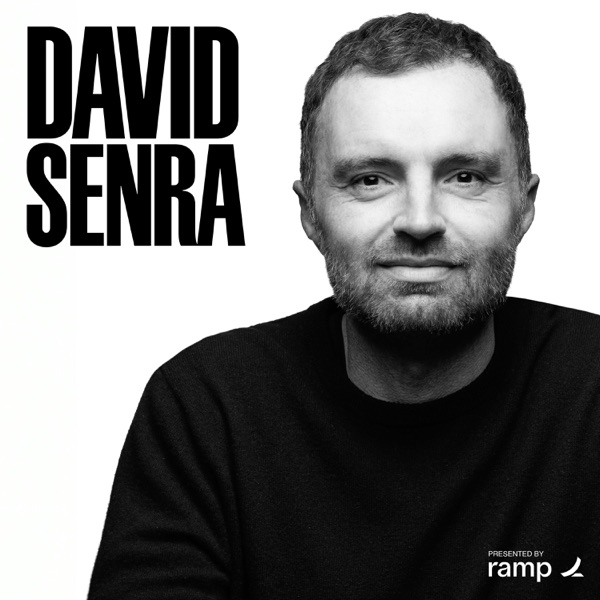
Podcast · 11 episodes in the reference, 2025 to 2026

David Senra

Published by Scicomm Media

Episodes

Doug Leone on Sequoia, Fear, Great Founders & Starting Over at 69Doug Leone30 August 2026Doug Leone spent 26 years helping lead Sequoia Capital through successive eras of technological change. Born in Italy, he came to the United States without speaking English and carried the insecurity of an outsider into his career. That fear became fuel: whenever he felt himself falling behind, he forced himself to start over. After stepping down from Sequoia at 65 to make room for the next generation, he returned four years later. Now he considers himself a low-level analyst again, racing to understand an AI revolution that he believes is rewriting business more radically than anything he has seen before. Leone explains the three questions he asks before making an investment: Would he put his children's money into it? If he could make only 20 investments in his life, would this be one of them? Could it return the entire fund? He is interested only in extreme outliers—companies capable of returning 100 times the original investment—and says the biggest mistake venture investors make is selling their winners too early. Sequoia once owned enormous stakes in Apple, Cisco, Google and NVIDIA, but even the greatest investors failed to anticipate how long exceptional companies could continue compounding. His role as an investor is not to shape a founder's technology. It is to help turn a product into a business: recruiting the first team, building sales and marketing, navigating crucible moments and preserving the founder as the soul of the company.
The Man Behind Grand Theft Auto 6: Strauss ZelnickStrauss Zelnick17 May 20261:39Strauss Zelnick has spent 40 years doing the same thing: finding where new technology is about to supercharge an old business, and getting there first. He started at Columbia Pictures in 1983 running international TV distribution. When the company needed a "new media" person, they looked for the least valuable executive they could spare. That was Zelnick. New media in 1983 meant VHS cassettes. He took the assignment anyway. By 2001, when he started ZMC, he had one thesis: technology would supercharge media and destroy it simultaneously, and the only companies worth owning sat at that intersection. In 2007, he used it to take over Take-Two Interactive with no money. The company had a chairman under indictment, four government investigations, and six months of cash left. Zelnick had written memos for Carl Icahn twice saying stay away. Then Icahn told him to read the bylaws. A plain vanilla Delaware charter allowed a board replacement if a majority of shares physically present at the annual meeting voted for it. Zelnick met the 10 hedge funds holding 70% of the stock, got commitments, walked in thinking he had 48%, discovered most had loaned their shares to short sellers, and won with 88%. The only asset worth keeping was GTA. His pitch to creative talent: we will fund your vision, stay out of your way, and run a company where nobody gets indicted. Market cap when he arrived: $700 million. Today: roughly $35 billion.
The Book of Elon with Eric JorgensonEric Jorgenson24 March 20261:50Eric Jorgenson is an investor, author, and the CEO of Scribe Media — best known for his mission to distill the ideas of the world's most consequential thinkers into books anyone can read. Obsessed with the idea that the best way to understand a great mind was to read everything they'd ever said, Jorgenson spent years compiling Naval Ravikant's writing, podcasts, and interviews into a single coherent volume. The result — The Almanack of Naval Ravikant — was released for free, spread virally, and has been read by millions of people around the world. He never charged a dollar for it. That project established a model. Rather than waiting for great thinkers to write their own books, Jorgenson would do it for them — hunting down every interview, essay, and conversation, finding the signal in the noise, and shaping it into something permanent. The Book of Elon followed. Drawing on decades of interviews, Jorgenson assembled the most complete portrait of Musk's thinking ever put in one place — how he reasons, how he recruits, how he sets goals that seem insane until they aren't. His work sits at a rare intersection: rigorous enough for serious students of business, accessible enough to hand to anyone. In an era of content overload, Jorgenson's instinct runs the opposite direction — that the most valuable thing you can do is take a lifetime of wisdom and make it impossible to ignore.
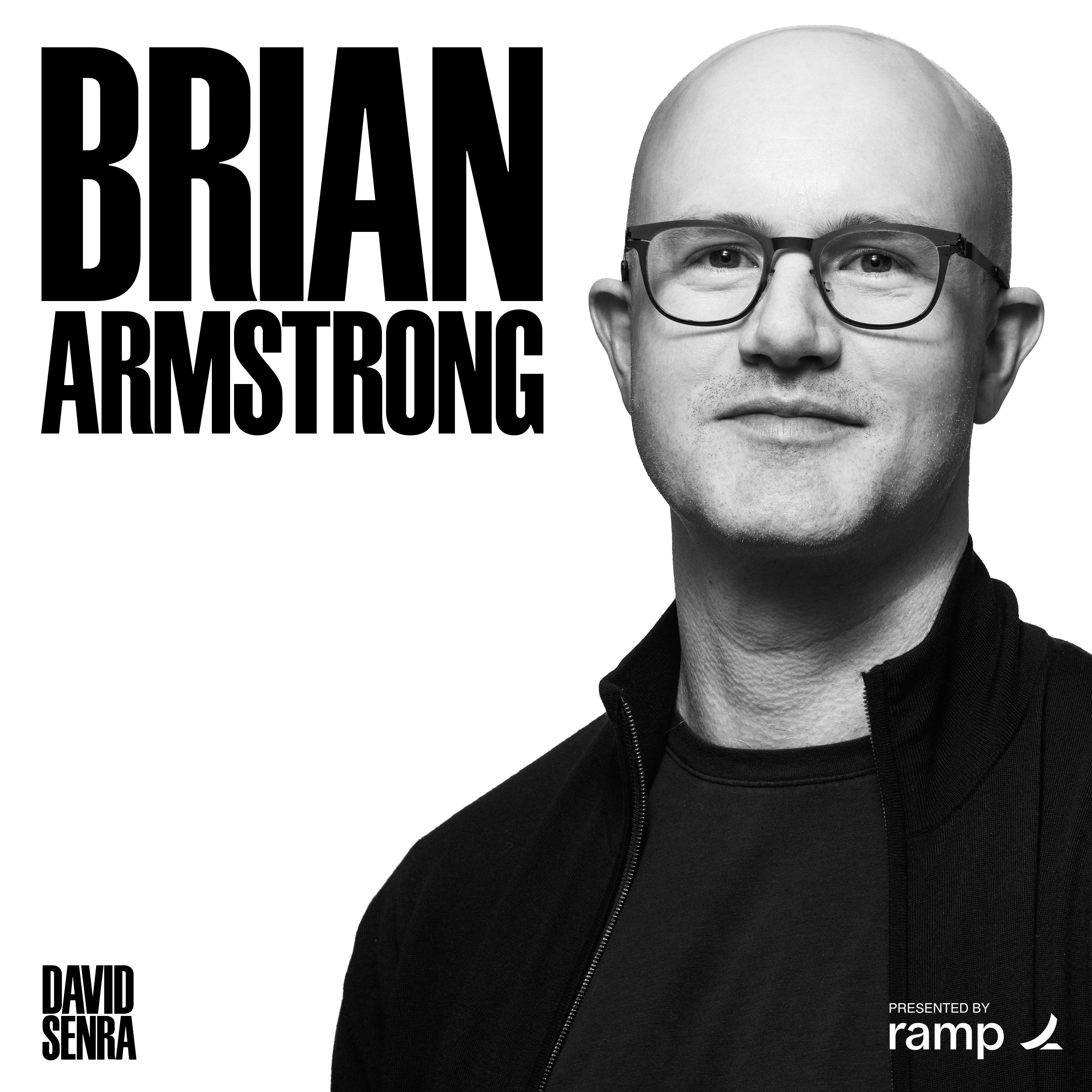
Brian Armstrong: When Washington Tried to Kill CoinbaseBrian Armstrong1 March 20261:50Brian Armstrong is the co-founder and CEO of Coinbase , the publicly traded cryptocurrency exchange and one of the most recognized names in the digital asset industry. Armstrong founded Coinbase in 2012 alongside Fred Ehrsam, launching out of Y Combinator with a simple but ambitious goal: to make Bitcoin easy to buy, sell, and store for everyday people. At a time when acquiring cryptocurrency required navigating technically complex and often unreliable platforms, Coinbase offered a clean, accessible interface that brought mainstream users into the space for the first time. Under Armstrong's leadership, Coinbase grew from a consumer-focused Bitcoin wallet into a sprawling financial infrastructure company serving retail investors, institutional clients, and developers. The company expanded to include a professional trading platform, a self-custody wallet, a layer-2 blockchain called Base, and a suite of developer APIs. In April 2021, Coinbase became the first major cryptocurrency exchange to go public in the United States, listing directly on Nasdaq in a landmark moment for the broader crypto industry. Armstrong has been one of the most vocal advocates for bringing cryptocurrency into the mainstream, pushing for clear regulatory frameworks that he believes are essential to unlocking the full potential of a crypto-based global economy.
Jason Fried: Your Only Competition Is Your CostsJason Fried15 February 20262:21Jason Fried is the co-founder and CEO of 37signals , the software company behind Basecamp, HEY, and ONCE. Fried is widely regarded as one of the most influential voices in modern product development, remote work, and business philosophy. He founded 37signals in 1999 as a web design consultancy, initially creating websites for clients while developing strong opinions about simplicity, clarity, and user-centered design. In 2004, the company pivoted to product development, launching Basecamp as a project management tool born from their own internal needs. The product's success led 37signals to transition entirely from consulting to software. Under Fried's leadership, 37signals became known for challenging Silicon Valley orthodoxies. The company remained bootstrapped and profitable, rejected venture capital, embraced remote work decades before it became mainstream, and advocated for sustainable growth over hypergrowth. In 2014, the company rebranded as Basecamp Inc. to focus exclusively on its flagship product, before returning to the 37signals name in 2022 as it expanded its product line. That same year, the company launched HEY, a reimagined email service, and later introduced ONCE, a new approach to software licensing that allows customers to buy rather than rent software.
Tobi Lütke: 21 Years of Building ShopifyTobi Lütke18 January 20262:24Tobi Lütke is the co-founder of Shopify , where he has served as the company's CEO since 2008. Under his leadership, Shopify grew from an online snowboard shop in Ottawa, Canada in 2004 to the world's leading e-commerce platform, powering over 4 million merchants in more than 175 countries. The company went public in 2015 at a $1.27 billion valuation and has since grown to a market capitalization exceeding $200 billion. After dropping out of school following the tenth grade in Germany, Lütke completed an apprenticeship in computer programming at the Koblenzer Carl-Benz-School. He moved to Canada in 2002 and launched Snowdevil, an online snowboard shop, in 2004 with Scott Lake and Daniel Weinand. Frustrated with existing e-commerce solutions, Lütke built his own platform using Ruby on Rails, which became Shopify in 2006. He became known for pioneering accessible e-commerce tools, contributing to the Ruby on Rails open-source community, and championing the idea that entrepreneurship should be available to everyone.
Daniel Ek, Spotify | David SenraDaniel Ek28 September 20252:09Daniel Ek is the co-founder and CEO of Spotify . Daniel Ek is an entrepreneur and technology executive widely regarded as one of the most influential figures in music, podcasting and audio streaming more broadly. Rising to prominence in the 2000s and 2010s, he became known for revolutionizing how people consume music and for transforming the music industry through digital innovation, platform development and strategic partnerships. He became a household name through Spotify's global expansion, and his career highlights include co-founding Spotify in 2006, growing it to over half a billion users worldwide and pioneering the freemium streaming model that reshaped music consumption. As an advocate for artists and music accessibility, he has also championed fair compensation models and music discovery algorithms, further cementing his influence and legacy in digital music culture.
Building Pixar, Working With Steve Jobs, and Cultivating Creativity | Ed CatmullEd Catmull
DHH: How to Build a Profitable Company Without Losing ControlDavid Heinemeier Hansson
How to Dominate for Decades | Doug Leone, Sequoia CapitalDoug Leone
Marc Andreessen: The World Is More Malleable Than You ThinkMarc Andreessen