 G
Podcast · 21 episodes in the reference, 2022 to 2026
Grit
Published by Kleiner Perkins
Host
JMJoubin Mirzadegan
Episodes
| What It Takes to Build a Generational Company | Anduril’s Trae Stephens | Trae Stephens | 18 May 2026 | Founder quality becomes more important as startups become easier to build. Trae Stephens, co-founder of Anduril and partner at Founders Fund, has spent years backing founders with strong conviction, including most recently at Roadrunner. He shares why too much capital too early can hurt startups, and why the best companies are built by teams with complementary strengths. Guest: Trae Stephens, co-founder, Anduril and Partner, Founders Fund Connect with Trae Stephens X LinkedIn Connect with Joubin: X LinkedIn Email: grit@kleinerperkins.com Follow Grit on LinkedIn Follow Grit on X Learn more about Kleiner Perkins | |
| How Brands Stay Visible When AI Decides | Profound CEO James Cadwallader | Ilya Fushman | 22 December 2025 | What happens when AI becomes your most influential referrer? As consumers turn to ChatGPT for answers, James Cadwallader and his team at Profound help brands like Eight Sleep and MongoDB gain visibility and leverage inside AI models. On this episode of Grit, he explains why brand narrative has shifted away from content, and why Profound is scaling globally ahead of traditional SaaS timelines. Guest: James Cadwallader, co-founder and CEO of Profound and Ilya Fushman, partner at Kleiner Perkins Connect with James Cadwallader X: https://x.com/thejamescad?lang=en LinkedIn: https://www.linkedin.com/in/jsca/ Connect with Ilya Fushman X: https://x.com/ilyaf LinkedIn: https://www.linkedin.com/in/ilyafushman/ Connect with Joubin X: https://x.com/Joubinmir LinkedIn: https://www.linkedin.com/in/joubin-mirzadegan-66186854/ Email: grit@kleinerperkins.com Follow on LinkedIn: https://www.linkedin.com/company/kpgrit Follow on X: https://x.com/KPGrit Learn more about Kleiner Perkins: https://www.kleinerperkins.com/ | |
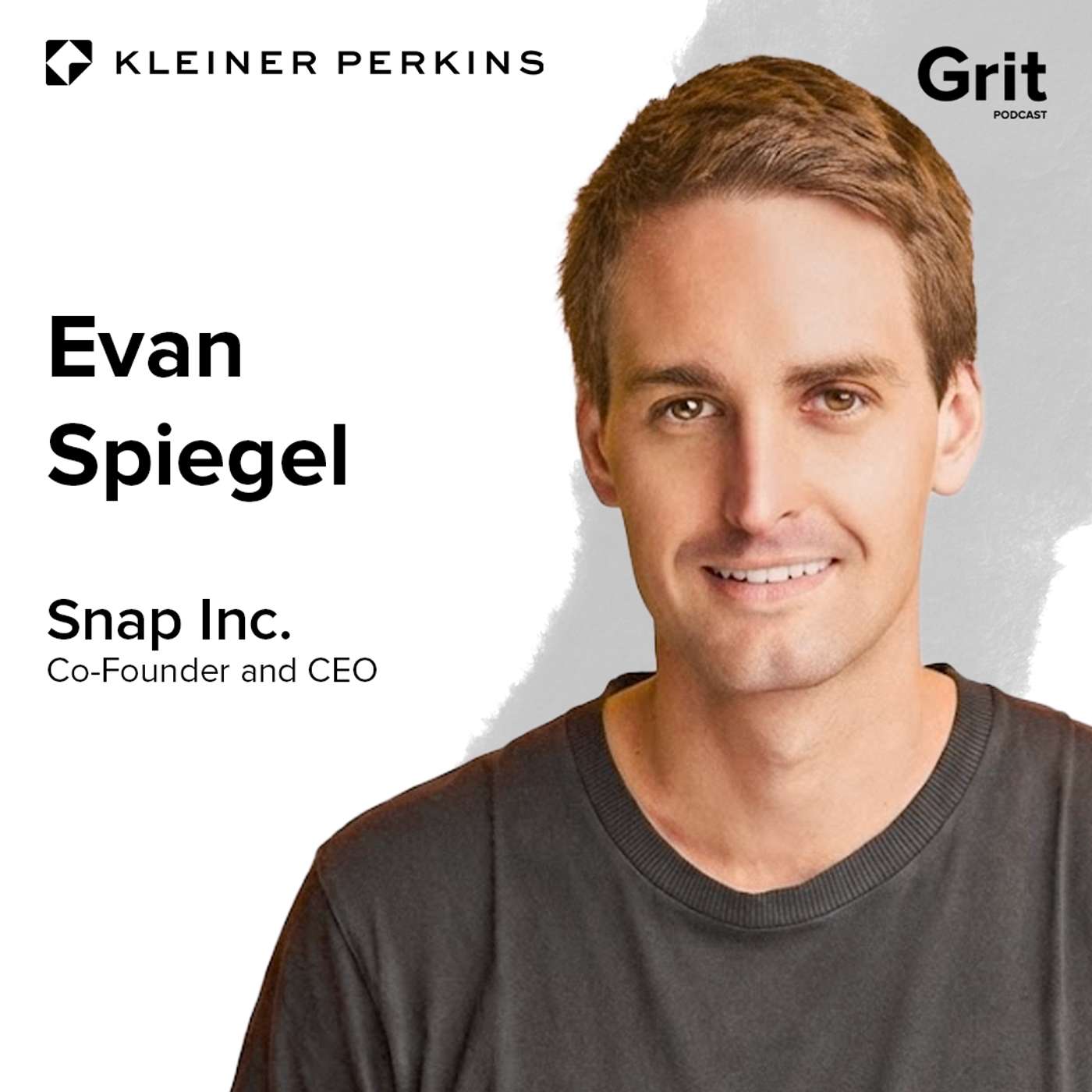 How Snap Plans to Win the AR Race | Evan Spiegel on Spectacles | Evan Spiegel | 15 December 2025 | 1:11 | Turning down a $3B offer from Facebook is a bold move for any young CEO. Evan Spiegel shares how Snap’s early dream was to stay independent and give its community an authentic voice, a bet that proved right. He also explains why they are now doubling down on AR glasses and why the anxiety around AI deserves far more attention from tech leaders. Guest: Evan Spiegel, co-founder and CEO of Snap Inc. and Bing Gordon, Advisor at Kleiner Perkins Connect with Evan Spiegel X: https://x.com/evanspiegel?lang=en LinkedIn: https://www.linkedin.com/in/evan-spiegel/ Connect with Bing Gordon X: https://x.com/bingfish LinkedIn: https://www.linkedin.com/in/binggordon/ Connect with Joubin X: https://x.com/Joubinmir LinkedIn: https://www.linkedin.com/in/joubin-mirzadegan-66186854/ Email: grit@kleinerperkins.com Learn more about Kleiner Perkins: https://www.kleinerperkins.com/ |
| The Pull to Build: Joubin Mirzadegan on Grit and Starting Roadrunner | Joubin Mirzadegan | 8 December 2025 | What does it take to go from advising founders to becoming one? On this week’s special Reverse Grit episode, we flip the script and put our Grit podcast host Joubin Mirzadegan in the guest seat. Joubin recently founded Roadrunner, where he is now co-founder & CEO. Roadrunner is building an AI‑native CPQ to modernize the quote‑to‑cash stack, drawing on years of conversations he’s had with enterprise revenue leaders. Stepping into the host role, Mamoon Hamid joins Joubin to talk about his transition from sales leader to founder, how Roadrunner came together, and why it became our first incubation since Glean. Roadrunner is hiring! Check them out: https://www.roadrunner.ai/ Guest: Joubin Mirzadegan, Partner, Kleiner Perkins Connect with Mamoon X LinkedIn Connect with Joubin X LinkedIn Email: grit@kleinerperkins.com Learn more about Kleiner Perkins | |
| She Sold Her Startup for $500 Million, Here’s Her Next Idea | Joubin Mirzadegan | 24 November 2025 | Screens have pulled families apart. Brynn Putnam set out to bring them back together with Board, the world’s ‘first face-to-face game console.’ On Grit, she tells Joubin Mirzadegan how every venture she’s built, including Mirror, started as a personal need, and how her true edge is the ability to strip an idea down to what actually matters. Guest: Brynn Putnam, founder and CEO of Board Connect with Brynn Putnam X LinkedIn Connect with Joubin X LinkedIn Email: grit@kleinerperkins.com Learn more about Kleiner Perkins | |
| How Notion Reimagined Productivity Tools | Ivan Zhao | Joubin Mirzadegan | 4 August 2025 | Ivan Zhao joins Joubin Mirzadegan on Grit to break down how the company’s minimalist design became a strategic edge in a world overwhelmed by bloated software. He shares why the AI agent still hasn’t arrived, and how Notion’s modular approach might be the closest thing to making it real. Guest: Ivan Zhao, co-founder and CEO of Notion Mentioned in this episode: Fuzzy Khosrowshahi, Airbnb, Sequoia Capital, Linear, Figma, Apple, Things, Microsoft, BMW, Lumiere, The Beatles, The Rolling Stones, Eric Clapton, Rippling, Matt MacInnis, Inkling, Steve Jobs, Douglas Engelbart, Alan Kay, Bill Gates, OpenAI ChatGPT, Y Combinator, Andrej Karpathy, Toby Schachman, Simon Last, Spotify, Slack Connect with Ivan Zhao X LinkedIn Connect with Joubin X LinkedIn Email: grit@kleinerperkins.com Learn more about Kleiner Perkins | |
| The Expert Network Behind Handshake AI’s Model Training w/ Garrett Lord & Mamoon Hamid | Mamoon Hamid | 21 July 2025 | Guests: Garrett Lord, co-founder and CEO of Handshake; and Mamoon Hamid, partner at Kleiner Perkins. Handshake set out to democratize career opportunity. In the process, it unlocked something more: a high-trust expert network built on verified talent and earned trust. This week on Grit , Garrett Lord shares how what began as a platform for student job seekers is now partnering with leading labs, enabling experts to train real-world AI systems. He explains how owning verified domain talent has become their core strategic edge, bypassing middlemen and turning a decade of trust into lasting advantage. Connect with Garrett Lord X LinkedIn Connect with Joubin X LinkedIn Email Connect with Mamoon X LinkedIn Learn more about Kleiner Perkins | |
| Stord’s Plan to Take on Amazon’s Logistics Advantage | Sean Henry | Ilya Fushman | 16 June 2025 | What does it take to build the logistics backbone for the next generation of commerce? Sean Henry, founder and CEO of Stord, joins Kleiner Perkins partner Ilya Fushman and Grit host Joubin Mirzadegan to talk about scaling a national fulfillment network that now moves 50 million packages a year and reaches 15% of U.S. households. They explore how Stored is using AI to connect warehouses, middle-mile routes, and delivery promises into one smart system. The goal: to give every brand an Amazon Prime-like advantage. Guest : Sean Henry, Co-Founder & CEO of Stord Links: Connect with Sean Henry X LinkedIn Connect with Joubin X LinkedIn Email: grit@kleinerperkins.com Learn more about Kleiner Perkins | |
| #231 CEO & Co-Founder Harvey, Winston Weinberg w/ Ilya Fushman: Worthy Sacrifices | Ilya Fushman | 24 February 2025 | Guests : Winston Weinberg, CEO & co-founder of Harvey; and Ilya Fushman, partner at Kleiner Perkins “If you think about pretty much any job out there in the world, we will have some sort of [AI] copilot,” says Kleiner Perkins partner Ilya Fushman. “The question is, who are the right folks to build it, and what’s their vision?” For Harvey CEO & co-founder Winston Weinberg, the vision is clear: Silicon Valley cannot and should not try to disrupt the legal profession by automating the job of lawyers. Instead, he says, they need to have “respect for the industry” before designing AI solutions that speed up specific tasks. “These industries are incredibly complex,” Winston says. “Legal is one of the oldest professions known to man. There are firms that are over a hundred years old. There are firms that are hundreds of years old, and having a brand that says, ‘We are partnering with the industry to transform it’ versus ‘We are just going to steamroll the industry’ is really important for us.” Chapters: (01:16) - The zeitgeist switch (02:58) - What is Harvey? (06:10) - Chief Law Officers (07:58) - Agentic workflows (09:43) - Ilya’s investment thesis (12:48) - Collaborating with AI (16:05) - Task automation (20:52) - Why is it called Harvey? | |
| #217 CEO & Co-Founder Codeium, Varun Mohan w/ Leigh Marie Braswell: Limitless | Leigh Marie Braswell | 18 November 2024 | Guests : Varun Mohan, CEO & Co-Founder of Codeium; and Leigh Marie Braswell, partner at Kleiner Perkins “A lot of people are really bad at knowing what good is,” says Codeium CEO Varun Mohan. Specifically, he’s thinking of startups that hire based on a “logo” — a well-known company on the résumé — rather than exceptional talent. Codeium is based in Mountain View, CA, and Varun believes that it’s incumbent on any new startup to hire in the San Francisco Bay Area, because of how exceptional talent is concentrated there. “When you hire someone that’s 10x better,” he says, “you can’t replace them with 10 1x people. | |
| #213 CEO & Co-Founder Loom Joe Thomas w/ Ilya Fushman: After the Exit | Ilya Fushman | 21 October 2024 | Guests : Joe Thomas, CEO and co-founder of Loom; and Ilya Fushman, partner at Kleiner Perkins Loom CEO Joe Thomas had a lot of things to think about before he sold his company to Atlassian for $975 million: The impact an acquisition might have on the product, how to keep the Loom brand alive, the risk of remaining independent... but it wasn’t until after the deal was announced that he really understood what it meant for his team. “I didn't know how emotional it'd be for me,” Joe says. “All of the Loom employees, current and former, that reached out when this was announced, they did their calculation and they're like, ‘Oh my God.’ That, to me, was the most emotionally transformative part of the process. | |
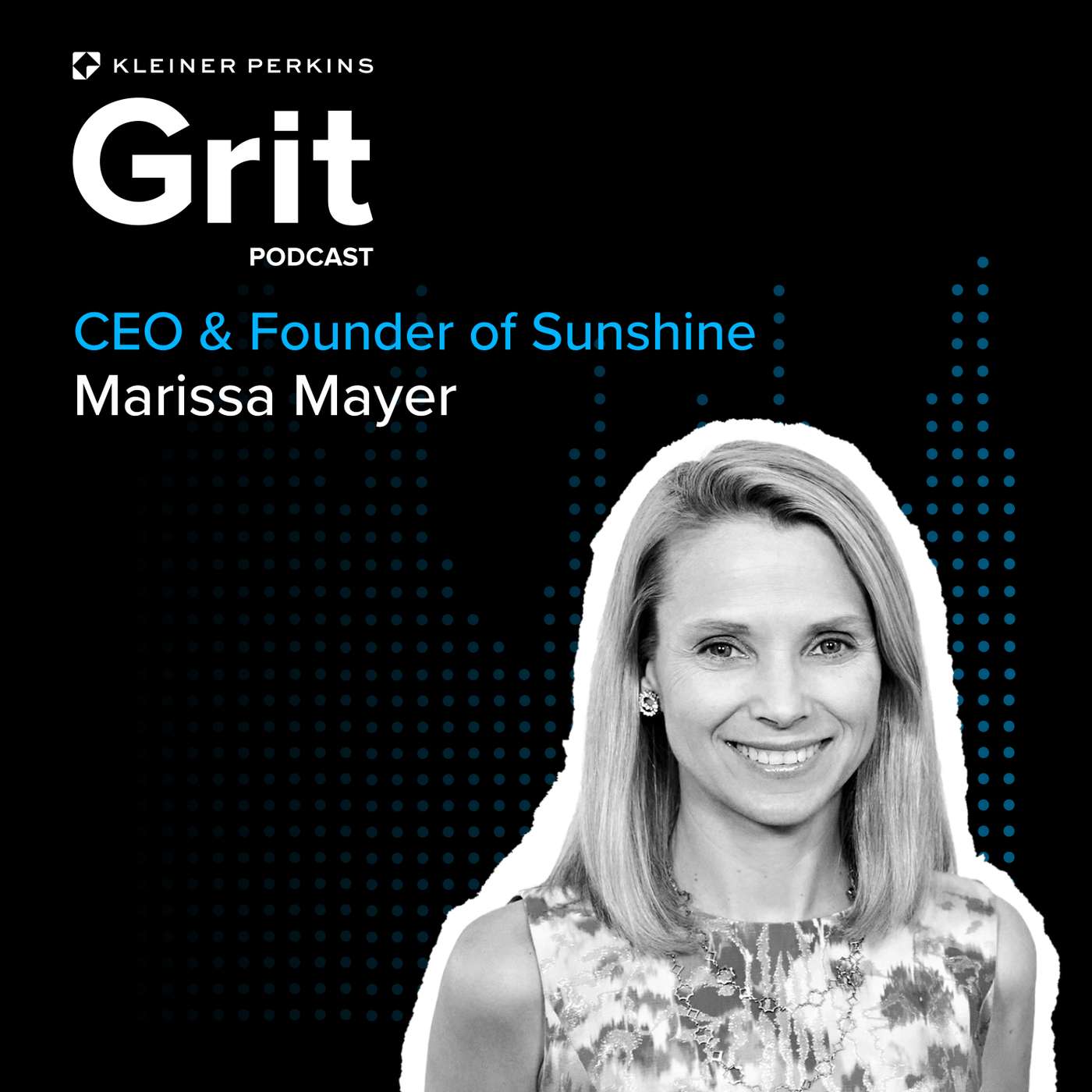 #194 CEO & Founder Sunshine, Marissa Mayer: Innovative Instincts | Marissa Mayer | 10 June 2024 | 1:26 | Guest : Marissa Mayer, CEO and Founder of Sunshine and former CEO of Yahoo When Marissa Mayer was first hired as the CEO of Yahoo, the company had lost nearly a quarter of its workforce in the preceding six months. Early on, she was chatting with employees in the cafeteria and one of them got her attention by smacking her tray. “Is it go time?” he asked. He was asking if the board and C-suite were ready to lead the company forward, but Marissa thought he had one foot out the door. “I had just come out of this meeting where they were like, ‘Everyone’s leaving!’” she recalled. “And I was like, ‘Oh no, please don’t go, I’ve only been here for four days!’” In this episode, Marissa and Joubin discuss the number 12, contacts and photo sharing, fear of AI, soccer moms, maternity as a “disability,” mothers’ rooms, Jim Citrin, Project Cardinal, HTML5 vs. native apps, Ross Levinsohn, Lori Puccinelli Stern, Joe Montana, David Karp, Mark Zuckerberg, Taylor Swift, hiring at Google, Amit Patel, Hamilton , John Doerr, and the Google APM program. |
| #188 CEO & Co-Founder Synthesia, Victor Riparbelli w/ Josh Coyne: Gorilla in the Room | Josh Coyne | 29 April 2024 | Guests : Victor Riparbelli, CEO and co-founder of Synthesia; and Josh Coyne, partner at Kleiner Perkins When Victor Riparbelli wants to learn something, he’ll start with a YouTube video or a podcast: “I maybe buy the book on Amazon as like the fifth step,” the Synthesia CEO says. His company is trying to change the text-first (or text-only) way information is conveyed at work, making AI avatar-narrated videos to replace documents like customer profiles and HR manuals. Victor says that as the technology improves over many years, it could replace text entirely. | |
| #168 CEO & Founder Glean, Arvind Jain w/ Mamoon Hamid: New Playbook | Mamoon Hamid | 11 December 2023 | Guest: Arvind Jain, Founder and CEO of Glean, and Mamoon Hamid, partner at Kleiner Perkins “I’m an engineer, so I have doubts about everything,” says Glean founder and CEO Arvind Jain. Well ... almost everything. Since launching Glean in 2019, he has held to the belief that “all of us are going to have really powerful AI assistants” in the future. With a several-year lead on generative AI tools like ChatGPT, Glean has built a growing club of CIO fans. With the broad acceptance of AI over the past year, Arvind says, “the level of confidence is higher than ever before.” In this episode, Arvind, Mamoon, and Joubin discuss golfer hats, ideas vs. execution, X1, energy audits, small towns in India, IIT, proving yourself, Rubrik, rejecting product-led growth, “workplace assistants,” CIO fans, internet ’94, Parker Conrad, and work as a hobby. In this episode, we cover: Arvind’s newfound fame (01:08) The state of the AI business (03:42) “Why now?” (06:05) Building great products (09:16) Company-building (11:27) Arvind’s childhood (14:37) Competition and hard work (16:44) Leaving Google (18:46) Glean vs. | |
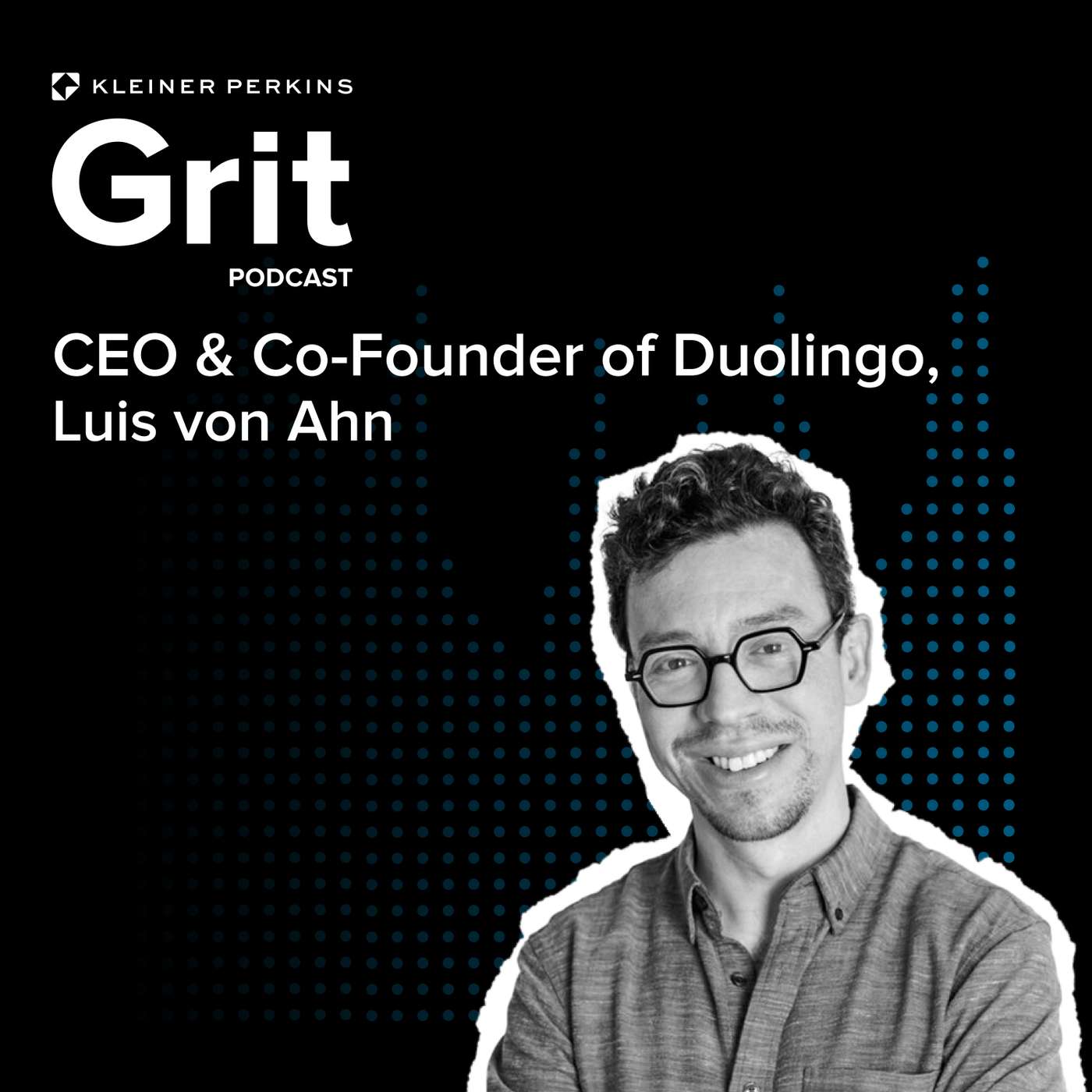 #164 CEO & Co-Founder Duolingo, Luis von Ahn: "The Pitch Was Never Pittsburgh" | Luis von Ahn | 13 November 2023 | 1:04 | Guest: Luis von Ahn, CEO and co-founder of Duolingo When Luis von Ahn wanted to go to college in the United States, he had to take a standardized test called the TOEFL, or Test of English as a Foreign Language. But there was nowhere in his home country of Guatemala that could accommodate another test-taker, so he flew to war-torn El Salvador, just to take the TOEFL. Many years later, as the co-founder and CEO of Duolingo, Luis and his team “decided this type of thing, we could do a lot better.” Today, more than 4,500 universities accept the results of the online Duolingo English Test — a boon for the estimated 2 billion people currently learning English around the world. In this episode, Luis and Joubin discuss returning to the office, Carnegie Mellon, identifying strivers, the “Luis dashboard,” ignoring Reddit, pre-meetings, the hardest part of learning, sounding dumb, private security, the job of a professor, digitizing books, working out every day, April Fools’ campaigns, Duo the owl, and hiring nice people. In this episode, we cover: Working in Pittsburgh, in-person (00:57) How Duolingo hires (06:48) Growing up in Guatemala (10:29) Luis’ parents, intelligence, and drive (12:09) His morning routine (16:56) Ground truth (19:39) “The smaller the team, the better” (22:29) Language education and human behavior (24:32) Learning English (28:53) Back to Guatemala (32:03) CAPTCHA and reCAPTCHA (36:10) Money vs. |
| #162 CEO & Co-Founder Rippling, Parker Conrad w/ Mamoon Hamid: Compounding | Mamoon Hamid | 30 October 2023 | Guests: Parker Conrad, CEO of Rippling, and Mamoon Hamid, partner at Kleiner Perkins How long did it take for Parker Conrad to stop wanting revenge? “I’ll let you know when it switches over,” the Rippling CEO and co-founder jokes. He resigned from his last company , the buzzy HR unicorn Zenefits, in 2016 and then quickly realized that the company’s new leaders would never return it to its former glory. He still loved the problems he had been trying to solve, and launched Rippling because “there was an opportunity there, [and] if it works ... it’s going to be fundamentally and foundationally better as a product.” It worked. As of March, Rippling has been valued at more than $11 billion, more than double Zenefits’ peak. In this episode, Parker, Mamoon, and Joubin discuss what happened at Zenefits, avoiding press coverage, FOMO and expectations, Paul Graham, fixing corporate insurance, Ryan Peterson’s “revenge portfolio,” CEO coaches, Mike Vernal, approving expenses, anecdata, and the Costco of SaaS. | |
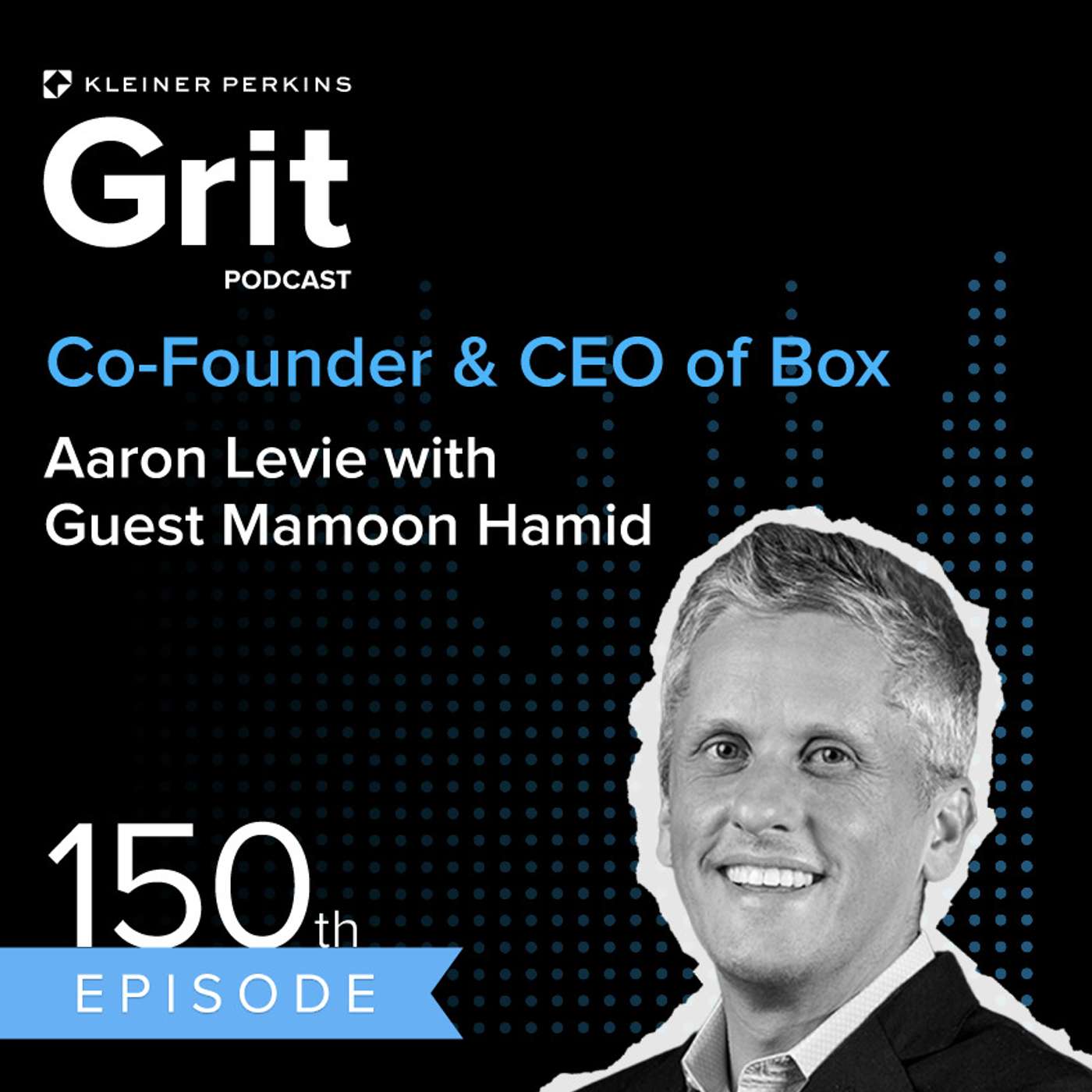 #150 CEO Box, Aaron Levie w/ Mamoon Hamid: Open For Business | Aaron Levie, Mamoon Hamid | 7 August 2023 | 1:03 | Guest: Aaron Levie, CEO of Box, and Mamoon Hamid, partner at Kleiner Perkins When he was a newly minted venture capitalist at USVP, Mamoon Hamid got a tip that he should meet a young entrepreneur named Aaron Levie, and fought for the right to invest in his cloud storage startup, Box. For years after that initial investment, the two men say, Box’s fate was precarious: “We could have died any day,” Mamoon says, and Aaron recalled several times he had to be talked “down from a ledge.” Today, they tell us how Box established itself as “open for business” — a concept Mamoon hounded Aaron with in the early years — and grew into success. In this episode, Aaron, Mamoon, and Joubin discuss Box socks, authenticity at work, Josh Stein, living in the office, over-diligence, Google Platypus, the 2008 crash, nostalgia, everything is personal, the ten-person test, burnout, Dan Levin, ChatGPT, Parker Conrad, and Silicon Valley as “technology town.” In this episode, we cover: “Make mom proud, unless she’s evil” (01:59) How Mamoon and Aaron met (04:38) Mamoon’s first investment in Box (11:15) Pausing the term sheet (16:08) “We could have died any day” (19:01) What is company-building? (23:23) Open For Business (25:27) Getting to cash flow positive (27:52) Slow growth with no burn vs. |
| #149 Co-CEO Workday, Carl Eschenbach: A Life of Significance | Carl Eschenbach | 31 July 2023 | Guest: Carl Eschenbach, co-CEO of Workday When Carl Eschenbach decided to leave VMWare after more than 14 years as COO, no one believed it: Not chairman Joe Tucci, not CEO Pat Gelsinger, and maybe not Carl himself. But he needed a more predictable work-life balance to help raise his teenage children. For the next seven years, he served as a partner at Sequoia Capital. And every day, he thought — and to his wife’s chagrin, talked — about going back: “It was always on the back of my mind,” he says. After the kids were out of the house, in late 2022, he jumped back into operating and became co-CEO of Workday. “It’s what I love to do,” he says. “I feel like I’ve been called to do it.” In this episode, Carl and Joubin discuss jumping rope, Mike Clayville, the Flowbee, focusing on the family, wrestling, commuting cross-country, servant leadership, Sequoia Capital, Aneel Bhusri, co-CEOs, and Palo Alto Networks. In this episode, we cover: Working on Sand Hill Road (00:55) Carl’s workout routine (03:15) Staying humble and grounded (08:04) Carl’s family and dinner table conversation (11:41) Drive and ambition (16:08) College vs. | |
| #138 CEO Motive, Shoaib Makani w/ Ilya Fushman: Powering the Physical Economy | Ilya Fushman | 15 May 2023 | Guest: Shoaib Makani, CEO of Motive “When we fail,” says Shoaib Makani, “it is because we have not understood the customer problem deeply and allowed them to guide us.” This wisdom is hard-won: Motive’s first product, an app for fleet management of trucks, idled for four years before becoming a runaway success story. Emboldened by this, the CEO tried to make an orthogonal push into all kinds of freight, “guns blazing,” only to realize six months in that he had way overestimated Motive’s competitive advantage. Retreating from freight was “painful,” Shoaib recalls, but helped the company extend its existing lead in trucking — and may have saved the whole business. In this episode — joined by special guest Ilya Fushman from Kleiner Perkins — Shoaib and Joubin discuss curiosity for the world, first impressions, reorienting yourself, electronic logging devices, directly connecting with customers, growing up as a CEO, waiting for the market, having a “low discount rate on the future,” the physical economy TAM, AI dash cams, and pricing in risk, and running out of runway. | |
| #103 Founder & CEO Productboard, Hubert Palan w/ Ilya Fushman: Chasing Perfection | Ilya Fushman | 12 September 2022 | Productboard founder and CEO Hubert Palan has made a point of studying the communication style of other leaders, from Martin Luther King Jr. to Elon Musk. But as the boss of a hot and growing tech startup, he’s realizing just how exceptional those people are. “You’re interviewing some of the top execs from companies are the Silicon Valley darling brands,” he says. “You leave the interview like, ‘This person has no idea what they’re doing. They just happen to be in the right spot at the right time.’” But that’s the necessary price, he explains, of doing something innovative instead of iterating on old ideas. In this episode, Hubert and Joubin are joined by Kleiner Perkins partner and Productboard investor Ilya Fushman to discuss Christmas carp, entrepreneurial soft skills, extreme frugality, VCs-as-bosses, the unique reason Hubert went vegetarian, studying famous speeches, being self-critical, the truth about “killing it” in tech, mis-hiring, selling outside your target customer segment, and why Hubert schedules everything. In this episode, we cover: How Hubert and Ilya conducted due diligence on each other (08:49) How Productboard drives revenue generation for modern companies (14:12) The wild fluctuations of the “founder mood meter” (20:00) The value of knowing how hard being a founder will be (28:25) Tough quarters and being transparent with your board (34:35) Holding oneself accountable vs. | |
| Founder & CEO Freshworks, Girish Mathrubootham: Success Is In the Big Things, Happiness Is In the Small Things | Girish Mathrubootham | 18 July 2022 | 1:13 | Girish Mathrubootham is the founder and CEO of Freshworks, the first Indian SaaS company to be listed in NASDAQ — and when he’s in his home country, he gets the celebrity treatment. Freshworks’ 2021 IPO was a milestone for the country’s tech sector, and Mathrubootham has also attracted a “take a selfie with me!” level of fame for trying to change the conversation about entrepreneurship there. “You can be successful in business without doing bad things,” he says. “Being a good person and winning is not mutually exclusive.” In this episode, Girish and Joubin discuss the silver lining of COVID lockdown; learning how to make mistakes and fight for what you want; why Girish started Freshworks after finding success at Zoho; the challenges of starting a small business in Chennai in the early 2010s; the “modern jail” of being a CEO; immediate job offers; “Indian cowboys”; why multi-product startups should hire in India; why moving to the US was like competing in the Olympics; and why the IPO is not the endgame. |
GWhat It Takes to Build a Generational Company | Anduril’s Trae StephensTrae Stephens · 18 May 2026GHow Brands Stay Visible When AI Decides | Profound CEO James CadwalladerIlya Fushman · 22 December 2025GHow Snap Plans to Win the AR Race | Evan Spiegel on SpectaclesEvan Spiegel · 15 December 2025GThe Pull to Build: Joubin Mirzadegan on Grit and Starting RoadrunnerJoubin Mirzadegan · 8 December 2025GShe Sold Her Startup for $500 Million, Here’s Her Next IdeaJoubin Mirzadegan · 24 November 2025GHow Notion Reimagined Productivity Tools | Ivan ZhaoJoubin Mirzadegan · 4 August 2025GThe Expert Network Behind Handshake AI’s Model Training w/ Garrett Lord & Mamoon HamidMamoon Hamid · 21 July 2025GStord’s Plan to Take on Amazon’s Logistics Advantage | Sean HenryIlya Fushman · 16 June 2025G#231 CEO & Co-Founder Harvey, Winston Weinberg w/ Ilya Fushman: Worthy SacrificesIlya Fushman · 24 February 2025G#217 CEO & Co-Founder Codeium, Varun Mohan w/ Leigh Marie Braswell: LimitlessLeigh Marie Braswell · 18 November 2024G#213 CEO & Co-Founder Loom Joe Thomas w/ Ilya Fushman: After the ExitIlya Fushman · 21 October 2024G#194 CEO & Founder Sunshine, Marissa Mayer: Innovative InstinctsMarissa Mayer · 10 June 2024G#188 CEO & Co-Founder Synthesia, Victor Riparbelli w/ Josh Coyne: Gorilla in the RoomJosh Coyne · 29 April 2024G#168 CEO & Founder Glean, Arvind Jain w/ Mamoon Hamid: New PlaybookMamoon Hamid · 11 December 2023G#164 CEO & Co-Founder Duolingo, Luis von Ahn: "The Pitch Was Never Pittsburgh"Luis von Ahn · 13 November 2023G#162 CEO & Co-Founder Rippling, Parker Conrad w/ Mamoon Hamid: CompoundingMamoon Hamid · 30 October 2023G#150 CEO Box, Aaron Levie w/ Mamoon Hamid: Open For BusinessAaron Levie, Mamoon Hamid · 7 August 2023G#149 Co-CEO Workday, Carl Eschenbach: A Life of SignificanceCarl Eschenbach · 31 July 2023G#138 CEO Motive, Shoaib Makani w/ Ilya Fushman: Powering the Physical EconomyIlya Fushman · 15 May 2023G#103 Founder & CEO Productboard, Hubert Palan w/ Ilya Fushman: Chasing PerfectionIlya Fushman · 12 September 2022GFounder & CEO Freshworks, Girish Mathrubootham: Success Is In the Big Things, Happiness Is In the Small ThingsGirish Mathrubootham · 18 July 2022
GHow Snap Plans to Win the AR Race | Evan Spiegel on SpectaclesEvan Spiegel · 15 December 2025GThe Pull to Build: Joubin Mirzadegan on Grit and Starting RoadrunnerJoubin Mirzadegan · 8 December 2025GShe Sold Her Startup for $500 Million, Here’s Her Next IdeaJoubin Mirzadegan · 24 November 2025GHow Notion Reimagined Productivity Tools | Ivan ZhaoJoubin Mirzadegan · 4 August 2025GThe Expert Network Behind Handshake AI’s Model Training w/ Garrett Lord & Mamoon HamidMamoon Hamid · 21 July 2025GStord’s Plan to Take on Amazon’s Logistics Advantage | Sean HenryIlya Fushman · 16 June 2025G#231 CEO & Co-Founder Harvey, Winston Weinberg w/ Ilya Fushman: Worthy SacrificesIlya Fushman · 24 February 2025G#217 CEO & Co-Founder Codeium, Varun Mohan w/ Leigh Marie Braswell: LimitlessLeigh Marie Braswell · 18 November 2024G#213 CEO & Co-Founder Loom Joe Thomas w/ Ilya Fushman: After the ExitIlya Fushman · 21 October 2024G#194 CEO & Founder Sunshine, Marissa Mayer: Innovative InstinctsMarissa Mayer · 10 June 2024G#188 CEO & Co-Founder Synthesia, Victor Riparbelli w/ Josh Coyne: Gorilla in the RoomJosh Coyne · 29 April 2024G#168 CEO & Founder Glean, Arvind Jain w/ Mamoon Hamid: New PlaybookMamoon Hamid · 11 December 2023G#164 CEO & Co-Founder Duolingo, Luis von Ahn: "The Pitch Was Never Pittsburgh"Luis von Ahn · 13 November 2023G#162 CEO & Co-Founder Rippling, Parker Conrad w/ Mamoon Hamid: CompoundingMamoon Hamid · 30 October 2023G#150 CEO Box, Aaron Levie w/ Mamoon Hamid: Open For BusinessAaron Levie, Mamoon Hamid · 7 August 2023G#149 Co-CEO Workday, Carl Eschenbach: A Life of SignificanceCarl Eschenbach · 31 July 2023G#138 CEO Motive, Shoaib Makani w/ Ilya Fushman: Powering the Physical EconomyIlya Fushman · 15 May 2023G#103 Founder & CEO Productboard, Hubert Palan w/ Ilya Fushman: Chasing PerfectionIlya Fushman · 12 September 2022GFounder & CEO Freshworks, Girish Mathrubootham: Success Is In the Big Things, Happiness Is In the Small ThingsGirish Mathrubootham · 18 July 2022