Updates

  1. 137 new fund letters and reports, each with its own page: Kayne Anderson Rudnick (48 market briefings, KayneCast episodes and TV commentaries), Shelton Capital Management (48 shareholder reports and a commentary), Lakehouse Capital (10 Small Companies Fund letters), Smead (5 newsletters), RIT Capital Partners (5 monthly commentaries), Kovitz, Legal & General, Generation, Hosking, Marram, Munro, Oldfield and others.
  2. 200 new fund letters and reports, each with its own page: Spheria (41 monthly reports), Peapack Private (41 weekly recaps and planning newsletters), Fort Washington (23), Polen Capital (15), Aristotle Pacific (14), Riverwater (13), Chou (10), Apollo Asia Fund (8, back to 1998), Personal Asset Trust, Rockwood Strategic, J Capital Research, I/O Fund, Penn Davis McFarland, Pomona and others.
  3. Investor pages have one Investments tab with shares, changes, % owned, class, market cap and Market cap and Status filters, a Funds tab listing each fund the firm runs, and assets under management from Form ADV. The Investors table shows AUM and current investments, and its search finds investors by what they hold.
  4. Filters, search and sort stay as you left them when you come back to a section. Person cards look like book cards. Company pages name their Investors tab Ownership. Kind and Sector filters use four kinds and GICS sectors with industries. Dead links left the Links tabs.
  5. 190 more investors from fiscal.ai's list, with their sites, letters, partners and 13F holdings; 556 more partner descriptions. Experts now lists only people.
  6. Fund letters lists 144 new documents from 23 firms, each with its own page: a summary, key insights and quotes. Among them: 37 BlackRock articles, 21 Value Partners monthly notes, eight Baron Capital letters, six Stone Sentinel letters to partners, seven Value Line portfolio manager Q&As, BNY's 2026 earnings releases and Starboard Value's 2026 conference presentations.
  7. 584 more investors, with their websites, 6,776 letters from their own sites, 1,385 partners with pages and the 13F holdings of 213 firms. New letters arrive daily from 290 more archives.
  8. Media and Companies filter by GICS sector and industry group, taken from the companies an episode or page names. 1,860 more company pages show a logo, the SEC's list included.
  9. The home page counts what the platform holds and lists features such as the document reader, the player and saved marks. Settings sits at the foot of the rail. Book cards are a quarter wider, so rows hold fewer. Companies drops the Named in filter, and the Role list in your account runs A to Z.
  10. Investor pages of 13 firms show their newsroom's latest posts. New 13F filings are read as the SEC publishes them.
  11. Investor pages have an Investments tab: 13,975 holdings for 105 investors, from their 13F filings with the SEC and their own portfolio pages, with status and sector. 7,338 more companies have a page of their own.
  12. A podcast or YouTube episode keeps playing while you move around the site, in a bar with skip, speed and volume. Media tables show each episode's length and description.
  13. Press releases come from each company's own newsroom (167 companies); SEC filings sit on the Filings tab. Tickers name their exchange, and a company's Experts tab includes guests whose episode description names it.
  14. Letter types now include Market commentary, Fact sheet, Interim report, Annual report, Proxy circular and Governance document. The reader opens over the whole window.
  15. Partners of investment firms have 2,836 appearances and 580 pieces of writing on their pages; Derek Sivers's page lists every book he rates, with his rating.
  16. Fund letters lists three Akre Focus shareholder reports: the ETF's annual report for the year to July 2026, its semi-annual report to January 2026 and the fund's semi-annual report to January 2025, each with its own page: a summary, key insights and quotes.
  17. 837 partners of 73 investment firms now have their own pages, with title, description, photograph and social accounts; Andreessen Horowitz partners' pages also list their writing on a16z.com.
  18. Company pages have a Press releases tab: 8,229 releases for 203 companies, from SEC filings and company newsrooms. Companies filter by For-profit or Non-profit. Own media is a table with filters. Media filters by sector and industry. Publication pages link their publisher in the description.
  19. The Unilever page's Letters tab shows what each fund letter says about Unilever, word for word with its page, and whether the letter is bullish, bearish, mixed or neutral. Filter by sentiment, and see 10 letters at a time.
  20. 492 more fund letters and 3,183 more articles show the day they were published, read from each letter's first page or each article's own page.
  21. The PDF reader has a search box: type words to see every match in the document and step through them. About 540 letters that were web pages, among them Oakmark's commentaries, Bill Miller's letters and Howard Marks's memos, now open in the reader.
  22. Person pages: recommendations open with tier 1 books; one button per organisation; transcripts sit on their episodes; the books on 129 reading lists joined the Recommends tabs.
  23. Companies lists every company with a ticker on the SEC's list, with a Source filter. A quote on a company page opens the letter at that page with the words marked. A company's Media tab lists only episodes that name it, and a new Own media tab lists its podcasts, publications and YouTube channel. Show pages link their publisher. A page opened from a table no longer shows that table's filters beside it.
  24. Company, investor and person pages show more of their social accounts: Facebook, TikTok, Bluesky, Medium, GitHub, Discord and podcast shows. Investor pages list every partner the firm's own team page names: 965 people across 73 investors, 98 for Andreessen Horowitz.
  25. About 170 more letters and papers open in the reader: Mohnish Pabrai's letters and transcripts from his site's new folder, and free copies of papers by Asness, Harvey, Altman, Lo and others from their own or their schools' sites.
  26. Every company a fund letter names has a page, with the letters and quotes that name it: 47 new pages, among them Atom Computing, Hugging Face, Rolls-Royce Holdings and Westinghouse Electric. Company pages have a Quotes tab.
  27. A person's Writing tab has a Type column and filter (Article, Essay, Transcript, Speech, Foreword, Interview and the rest), and Publication names only the publication that published each piece.
  28. Fund letters opens on the newest published letter, and a letter or paper found by search opens its own page here instead of the publisher's site.
  29. A letter or paper with a copy on the site opens its PDF over its page, with a button to open it in a new tab. Select text to highlight or underline it; signed-in readers keep their marks in their account. Each quote opens the PDF at its page with its words marked, and a Source link leads to the publisher's original.
  30. Fund letters lists 61 more documents, each with its own page: Fairfax's 2025 and 2026 interim reports, proxy circulars and 2025 annual report (with their French editions), 26 Charlie Munger meeting transcripts, talks and essays, Third Point's 2026 monthly reports and Malibu Life's interim results, and a Seth Klarman interview. Papers adds Richard Thaler's two 2020 editorials on nudges.
  31. Fund letters lists Lux Capital's letters for Q2 and Q3 2026, by Josh Wolfe, each with its own page: a summary, key insights and quotes.
  32. Fund letters lists Brookfield's letter to shareholders for Q3 2026, by Bruce Flatt, with its own page: a summary, key insights and quotes.
  33. Fund letters lists Howard Marks's memo of 11 November 2026, A Layman Thinks About AI, with its own page: a summary, key insights and quotes.
  34. Fund letters lists 118 more letters, each with its own page: 44 weekly commentaries by Jeremy Siegel from 2026, 31 issues of Van Tharp's newsletter from 2018, 23 Pabrai Investment Funds letters from 2021 to Q3 2026, 13 Efficient Frontier essays by William Bernstein, Oakmark's three 3Q 2026 commentaries, two Lindsell Train reports, a John Hussman comment and Third Point's Q3 2026 letter.
  35. 2,027 more books carry a one-line description in the Books table and on their pages; 7,067 of 7,715 have one, every tier 1, 2 and 3 book among them.
  36. Fund letters lists 187 more letters from 19 firms, among them Permanent Equity, Social Capital, Lux Capital, Square Peg, Bestinver, Cobas, Sequoia Fund, Marketfield and EquityCompass; each shows on its investor's page and has a page of its own.
  37. 2,928 more books carry a one-line description in the Books table and on their pages, so every tier 1, 2 and 3 book has one; 5,040 in all.
  38. Every publication on Newsletters has its own page: its writing, its writers, its staff and who recommends it. Investor pages have a Management tab; a company's Experts tab now leaves out its own people, who list under Management. Tabs on a phone move sideways only.
  39. Every fund letter and research paper has its own page: the thesis, the PDF, the companies and books it names, and for 176 letters and 24 papers so far a summary, key insights and quotes with their page.
  40. 99 books that no page listed now sit under their topics in Books, among them Caste, American Prometheus and Pale Blue Dot.
  41. Newsletters lists every newspaper, magazine, investment newsletter, journal and blog the reference holds, 442 in all, with the people who write there. The search box keeps your last 20 searches. You can create an account.
  42. 283 books that fund managers recommend in their letters are on the shelf, each with the letter's own words and page; investor pages have a Recommends tab.
  43. Person, company, investor and show pages link their own accounts on X, Threads, Instagram, LinkedIn, YouTube and Substack: 275 people, 552 companies and organisations, 88 investors and 478 shows.
  44. 716 more book recommendations name their source: the person's own reading list, letter, blog post, speech or interview, or an article that reports it. 232 of them quote the person's own words about the book, on the book card and on the book's page.
  45. Every US-listed company has a page with its SEC filings. Company pages list their experts and their management, past and present. Fund managers sit under Investors. Each show has a page of its episodes, and an episode page names its guests and hosts. Biographies lists groups, then people. Breadcrumbs show where a page sits.
  46. Media lists every podcast episode, video, interview and talk, over 10,000, by person, company, publisher and event; each filter searches its own choices. Books opens on its table, then Browse, then Authors and Recommenders. A filter's count no longer covers its arrow.
  47. A book that no company, country or subject page lists shows its topics under Where it sits in the reference. On a phone, a page's tabs scroll sideways only. Descriptions read the same on every page. See them in the Experts tab lists every expert the page names.
  48. Every podcast episode, video and interview has its own page with a video or audio player and a link to the source. Investor pages show each company's sector and market cap; firms such as Berkshire Hathaway have one page that holds their letters and their company tabs. Letters tabs filter by company and search the theses. Companies filter by Public, Private and Defunct and link each company's website.
  49. Every tab, view and search has its own address, such as /books/table/asset or /letters/companies, so Back works and a link opens the same place. Page addresses no longer end in .html. Fund letters, Investors, Companies and Papers load about a fifth of the data they did.
  50. Fund letters has a Companies tab: every company the letters name, with its market cap, sector, country, and how many letters and investors name it. Investor pages link each investor's website. Lists in table cells end with “… and N more” at every width.
  51. 1,120 more book summaries; descriptions for 373 papers; pages for 137 more companies, each with the fund letters that discuss it; 215 official photographs; search has its own page.
  52. 411 more books have a summary; person pages list 930 more of the books they wrote; 147 people show their official photograph.
  53. Every investor has a page with its letters and the companies they discuss; company pages list the investors whose letters name them.
  54. A Companies section at the top of the rail lists every company the books, experts and fund letters name.
  55. Person pages list letters, writing, profiles and links as sortable tables with filters, and show each person's companies as links; Fund letters show each letter's description in its own column.
  56. Experts show a checked job title and a short description of each person; 30 more people have photographs.
  57. Every company, fund, university and publication the experts work for has a page listing the people there.
  58. Fund letters show each letter's thesis and filter by it; 225 person pages list the essays, columns and newsletter issues the person wrote.
  59. Person pages list every essay and newsletter issue a person wrote, and their own books as a table in List view.
  60. Recommends shows the five largest kinds of book and the rest under More; browse pictures load sooner.
  61. Podcasts and talks link the original episode, filter by Audio and video or Press, and list each publisher once.
  62. Pages are wider, Recommends has List and Grid, and a filter clicked again turns off.
  63. Book cards sit in a ruled grid with Open Library and Goodreads links and each book's one-line note.
  64. Funds is now Investors; each investor's styles are buttons that filter the table.
  65. Podcasts and talks on a person's page filter by year and publisher and show as a list or a grid of pictures.
  66. Quotes show only people's own words: 472 summaries written by list sites are gone.
  67. Country pages open from Browse again, and every link on the shelf lands on a page.
  68. Subject and person pages show their sections as tabs, and each book appears once on a person's page.
  69. Book cards show the quote, who said it and the source; grids show five cards to a row.
  70. On a phone, a menu holds the sections, search, Updates, Feedback and dark mode.
  71. Feedback takes a screenshot of the page with no browser prompt, opens a screenshot full size when you click it, and clears itself once sent.
  72. Book cards are centred, search names the topic each book sits in, and any text cut short shows whole on hover.
  73. Search groups its results by kind: people, companies, geographies, subjects, topics, books, funds, fund letters and papers.
  74. The Books table lists who recommended each book by name, and the browser tab names the section you are in.
  75. Feedback can take a screenshot of the page, or one you paste or choose, and opens in the corner beside Updates.
  76. Each rail button reopens its section where you left it, and Browse, Table and People show on every book and subject page.
  77. Filters grey out choices that hold nothing instead of hiding them, and Books › People filters by authors or recommenders.
  78. Feedback takes a subject line and up to three screenshots.
  79. Biographies are grouped by the person they are about: 41 new pages, from Abraham Lincoln to Lee Kuan Yew.
  80. Sport splits into 23 sports, and Religion into one topic per faith.
  81. Book lists show as cards: the cover, one recommendation quote and every recommender by name.
  82. Seventeen subjects that had two or three pages under different names now have one page each.
  83. Every page lists its Experts as authors and recommenders, with a link to them on the Experts tab.
  84. Economics, Financial history, Financial panics and Accounting are subjects of their own, with one page per financial crisis.
  85. Book, person and subject pages open inside the app, so the tabs stay in view.
  86. 996 more book covers, and photographs or logos for 227 more people and companies.
  87. Books › Browse shows every subject as cards, and the rail holds Fund letters, Papers, Experts, Books and Funds.
  88. Every topic over 150 books splits into narrower topics, each with a page of its own.

Send feedback

What is it?
Screenshots, up to 3 (optional)
or paste one with Ctrl+V

We use your email only to reply to you.

K

Podcast · 8 episodes in the reference, 2023 to 2026

Keen On America

Published by Andrew Keen

Host
AKAndrew Keen

Episodes
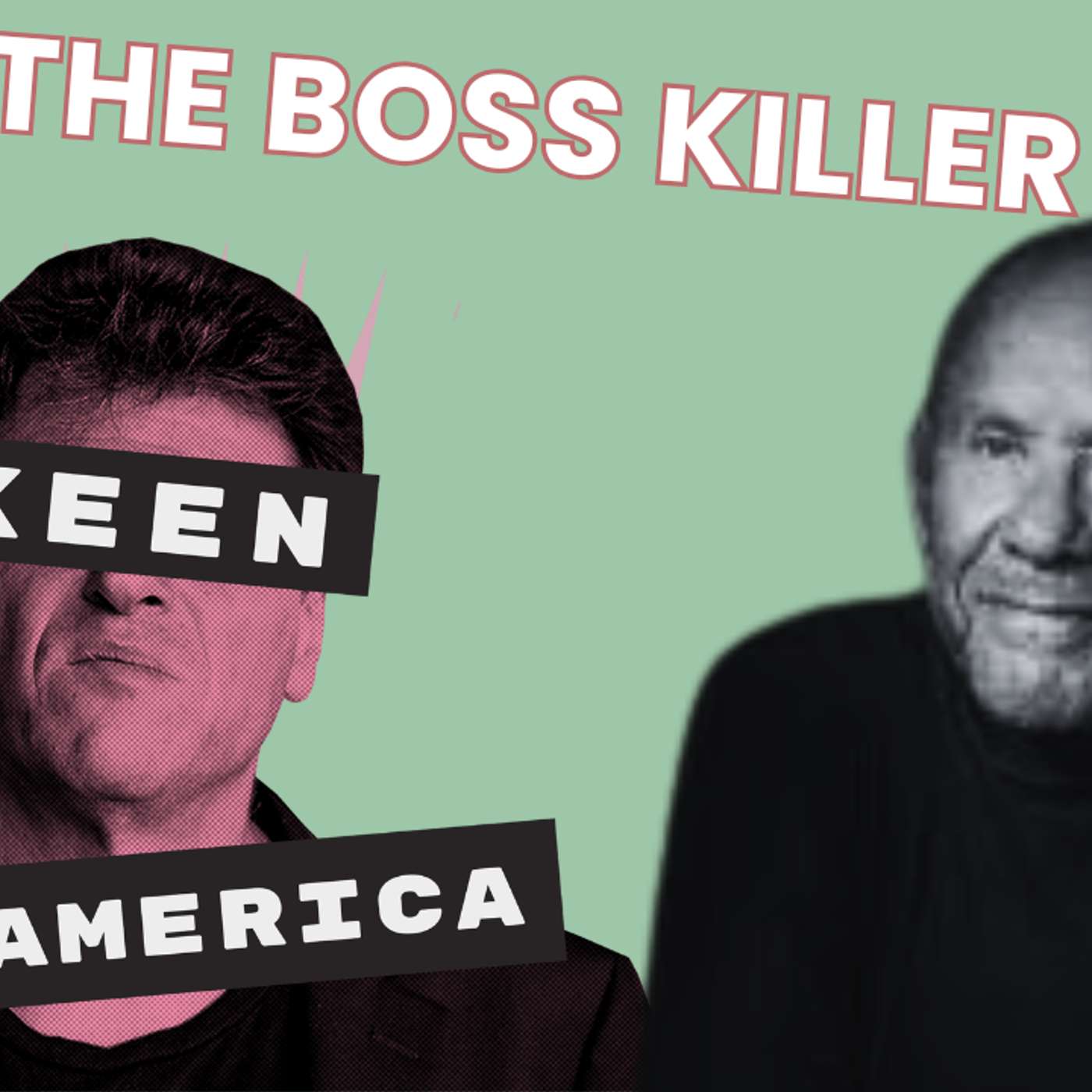
How a Turkey Voted for Xmas: Ricardo Semler on Why One Boss Wants the End of All Bosses.Ricardo Semler24 July 202645 min“It’s like asking turkeys to vote for Christmas.” — Ricardo Semler on why bosses won’t let their workers vote on them Ricardo Semler might be the most anti-boss boss in the history of corporate bosses. Thrown into his Austrian immigrant father’s São Paulo manufacturing firm at seventeen, the young Brazilian ripped up the rulebook — no dress codes, no time clocks, a ten-page cartoon manual instead of HR — and grew the company from 110 employees to more than 5,000. In the mid-Eighties he was already inventing hybrid work, shipping Telex machines to his workers’ homes. One of them even squeezed one of these 150-pound machines into his bathroom. Now, in his upcoming e-book The End of the Boss , the author of the iconoclastic autobiography Maverick argues that the corporate pyramid — an inheritance, he says, from West Point via the railroads — is as dead as a cuckoo bird (as the Swiss would say). Nothing good has been done with it since World War Two. Not in Korea, Vietnam, Afghanistan, his native Brazil, and certainly not in corporate America where Elon Musk’s current pay package equals the wages of all his employees for the next five years. Semler’s alternative is disarmingly simple: groups of ten who validate their leader every six months. Fail the vote and you’re not fired — you go back to being one of the nine.
DysonEsther Dyson22 January 2025If anyone should be anointed “aunt” or “court jEsther” of the tech industry, it’s long time journalist, investor and philanthropist Esther Dyson . When I caught up with Dyson at DLD, she reflected on her 40+ year career in technology and her evolution from tech industry observer to wellness advocate. Her aunt/court jester" role, she explains, is to provide honest feedback to the tech powers-that-be while maintaining independence. In this role, Dyson expresses concern about society's vulnerability to "information diabetes" - addictive content that, like processed food, provides short-term pleasure but long-term harm. She details her work with Wellville, a 10-year project focused on community health and resilience, and explains her upcoming book "Term Limits," which argues for the importance of knowing when to pass the torch rather than trying to live or serve forever. Dyson - who, between 2008 and 2009 lived in Star City outside Moscow, Russia and trained as a backup cosmonaut - also shares her unique insights about Russia's descent into authoritarianism and the privatization of space travel. ESTHER DYSON is an investor, journalist, author, businesswoman, commentator, and philanthropist. She is a leading angel investor focused on health care, open government, digital technology, biotechnology, and outer space.
Episode 2306: Albert Wenger on how to save the Internet, Capitalism and the PlanetAlbert Wenger17 January 202541 minWe are back in Munich at the DLD Conference , Europe’s foremost tech gathering. DLD is celebrating its 20th anniversary this year and, to mark this occasion, we spoke to some of the leading DLD’ers about the tumultuous last twenty years. First up is the Union Square Ventures partner Albert Wenger , author of The World After Capital , who - in spite of all the problems of the last two decades - remains defiantly optimistic about the future. He emphasizes the need to move beyond "industrial age thinking" focused on physical capital toward solutions suited for the digital age, where attention is the primary constraint. On AI, Wenger believes we've reached a genuine breakthrough moment, suggesting a 10-15% chance of artificial superintelligence emerging within the next year or two. He advocates for open AI models rather than concentration among a few large tech companies, proposing copyright reforms to encourage transparency in AI development. Wenger also discusses his practical efforts to create positive change, including his universal basic income pilot in Hudson, NY, and initiatives promoting "steward ownership" to make capital more enabling and less extractive. He envisions a future where technological advances help solve climate change, disease, and food security challenges while restoring natural environments.
Episode 2254: Steven Levy on what has and hasn't surprised him about the last twenty years of tec...Steven Levy25 November 202450 minLast week, we featured an interview with John Markoff, the legendary New York Times Silicon Valley correspondent. If Markoff has an East Coast equivalent, it’s Steven Levy , the former Newsweek technology correspondent and author of best-selling books about hacking, crypto, Google and Facebook. Levy is now Wired’ s editor-at-large and when I visited Levy at New York City’s glittering Conde Nast offices, we talked about what has and hasn’t surprised him about the last twenty years of tech history and why he may be the last journalist with the good fortune of being paid to write long articles about Microsoft. Steven Levy is Wired’s editor at large. The Washington Post has called him “America’s premier technology journalist.” For almost four decades Levy has chronicled the digital revolution, its impact on humanity, and the people behind it. He has written the foundational work on computer culture ( Hackers , 1984) and with Crypto (2001) the indispensable book on story behind that groundbreaking technology—years before people began gushing about Bitcoin and the blockchain. He has written the definitive books on Facebook, Google, the Macintosh, and the iPod. World-class engineers tell him that they pursued AI after reading his 1992 book Artificial Life . And he currently covers the breadth of tech stories—the good and the disturbing—for WIRED, where he has been a contributor since its inception.
Episode 2086: Keith Teare on Silicon Valley's Trump-Biden dilemmaDoug Leone7 June 2024That Was The Week author and Silicon Valley based entrepreneur Keith Teare isn’t a great fan of either Trump or Biden. But as he notes in this week’s newsletter , while Joe Biden is no dream candidate, Donald Trump is a “big no no” nightmare. But not everyone in Silicon Valley shares Keith’s distaste for Trump. Sequoia Capital partner, Doug Leone, for example, tweeted this week that he would be voting for Donald Trump in November. And other tech investors like former PayPal COO David Sachs are even holding San Francisco fundraisers for Trump. So would a Trump or Biden White House be better for Silicon Valley? Or is possible that in their mutual opposition to Chinese tech and their shared ambivalence about technological innovation that the two alter kockers aren’t quite as different as their supporters imagine? Keith Teare is the founder and CEO of SignalRank Corporation. Previously, he was executive chairman at Accelerated Digital Ventures Ltd., a U.K.-based global investment company focused on startups at all stages. Teare studied at the University of Kent and is the author of “The Easy Net Book” and “Under Siege.” He writes regularly for TechCrunch and publishes the “That Was The Week” newsletter. Named as one of the "100 most connected men" by GQ magazine, Andrew Keen is amongst the world's best known broadcasters and commentators. In addition to presenting KEEN ON, he is the host of the long-running How To Fix Democracy show.
A venture capitalist imagines a world after capital: Albert Wenger on work, leisure and the environment in the AI ageAlbert Wenger18 January 202421 minEPISODE 1938: In this special KEEN ON show from DLD in Munich, Andrew talks Union Square Ventures partner, Albert Wenger, about work, leisure and the environment in our smart machine age Albert Wenger is a managing partner at Union Square Ventures. Before joining USV, Albert was the president of del.icio.us through the company’s sale to Yahoo and an angel investor (Etsy, Tumblr). He previously founded or co-founded several companies, including a management consulting firm and an early hosted data analytics company. Albert graduated from Harvard College in economics and computer science and holds a Ph.D. in Information Technology from MIT. Named as one of the "100 most connected men" by GQ magazine, Andrew Keen is amongst the world's best known broadcasters and commentators. In addition to presenting KEEN ON, he is the host of the long-running How To Fix Democracy show. He is also the author of four prescient books about digital technology: CULT OF THE AMATEUR, DIGITAL VERTIGO, THE INTERNET IS NOT THE ANSWER and HOW TO FIX THE FUTURE. Andrew lives in San Francisco, is married to Cassandra Knight, Google's VP of Litigation & Discovery, and has two grown children. This is a public episode. If you'd like to discuss this with other subscribers or get access to bonus episodes, visit keenon.substack.com/subscribe
The Inside Story of Social Media: Steven Levy on Friendster, MySpace, Facebook and TikTokSteven Levy17 February 202335 minIn this KEEN ON episode, Andrew talks to Steven Levy, Wired editor-at-large and author of FACEBOOK: THE INSIDE STORY, about the history of social media from Friendster and MySpace to Facebook and TikTok. Steven Levy is Wired’s editor at large. The Washington Post has called him “America’s premier technology journalist.” For almost four decades Levy has chronicled the digital revolution, its impact on humanity, and the people behind it. He has written the foundational work on computer culture ( Hackers , 1984) and with Crypto (2001) the indispensable book on story behind that groundbreaking technology—years before people began gushing about Bitcoin and the blockchain. He has written the definitive books on Facebook, Google, the Macintosh, and the iPod. World-class engineers tell him that they pursued AI after reading his 1992 book Artificial Life . And he currently covers the breadth of tech stories—the good and the disturbing—for WIRED, where he has been a contributor since its inception. Levy’s previous positions include founder of Backchannel and chief technology writer and senior editor for Newsweek . His work has also appeared in Rolling Stone , Harper’s Magazine , Macworld , The New York Times Magazine , Esquire , The New Yorker, and Premiere . Among his honors: PC Magazine named Hackers the best sci-tech book written in the last twenty years. Crypto won the grand e-book prize at the 2001 Frankfurt Book Fair. In the Plex was Amazon’s best business book of 2011.
Brad Feld: The Tech Community Needs To Be Humble to Survive With What Will Be a "Challenging" 2023Brad Feld3 January 202340 minHosted by Andrew Keen, Keen On features conversations with some of the world’s leading thinkers and writers about the economic, political, and technological issues being discussed in the news, right now. In this episode, Andrew is joined by Brad Feld, co-author of Startup Boards: A Field Guide to Building and Leading an Effective Board of Directors . Brad Feld has invested in startups for over 25 years and co-founded Foundry and Techstars. He is the author of multiple books, including Venture Deals: Be Smarter Than Your Lawyer and Venture Capitalist and Startup Communities: Building an Entrepreneurial Ecosystem in Your City .