 L
Podcast · 25 episodes in the reference, 2022 to 2026
Lenny's Podcast: Product | Career | Growth
Published by Lenny Rachitsky
Host
LRLenny Rachitsky
Episodes
| Why companies are becoming a series of loops | Anish Acharya (a16z) | Anish Acharya | 6 September 2026 | Anish Acharya is a General Partner at Andreessen Horowitz (a16z), where he has focused on consumer investing. Anish is one of the most insightful, thought-provoking, and in-the-weeds product investors I’ve met, and this conversation will get your mind buzzing. Before joining a16z, Anish was a serial founder and operator: he founded SocialDeck, which he sold to Google, then led multiple efforts inside Google before founding Snowball, which he sold to Credit Karma. At Credit Karma he rose to VP of Product and then GM of the consumer product and the broader credit card business. In our in-depth conversation, we discuss: 1. Why you don’t have to worry about becoming part of the “permanent underclass” 2. Why company building will now involve creating a series of loops 3. What’s happening in consumer right now 4. Why the biggest opportunity in consumer is “/loop, make me happier” 5. Why moats are discovered, not designed 6. The rising importance of distribution as a moat 7. | |
 A rational conversation on where AI is actually going | Benedict Evans | Benedict Evans | 31 May 2026 | 1:20 | Benedict Evans is an independent analyst and former partner at Andreessen Horowitz, where he spent years as their in-house “thinker” tracking the most important technology trends. For the past six years, he’s been publishing deeply researched presentations on where tech is heading, most recently focused on AI’s transformation of the economy. His work is read by founders, investors, and operators trying to make sense of a noisy field. His most controversial opinion: AI is as big a deal as the internet or mobile—and only as big. In our in-depth conversation, we discuss: 1. Why we’re in “1997” for AI—early, exciting, and deeply uncertain about what comes next 2. Where value will actually accrue in the AI stack 3. The anti-AI backlash, and where it may lead 4. The surprising boom in consulting and professional services at AI companies 5. Why distribution is becoming the ultimate moat as software gets easier to build 6. Why the right question about your job isn’t “What percent can AI do?” but “Is this a task or a job?” 7. |
| Sequoia CEO coach: Why it’s never been easier to start a company, and never been harder to scale one | Brian Halligan (co-founder, HubSpot) | Brian Halligan | 15 February 2026 | Brian Halligan co-founded HubSpot, ran it as CEO for about 15 years, and now coaches Sequoia’s fastest-growing founders as their in-house CEO coach. We discuss: 1. His LOCKS framework for evaluating founders 2. Why you should build your team like the 2004 Red Sox 3. Why hiring “spicy” candidates beats consensus picks 4. Why enterprise sales will be the last white-collar job AI replaces 5. Some of my favorite “Halliganisms” — Brought to you by: Sentry —Code breaks, fix it faster: http://sentry.io/lenny Datadog —Now home to Eppo, the leading experimentation and feature flagging platform: https://www.datadoghq.com/lenny WorkOS —Modern identity platform for B2B SaaS, free up to 1 million MAUs: https://workos.com/lenny — Episode transcript: https://www.lennysnewsletter.com/p/sequoia-ceo-coach-why-its-never-been — Archive of all Lenny's Podcast transcripts: https://www.dropbox.com/scl/fo/yxi4s2w998p1gvtpu4193/AMdNPR8AOw0lMklwtnC0TrQ?rlkey=j06x0nipoti519e0xgm23zsn9&st=ahz0fj11&dl=0 — Where to find Brian Halligan • X: https://x.com/bhalligan • LinkedIn: linkedin.com/in/brianhalligan • Delphi: https://www.delphi.ai/bhalligan • Podcast: https://sequoiacap.com/series/long-strange-trip — Where to find Lenny: • Newsletter: https://www.lennysnewsletter.com • X: https://twitter.com/lennysan • LinkedIn: https://www.linkedin.com/in/lennyrachitsky/ — In this episode, we cover: (00:00) Introduction to Brian Halligan (03:56) The perpetual state of constructive dissatisfaction (05:25) Coaching… | |
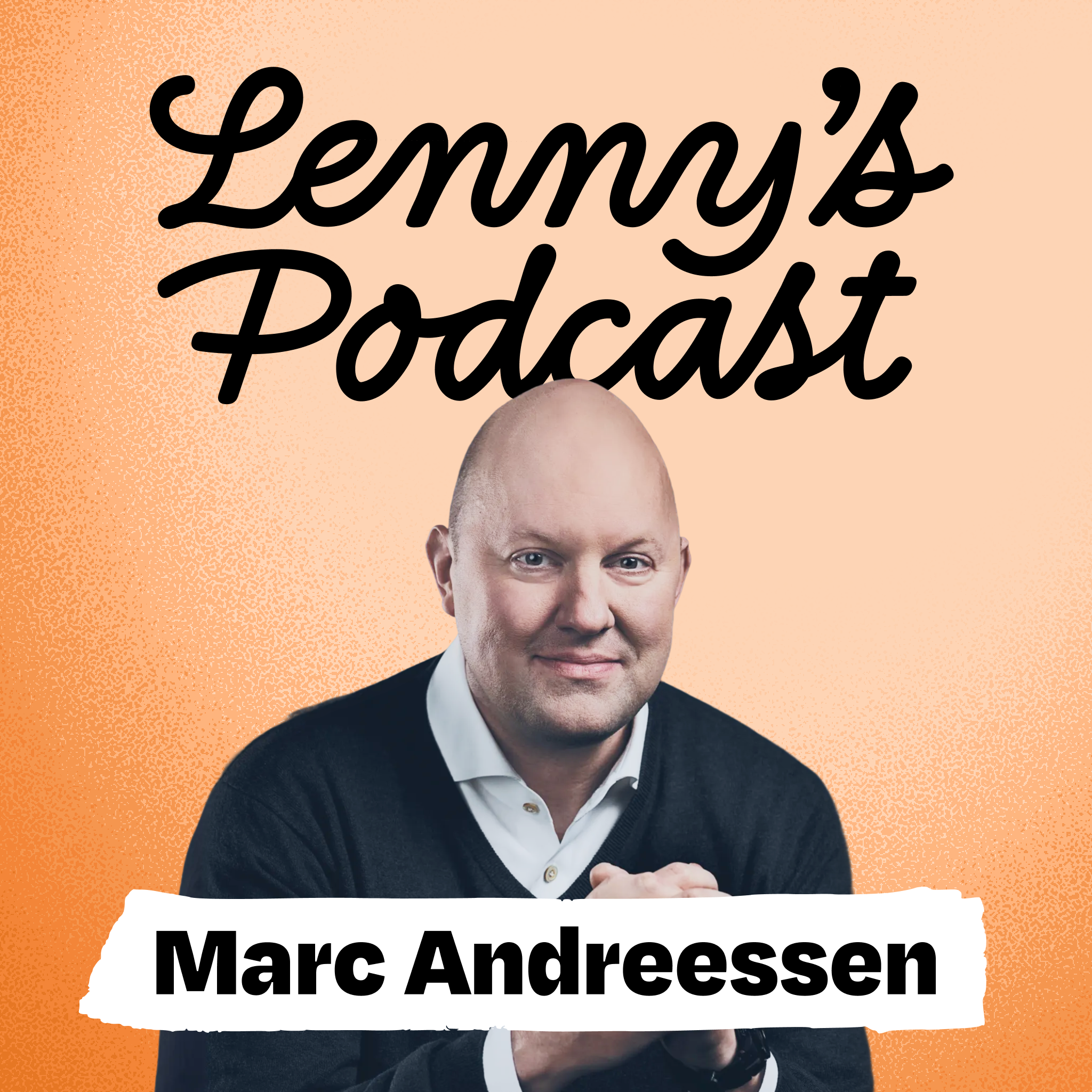 Marc Andreessen: The real AI boom hasn’t even started yet | Marc Andreessen | 29 January 2026 | 1:45 | Marc Andreessen is a founder, investor, and co-founder of Netscape, as well as co-founder of the venture capital firm Andreessen Horowitz (a16z). In this conversation, we dig into why we’re living through a unique and one of the most incredible times in history, and what comes next. We discuss: 1. Why AI is arriving at the perfect moment to counter demographic collapse and declining productivity 2. How Marc has raised his 10-year-old kid to thrive in an AI-driven world 3. What’s actually going to happen with AI and jobs (spoiler: he thinks the panic is “totally off base”) 4. The “Mexican standoff” that’s happening between product managers, designers, and engineers 5. Why you should still learn to code (even with AI) 6. How to develop an “E-shaped” career that combines multiple skills, with AI as a force multiplier 7. The career advice he keeps coming back to (“Don’t be fungible”) 8. How AI can democratize one-on-one tutoring, potentially transforming education 9. |
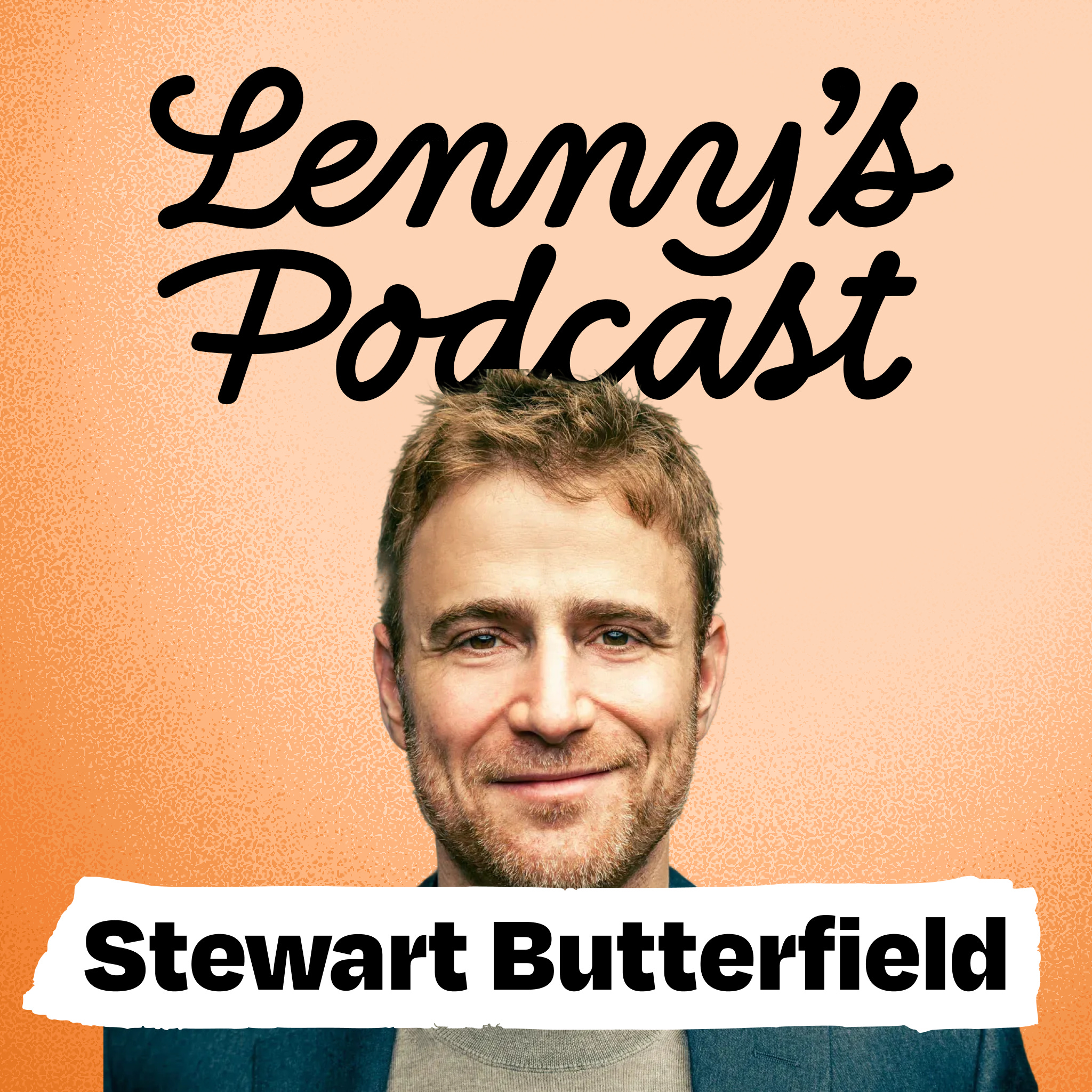 Mental models for building products people love ft. Stewart Butterfield | Stewart Butterfield | 20 November 2025 | 1:31 | Stewart Butterfield is the co-founder of Slack and Flickr, two of the most influential products in internet history. After selling Slack to Salesforce in one of tech’s biggest acquisitions, he’s been focused on family, philanthropy, and creative projects. In this rare podcast appearance, Stewart shares the product frameworks and leadership principles that most contributed to his success. From “utility curves” to “the owner’s delusion” to “hyper-realistic work-like activities,” his thoughts on craft, strategy, and leadership apply to anyone building products or leading teams. We discuss: 1. Hyper-realistic work-like activities 2. The owner’s delusion 3. Utility curves 4. “Don’t make me think” 5. “We don’t sell saddles here” 6. Tilting your umbrella 7. |
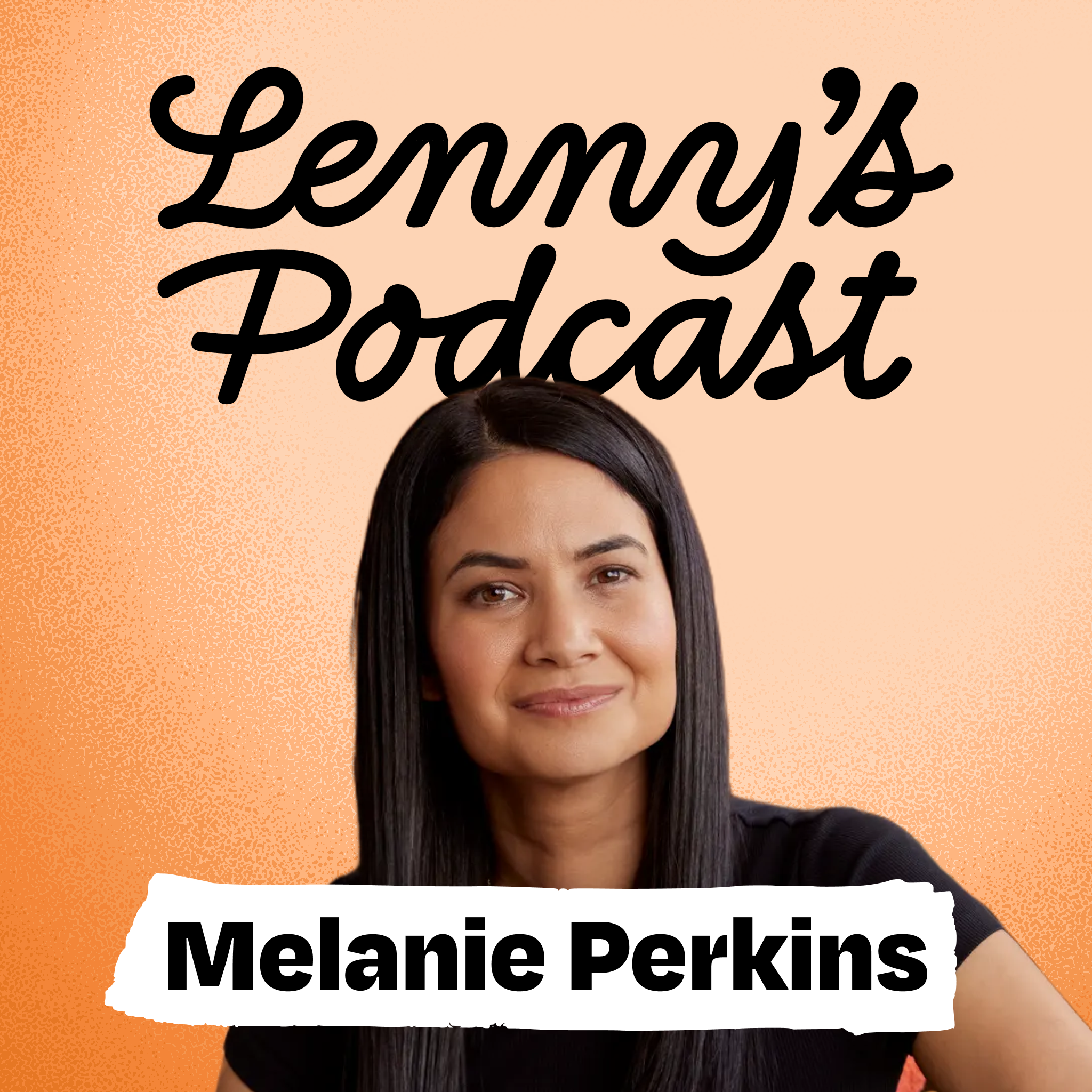 She turned 100+ rejections into a $42B company | Melanie Perkins | Melanie Perkins | 2 November 2025 | 1:06 | Melanie Perkins is CEO and co-founder of Canva, currently valued at over $42 billion, generating over $3 billion in annual revenue, with more than 240 million monthly active users and, incredibly, eight consecutive years of profitability. But the journey was far from smooth. Melanie was rejected by over 100 investors during her first fundraising round, her team spent two years without being able to ship a new feature during a technical rewrite, and the company pivoted early from a yearbook publishing platform to become the design powerhouse it is today. Through it all, she maintained what she calls “column B” thinking: building toward a dream future rather than just using the bricks around you. We discuss: 1. How “column B” thinking helped Melanie build Canva, by starting with an impossible vision rather than existing constraints 2. The power of setting “crazy big goals” 3. How Canva survived a painful two-year period without shipping any new features while rewriting their codebase 4. How Melanie pushed through 100 investor rejections, and how she used each rejection to strengthen her pitch 5. Canva’s “two-step plan”: build one of the world’s most valuable companies, then do the most good possible 6. Melanie’s vision for 2050 and why she believes imagination is the first step toward a better world — Brought to you by: Vanta —Automate compliance. Simplify security. |
 From managing people to managing AI: The leadership skills everyone needs now | Julie Zhuo | Julie Zhuo | 21 September 2025 | 1:36 | Julie Zhuo is the former VP and Head of Design at Facebook (now Meta), author of the bestselling book The Making of a Manager , and co-founder of Sundial, an AI-powered data analysis company. Also, my first-ever podcast guest over 3 years ago! In our conversation, we discuss: 1. The three core manager skills that translate directly to managing AI agents 2. How her team uses AI to learn new skills 10x faster 3. The “diagnose with data, treat with design” framework for balancing gut and data 4. Why hypergrowth AI companies have terrible data infrastructure (and why it doesn’t matter) 5. How to give feedback that actually lands—including Julie’s exact script for difficult conversations 6. |
 Rapidly test and validate any startup idea with the 2-day Foundation Sprint (from the creators of the Design Sprint) | Jake Knapp & John Zeratsky (Character Capital) | John Zeratsky, Jake Knapp | 13 July 2025 | 1:42 | Jake Knapp and John Zeratsky are the co-creators of the Design Sprint (the famous five-day product innovation process) and authors of the bestselling book Sprint . After decades of working with over 300 startups in the earliest stages, they discovered that most startups fail not because they can’t build, but because they build the wrong thing. The very beginning of a startup is your highest-leverage moment, and most teams waste months or years by skipping a few critical early questions. Jake and John developed the Foundation Sprint to help startups validate ideas and compress months of work into just two days. What you’ll learn: 1. The step-by-step Foundation Sprint process that compresses three or four months of validation into two days—including templates you can use immediately 2. Why differentiation is the #1 predictor of startup success (with the 2x2 framework that you can use with your team) 3. The three fundamental questions every founder should answer before writing a line of code 4. The “note and vote” technique that eliminates groupthink and gets honest answers from your colleagues 5. The seven “magic lenses” for choosing between multiple product ideas 6. The biggest mistake engineers make when building with AI tools 7. |
 How have I been complicit in creating the conditions I say I don’t want? | Jerry Colonna | Jerry Colonna | 8 May 2025 | 1:23 | Jerry Colonna is a world-renowned executive coach, a former venture capitalist, and the co-founder and CEO of Reboot, an executive coaching firm that combines practical leadership development with deeper self-inquiry. With over 27 years of coaching experience, he has guided countless leaders through the challenges of scaling companies, building teams, and navigating the emotional complexities of leadership. Known for his radical-self-inquiry approach, Jerry helps leaders uncover the unconscious patterns that hold them back and empowers them to lead with authenticity, compassion, and clarity. In our conversation, we cover: 1. A powerful question that unlocks self-awareness: “How have I been complicit in creating the conditions I say I don’t want?” 2. Jerry’s foundational equation for leadership success: practical skills + radical self-inquiry + shared experiences = enhanced leadership and resilience 3. Why teams most often fail (hint: it’s not lack of talent or strategy) 4. How busyness often masks deeper issues of self-worth 5. Why a “growth mindset” can be problematic 6. The importance of legacy and what it means to live a meaningful life 7. The role of AI in self-inquiry and how tools like ChatGPT can help uncover blind spots 8. |
 The hidden power of introverts: How to thrive without changing who you are | Susan Cain | Susan Cain | 16 March 2025 | 1:18 | Susan Cain , author of the groundbreaking bestseller Quiet: The Power of Introverts in a World That Can’t Stop Talking , shares a guide for how introverts can thrive in the workplace without sacrificing their authentic selves. Drawing from her extensive research and personal experience, Cain offers a powerful reframing: success doesn’t require becoming more extroverted—it demands becoming more fully yourself. — What you’ll learn: 1. A simple definition of introversion and how it differs from shyness—plus a simple two-question test to determine where you fall on the spectrum 2. Five practical tactics introverts can use to be more successful in business while staying true to their natural temperament 3. How to handle challenging workplace scenarios like meetings dominated by loud voices and networking events that drain your energy 4. Specific strategies for managers and founders to create environments where introverted team members can contribute their best work 5. Practical techniques for saying no to energy-draining commitments 6. Strategies for managers to better support and leverage introverted team members 7. Practical advice for raising introverted children to help them develop confidence while honoring their natural temperament 8. Why seeking to become “more extroverted” is the wrong goal—and what to focus on instead to achieve professional success — Brought to you by: • Enterpret —Transform customer feedback into product growth • Vanta —Automate compliance. |
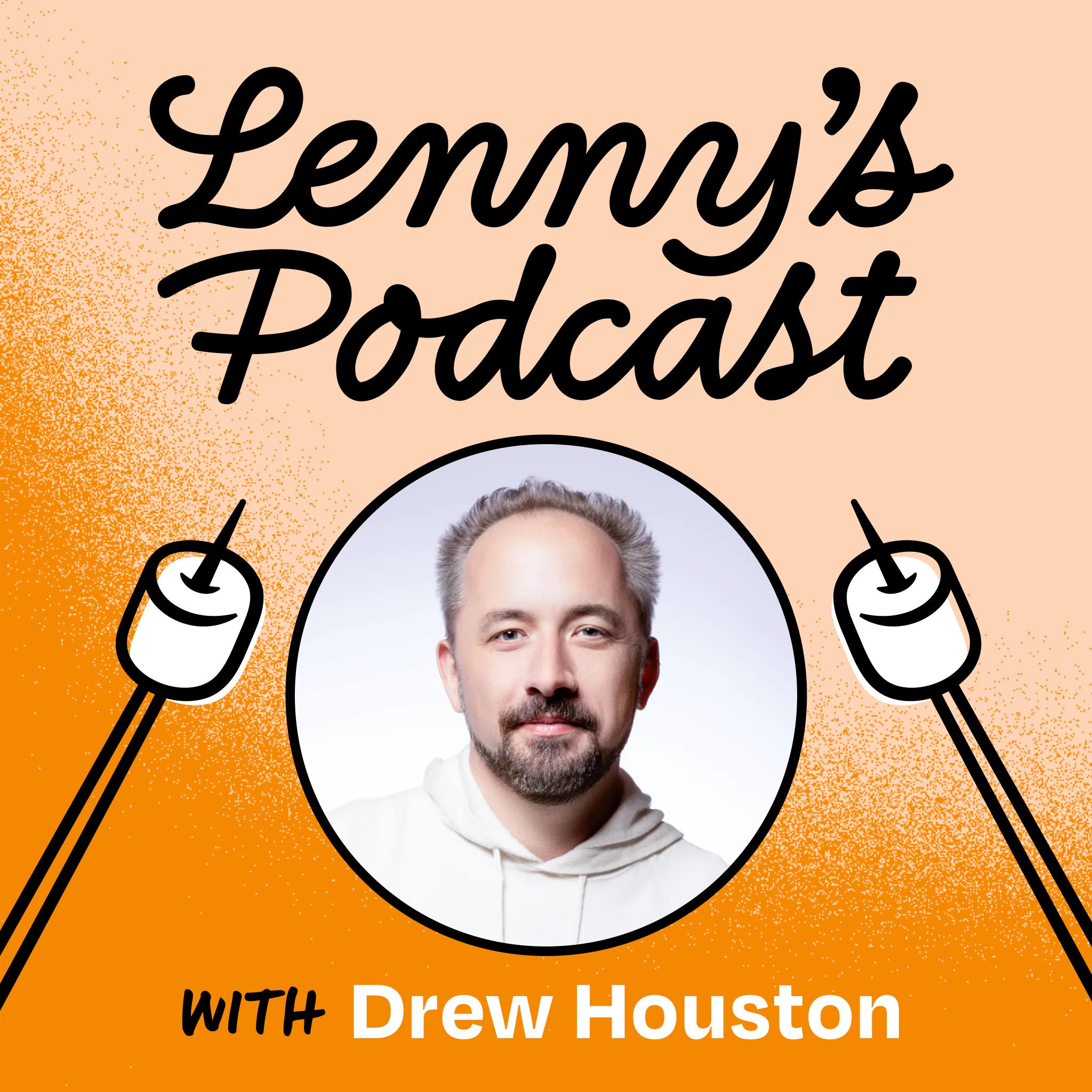 Behind the founder: Drew Houston (Dropbox) | Drew Houston | 9 January 2025 | 1:38 | Drew Houston is the co-founder and CEO of Dropbox. Under his leadership, Dropbox has grown from a simple idea to a service used by over 700 million registered users globally, with a valuation exceeding $9 billion. Drew has led Dropbox through multiple phases, from explosive viral growth, to battling all the tech giants at once, to reinventing the company for the future of work. In our conversation, he opens up about: • The three eras of Dropbox’s growth and evolution • The challenges he’s faced over the past 18 years • What he learned about himself • How he’s been able to manage his psychology as a founder • The importance of maintaining your learning curve • Finding purpose beyond metrics and growth • The micro, macro, and meta aspects of building companies • Much more — Brought to you by: • Paragon —Ship every SaaS integration your customers want • Explo —Embed customer-facing analytics in your product • Vanta —Automate compliance. |
 The original growth hacker reveals his secrets | Sean Ellis (author of “Hacking Growth”) | Sean Ellis | 5 September 2024 | 1:44 | Sean Ellis is one of the earliest and most influential thinkers and operators in growth. He coined the term “growth hacking,” invented the ICE prioritization framework, was one of the earliest people to use freemium as a growth lever, and, most famously, developed the Sean Ellis Test for product-market fit (which a large percentage of founders use today to track if they’ve found PMF). Over the course of his career, Sean was head of growth at Dropbox and Eventbrite; helped companies like Microsoft and Nubank refine their growth strategy; was on the founding team of LogMeIn, which sold for over $4 billion; and is the author of one of the most popular growth books of all time, Hacking Growth , which has sold over 750,000 copies. |
 Pattern Breakers: How to find a breakthrough startup idea | Mike Maples, Jr. (Partner at Floodgate) | Mike Maples, Jr. | 7 July 2024 | 1:49 | Mike Maples, Jr. is a legendary early-stage startup investor and a co-founder and partner at Floodgate. He’s made early bets on transformative companies like Twitter, Lyft, Twitch, Okta, Rappi, and Applied Intuition and is one of the pioneers of seed-stage investing as a category. He’s been on the Forbes Midas List eight times and enjoys sharing the lessons he’s learned from his years studying iconic companies. In his new book, Pattern Breakers: Why Some Start-Ups Change the Future , co-authored with Peter Ziebelman, he discusses what he’s found separates startups and founders that break through and change the world from those that don’t. After spending years reviewing the notes and decks from the thousands of startups he’s known over the past two decades, he’s uncovered three ways that breakthrough founders think and act differently. In our conversation, Mike talks about: • The three elements of breakthrough startup ideas • Why you need to both think and act differently • How to avoid the “comparison trap” and “conformity trap” • The importance of movements, storytelling, and healthy disagreeableness in startup success • How to apply pattern-breaking principles within large companies • Mike’s one piece of advice for founders • Much more Pre-order Mike’s book here and get a second signed copy for free. Limited copies are available, so order ASAP: patternbreakers.com/lenny . |
 The social radar: Y Combinator’s secret weapon | Jessica Livingston (co-founder of YC, author) | Jessica Livingston | 27 June 2024 | 1:25 | Jessica Livingston is a co-founder of Y Combinator, the first and most successful startup accelerator. Y Combinator has funded over 5,000 companies, 200 of which are now unicorns, including Airbnb, Dropbox, DoorDash, Stripe, Coinbase, and Reddit. Jessica played a crucial role in YC’s early success, when she was nicknamed the “social radar” because of her uncanny ability to quickly evaluate people—an essential skill when investing in early-stage startups. She’s also the host of the popular podcast The Social Radars, where she interviews billion-dollar-startup founders, and the author of the acclaimed book Founders at Work , which captures the origin stories of some of today’s most interesting companies. In our conversation, we discuss: • How Jessica gained the affectionate title of the “social radar” • Why defensive founders are a red flag • How to develop your social radar • What she looks for in founders during YC interviews • How YC’s early inexperience in angel investing led to the batch model • Her favorite stories from interviews with Airbnb, Rippling, and more • Lessons learned from hosting her own podcast • Much more — Brought to you by: • Enterpret —Transform customer feedback into product growth • Anvil —The fastest way to build software for documents • Vanta —Automate compliance. |
| This will make you a better decision-maker | Annie Duke (author of “Thinking in Bets” and “Quit,” former pro poker player) | Annie Duke | 2 May 2024 | Annie Duke is a former professional poker player, a decision-making expert, and a special partner at First Round Capital. She is the author of Thinking in Bets (a national bestseller) and Quit: The Power of Knowing When to Walk Away and the co-founder of the Alliance for Decision Education, a nonprofit whose mission is to improve lives by empowering students through decision skills education. In our conversation, we cover: • What Annie learned from the late Daniel Kahneman • The power of pre-mortems and “kill criteria” • The relationship between money and happiness • The power of “mental time travel” • The nominal group technique for better decision quality • How First Round Capital improved their decision-making process • Many tactical decision-making frameworks — Brought to you by: • Vanta —Automate compliance. Simplify security. • UserTesting —Human understanding. Human experiences. | |
| A framework for finding product-market fit | Todd Jackson (First Round Capital) | Todd Jackson | 11 April 2024 | Todd Jackson is a Partner at First Round Capital. Before moving into venture capital, he played a crucial role as VP of Product and Design at Dropbox, guiding the company until its IPO in 2018. Prior to Dropbox, Todd led product management for Twitter’s Content and Discovery teams after selling his startup, Cover, to Twitter in 2014. Before Cover, Todd oversaw product development for Facebook’s Newsfeed, Photos, and Groups. He kickstarted his career at Google as an associate product manager and eventually led product for Gmail, witnessing its growth from beta to 200 million users. | |
 Product management theater | Marty Cagan (Silicon Valley Product Group) | Marty Cagan | 10 March 2024 | 1:25 | Marty Cagan is a luminary in the world of product. He’s the author of two of the most foundational books for product teams and product leaders ( Inspired and Empowered ), he’s the founder of Silicon Valley Product Group (one of the longest-running product advisory groups), and he’s almost certainly worked with more product leaders and teams than any human alive. Now he’s releasing his newest book, Transformed , which is sure to become a staple of tech-powered companies worldwide. Marty’s previous appearance on our show remains one of the most popular episodes to date. In this conversation, we discuss: • The rise of “product management theater” • Changes in the PM role post-ZIRP and the shift from growth to build functions • The disconnect between good product companies and online product advice • How over-hiring has created challenges in the product industry • The most important skills for PMs to build • How to know if you’re on a “feature team” • The potential disruption of product management by AI • Marty’s new book, Transformed: Moving to the Product Operating Model • Four new competencies required for successful product organizations — Brought to you by: • Sprig —Build a product people love • Eppo —Run reliable, impactful experiments • Vanta —Automate compliance. Simplify security. |
 Making time for what matters | Jake Knapp and John Zeratsky (Authors of Make Time, Character VC) | Jake Knapp | 11 February 2024 | 1:36 | Jake Knapp and John Zeratsky are the authors of best-selling books Sprint and Make Time . They have helped more than 300 teams design new products and bring them to market, including those at YouTube, Gusto, One Medical Group, and Slack. Jake and John are co-founders of the venture capital firm Character, where they support startups with capital and sprints. Previously, they were operating partners at Google Ventures and, before that, design leaders at Google, where John worked on Google Ads and YouTube and Jake helped build Gmail and co-founded Google Meet. |
| Making time for what matters | Jake Knapp and John Zeratsky (authors of Sprint and Make Time, co-founders of Character Capital) | John Zeratsky | 11 February 2024 | Jake Knapp and John Zeratsky are the authors of best-selling books Sprint and Make Time . They have helped more than 300 teams design new products and bring them to market, including those at YouTube, Gusto, One Medical Group, and Slack. Jake and John are co-founders of the venture capital firm Character, where they support startups with capital and sprints. Previously, they were operating partners at Google Ventures and, before that, design leaders at Google, where John worked on Google Ads and YouTube and Jake helped build Gmail and co-founded Google Meet. | |
 Geoffrey Moore on finding your beachhead, crossing the chasm, and dominating a market | Geoffrey A. Moore | 25 January 2024 | 1:25 | Geoffrey Moore is an author, speaker, and advisor, widely known for his seminal book Crossing the Chasm: Marketing and Selling Disruptive Products to Mainstream Customers , which many consider the most important book ever written on go-to-market strategy. Moore’s work is focused on the market dynamics surrounding disruptive innovations, and how one overcomes the challenge of transitioning from serving early adopters to the mainstream. In this episode, we discuss: • What “crossing the chasm” means • What steps to take before you try crossing the chasm • The importance of winning a marquee customer • The role of executive sponsors in the sales process • The differences between visionaries and pragmatists, and how to build for each • Geoffrey’s four go-to-market playbooks based on stage: Early Market, Bowling Alley, Tornado, and Main Street • The problem with discounting before crossing the chasm • “Deadly sins” to avoid when crossing the chasm — Brought to you by: • CommandBar —AI-powered user assistance for modern products and impatient users • WorkOS —An API platform for quickly adding enterprise features • Arcade Software —Create effortlessly beautiful demos in minutes — Find the full transcript at: https://www.lennysnewsletter.com/p/geoffrey-moore-on-finding-your-beachhead — Where to find Geoffrey Moore: • X: https://twitter.com/geoffreyamoore • LinkedIn: https://www.linkedin.com/in/geoffreyamoore/ • LinkedIn posts… |
 Jason Fried challenges your thinking on fundraising, goals, growth, and more | Jason Fried | 17 December 2023 | 1:50 | Jason Fried is the co-founder and CEO of 37signals, the maker of Basecamp and HEY. 37signals is a very different kind of company. With fewer than 80 employees, they have over 100,000 customers, generate tens of millions of dollars in profit each year, and have no investors, board, or any plans to ever raise money or sell the company. In our conversation, we explore a path many tech founders never consider—bootstrapping. We discuss: • Why he and his team prioritize profit above all else • The unexpected challenges with raising venture capital • The “Shape Up” framework for building products • Why, and how, to foster a gut-driven culture • Jason’s thoughts on why work should not feel like war • Advice for starting a bootstrapped business • The philosophy behind Once, 37signals’s new line of software products — Brought to you by Coda —Meet the evolution of docs | Sidebar —Accelerate your career by surrounding yourself with extraordinary peers | Wix Studio —The web creation platform built for agencies — Find the full transcript at: https://www.lennysnewsletter.com/p/jason-fried-challenges-your-thinking — Where to find Jason Fried: • X: https://twitter.com/jasonfried • LinkedIn: https://www.linkedin.com/in/jason-fried/ • Email: jason@hey.com — Where to find Lenny: • Newsletter: https://www.lennysnewsletter.com • X: https://twitter.com/lennysan • LinkedIn: https://www.linkedin.com/in/lennyrachitsky/ — In this episode, we cover: (00:00) Jason’s background (03:49) The success of… |
 Lessons on product sense, AI, the first mile experience, and the messy middle | Scott Belsky (Adobe) | Scott Belsky | 18 May 2023 | 1:03 | Brought to you by Braintrust —For when you needed talent, yesterday | Eppo —Run reliable, impactful experiments | Rows —The spreadsheet where data comes to life — Scott Belsky is an entrepreneur, author, investor, and currently Adobe’s Chief Strategy Officer and EVP of Design and Emerging Products. He founded Behance, an online platform for creative professionals to showcase and discover work, and served as CEO until its acquisition by Adobe. Scott is an early advisor and investor in several businesses at the intersection of technology and design, including Pinterest, Uber, Warby Parker, Airtable, and Flexport. He is also the author of two nationally bestselling books and founded 99U, a publication and conference focused on productivity in the creative world. |
| How Notion leveraged community to build a $10B business | Camille Ricketts (Notion, First Round Capital) | Brett Berson, Josh Kopelman | 11 December 2022 | Camille Ricketts began her career in journalism, at the Wall Street Journal , in 2006. In 2010 she joined Tesla, where she worked in communications alongside Elon Musk. She transitioned into marketing and became the Head of Content and Marketing at First Round Capital and then went on to become the very first marketing hire at Notion. In today’s episode, we dig into community-led growth—what it is, and when and how to pursue it. We get super-specific on how Notion championed their most loyal users and built a passionate community, and the incredible outcome it had for the company’s growth. We also talk about how to create great content, and how content can drive growth for your business and brand. — Find the full transcript here: https://www.lennysnewsletter.com/p/how-notion-leveraged-community-to — Thank you to our wonderful sponsors for supporting this podcast: • Eppo — Run reliable, impactful experiments: https://www.geteppo.com/ • Flatfile — A CSV importer that says yes instead of error: mismatch : https://www.flatfile.com/lenny • Vanta — Automate compliance. | |
 Growth tactics, retention strategies, and becoming a better writer | Julian Shapiro (Demand Curve, Hyper, Webflow, TechCrunch) | Julian Shapiro | 25 September 2022 | 59 min | Julian Shapiro is widely known as the founder of Demand Curve, where he’s helped thousands of companies figure out their growth strategy. He also wrote the growth marketing column at TechCrunch, was CMO at Webflow, and even created an animation engine called Velocity that’s now used in apps like Uber and WhatsApp. In today’s episode, Julian dives deep on product-led acquisition (PLA) and why he believes it’s the best way to grow your company. He shares specific marketing strategies for growth and retention and speaks about his framework for creating novel, engaging content, and how to choose topics for that content. He also discusses a framework called the Curiosity Faucet, inspired by prolific creators such as Ed Sheeran, John Mayer, Taylor Swift, and Neil Gaiman, to help you unlock your own creativity. |
 The nature of product | Marty Cagan, Silicon Valley Product Group | Marty Cagan | 21 August 2022 | 1:00 | What are common diseases of product teams, and how do you avoid them? Why should you focus less on problem discovery and more on solution discovery? How do you maintain your product mojo? After working as a product leader for over 20 years, Marty Cagan started Silicon Valley Product Group to help product teams operate at a higher level. In this conversation, Marty shares what Steve Jobs can teach you about building product, how to structure your teams for innovation, how to improve your product culture, which trends in PM to ignore, and much more. After this, you’ll never think about building teams the same way. Join us. |
LWhy companies are becoming a series of loops | Anish Acharya (a16z)Anish Acharya · 6 September 2026LA rational conversation on where AI is actually going | Benedict EvansBenedict Evans · 31 May 2026LSequoia CEO coach: Why it’s never been easier to start a company, and never been harder to scale one | Brian Halligan (co-founder, HubSpot)Brian Halligan · 15 February 2026LMarc Andreessen: The real AI boom hasn’t even started yetMarc Andreessen · 29 January 2026LMental models for building products people love ft. Stewart ButterfieldStewart Butterfield · 20 November 2025LShe turned 100+ rejections into a $42B company | Melanie PerkinsMelanie Perkins · 2 November 2025LFrom managing people to managing AI: The leadership skills everyone needs now | Julie ZhuoJulie Zhuo · 21 September 2025LRapidly test and validate any startup idea with the 2-day Foundation Sprint (from the creators of the Design Sprint) | Jake Knapp & John Zeratsky (Character Capital)John Zeratsky, Jake Knapp · 13 July 2025LHow have I been complicit in creating the conditions I say I don’t want? | Jerry ColonnaJerry Colonna · 8 May 2025LThe hidden power of introverts: How to thrive without changing who you are | Susan CainSusan Cain · 16 March 2025LBehind the founder: Drew Houston (Dropbox)Drew Houston · 9 January 2025LThe original growth hacker reveals his secrets | Sean Ellis (author of “Hacking Growth”)Sean Ellis · 5 September 2024LPattern Breakers: How to find a breakthrough startup idea | Mike Maples, Jr. (Partner at Floodgate)Mike Maples, Jr. · 7 July 2024LThe social radar: Y Combinator’s secret weapon | Jessica Livingston (co-founder of YC, author)Jessica Livingston · 27 June 2024LThis will make you a better decision-maker | Annie Duke (author of “Thinking in Bets” and “Quit,” former pro poker player)Annie Duke · 2 May 2024LA framework for finding product-market fit | Todd Jackson (First Round Capital)Todd Jackson · 11 April 2024LProduct management theater | Marty Cagan (Silicon Valley Product Group)Marty Cagan · 10 March 2024LMaking time for what matters | Jake Knapp and John Zeratsky (Authors of Make Time, Character VC)Jake Knapp · 11 February 2024LMaking time for what matters | Jake Knapp and John Zeratsky (authors of Sprint and Make Time, co-founders of Character Capital)John Zeratsky · 11 February 2024LGeoffrey Moore on finding your beachhead, crossing the chasm, and dominating a marketGeoffrey A. Moore · 25 January 2024LJason Fried challenges your thinking on fundraising, goals, growth, and moreJason Fried · 17 December 2023LLessons on product sense, AI, the first mile experience, and the messy middle | Scott Belsky (Adobe)Scott Belsky · 18 May 2023LHow Notion leveraged community to build a $10B business | Camille Ricketts (Notion, First Round Capital)Brett Berson, Josh Kopelman · 11 December 2022LGrowth tactics, retention strategies, and becoming a better writer | Julian Shapiro (Demand Curve, Hyper, Webflow, TechCrunch)Julian Shapiro · 25 September 2022LThe nature of product | Marty Cagan, Silicon Valley Product GroupMarty Cagan · 21 August 2022
LA rational conversation on where AI is actually going | Benedict EvansBenedict Evans · 31 May 2026LSequoia CEO coach: Why it’s never been easier to start a company, and never been harder to scale one | Brian Halligan (co-founder, HubSpot)Brian Halligan · 15 February 2026LMarc Andreessen: The real AI boom hasn’t even started yetMarc Andreessen · 29 January 2026LMental models for building products people love ft. Stewart ButterfieldStewart Butterfield · 20 November 2025LShe turned 100+ rejections into a $42B company | Melanie PerkinsMelanie Perkins · 2 November 2025LFrom managing people to managing AI: The leadership skills everyone needs now | Julie ZhuoJulie Zhuo · 21 September 2025LRapidly test and validate any startup idea with the 2-day Foundation Sprint (from the creators of the Design Sprint) | Jake Knapp & John Zeratsky (Character Capital)John Zeratsky, Jake Knapp · 13 July 2025LHow have I been complicit in creating the conditions I say I don’t want? | Jerry ColonnaJerry Colonna · 8 May 2025LThe hidden power of introverts: How to thrive without changing who you are | Susan CainSusan Cain · 16 March 2025LBehind the founder: Drew Houston (Dropbox)Drew Houston · 9 January 2025LThe original growth hacker reveals his secrets | Sean Ellis (author of “Hacking Growth”)Sean Ellis · 5 September 2024LPattern Breakers: How to find a breakthrough startup idea | Mike Maples, Jr. (Partner at Floodgate)Mike Maples, Jr. · 7 July 2024LThe social radar: Y Combinator’s secret weapon | Jessica Livingston (co-founder of YC, author)Jessica Livingston · 27 June 2024LThis will make you a better decision-maker | Annie Duke (author of “Thinking in Bets” and “Quit,” former pro poker player)Annie Duke · 2 May 2024LA framework for finding product-market fit | Todd Jackson (First Round Capital)Todd Jackson · 11 April 2024LProduct management theater | Marty Cagan (Silicon Valley Product Group)Marty Cagan · 10 March 2024LMaking time for what matters | Jake Knapp and John Zeratsky (Authors of Make Time, Character VC)Jake Knapp · 11 February 2024LMaking time for what matters | Jake Knapp and John Zeratsky (authors of Sprint and Make Time, co-founders of Character Capital)John Zeratsky · 11 February 2024LGeoffrey Moore on finding your beachhead, crossing the chasm, and dominating a marketGeoffrey A. Moore · 25 January 2024LJason Fried challenges your thinking on fundraising, goals, growth, and moreJason Fried · 17 December 2023LLessons on product sense, AI, the first mile experience, and the messy middle | Scott Belsky (Adobe)Scott Belsky · 18 May 2023LHow Notion leveraged community to build a $10B business | Camille Ricketts (Notion, First Round Capital)Brett Berson, Josh Kopelman · 11 December 2022LGrowth tactics, retention strategies, and becoming a better writer | Julian Shapiro (Demand Curve, Hyper, Webflow, TechCrunch)Julian Shapiro · 25 September 2022LThe nature of product | Marty Cagan, Silicon Valley Product GroupMarty Cagan · 21 August 2022