 M
Podcast · 11 episodes in the reference, 2022 to 2026
Money Maze Podcast
Episodes
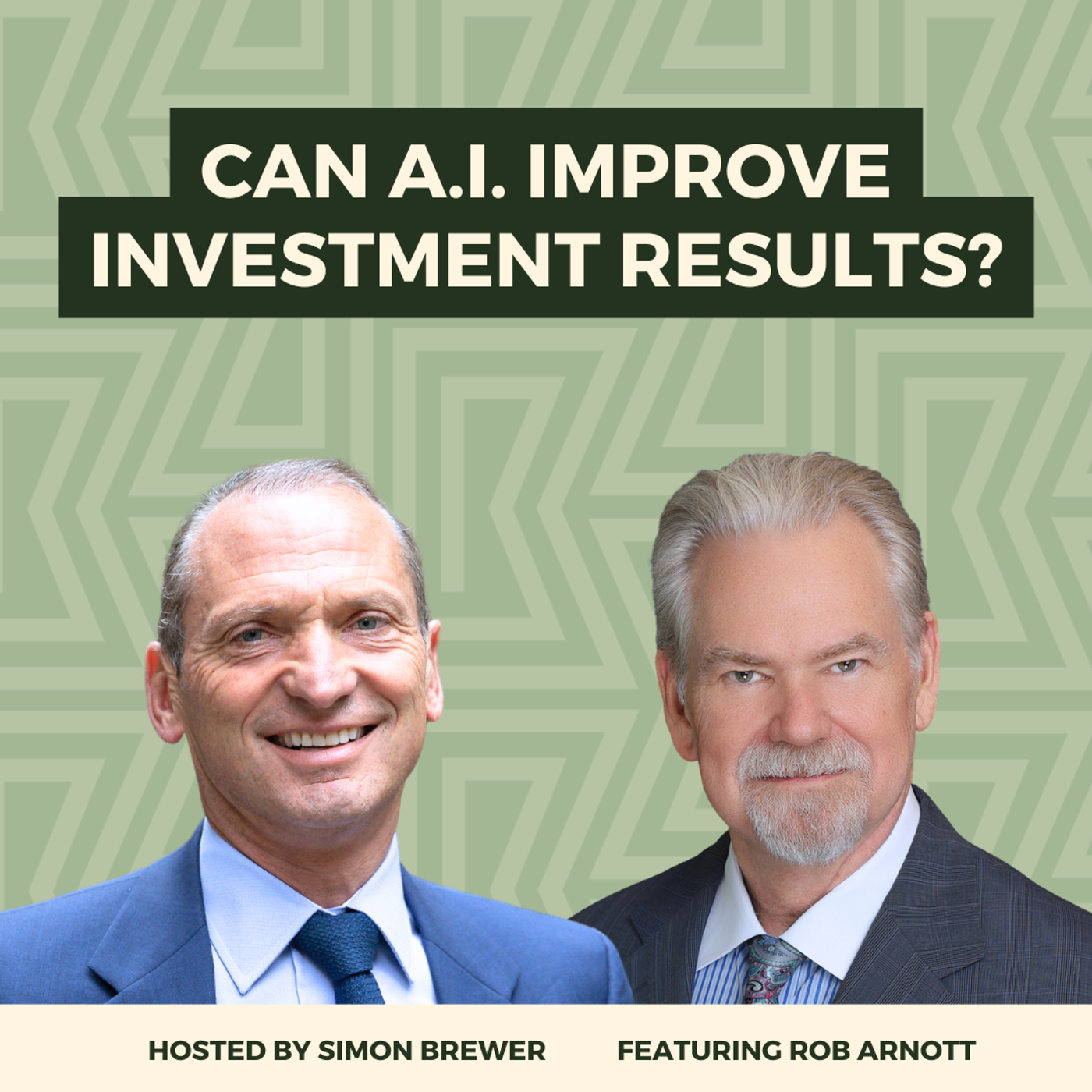 Can A.I. Improve Investment Results? With Rob Arnott, Founder & Chair, Research Affiliates. | Robert D. Arnott | 30 April 2026 | 39 min | Rob Arnott, Founder & Chair of Research Affiliates, discusses where AI works well & can assist across the money management ecosystem, the risk of ‘AI hallucination’ & over-reliance, quant vs human judgement, and the future of work. Amidst the volumes written about AI’s impact on the business and investing worlds, we wanted to ask some specific questions about adoption, learning, implementation and limitations within the investing universe. We asked these questions of Rob Arnott, founder of Research Affiliates and a previous guest, whose firm is steeped in data, systematic disciplines and empirical evidence. In a compelling and engaging conversation, Rob discusses why common sense can beat data, how AI can hallucinate, its creative limitations, but its unequivocal potency in improving multiple areas of the investing business. Finally, when asked for his convictions across markets, he discusses the exceptional value in US small vs large cap equity! The Money Maze Podcast is kindly sponsored by J.P. Morgan Asset Management *, IFM Investors , World Gold Council and LSEG . * During the episode we cite J.P. Morgan Asset Management as Europe’s leading active ETF provider by assets under management. This is sourced from J.P. Morgan Asset management and Bloomberg, data as of 30 March 2026. |
 Joel Greenblatt: Legendary Investor and Author on Patience in the Investing Business | Joel Greenblatt | 24 October 2024 | 46 min | This recording took place at the London Value Investor Conference over summer, where Simon hosted a discussion with Joel Greenblatt. Joel not only founded and runs Gotham Asset Management, but was also an adjunct professor at Columbia Business School for 20+ years. Joel previously ran Gotham Capital, where he achieved 50% annualised returns between 1985-1994 (34.4% net) . Joel also helped Michael Burry set up Scion Capital in 2000. In this discussion, Joel offers some exceptionally valuable insights into the issues of active versus passive, if valuation works pays, the need for patience, thoughts on concentration, and learning from mistakes. He talks on the need for detailed valuation work in order to identify compelling valuation opportunities, but also of the need for patience for the market to recognise such situations. He advocates passive for those ill-equipped to undertake detailed valuation work, and also recognises the challenges of owning too many overvalued and insufficient undervalued companies when you are passively invested. He then explains how the best way to learn from one’s investing mistakes is to lose amounts of money that matter. Joel goes on to acknowledge that he would have been fired several times over, had it not been his own firm! A treasure trove of advice from a pro! The interview is followed by a short Q&A. |
 Volatility Laundering in Private Equity, the Merits of International Diversification, Value Vs Growth and Systematic Investing - With Cliff Asness | Clifford Asness | 27 August 2024 | 1:18 | Simon introduces Cliff Asness, Co-Founder and CIO of AQR (Applied Quantitative Research), highlighting the firm's systematic approach to investing in a variety of assets. Cliff Asness shared his background, mentioning that he was initially an underachiever in school but transitioned to a highly driven person during college at the University of Pennsylvania. He explained that market efficiency is a spectrum, and even Fama admitted that markets are not perfectly efficient, despite what many might assume. Discussing current markets, Asness emphasized the importance of global diversification and noted that the U.S.'s prolonged outperformance mostly stemmed from its increasing valuation premium over international markets. He highlighted "volatility laundering" in private assets, where the infrequent marking of private investments creates an illusion of lower volatility, cautioning that this could lead to misinformed investment decisions. Asness touched on philanthropy, saying he finds joy in charitable giving despite the difficulty in assessing the best use of funds and mentioned the importance of concentrating philanthropy for more impact. The Money Maze Podcast is kindly sponsored by Schroders , IFM Investors and the World Gold Council . Sign up to our Newsletter | Follow us on LinkedIn | Watch on YouTube |
 Is Active Management Worth Paying For? With Terry Smith (CEO, CIO & Founder of Fundsmith) | Terry Smith | 25 January 2024 | 55 min | Our guest today has been referred to as "the English Warren Buffett" for his style and success in investing. His book, published in 1992, Accounting for Growth, and its ensuing controversy helped propel it to the top of the bestsellers chart, displacing Stephen Hawking's ’A Brief History of Time’ from the No.1 spot. He’s been head of research, CEO of a public company, a former top banks analyst (who won’t own a bank in his fund), and is now highly respected Founder and CIO at the global equity fund manager, Fundsmith. Terry details his progress through finance, including how he examines inconsistencies and checks cash flows. He explains why he believes you cannot be successful in investing unless you break out from the crowd. He then describes the genesis of Fundsmith, its mission “to run the best fund ever; by which we mean the one with the highest return over the long term adjusted for risk.” He then details what he looks for in the companies he selects, red lines, distrusting management gloss and why he believes that equities beat bonds over the long term. Lots to learn! The Money Maze Podcast is kindly sponsored by Schroders , Bremont Watches , LiveTrade and IFM Investors . Sign up to our Newsletter | Follow us on LinkedIn | Watch on YouTube |
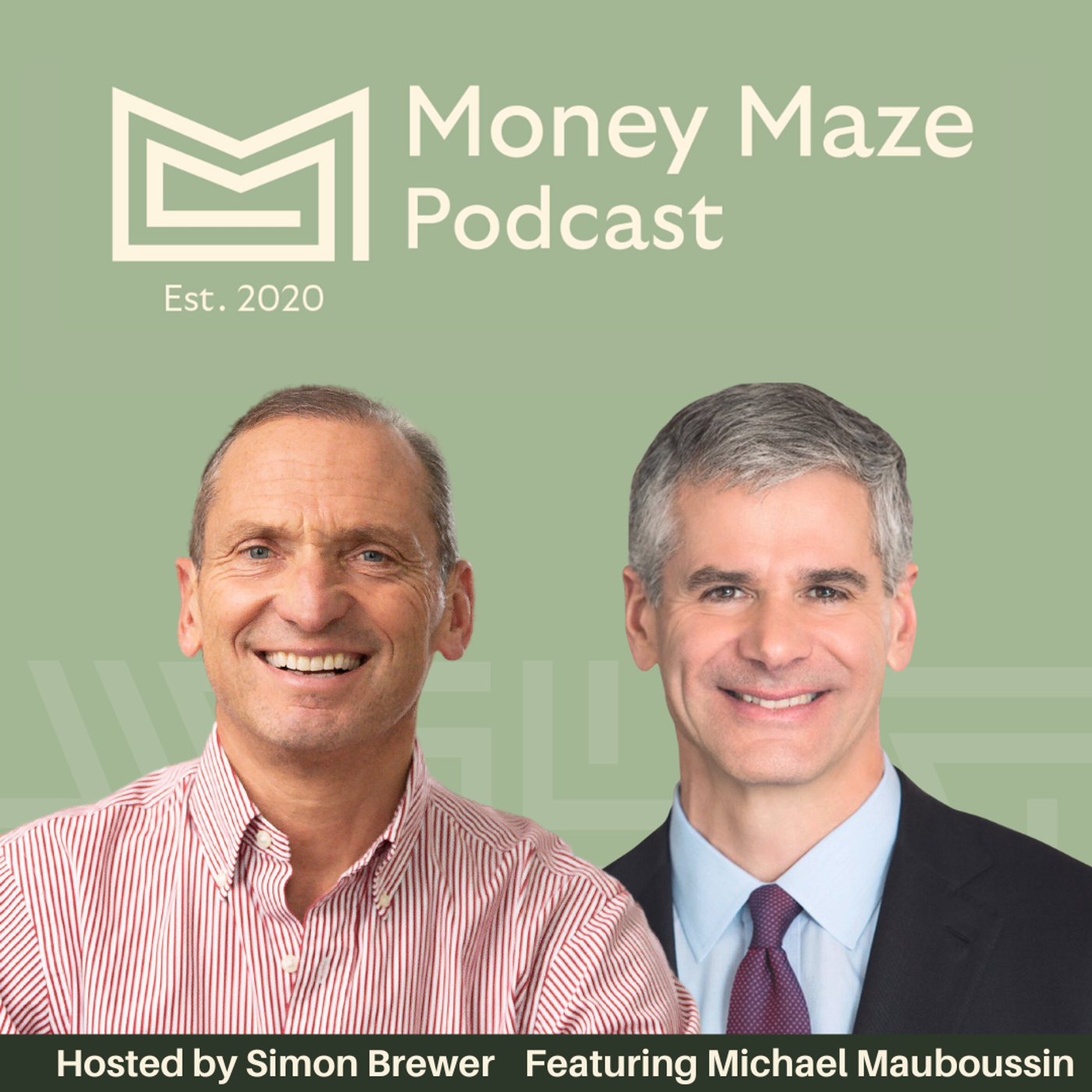 Why Do Companies Die? Value Creation in Public Equity Markets - Michael Mauboussin (Morgan Stanley) | Michael Mauboussin | 23 November 2023 | 20 min | In his report ‘Birth, Death, and Wealth Creation’, Michael Mauboussin observes and then claims that corporations are surviving longer and winning more. This week, we welcome Michael Mauboussin, Head of Consilient Research at Counterpoint Global, Morgan Stanley Investment Management, to discuss the unique patterns of wealth creation in public equity markets. After explaining the similarities between ice hockey and investing, Michael discusses why corporate ‘death rate’ is higher than firms’ ‘birth rates. He describes why firms are increasingly choosing forgo IPOs, opting to stay private for longer. He also covers Hendrick Bessembinder’s theory of wealth destruction, the distinction between value investing and value factors, and why investors may want to look beyond the headlines when it comes to tech. Michael Mauboussin was interviewed by Simon Brewer at the Quality-Growth Investor Conference in London. The next in-person event to be held by the organizers of the conference will be Value Invest New York on December 12. Use this link and enter “MONEYMAZE_VINY” at checkout to enjoy a 40% discount on tickets (worth $600; offer valid until 30th November 2023). The Money Maze Podcast is kindly sponsored by Schroders , Bremont Watches , IFM Investors and LiveTrade . Sign up to our Newsletter | Follow us on LinkedIn | Watch on YouTube |
 Five Forces Shaping the Global Economy - With Ray Dalio, Founder of Bridgewater Associates | Ray Dalio | 2 November 2023 | 1:13 | According to Bloomberg, Ray Dalio and his firm Bridgewater have “made more money for investors than any other hedge fund in history”. In this interview, Ray outlines his investment thinking and analyses some key trends shaping the global economy. Ray is an investor, commentator, philanthropist, and analyst of history’s relevance is assessing today’s economic and social challenges. He’s been dubbed the “Steve Jobs of investing" and Fortune has referred to the company he founded as the "5th Most Important Company in the US". In this feature, he discusses the development of Bridgewater and the principles that underpin his thinking (as also covered in his bestselling book, ‘Principles: Life and Work’). He then offers his perspective on the 'Big Cycle' that has driven the successes and failures of all the world’s major countries throughout history, before outlining the five key forces he believes are at work today: debt, conflict, populism, climate change and the power of technology. Kindly sponsored by Schroders , Bremont Watches , LiveTrade and IFM Investors . Sign up to our Newsletter | Follow us on LinkedIn | Watch on YouTube |
 Value Investing: Down But Not Out? With David Einhorn, Founder & President of Greenlight Capital | David Einhorn | 11 July 2023 | 18 min | Oscar Wilde defined a cynic as someone who knew the price of everything, and the value of nothing. In today’s episode, we discuss value investing with David Einhorn, Founder and President of Greenlight Capital. David talks about the irreparable damage caused to the value investment industry, passive investing, returns, and bonds trading. He also discusses index and short investments, as well as undervalued products. This episode is an excerpt from the session recorded at the London Value Investor Conference in May. Many thanks to the LVIC team for allowing us to share this content for free! Find out more about their upcoming sister conference, the Quality Growth Investor Conference, here . Sign up to our newsletter for more in-depth insights | Follow us on LinkedIn The Money Maze Podcast is kindly sponsored by Schroders , Bremont Watches , and LiveTrade . We’re pleased to also be supporting GAIN as our 2023 Charitable Partner! |
| Top 3 Episodes of 2022 - #3 Joan Solotar (Global Head of Blackstone’s Private Wealth Solutions Business) | Joan Solotar | 20 March 2023 | To celebrate the three year anniversary of the Money Maze Podcast we’re pleased to be re-sharing our the top 3 most listened to episodes of 2022! In this episode, we’re in discussion with the Global Head of the Blackstone’s Private Wealth Solutions business, Joan Solotar. Joan has twice been recognised in Barron’s as one of the 100 Most Influential Women in U.S. Finance, and after a background in equity research covering financial services, she joined Blackstone in 2007. She starts by describing Blackstone’s growth in alternative assets, before explaining their private wealth solutions business. She discusses their drive to “democratise alternatives”, their client base, geographical reach and why they believe we are very early in the adoption of these assets in portfolios. She then breaks down the components of alternatives, with a dive into their real estate expertise, the credit portfolios which have disintermediated portions of bank lending, as well as discussing hedge funds and P.E. She discusses the liquidity trade-offs, why they have developed Blackstone University for clients, before offering some terrific general advice (especially to fathers with daughters!). Originally released in March 2022. Sign up to our newsletter for more in-depth insights | Follow us on LinkedIn The Money Maze Podcast is kindly sponsored by Schroders , Bremont Watches , LiveTrade and Mintus . | |
| FinTech VC Examined – With David Haber, General Partner at Andreessen Horowitz (a16z) | David Haber | 15 December 2022 | Founded by Marc Andreessen and Ben Horowitz, Andreessen Horowitz (also known as a16z) is a revered venture capital firm which sits at the epicentre of financing entrepreneurial businesses. In this conversation, David Haber, General Partner overseeing fintech investing, begins by discussing his background, including graduating from Harvard, selling his business (Bond Street) to Goldman Sachs in 2017, before joining a16z to establish their first East Coast presence. David is able to offer a unique perspective as both an entrepreneur and venture capitalist. He describes how a16z is growing, its desire to build enduring value by compounding returns and building on competitive advantages. He then explains how they engage with firms of varying size to help them on their journeys and provides an illustration to help frame the conversation. He discusses the private asset explosion, the potential adjustments following this tougher period, risk-taking, hiring, crypto and more! Sign up to our newsletter for more in-depth insights | Follow us on LinkedIn The Money Maze Podcast is kindly sponsored by Schroders , Bremont Watches , LiveTrade and Mintus . | |
| Karen Karniol-Tambour, Co-Chief Investment Officer for Sustainability at Bridgewater, the $160 Billion Hedge Fund, on Today’s Economic Landscape | Karen Karniol-Tambour | 19 May 2022 | Sign up to our newsletter for more in-depth insights | Follow us on LinkedIn Ray Dalio has described today’s guest, “as a vacuum cleaner of learning”, and in this episode Karen Karniol-Tambour exhibits a formidable grasp of the challenges of today’s investing environment. The conversation begins with a review of the current monetary challenge facing the Fed and leads into the dilemma for investors weaned on variations of the 60/40 benchmark. She explains Bridgewater’s enthusiasm for inflation protection, for owning important exposure to broad commodities, through to the role gold should play. At the same time she explains succinctly why US equities might be the worst performing asset class in the decade ahead. She discusses why currencies could be an important source of return in a world of lacklustre performance, in a re-visit of the 1970s and 1980s. Karen finally explains how Bridgewater think about the systematic and fundamental way of approaching sustainable investing, as well as the sustainable fund that they have developed. The Money Maze Podcast is sponsored by Schroders , Bremont Watches and LiveTrade . Schroders is a global investment and wealth manager, with a purpose to provide excellent investment performance to clients, through active investment management. Bremont is an award-winning British company that produces beautifully engineered chronometers, designed to appeal to those who share the appreciation of a beautiful mechanical wristwatch. | |
| Joan Solotar, Global Head of Blackstone’s $192 Billion Private Wealth Solutions Business | Joan Solotar | 31 March 2022 | Sign up to our newsletter for more in-depth insights | Follow us on LinkedIn In this episode, we’re in discussion with the Global Head of the Blackstone’s $192 billion Private Wealth Solutions business, Joan Solotar. Joan has thrice been recognised in Barron’s as one of the 100 Most Influential Women in U.S. Finance, and after a background in equity research covering financial services, she joined Blackstone in 2007. She starts by describing Blackstone’s growth to oversee approximately $880 billion in alternative assets, before explaining their private wealth solutions business. She discusses their drive to “democratise alternatives”, their client base, geographical reach and why they believe we are very early in the adoption of these assets in portfolios. She then breaks down the components of alternatives, with a dive into their real estate expertise, the credit portfolios which have disintermediated portions of bank lending, as well as discussing hedge funds and P.E. She discusses the liquidity trade-offs, why they have developed Blackstone University for clients, before offering some terrific general advice (especially to fathers with daughters!). |
MCan A.I. Improve Investment Results? With Rob Arnott, Founder & Chair, Research Affiliates.Robert D. Arnott · 30 April 2026MJoel Greenblatt: Legendary Investor and Author on Patience in the Investing BusinessJoel Greenblatt · 24 October 2024MVolatility Laundering in Private Equity, the Merits of International Diversification, Value Vs Growth and Systematic Investing - With Cliff AsnessClifford Asness · 27 August 2024MIs Active Management Worth Paying For? With Terry Smith (CEO, CIO & Founder of Fundsmith)Terry Smith · 25 January 2024MWhy Do Companies Die? Value Creation in Public Equity Markets - Michael Mauboussin (Morgan Stanley)Michael Mauboussin · 23 November 2023MFive Forces Shaping the Global Economy - With Ray Dalio, Founder of Bridgewater AssociatesRay Dalio · 2 November 2023MValue Investing: Down But Not Out? With David Einhorn, Founder & President of Greenlight CapitalDavid Einhorn · 11 July 2023MTop 3 Episodes of 2022 - #3 Joan Solotar (Global Head of Blackstone’s Private Wealth Solutions Business)Joan Solotar · 20 March 2023MFinTech VC Examined – With David Haber, General Partner at Andreessen Horowitz (a16z)David Haber · 15 December 2022MKaren Karniol-Tambour, Co-Chief Investment Officer for Sustainability at Bridgewater, the $160 Billion Hedge Fund, on Today’s Economic LandscapeKaren Karniol-Tambour · 19 May 2022MJoan Solotar, Global Head of Blackstone’s $192 Billion Private Wealth Solutions BusinessJoan Solotar · 31 March 2022