 O
Podcast · 17 episodes in the reference, 2022 to 2026
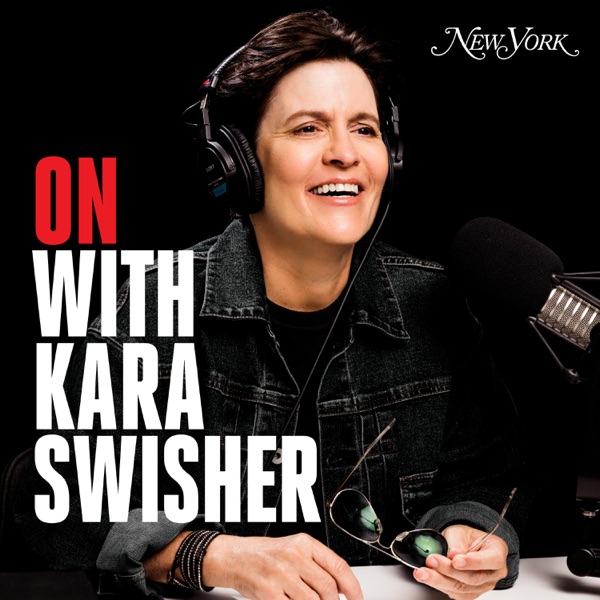
On with Kara Swisher
Published by Vox Media
Host
Kara SwisherKara SwisherPodcast host and contributing editorHas covered the business of the internet since 1994; hosts On with Kara Swisher and co-hosts the Pivot podcast.
Episodes
| Ryan Holiday on the Case for Stoicism in an Age of Distraction | Ryan Holiday | 17 August 2026 | 53 min | While the Greek and Roman philosophy of Stoicism has been around for millennia, author and media strategist Ryan Holiday is bringing its teachings to a modern audience by way of his popular books and his podcast, “ The Daily Stoic .” He says ancient writings by the likes of Seneca, Marcus Aurelius, and Epictetus resonate in times that feel especially chaotic. Kara and Ryan talk about why young men in particular seem drawn to Stoicism and what powerful figures in the worlds of tech, MAGA politics, and the man-o-sphere get wrong about its teachings. He tells Kara their actions frequently run counter to Stoicism’s foundational tenet: our obligation and responsibility to — and with — other people. Questions? Comments? Email us at on@voxmedia.com or find us on YouTube , Instagram , TikTok , Threads , and Bluesky @onwithkaraswisher. Learn more about your ad choices. Visit podcastchoices.com/adchoices |
| America’s New Power Order: Kara in Conversation with Walter Isaacson | Walter Isaacson | 6 April 2026 | 1:02 | Kara’s 2023 interview with journalist and biographer Walter Isaacson about his Elon Musk biography was one of her most contentious conversations ever — and one of the show’s most popular episodes. They’re still friends, though. And at this year’s New Orleans Book Festival at Tulane University, Isaacson got his chance to put Kara in the hot seat. In this live conversation, recorded last month, Kara and Isaacson talk about the future of A.I., how power is shifting in the United States, and how those changes are reshaping American life. They also talk about Kara’s new CNN series, “ Kara Swisher Wants to Live Forever .” Special thanks to the New Orleans Book Festival for hosting this event. Questions? Comments? Email us at on@voxmedia.com or find us on YouTube , Instagram , TikTok , Threads , and Bluesky @onwithkaraswisher. Learn more about your ad choices. Visit podcastchoices.com/adchoices |
 8 billion people vs 5 AI CEOs with Tristan Harris | Tristan Harris | 26 March 2026 | 1:17 | Tristan Harris, a technology ethicist and co-founder of the Center for Humane Technology , studies how the tech industry’s platforms have become extractive and controlling. Kara first interviewed him in 2017, and after he was featured in the 2020 Netflix documentary “ The Social Dilemma,” his profile shot through the roof. Now he's featured in a new film called, "The AI Doc: Or How I Became an Apocaloptimist," which explores the promises and existential risks of AI. Tristan joins Kara to discuss how the current AI arms race is driven by the wrong incentives, and why that's leading us towards an "anti-human" future. He argues that the benefits and breakthroughs promised by AI are inseparable from profound risks, and calls for public pressure, regulation and global coordination to build a humane future with AI before it's too late. You can find out more about the work Tristan and the Center for Humane Technology are doing at The Human Movement. Questions? Comments? Email us at on@voxmedia.com or find us on YouTube , Instagram , TikTok , Threads , and Bluesky @onwithkaraswisher. Learn more about your ad choices. Visit podcastchoices.com/adchoices |
| ACCESS with Alex Heath and Ellis Hamburger | Vlad Tenev | 1 January 2026 | 1:06 | Happy 2026 from all of us at On with Kara Swisher! We’re ringing in the new year with an episode of ACCESS, a new tech insider podcast from the Vox Media Podcast Network that’s hosted by two highly connected tech journalists, Alex Heath and Ellis Hamburger. Each week, Alex and Ellis have revealing conversations with Silicon Valley’s most influential leaders, from the tech titans of today to tomorrow’s most interesting entrepreneurs. On this episode of ACCESS , they speak to Robinhood CEO Vlad Tenev to discuss the rise of prediction markets, juggling priorities as a public CEO, and much more. For full video episodes, subscribe on YouTube Follow ACCESS on Instagram and TikTok . Follow Alex's Sources newsletter and on X @alexeheath. Follow Ellis at Meaning and on X @hamburger. Learn more about your ad choices. Visit podcastchoices.com/adchoices |
| Marc Benioff on Elon, AI Agents, and the “DOGE” | Marc Benioff | 9 December 2024 | 58 min | How will AI agents change the economy and the workforce — and are Americans ready? Salesforce CEO Marc Benioff has some thoughts. After a stellar quarter boosted by the customer resource management company’s new AI autonomous agents, Agentforce, Benioff explains to Kara how employers and employees will be impacted by a new era of digital workers; why he thinks investing tens of billions in AI capital expenditures (like his competitor Microsoft) is a “race to the bottom”; and what he hopes will come from Donald Trump’s Department of Government Efficiency. Plus: Kara and Marc go another round on “DOGE Master” Elon Musk, and whether it’s still possible for business leaders to still defend their values and workers without fear of political repercussions. They also remember their mutual friend, former YouTube CEO Susan Wojcicki, who died earlier this year. Questions? Comments? Email us at on@voxmedia.com or find us on Instagram and TikTok @onwithkaraswisher Learn more about your ad choices. Visit podcastchoices.com/adchoices |
| Microsoft CEO Satya Nadella on the OpenAI Debacle | Satya Nadella | 21 November 2023 | 28 min | In the swirl of drama around Sam Altman’s exit from OpenAI, one company seems to be the winner: Microsoft. It has both a significant partnership with, and an ownership stake in, the company, and now it's welcoming Altman and OpenAI researchers with open arms. For this emergency episode, Kara interviews Microsoft CEO Satya Nadella. Questions? Comments? Email us at on@voxmedia.com or find us on social media. We’re on Instagram/Threads as @karaswisher and @nayeemaraza Learn more about your ad choices. Visit podcastchoices.com/adchoices |
| The Twitter Fantasy from Land of the Giants | Ben Mezrich | 6 November 2023 | 52 min | Today we’re playing you an episode of Land of the Giants that takes a walk down memory lane to the early days of Twitter and how the platform became the best and worst place on the internet. If you like it; check out the Land of The Giants: The Twitter Fantasy and revisit our interviews with Ben Mezrich , Walter Isaacson , Ronan Farrow and William Cohan , or Kara and Nayeema’s own walk down memory lane on Twitter. Enjoy! And we’ll be back on Thursday with a new episode of On. This episode hosted by Peter Kafka (@pkafka) and Lauren Goode (@laurengoode) EDITOR'S NOTE: This episode contains descriptions of sexual harassment and of graphic threats of violence. This section begins after the second midroll break and lasts for about 7 minutes. Learn more about your ad choices. Visit podcastchoices.com/adchoices |
| How Elon Broke Twitter — and Twitter Broke Elon — with Ben Mezrich | Ben Mezrich | 2 November 2023 | 1:08 | What does a dramatic narrative nonfiction account of a dramatic tech CEO look like? To find out, we turn to Ben Mezrich, the author whose books have been adapted to films like 21, The Social Network, and Dumb Money . His latest, Breaking Twitter , has already been optioned by MGM. In this conversation: Ben’s process for blending hard facts with informed speculation, Kara’s advice for dealing with the tech titan, and predictions about Linda Yaccarino’s fate. Oh, also a brainstorm about who should play Elon on the big screen: Kara envisions a classic Vince Vaughn type, Nayeema picks Brendan Fraser, and Ben throws in a Succession character — but *not* the one you’d expect! Questions? Comments? Email us at on@voxmedia.com or find us on social media. We’re on Instagram/Threads as @karaswisher and @nayeemaraza Learn more about your ad choices. Visit podcastchoices.com/adchoices |
| Alexis Ohanian and Deb Roy on Big Tech’s Effects on Democracy | Alexis Ohanian | 26 October 2023 | 52 min | Democracy is challenged, at home and abroad, and at least some of this blame falls on “Big Tech.” Kara talks to Alexis Ohanian, Reddit co-founder and venture capitalist, and Deb Roy, the director of the MIT Center for Constructive Communication, about how we got here and what some potential solutions are. Stick around after the interview to hear Kara and Nayeema discuss the ethics of stapling bread to trees. This episode was recorded live at the University of Virginia’s Karsh Institute for Democracy’s Democracy 360 event on October 17th. Questions? Comments? Email us at on@voxmedia.com or find us on social media. We’re on Instagram/Threads as @karaswisher and @nayeemaraza Learn more about your ad choices. Visit podcastchoices.com/adchoices |
| Elon Musk: Somebody That I Used to Know | Walter Isaacson | 4 September 2023 | 1:05 | This Labor Day, we are re airing a fan-favorite episode about, who else, Elon Musk and Kara Swisher. Nayeema interviews Kara — who’s covered Musk since the late 90s. We’ll unpack how Elon became Elon, why Kara came to believe he was one of the greatest visionaries in Silicon Valley, when exactly she soured on him — and why she still holds out some hope. If you’re not sick of Elon by the end of this episode, you may also want to listen to our conversations with Elon biographer Walter Isaacson , former Twitter employee Yoel Roth and journalists Bill Cohan and Ronan Farrow . You can find Kara and Nayeema on Instagram/Threads @karaswisher and @nayeemaraza. Learn more about your ad choices. Visit podcastchoices.com/adchoices |
| A.I. Doomsday with Tristan Harris | Tristan Harris | 25 May 2023 | 1:14 | After Kara and Nayeema review the week’s A.I. news, including Sam Altman’s Senate testimony and the viral AI-generated image of the Pentagon in flames, we turn to Tristan Harris — co-founder of the Center for Humane Technology and a key voice among the calls for slowing down the A.I. arms race. BTW, do you have any burning questions on career, love or life you’d like Kara or Nayeema’s advice on? If so, call 1-888-KARA-PLZ and leave us a voice mail. Learn more about your ad choices. Visit podcastchoices.com/adchoices |
| SVB, IG & AI with Instagram Co-founder Kevin Systrom | Kevin Systrom | 16 March 2023 | 59 min | After a quick rundown of Kara’s Twitter feud with SVB-enthusiast David Sacks, we turn to an interview with a former Silicon Valley Bank customer: Kevin Systrom. When you found one of the most successful social media apps at 27, it’s tough to figure out where to go with Act Two. But after leaving Facebook (now Meta) in 2018, Systrom is back with an AI-powered news-reader called Artifact which has been dubbed a “Tiktok for Text.” Onstage at SXSW this weekend, as the SVB crisis was playing out, Kara and Kevin discuss his regrets about Instagram, his plans to crack the news business and what’s wrong with tech bros. Questions? Comments? Email us at on@voxmedia.com or find us on Twitter @karaswisher and @nayeema Learn more about your ad choices. Visit podcastchoices.com/adchoices |
| Marc Benioff’s Toughest Conversation with Kara Swisher | Marc Benioff | 6 March 2023 | 1:08 | Kara has interviewed Salesforce CEO and co-founder Marc Benioff many times but he says she'd never been as prepared to grill him as she was this time. It’s a showdown between a savvy CEO who is deft at turning the tables…and an interviewer who is unafraid to pin him down. Taped in front of a live audience at the Upfront Summit, the two tackle whether Marc will be able to keep up the victory lap of a surprisingly strong earnings report , his succession plan, their divergent takes on a divisive Elon Musk – and why having activist investors breathing down his neck is “fun” for Benioff. Questions? Comments? Email us at on@voxmedia.com or find us on Twitter @karaswisher and @nayeema Learn more about your ad choices. Visit podcastchoices.com/adchoices |
| Has the Silicon Valley Bubble Burst? A Conversation w Jessica Lessin & William Cohan | William D. Cohan | 26 January 2023 | 51 min | Rapid-fire layoffs, activist investors at the gate and tumbling stock prices — tech has had a bad year. But Kara tells Nayeema she’s seen it all before and that the industry, if not all its captains, will survive this shake-up, too. In the panel interview, Kara is joined by two other journalists: Jessica Lessin, founder and CEO of The Information, a scoop-laden tech news platform covering Silicon Valley, and William Cohan, a former M&A banker and a founding partner at Puck, another excellent source for scoops. They tackle what’s behind the long decline, and recent rally, of tech stocks, and when and how the Valley will bounce back. Then they zoom in on what Meta, Google, Microsoft, Amazon, Apple and Netflix will need to zoom in on to survive the storm. And Jessica offers a theory: the time is ripe for a changing of the old tech guard. Sorry, Elon — it may be time to step aside. You can find Kara and Nayeema on Twitter @karaswisher and @nayeema. Learn more about your ad choices. Visit podcastchoices.com/adchoices |
| Twitter Spaces On: Elon, Elon, Elon … and Trump | William D. Cohan | 19 October 2022 | 50 min | Today, we’re sharing a bonus episode of Kara’s Twitter Spaces conversation that was taped on Monday night. She’s joined by William Cohan, journalist and founding partner of Puck, and Scott Galloway, business professor and co-host of the Pivot podcast. Nayeema pops in with a question at the end — and you can too, if you join our next Twitter Spaces. Follow us on Twitter @karaswisher and @nayeema to tune in for future conversations. Learn more about your ad choices. Visit podcastchoices.com/adchoices |
 Brené Brown on leadership, Trump, and the coward's path to power | Brené Brown | |||
 Kleiner Perkins Chairman John Doerr and Congressman Ro Khanna | Full Interview | Code 2022 | John Doerr |
ORyan Holiday on the Case for Stoicism in an Age of DistractionRyan Holiday · 17 August 2026OAmerica’s New Power Order: Kara in Conversation with Walter IsaacsonWalter Isaacson · 6 April 2026O8 billion people vs 5 AI CEOs with Tristan HarrisTristan Harris · 26 March 2026OACCESS with Alex Heath and Ellis HamburgerVlad Tenev · 1 January 2026OMarc Benioff on Elon, AI Agents, and the “DOGE”Marc Benioff · 9 December 2024OMicrosoft CEO Satya Nadella on the OpenAI DebacleSatya Nadella · 21 November 2023OThe Twitter Fantasy from Land of the GiantsBen Mezrich · 6 November 2023OHow Elon Broke Twitter — and Twitter Broke Elon — with Ben MezrichBen Mezrich · 2 November 2023OAlexis Ohanian and Deb Roy on Big Tech’s Effects on DemocracyAlexis Ohanian · 26 October 2023OElon Musk: Somebody That I Used to KnowWalter Isaacson · 4 September 2023OA.I. Doomsday with Tristan HarrisTristan Harris · 25 May 2023OSVB, IG & AI with Instagram Co-founder Kevin SystromKevin Systrom · 16 March 2023OMarc Benioff’s Toughest Conversation with Kara SwisherMarc Benioff · 6 March 2023OHas the Silicon Valley Bubble Burst? A Conversation w Jessica Lessin & William CohanWilliam D. Cohan · 26 January 2023OTwitter Spaces On: Elon, Elon, Elon … and TrumpWilliam D. Cohan · 19 October 2022OBrené Brown on leadership, Trump, and the coward's path to powerBrené BrownOKleiner Perkins Chairman John Doerr and Congressman Ro Khanna | Full Interview | Code 2022John Doerr