 P
Podcast · 18 episodes in the reference, 2024 to 2026
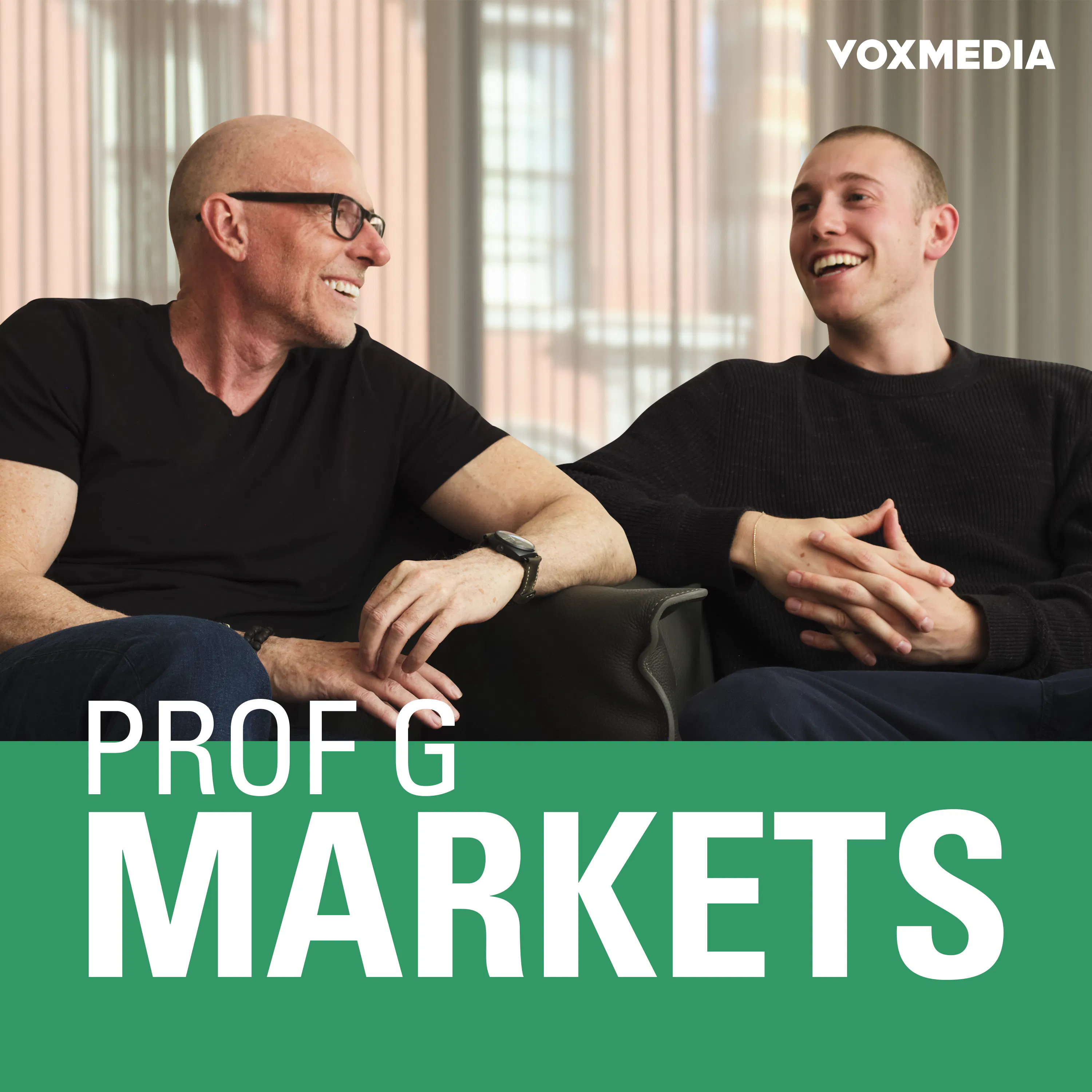
Prof G Markets
Published by Vox Media Podcast Network
Hosts
SGScott GallowayEEEd Elson
Episodes
 Cal Newport: The AI Industry Is Betting On The Wrong Kind Of AI | Cal Newport | 9 October 2026 | 1:20 | Ed Elson is joined by Cal Newport to discuss AI’s impact on children and mental health and how AI companies are addressing these risks. They also explore what AI “gone right” would look like, whether large language models are the future of the industry, and what role the government should play in regulating the technology. Cal Newport is a Professor of Computer Science at Georgetown University and New York Times bestselling author of eight books. Vote for Prof G Markets at the Signal Awards here Subscribe to the Prof G Markets Youtube Channel Check out our latest Prof G Markets newsletter Follow Prof G Markets on Instagram Follow Ed on Instagram , X and Substack Follow Scott on Instagram Send us your questions or comments by emailing Markets@profgmedia.com Learn more about your ad choices. Visit podcastchoices.com/adchoices |
 Bonds Are Going Haywire Again — Howard Marks Explains Why | Howard Marks | 24 September 2026 | 33 min | Ed Elson is joined by Howard Marks to break down what’s happening with the bond market and how investors should act accordingly. Then, Daniel Baer joins to discuss the biggest takeaways from the UN General Assembly so far and where the relationship between the U.S. and Iran stands. Finally, Ed gives his take on an AI data center provider delaying its IPO. Howard Marks is the co-founder and co-chairman of Oaktree Capital Management. Daniel Baer is the former U.S. Ambassador to the Organization for Security and Cooperation in Europe and the Interim President of the Carnegie Endowment for International Peace. Subscribe to the Prof G Markets Youtube Channel Follow Prof G Markets on Instagram Follow Ed on Instagram , X and Substack Follow Scott on Instagram Send us your questions or comments by emailing Markets@profgmedia.com Learn more about your ad choices. Visit podcastchoices.com/adchoices |
 Tyler Cowen: The AI Bears Are Asking The Wrong Questions | Tyler Cowen | 4 September 2026 | 1:00 | Ed Elson and Scott Galloway are joined by Tyler Cowen to discuss why he’s not concerned about a potential AI bubble, how AI is reshaping the labor market, and why he thinks the data center buildout is ultimately a good thing. They also discuss who stands to benefit most from AI, why cybersecurity is a growing concern, how he would grade the U.S. economy today, and what he sees as the biggest obstacle to AI’s continued growth. Tyler Cowen is an economist, author, podcaster and chair of the Mercatus Center at George Mason University. Subscribe to the Prof G Markets Youtube Channel Check out our latest Prof G Markets newsletter Follow Prof G Markets on Instagram Follow Ed on Instagram , X and Substack Follow Scott on Instagram Send us your questions or comments by emailing Markets@profgmedia.com Learn more about your ad choices. Visit podcastchoices.com/adchoices |
 This Is How OpenAI Goes Broke — ft. Sebastian Mallaby | Sebastian Mallaby | 10 July 2026 | 1:05 | Ed Elson sits down with Sebastian Mallaby to discuss why he believes there's a real chance OpenAI runs out of money within the next 18 months, and what that would mean for the broader AI industry. He also explains why he doesn't necessarily see Meta's decision to sell excess compute capacity as a bear signal, why he was encouraged by the Trump administration's new AI policy, and how he expects the AI race to unfold over the coming years. Sebastian Mallaby is a prominent journalist, author, Pulitzer Prize finalist, and senior fellow at the Council on Foreign Relations. His latest book is The Infinity Machine: Demis Hassabis, DeepMind, and the Quest for Superintelligence . Subscribe to the Prof G Markets Youtube Channel Check out our latest Prof G Markets newsletter Follow Prof G Markets on Instagram Follow Ed on Instagram , X and Substack Follow Scott on Instagram Send us your questions or comments by emailing Markets@profgmedia.com Learn more about your ad choices. Visit podcastchoices.com/adchoices |
 The IPO Frenzy Has Begun — ft. Howard Marks | Howard Marks | 12 June 2026 | 56 min | Ed Elson and Scott Galloway are joined by Howard Marks to discuss whether the IPOs from SpaceX, Anthropic and OpenAI are legitimate investments or signs of irrational exuberance. They explore how investors should think about the enormous uncertainty of AI, where opportunities still exist in an increasingly expensive market, and whether fears about private credit are overblown or warranted. Howard Marks is the co-founder and co-chairman of Oaktree Capital Management. Subscribe to the Prof G Markets Youtube Channel Check out our latest Prof G Markets newsletter Follow Prof G Markets on Instagram Follow Ed on Instagram , X and Substack Follow Scott on Instagram Send us your questions or comments by emailing Markets@profgmedia.com Learn more about your ad choices. Visit podcastchoices.com/adchoices |
 AI Is Making Us All Dumber | Cal Newport | 12 May 2026 | 34 min | Ed Elson brings on Cal Newport and Derek Thompson to explore how AI is reshaping the way we think and learn to the downside. They dig into how its impact on human intelligence could fundamentally change the economy, the risks that concern them most, and how individuals can ensure they don’t fall behind. Cal Newport is a Professor of Computer Science at Georgetown University and New York Times bestselling author of eight books, including Slow Productivity and Deep Work. Derek Thompson is the Host of the Plain English Podcast, and author of Abundance. Get your tickets to the Prof G Markets tour Subscribe to the Prof G Markets Youtube Channel Check out our latest Prof G Markets newsletter Follow Prof G Markets on Instagram Follow Ed on Instagram , X and Substack Follow Scott on Instagram Send us your questions or comments by emailing Markets@profgmedia.com Learn more about your ad choices. Visit podcastchoices.com/adchoices |
 Why Oil Still Runs the World — ft. Daniel Yergin | Daniel Yergin | 8 May 2026 | 57 min | Daniel Yergin joins Ed Elson to discuss how the war in Iran has gripped global oil markets over the last couple months. They cover why the Strait of Hormuz has become more consequential in recent years, what’s next for energy prices and production, and who comes out of this conflict on top. Daniel Yergin is the Vice Chairman of S&P Global and Pulitzer Prize–winning author of The Prize: The Epic Quest for Oil, Money, and Power and The New Map: Energy, Climate, and the Clash of Nations. Get your tickets to the Prof G Markets tour Subscribe to the Prof G Markets Youtube Channel Check out our latest Prof G Markets newsletter Follow Prof G Markets on Instagram Follow Ed on Instagram , X and Substack Follow Scott on Instagram Send us your questions or comments by emailing Markets@profgmedia.com Learn more about your ad choices. Visit podcastchoices.com/adchoices |
 Ray Dalio: The World Order Has Unraveled | Ray Dalio | 30 April 2026 | 34 min | Ed Elson speaks with Ray Dalio about where the world stands amid the Iran war, rising inflation, and climbing U.S. debt — and what investors should do about it. Then, he is joined by Gil Luria to discuss his takeaways from Amazon, Google, Microsoft and Meta earnings. Finally, Ed gives his take on why OpenAI is systemic to the stock market. Ray Dalio is the founder of Bridgewater Associates. Gil Luria is the head of technology research at D.A. Davidson. Get your tickets to the Prof G Markets tour Subscribe to the Prof G Markets Youtube Channel Check out our latest Prof G Markets newsletter Follow Prof G Markets on Instagram Follow Ed on Instagram , X and Substack Follow Scott on Instagram Send us your questions or comments by emailing Markets@profgmedia.com Learn more about your ad choices. Visit podcastchoices.com/adchoices |
 The AI Divide: Who Wins and Who Gets Replaced — ft. Bill Gurley | Bill Gurley | 27 March 2026 | 1:02 | Ed Elson and Scott Galloway are joined by Bill Gurley to break down how young people can position themselves for success in the age of AI, how Silicon Valley and the private markets have evolved, and what a potential market correction could look like. Bill Gurley has been General Partner at Benchmark Capital since 1999. His new book, “Runnin’ Down a Dream: How to Thrive in a Career You Actually Love,” is available now. Check out our latest Prof G Markets newsletter Follow Prof G Markets on Instagram and Substack Follow Ed on Instagram , X and Substack Follow Scott on Instagram Send us your questions or comments by emailing Markets@profgmedia.com Learn more about your ad choices. Visit podcastchoices.com/adchoices |
 Billions in Tariff Refunds — Who Gets the Money? | Ryan Petersen | 24 February 2026 | 33 min | Ed Elson breaks down Trump's new tariffs and unpacks where the refunds stand following the Supreme Court’s decision last week with Peter Harrell and Ryan Petersen. Then he shares his thoughts on what the legacy of the tariffs will be. Peter Harrell is a Visiting Scholar at the Institute of International Economic Law at Georgetown Law School. Ryan Petersen is the CEO of supply chain management company Flexport. Check out our latest Prof G Markets newsletter Follow Prof G Markets on Instagram Follow Ed on Instagram , X and Substack Follow Scott on Instagram Send us your questions or comments by emailing Markets@profgmedia.com Learn more about your ad choices. Visit podcastchoices.com/adchoices |
 Are We Reliving 1929? Parallels to Today’s Market Mania — ft. Andrew Ross Sorkin | Prof G Markets | Andrew Ross Sorkin | 31 October 2025 | 1:06 | Ed Elson and Scott Galloway are joined by Andrew Ross Sorkin, editor-at-large of DealBook at the New York Times and co-anchor of CNBC’s Squawk Box, to discuss his new book, “1929,” and the striking parallels between the great crash and today’s markets environment. He delves into the lessons we can learn from past financial crises, shares his insights on the upcoming New York mayoral race, and offers expert tips on the art of compelling storytelling. Order Andrew’s book Subscribe to the Prof G Markets newsletter Order " Notes on Being a Man ," out Nov. 4 Subscribe to No Mercy / No Malice Follow Prof G Markets on Instagram Follow Scott on Instagram Follow Ed on Instagram and X Learn more about your ad choices. Visit podcastchoices.com/adchoices |
 AI, TikTok, and the Battle for Media’s Future — ft. Mark Cuban | Prof G Markets | Mark Cuban | 26 September 2025 | 1:06 | Ed and Scott are joined by Mark Cuban, serial entrepreneur and investor, to discuss the challenges facing today’s media ecosystem. Mark shares his take on what happened with Jimmy Kimmel, his thoughts on the TikTok deal, and how he believes AI will ultimately impact employment. He also explains why he thinks social media should be age-gated — and why, despite the concerns, AI could end up helping Hollywood rather than hurting it. Subscribe to the Prof G Markets newsletter Order "The Algebra of Wealth" out now Subscribe to No Mercy / No Malice Follow Prof G Markets on Instagram Follow Scott on Instagram Follow Ed on Instagram and X Learn more about your ad choices. Visit podcastchoices.com/adchoices |
 How America Goes Broke — ft. Ray Dalio | Prof G Markets | Ray Dalio | 5 September 2025 | 1:07 | Ed and Scott are joined by Ray Dalio, global macro investor, founder of Bridgewater Associates, and New York Times bestselling author, who returns to the show to discuss how countries go broke and how far along America is in that cycle. He shares his insights on tax policy, what he thinks is the biggest threat to America’s dominance, and how things will play out with the deficit if we do nothing. Subscribe to the Prof G Markets newsletter Order "The Algebra of Wealth" out now Subscribe to No Mercy / No Malice Follow Prof G Markets on Instagram Follow Scott on Instagram Follow Ed on Instagram and X Learn more about your ad choices. Visit podcastchoices.com/adchoices |
 Why Trump Will Back Down on China Tariffs — ft. Ryan Petersen | Prof G Markets | Ryan Petersen | 24 April 2025 | 1:04 | Scott and Ed discuss the rally in the Euro and German bonds, Chinese state-backed funds pulling out of U.S. private equity, and Bill Ackman’s investment in Hertz. Then Ryan Petersen, the founder and CEO of Flexport, a leader in global supply chain management, joins the show to unpack the real-world impact of tariffs on American businesses. He breaks down how the levies will drive inflation, shares his outlook on the trade war with China, and explains how supply chains are rapidly reshaping. Subscribe to the Prof G Markets newsletter Order "The Algebra of Wealth," out now Subscribe to No Mercy / No Malice Follow the podcast across socials @profgpod: Instagram Threads X Reddit Follow Scott on Instagram Follow Ed on Instagram and X Learn more about your ad choices. Visit podcastchoices.com/adchoices |
 Breaking Down Warning Signals from the Bond Market — ft. William Cohan | Prof G Markets | William D. Cohan | 17 April 2025 | 56 min | Vote for Prof G Markets at the Webby Awards Scott and Ed discuss how the markets reacted to Trump’s tariff exemption on smartphones and computers, the dollar falling to a three-year low, and first quarter bank earnings. Then William Cohan, New York Times bestselling author and founding partner of Puck, joins the show to unpack the latest developments in the bond market. He explores the potential fallout of a credit crisis, weighs in on whether Japan and China are wielding the bond market as a geopolitical weapon, and offers his take on where the next wave of damage from the tariffs is likely to surface. Subscribe to the Prof G Markets newsletter Order "The Algebra of Wealth," out now Subscribe to No Mercy / No Malice Follow the podcast across socials @profgpod: Instagram Threads X Reddit Follow Scott on Instagram Follow Ed on Instagram and X Learn more about your ad choices. Visit podcastchoices.com/adchoices |
 How to Build a Rich Life — ft. Ramit Sethi | Prof G Markets | Ramit Sethi | 15 August 2024 | 52 min | Ramit Sethi, New York Times Best Selling author of “I Will Teach You To Be Rich,” joins the show to discuss the most common money problems people face. He offers actionable tips for navigating finances with your partner, buying vs. renting your home, and raising your kids to appreciate money. Ramit and Scott also discuss the skill of spending money well. Subscribe to No Mercy / No Malice Follow the podcast across socials @profgpod: Instagram Threads X Reddit Follow Scott on Instagram Follow Ed on Instagram and X Learn more about your ad choices. Visit podcastchoices.com/adchoices |
 Aswath Damodaran: Big Tech Has No Idea How AI Pays Off | Aswath Damodaran | |||
 Aswath Damodaran: The AI Boom Is Headed For A Reckoning | Aswath Damodaran |
PCal Newport: The AI Industry Is Betting On The Wrong Kind Of AICal Newport · 9 October 2026PBonds Are Going Haywire Again — Howard Marks Explains WhyHoward Marks · 24 September 2026PTyler Cowen: The AI Bears Are Asking The Wrong QuestionsTyler Cowen · 4 September 2026PThis Is How OpenAI Goes Broke — ft. Sebastian MallabySebastian Mallaby · 10 July 2026PThe IPO Frenzy Has Begun — ft. Howard MarksHoward Marks · 12 June 2026PAI Is Making Us All DumberCal Newport · 12 May 2026PWhy Oil Still Runs the World — ft. Daniel YerginDaniel Yergin · 8 May 2026PRay Dalio: The World Order Has UnraveledRay Dalio · 30 April 2026PThe AI Divide: Who Wins and Who Gets Replaced — ft. Bill GurleyBill Gurley · 27 March 2026PBillions in Tariff Refunds — Who Gets the Money?Ryan Petersen · 24 February 2026PAre We Reliving 1929? Parallels to Today’s Market Mania — ft. Andrew Ross Sorkin | Prof G MarketsAndrew Ross Sorkin · 31 October 2025PAI, TikTok, and the Battle for Media’s Future — ft. Mark Cuban | Prof G MarketsMark Cuban · 26 September 2025PHow America Goes Broke — ft. Ray Dalio | Prof G MarketsRay Dalio · 5 September 2025PWhy Trump Will Back Down on China Tariffs — ft. Ryan Petersen | Prof G MarketsRyan Petersen · 24 April 2025PBreaking Down Warning Signals from the Bond Market — ft. William Cohan | Prof G MarketsWilliam D. Cohan · 17 April 2025PHow to Build a Rich Life — ft. Ramit Sethi | Prof G MarketsRamit Sethi · 15 August 2024PAswath Damodaran: Big Tech Has No Idea How AI Pays OffAswath DamodaranPAswath Damodaran: The AI Boom Is Headed For A ReckoningAswath Damodaran