 S
Podcast · 34 episodes in the reference, 2016 to 2021
Startup Grind
Host
SGStartup Grind
Episodes
 Fourth time Lucky with Vlad Magdalin (Webflow) | Vlad Magdalin | 28 August 2021 | 49 min | Vlad Magdalin is the Founder & CEO at Webflow . the startup that allows you to build better business websites, faster, without coding. To date, Vlad has raised over $73m with Webflow from some dear friends of the show including Accel, Ron @ Rainfall, Brianne @ Work Life, Benjamin Ling and Y Combinator to name a few. Prior to founding Webflow, Vlad was a Senior Software Engineer @ Intuit. Before Intuit, Vlad co-founded Chatterfox, a web application allowing people to stay in touch with groups offriends, family, or co-workers. (Interviewed by StartupGrind's Chris Joannou). |
 Mmhmm Making Video Communication More Clear and Compelling with Phil Libin | Phil Libin | 23 April 2021 | 46 min | Phil Libin is the Founder and CEO at mmhmm , the app that allows you to level up your remote presentations, making high-quality video content in minutes. To date, Phil has raised over $30M for the company from an incredible investor base including Sequoia, Kevin & Julia Hartz, Tony Fadell, Instagram’s Kevin Systrom and Mike Krieger and Brianne Kimmel. Prior to mmhmm, Phil was a Managing Director @ General Catalyst and prior to his time in venture, Phil most famously founded Evernote, where he led the business with phenomenal success, as CEO for over 8 years. Libin is the latest high-profile executive to leave San Francisco. He now says remote working will be a "massive and profound" change. ---- Render Capital wants you to apply for their 2021 Render Competition! The Render Competition invests $100,000 into eight early-stage startups each year to help them scale their solution and attract future investment. Learn more about the Render Competition and apply today at render.capital/competition/startupgrind (Interviewed by Startup Grind's Chris Joannou). |
 The Startup Community Way: Evolving an Entrepreneurial Ecosystem with Brad Feld | Brad Feld | 11 December 2020 | 1:00 | Brad Feld lives in Boulder, Colorado and Homer, Alaska with his wife and is on a quest to run a marathon in every state in the US.Brad has been an early-stage investor and entrepreneur since 1987. Prior to co-founding Foundry Group, he co-founded Mobius Venture Capital and, prior to that, founded Intensity Ventures. Brad is also a co-founder of TechStars. In addition to his investing efforts, Brad has been active with several non-profit organizations and currently is chair of the National Center for Women & Information Technology, co-chair of Startup Colorado, and on the board of UP Global. Brad is a nationally recognized speaker on the topics of venture capital investing and entrepreneurship and writes the widely read blogs Feld Thoughts, Startup Revolution, and Ask the VC. Brad holds Bachelor of Science and Master of Science degrees in Management Science from the Massachusetts Institute of Technology. Brad is also an avid art collector and long-distance runner. He has completed 23 marathons as part of his mission to finish a marathon in each of the 50 states. Learn more about Oracle for Startups (Interviewed by StartupGrind's Chris Joannou). |
 Affectiva - Rana el Kaliouby | Rana el Kaliouby | 27 October 2020 | 32 min | After growing up in Cairo, Egypt, she earned a PhD in Cambridge University, and then joined the MIT Media Lab as a research scientist, where she spearheaded the application of emotion recognition technology in a variety of fields, including mental health and autism. She left MIT to co-found Affectiva and is a passionate advocate for humanizing technology, ethics in AI, women in technology and diversity. Rana has been recognized on Fortune’s 40 Under 40 list, Forbes' Top 50 Women in Tech, Inc.’s Female Founders 100 list, and named one of the three Global Business pioneers by Bloomberg in 2017. Rana is a World Economic Forum Young Global Leader and a Young Presidents' Organization member, and co-hosted a PBS NOVA series on AI. Learn more about Oracle for Startups (Interviewed by StartupGrind's Chris Joannou). |
 The Definition of Creative Thought Leadership - Scott Belsky (Behance/Adobe) | Scott Belsky | 12 September 2020 | 48 min | Scott Belsky is an executive , entrepreneur , author , and investor (and all-around product obsessive). He currently serves as Adobe's Chief Product Officer and Executive Vice President, Creative Cloud. Scott's passion is to make the creative world more productive, connected, and adaptive to new technologies. Scott co-founded Behance in 2006, and served as CEO until Adobe acquired Behance in 2012. Millions of people use Behance to display their portfolios, as well as track and find top talent across the creative industries. After Behance's acquisition, Scott helped reboot Adobe's mobile product strategy and led Behance until 2016, when he spent a few years as an investor and advisor to multiple businesses. Alongside his role at Adobe, Scott actively advises and invests in businesses that cross the intersection of technology and design - and help empower people. He works closely with a number of venture capital firms including Benchmark and Homebrew, and is an early advisor and investor in Pinterest, Uber, sweetgreen, Carta, Cheddar, Flexport, Airtable, and Periscope (now part of Twitter) as well as several others in the early stages. Over the years, Scott has pursued other projects to help organize and empower the careers of creative people. These include 99U , Behance's think tank and annual conference devoted to execution in the creative world; and a popular line of organizational paper products that help organize creative people and teams. |
 How to Scale a Startup — Aaron Levie + Steven Sinofsky | Aaron Levie | 24 October 2019 | 26 min | A respected technologist and business leader, Steven Sinofsky is an investor, adviser, as well as a Board Partner at the Andreessen Horowitz venture capital firm. He began his career at Microsoft in 1989. He started as a software design engineer in development tools. Working in product management, he grew to be one of the company's senior executives on Microsoft Office overseeing six major releases of the full range of Office apps and creation of Office servers. Most recently he served as President of the Windows division through 2012, delivering two major releases of Windows as well as the creation of Microsoft Surface, and Windows Services such as Outlook.com, OneDrive and Identity. Sinofsky frequently comments on products, development and management at his blog, https://medium.learningbyshipping.com , and on twitter, @stevesi. He earned a BA in both computer science and chemistry from Cornell and an MS from the University of Massachusetts, Amherst. Aaron Levie is the Co-founder of cloud-based content management and collaboration platform. |
 Melanie Perkins - Co-founder Canva | Melanie Perkins | 27 September 2019 | 16 min | Melanie Perkins is an Australian technology entrepreneur. She is known as the CEO and co-founder of Canva, an online design and publishing tool which makes graphic design simple for everyone. Melanie is one of the youngest female CEO to be leading a tech start-up valued at over a billion dollars. Melanie has raised more than $166 million from investors including Google Maps co-founder Lars Rasmussen, Yahoo! CFO Ken Goldman, and funds such as Bond, General Catalyst, Felicis Ventures and Blackbird. |
 Innovate with Intention - Joe Gebbia + Alfred Lin | Alfred Lin, Joe Gebbia | 5 September 2019 | 31 min | About the speakers: Joe Gebbia is the co-founder and CPO of Airbnb, serving on the Board of Directors and Executive staff, while leading Samara, Airbnb’s in-house design and innovation studio. He is involved in crafting the company culture, shaping the design aesthetic, and innovating future growth opportunities. Alfred Lin is a Partner at Sequoia Capital and works with inspiring founders focused on disrupting the mobile, marketplace, commerce, consumer services, and online-to-offline sectors. He currently represents Sequoia on the Boards of Airbnb, Cobalt Robotics, Dia & Co., DoorDash, Houzz, Stella & Dot, and Zipline and was previously on the Board of Achievers (HAWK), FutureAdvisor (BLK), Humble Bundle (JCOM), and Shopular (Ebates/Rakuten). GLOBAL CONFERENCE: https://www.startupgrind.com/conference/ READ THE BLOG: https://medium.com/startup-grind TWITTER: https://twitter.com/StartupGrind FACEBOOK: https://www.facebook.com/StartupGrind/ INSTAGRAM: https://www.instagram.com/startup/ |
 Aaron Levie (Box) and Michal Lev-Ram (Fortune) at Startup Grind Global 2016 | Aaron Levie | 13 July 2016 | 26 min | Aaron Levie, CEO of Box at Startup Grind’s Global Conference earlier this year. Aaron has been CEO since co-founding the cloud storage company in 2005. Aaron served as the company’s product and platform strategy visionary. His plan incorporated traditional content management with elements of social business software. Aaron is also an advisor at 8 Partners and used to serve as an intern at Paramount Pictures. Aaron studied Business at the Marshall School of Business at the University of Southern California. Lets listen into Aaron Levie live at Startup Grind’s Global Conference Earlier This Year Interviewed by Fortune’s Michal Lev-Ram: This podcast is brought to you by HBX Harvard Business School’s digital learning initiative. Introducing “Disruptive Strategy with Clayton Christensen,” an engaging and interactive online learning experience from Harvard Business School’s HBX. Learn to create winning strategies to position your organization for longterm success by applying proven disruption and innovation theories from world renowned strategist Clay Christensen. Disruptive Strategy encourages active learning and peer collaboration, and requires a commitment of approximately thirty hours over six weeks. Applications are being accepted for upcoming cohorts in August and October. To learn more, visit disruptivestrategy.org |
| How to Build Your Company's 5 Year Plan with Alex Austin, Branch Metrics & Scott Nolan, Founders Fund | Scott Nolan | 7 April 2016 | Alex Austin founder & CEO of branch metrics who is joined by founders fund partner and former spacex engineer scott nolan. alex received an MS in Electrical Engineering & an MBA from stanford. In between degrees, he spent five years building a solar panel manufacturing facility from scratch in Santa Clara. While at stanford business school Alex also built an SDK for Android and iOS that is now live on over seven million phones world wide. Alex is now the CEO of Branch Metrics, taking the lessons he learned as a mobile app developer to building a mobile linking platform that helps apps grow and give their users better experiences. Scott Nolan is a Partner at Founders Fund, where he focuses on investments in technology-driven companies across sectors including energy, biotechnology, aerospace, healthcare and advanced manufacturing. Prior to Founders Fund, Scott was an early employee at SPACEX . There, he helped develop the propulsion systems used on the Falcon 1, Falcon 9 and Dragon vehicles and was responsible for the Dragon capsule’s thermal and environmental control subsystems. Lets listen into Alex and Scott’s conversation from our Silicon Valley chapter | |
 Don't Discount the Hustle with Brant Cooper (The Lean Entrepreneur) | Brant Cooper | 17 February 2016 | 59 min | New York Times best selling author Brant Cooper at our San Diego Chapter. Brant is the author of "the Lean Entrepreneur" and the entrepreneurs guide to the lean brand. Brant’s startup career includes Tumbleweed, Timestamp, WildPackets, inCode, and many others. Brant previously authored The Entrepreneur's Guide to Customer Development, the first purpose-written book to discuss Lean Startup and Customer Development concepts. He has worked with thousands of entrepreneurs across the globe. Brant is the Co-Founder of Moves the Needle Group, which has advised the innovation practices of such leading companies as General Electric, Intuit, Capital One, ADP, and Transamerica. He is Founder of StartupSandiego.co, Organizer for SD Tech Founders. Lets listen into Brant Cooper interview in San Diego |
| AI Agents and the Future of Software Teams with Linear + Sequoia Capital | Stephanie Zhan | |||
| Alex Austin (Branch Metrics) and Scott Nolan ( Founders Fund) at Startup Grind Silicon Valley | Scott Nolan | |||
 Alfred Lin (Sequoia Capital) at Startup Grind San Francisco | Alfred Lin | |||
| Breakout Session: The Tech Edge in AI: Foundation Models, Infra, and What Wins | Jon Chu | |||
| Building & Scaling Brilliant Companies - Kevin Systrom (Instagram) & Samir Kaul (Khosla Ventures) | Samir Kaul | |||
| Building Companies for Intelligent Growth - Iris Choi + Ann Miura-Ko | Iris Choi | |||
 Clayton Christensen (Innovator's Dilemma) & Marc Andreessen (a16z) | Startup Grind Global | Clayton Christensen, Marc Andreessen | |||
 Clayton Christensen Interview with Mark Suster at Startup Grind 2013 | Clayton Christensen | |||
 Dustin Moskovitz (Asana; Facebook) and Katie Benner (NYT) at Startup Grind Global 2016 | Dustin Moskovitz | |||
| Fintech in Flux: Where it's Been and Where it's Going - Eric Sager + Angela Strange | Angela Strange | |||
| Hayley Barna (First Round Capital) + Jason Williamson (Oracle) at Startup Grind Global 2021 | Hayley Barna | |||
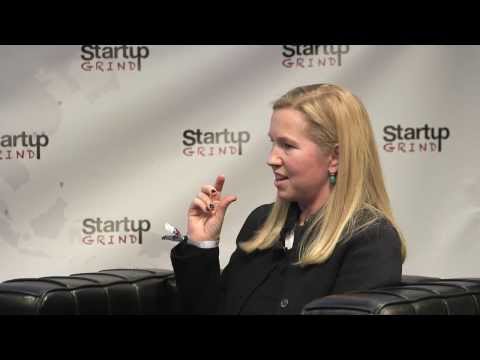 Jessica Livingston (Y Combinator) at Startup Grind 2014 | Jessica Livingston | |||
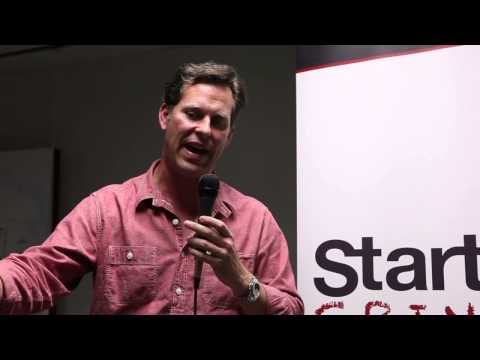 Mike Maples, Jr. (FLOODGATE) at Startup Grind Silicon Valley | Mike Maples, Jr. | |||
| Pitch Battle Finals | Jon Chu | |||
| RESHMA SOHONI | SEEDCAMP | STARTUP GRIND EUROPE | Reshma Sohoni | |||
 Ron Conway (SV Angel; FWD.US) at Startup Grind Global 2016 | Ron Conway | |||
| Scaling from Zero to $40 Million ARR in 6 Months - Eric Simons (StackBlitz) & Erik Nordlander (GV) | Erik Nordlander | |||
 Scott Farquhar (Atlassian) at Startup Grind Sydney | Scott Farquhar | |||
 Test Your Startup's Potential with VC Mike Maples: Secrets to Success | Mike Maples, Jr. | |||
| The Startup Life Cycle- Tom Hulme, Ingrid Lunden | Tom Hulme | |||
 What is Web3 and Why You Should Care? - Web3 Summit Panel | Gaby Goldberg | |||
| What Makes a Category-Defining AI Company with Gabe Pereyra (Harvey AI) + Sangeen Zeb (GV) | Sangeen Zeb | |||
| Winning Founders + Influencing Everyone - Margit Wennmachers | Margit Wennmachers |
SFourth time Lucky with Vlad Magdalin (Webflow)Vlad Magdalin · 28 August 2021SMmhmm Making Video Communication More Clear and Compelling with Phil LibinPhil Libin · 23 April 2021SThe Startup Community Way: Evolving an Entrepreneurial Ecosystem with Brad FeldBrad Feld · 11 December 2020SAffectiva - Rana el KalioubyRana el Kaliouby · 27 October 2020SThe Definition of Creative Thought Leadership - Scott Belsky (Behance/Adobe)Scott Belsky · 12 September 2020SHow to Scale a Startup — Aaron Levie + Steven SinofskyAaron Levie · 24 October 2019SMelanie Perkins - Co-founder CanvaMelanie Perkins · 27 September 2019SInnovate with Intention - Joe Gebbia + Alfred LinAlfred Lin, Joe Gebbia · 5 September 2019SAaron Levie (Box) and Michal Lev-Ram (Fortune) at Startup Grind Global 2016Aaron Levie · 13 July 2016SHow to Build Your Company's 5 Year Plan with Alex Austin, Branch Metrics & Scott Nolan, Founders FundScott Nolan · 7 April 2016SDon't Discount the Hustle with Brant Cooper (The Lean Entrepreneur)Brant Cooper · 17 February 2016SAI Agents and the Future of Software Teams with Linear + Sequoia CapitalStephanie ZhanSAlex Austin (Branch Metrics) and Scott Nolan ( Founders Fund) at Startup Grind Silicon ValleyScott NolanSAlfred Lin (Sequoia Capital) at Startup Grind San FranciscoAlfred LinSBreakout Session: The Tech Edge in AI: Foundation Models, Infra, and What WinsJon ChuSBuilding & Scaling Brilliant Companies - Kevin Systrom (Instagram) & Samir Kaul (Khosla Ventures)Samir KaulSBuilding Companies for Intelligent Growth - Iris Choi + Ann Miura-KoIris ChoiSClayton Christensen (Innovator's Dilemma) & Marc Andreessen (a16z) | Startup Grind GlobalClayton Christensen, Marc AndreessenSClayton Christensen Interview with Mark Suster at Startup Grind 2013Clayton ChristensenSDustin Moskovitz (Asana; Facebook) and Katie Benner (NYT) at Startup Grind Global 2016Dustin MoskovitzSFintech in Flux: Where it's Been and Where it's Going - Eric Sager + Angela StrangeAngela StrangeSHayley Barna (First Round Capital) + Jason Williamson (Oracle) at Startup Grind Global 2021Hayley BarnaSJessica Livingston (Y Combinator) at Startup Grind 2014Jessica LivingstonSMike Maples, Jr. (FLOODGATE) at Startup Grind Silicon ValleyMike Maples, Jr.SPitch Battle FinalsJon ChuSRESHMA SOHONI | SEEDCAMP | STARTUP GRIND EUROPEReshma SohoniSRon Conway (SV Angel; FWD.US) at Startup Grind Global 2016Ron ConwaySScaling from Zero to $40 Million ARR in 6 Months - Eric Simons (StackBlitz) & Erik Nordlander (GV)Erik NordlanderSScott Farquhar (Atlassian) at Startup Grind SydneyScott FarquharSTest Your Startup's Potential with VC Mike Maples: Secrets to SuccessMike Maples, Jr.SThe Startup Life Cycle- Tom Hulme, Ingrid LundenTom HulmeSWhat is Web3 and Why You Should Care? - Web3 Summit PanelGaby GoldbergSWhat Makes a Category-Defining AI Company with Gabe Pereyra (Harvey AI) + Sangeen Zeb (GV)Sangeen ZebSWinning Founders + Influencing Everyone - Margit WennmachersMargit Wennmachers