 T
Podcast · 14 episodes in the reference, 2022 to 2026
The High Flyers Podcast with Vidit Agarwal
Published by Vidit Agarwal
Host
VAVidit Agarwal
Episodes
| #291 Samir Kaul: Vinod Khosla's Longtime Partner on Why VCs Chase Hype, Losing Millions and Finding His Identity | Samir Kaul | 10 November 2026 | This episode is supported by Xero, helping businesses use AI with more control through JAX, its in-platform AI finance partner. Get 90% off your plan for your first 6 months at xero.com/highflyers . ________ What does it take to spot billion-dollar opportunities before the rest of the world sees them? And what happens when some of your biggest bets fail, even after you've helped build one of Silicon Valley's most successful venture capital firms alongside the legend Vinod Khosla? Meet Samir Kaul -- one of three Founding Partners and a Managing Director at Khosla Ventures , one of Silicon Valley's most influential venture capital firms, with investments including OpenAI, Rocket Lab, Guardant Health and Impossible Foods. A scientist turned investor, Samir has spent over two decades alongside legendary investor Vinod Khosla, backing unconventional founders and breakthrough technologies across healthcare, energy, space and AI. In this rare and unusually candid conversation, Samir shares his remarkable journey. From growing up in an Indian immigrant family, getting kicked out of school and nearly abandoning his medical ambitions, to working with genomics pioneer Craig Venter, attending Harvard Business School and stumbling into venture capital. | |
| #279 Ryan Beiermeister: Founders Fund's Partner on Building for Billions, Human Judgement & How Debate Changed Her Life | Ryan Beiermeister | 14 September 2026 | This episode is supported by Xero, helping businesses use AI with more control through JAX, its in-platform AI finance partner. Get 90% off your plan for your first 6 months at xero.com/highflyers . ________ Ryan Beiermeister is a Partner at Founders Fund, one of the world’s leading venture capital firms. Before becoming an investor, she held senior roles at three of the most consequential technology companies of the past decade: VP at OpenAI leading AI safety work, Product Director at Meta across election integrity and social issues, and VP at Palantir, where she helped lead development of Gotham. At College, Ryan was the #1 ranked college policy debater in the US and won top speaker at the 2012 national championship, becoming only the fourth woman since 1946 to do so. In this conversation, Ryan joins Vidit to unpack the unconventional path from Houston and elite college debate to Palantir, Meta, OpenAI and now Founders Fund, including why Palantir took a chance on her at 22, what she learned building products for governments and billions of users, and why she believes there is still “no replacement for human judgement” in the age of AI. They also explore the risks of building technology and simply “throwing it over the wall”, the developmental impact of AI on young people, what makes humans uniquely valuable in an increasingly automated world, and Ryan’s early lessons from making the leap from operator to venture capitalist. Please enjoy exploring your curiosity. | |
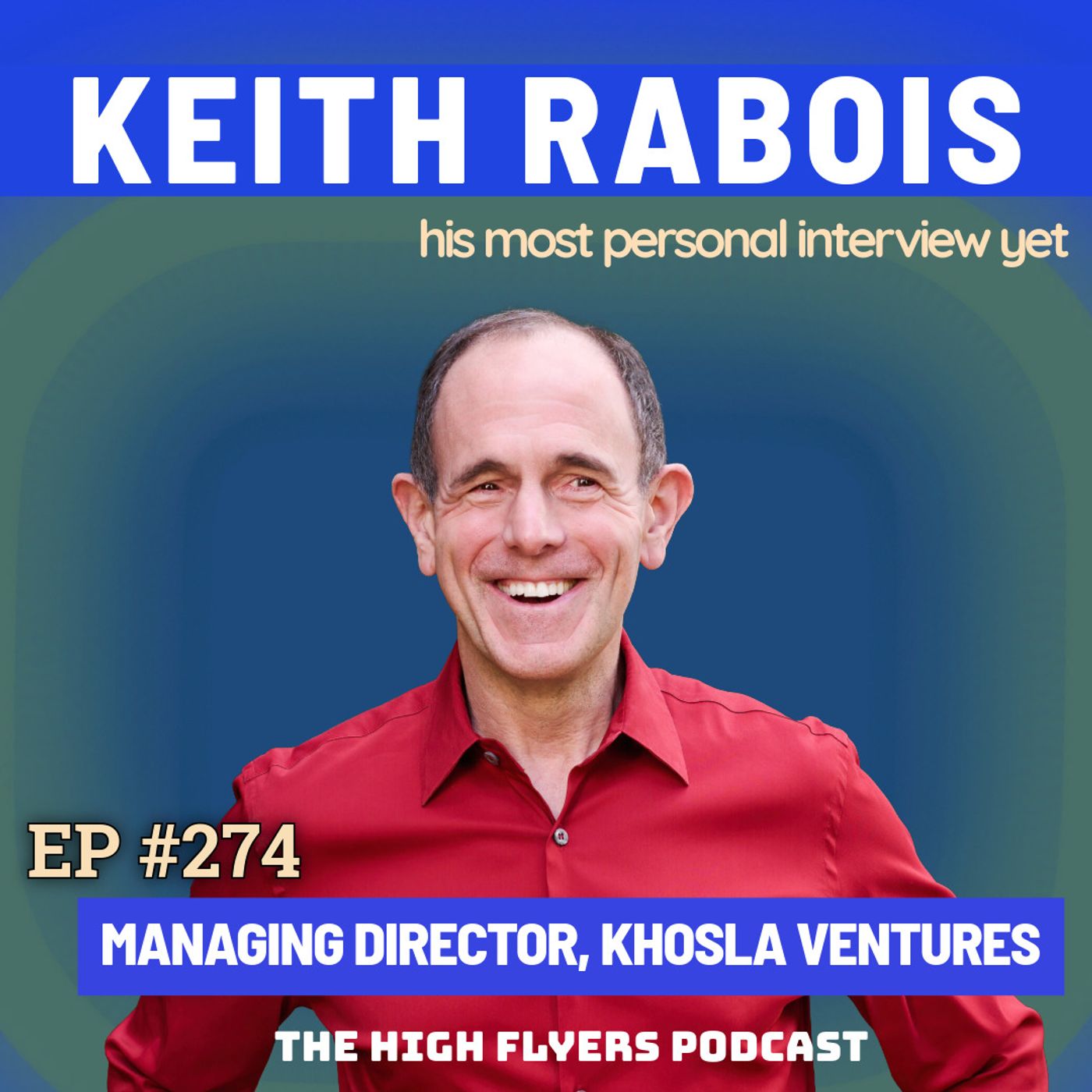 #274 Keith Rabois: His Rarely Discussed Childhood and How He Became One of Tech’s Most Influential Investors | Keith Rabois | 31 August 2026 | 1:06 | This episode is supported by Xero, helping businesses use AI with more control through JAX, its in-platform AI finance partner. Get 90% off your plan for your first 6 months at xero.com/highflyers . ________ Keith Rabois is Managing Director at Khosla Ventures and one of Silicon Valley’s most influential technology investors and operators. He held senior roles at PayPal, LinkedIn, Slide and Square, co-founded Opendoor and OpenStore, and has backed more than 15 companies that have gone public, including YouTube, Palantir, Airbnb and DoorDash. A perennial Forbes Midas List investor, Keith has ranked as high as #4 in the US and #8 globally. In this unusually personal conversation with Vidit, Keith goes back to the beginning: growing up in a middle-class Jewish family in Edison, New Jersey, reading the encyclopedia cover to cover and becoming what he calls a “high-credentialist kid.” He explains how that pursuit took him through Stanford, Harvard Law School, a federal appellate court clerkship and Sullivan & Cromwell before he abandoned the path “cold turkey” at 29 to join a startup almost nobody remembers. Keith reflects on the people who changed the direction of his life, including Peter Thiel, Reid Hoffman, Vinod Khosla and Sam Altman. |
 #258 Cristina Cordova: Linear’s COO on Catching Taxis Alone to School, scaling Stripe as the 28th hire and more | Cristina Cordova | 26 May 2026 | 1:27 | Episode #258 features Cristina Cordova — employee number 28 at Stripe, an early hire at Notion, former Partner at First Round Capital, and now COO of Linear. This conversation is less about startup tactics and more about ambition, identity and operating inside some of Silicon Valley’s most respected companies before they became obvious to everyone else. Cristina reflects on growing up in Los Angeles with a single mother, becoming fiercely independent from a young age, and navigating worlds that initially felt completely foreign to her own. She shares the emotional complexity of spending more than a decade inside elite tech environments, from joining Stripe in its earliest days to helping scale Notion during its breakout years. Vidit and Cristina explore what separates companies that become deeply loved from those that simply grow fast, why some people thrive in ambiguity while others struggle as organisations scale, and how her “run through walls” mentality became both a superpower and a source of tension as companies matured from dozens to thousands of employees. They also discuss partnerships and developer ecosystems at Stripe, community-led growth at Notion, building products with taste and quality, AI and modern software companies, founder psychology, career reinvention, and the challenge of building a meaningful life when work becomes such a large part of who you are. Please enjoy exploring your curiosity. |
| #249 David Haber: a16z General Partner on Living in the Grey, Building Compounding Advantage and Goldman Sachs Acquisition | David Haber | 17 March 2026 | Episode #249 features a rare in-depth conversation with David Haber, General Partner at Andreessen Horowitz, one of the world’s leading venture capital firms (managing $40B+), where he focuses on technology investments in B2B software and financial services. Before that, he founded Bond Street, a fintech startup acquired by Goldman Sachs, where he later worked on strategy, partnerships and new ventures. In discussion with Vidit Agarwal, David reflects on his journey from growing up in a Mexican-Jewish family, sharing deeply personal and professional insights on identity, ambition and belonging. He unpacks what it really takes to build and sell a company from his own lived experience, the emotional comedown after an acquisition, and the shift from founder to operating inside institutions like Goldman Sachs. Hear David's perspective on how to spot competitive compounding advantages in people and businesses, recognising talent early, and whether he'd pick Marc Andreessen or Ben Horowitz for his 5 person learning room. David also compares NYC to SF, and the pros and cons of each city. Please enjoy exploring your curiosity. ________ Get in touch with us via email at contact@curiositycentre.com Join our stable of commercial partners including the Australian Government, Google, KPMG, Vanta, Allens, Macquarie Capital, City of Sydney and more. | |
| #187 Paul Bassat Unplugged: Migrant parents, SEEK’s Breakthrough, Building Square Peg, and Driving Community Impact through AFL and 'Amplify' | Paul Bassat | 22 December 2024 | 1:10 | Paul Bassat is a visionary leader in venture capital, technology, and community impact. As Co-founder and Partner at Square Peg, a top venture capital firm spanning Australia, Israel, and Southeast Asia -- Paul champions founders building transformative global startups. His portfolio includes investments in icons like Canva, Airwallex, and Rokt. In 1997, Paul co-founded SEEK, pioneering one of Australia’s first globally successful tech companies in employment and education. In 2023, he launched AMPLIFY, a non-partisan platform empowering Australians to shape national conversations. Paul also serves as an AFL Commissioner, former Wesfarmers board member, and advocate for community progress Please note: This a replay of the episode that was released in May 2023. *** Hosted by Vidit Agarwal, Founder of Curiosity Center and The High Flyers Podcast. It’s now time to explore your curiosity. If you're keen to discuss sponsorship and partnering with us, email us at vidit@thehighflyerspodcast.com today! -> Find out more about Vanta at http://vanta.com/high and get your compliance superpower for your business today. *** CLICK HERE to read show notes from this conversation. Please enjoy! *** Follow us on Instagram , LinkedIn or Twitter Get in touch with our Founder and Host, Vidit Agarwal directly here Contact us via our website to discuss sponsorship opportunities, recommend future guests or share feedback, we love hearing how to improve! |
 #168 Craig Blair: Trials and Tribulations; Co-Founder of a $1B+ VC Fund in his most candid interview ever | Craig Blair | 26 June 2024 | 1:18 | Craig Blair is the Co-Founder and Partner at Airtree, a globally recognised Venture Capital firm with $1B+ funds under management. Before AirTree, he was a partner at Netus, a venture fund with a global top decile track record. He has also been a founder of three software businesses -- two of which were successful and one of which was a painful learning experience. Craig was born in Ontario, Canada and now lives in Sydney, Australia. This episode is brought to you by KPMG High Growth Ventures and Curiosity Center. It’s now time to explore your curiosity. If you're keen to discuss sponsorship and partnering with us, email us at vidit@thehighflyerspodcast.com today! *** CLICK HERE to read show notes from this conversation. Please enjoy! *** Follow us on Instagram , LinkedIn or Twitter Get in touch with our Founder and Host, Vidit Agarwal directly here Contact us via our website to discuss sponsorship opportunities, recommend future guests or share feedback, we love hearing how to improve! Thank you for rating / reviewing this podcast on Apple Podcasts and Spotify, it helps others find us and convince guests to come on the show! *** The High Flyers Podcast re-imagines the traditional notion of a "high flyer" and is a premier product of the Curiosity Center. The podcast showcases the journeys of relatable role models from their sunrise (childhood) to today. |
| #144 Piruze Sabuncu: Stripe's first hire in South East Asia, turkish influences, partner at SquarePeg! | Piruze Sabuncu | 21 September 2023 | Piruze Sabuncu is a Partner at the Venture Capital firm Squarepeg. She was born in Turkey and currently lives in Singapore. Piruze built and scaled the startup that's now a global juggernaut, Stripe -- in Southeast Asia as employee #1 in the region, following a stint as a founder and working at companies including Dell and Mckinsey. *** Episode guiding points: Learn about Piruze’s sunrise in Turkey, the influences of her big family and the beauty of Turkish culture including reflections on stories from her childhood walking her own path and questioning the status quo in a traditional culture. You might be surprised to hear her primary school teacher thought Piruze would become a diplomat! We cover her move to the US and 10 years living there and how it kickstarted a wild journey of a lifetime both personally and professionally; how and why she started her career in tech in the 2000’s in Austin, Texas of all places! The real benefits of studying an MBA and what gave her the self belief to go found a startup post MBA rather than following her classmates into a global firm. | |
 #130 Paul Bassat: Family grounding, Realities of creating success at Seek + Square Peg Capital, Building a legacy & Australia's future! | Paul Bassat | 16 May 2023 | 1:11 | Paul Bassat is the Co-Founder of the Venture Capital firm, Square Peg with operations in Australia, Singapore and Israel. Previously, he co-founded the success story that is the online recruitment website, Seek. He was born and lives in Melbourne, Australia. In this episode #130 w Paul Bassat , learn about: Paul’s sunrise in Melbourne, Australia with European heritage with his parents coming to Australia as refugees and mum being a holocaust survivor from Poland. Paul shares the influences of his mum, a lawyer and dad an IBM executive, and his two older siblings. I loved asking Paul about his personality in high school, dreams at age 18, the two catalysts to leave his law career and start Seek in the 90’s (note: startups were not a thing back then) — and he’s candid about various parts of the Seek story that haven’t been shared before including the structure of the co-founding team, competing with large incumbents and market leadership in China. We dive deep into the transition from Seek to Square Peg, including living in France with his family, the ways in which the founder experience helped and hindered his investor role, the importance of founder’s having awareness of investor conviction in follow on rounds, and his most painful learnings. And we unpack what Paul would do if he was Australian Prime Minister for a year and how he would like to leave a legacy. 🎉 And our 7-star events are back ! |
 #115 The hungry not the proven, LIVE at the Sunrise festival ft. Niki Scevak, Blackbird VC & Vince Allen, SunDrive | Niki Scevak | 8 January 2023 | 42 min | In this special (live) episode #115 w Niki Scevak and Vince Allen , learn about: Source of Niki’s ambition Vince’s first meeting with Niki Dynamic of a university student as Vince was (Phd I might add) and Niki being more experienced in his career How they’ve helped each other in unexpected ways given the founder/investor relationship is built on a commercial agreement but is very personal Niki and Vince’s global cultural influences Vince unpacks exactly how Australia can be the global leader in solar energy Twitter memes The two shits (Yes, you read hat right) It’s now time to explore your curiosity. Please enjoy! *** Follow us on Instagram , LinkedIn or Twitter Enjoy all episodes via our website and find out all about the Curiosity Center here Email the host Vidit Agarwal directly at vidit@curiositycenter.xyz to discuss sponsorship opportunities, recommend future guests or share feedback. He reads every email. Thank you for rating / reviewing this podcast on iTunes and Spotify, it helps others find us and convince guests to come on the show! |
 #113 Daniel Petre: Insecurities, reporting to Bill Gates, founding Airtree VC, realities of philantrophy | Daniel Petre | 8 December 2022 | 1:05 | In this episode #113 w Daniel Petre , learn about: sunrise in Sydney and immigrant parents from Romania being sent to Australia after World war 2 reflections on childhood not being the happiest and looking for a sense of belonging success at age 18: be a fighter pilot in the Air Force, don’t make it from last 35 applicants psychology being a path Daniel would explore if he was 18 again Joining Microsoft when it wasn’t a household name and rising to one of 5 global VP's under Bill Gates Does he feel successful after time at Microsoft? How birth of first daughter and death of sister re-prioritised life focus Creating a culture of truth seeking as a leader at Airtree Ventures Learnings from Bill Bartee (co-founder of Blackbird + Main Sequence) How Australia can be a philanthropic nation It’s now time to explore your curiosity. Please enjoy! *** Follow us on Instagram , LinkedIn or Twitter Contact us via our website or email Vidit directly at vidit@curiositycenter.xyz to discuss sponsorship opportunities, recommend future guests or share feedback, we love hearing how to improve! Thank you for rating / reviewing this podcast on iTunes and Spotify, it helps others find us and convince guests to come on the show! |
| Michael Tolo: Rich italian heritage, transtition from law to finance & VC, Investing in deep tech founders and creating net new categories of entrepreneurship! | Michael Tolo | 17 August 2022 | Michael is Principal at Blackbird VC and helps uncover & invest in founders and innovation in Synthetic biology, Embedded commerce, Compute, Healthcare and Robotics. In this episode #99, learn about: Sunrise in Melbourne having rich Italian heritage and influences, with his dad being a chemical engineer and mum starting out as a high school teacher and then becoming a financial planner and always being there for Michael and his younger brother. How speaking different languages is he perfect way to see through a clear window into a culture How he started his career in law and then utilised an inspiring learning path to move to finance and then into Venture Capital with Playground VC in the USA (which also has a story behind it) Specific learnings of these 3 transitions and now being back in Australia with Blackbird Why Deep Tech investing fascinates him Distilling misconceptions about founders in Deep Tech 3 key traits to be a successful VC How he spends his perfect day off work Michael's one strength and one weakness It’s now time to explore your curiosity. Please enjoy! *** Follow us on Instagram , LinkedIn or Twitter Contact us via OUR WEBSITE or email Vidit directly at vidit@curiositycenter.xyz to discuss sponsorship opportunities, recommend future guests or share feedback, we love hearing how to improve! Thank you for rating / reviewing this podcast on iTunes and Spotify, it helps others find us and convince guests to come on the show! | |
 #67 Blackbird's Niki Scevak: Zero to one, Courageous ambition, Dandelions and Orchids + secrets to be supremely well read | Niki Scevak | 14 March 2022 | 1:02 | Welcome to episode #67 w Niki Scevak ! Here are 5 key takeaways that I think you will learn from this episode today: How accessing his first internet modem in his childhood changed Niki's world What is the source of his courage and ambition and seeking it in others How does Niki structure his week to balance thinking, meeting founders and growing Blackbird? Applying the Orchids and Dandelions concept to parenting and business What prevents investors from making the first move? BONUS: Starting Blackbird Ventures in 2012: out of 500 meetings, 97 people said yes to raise $29M fund *** TIMESTAMPS 03:05 — Niki quick facts 04:30 - High Flyer in Niki’s life 06:45 - Niki’s family unit and growing up in Newcastle 08:25 - How the internet very early on influenced Niki 10:00 - Source of being courageous and highly ambitious 12:15 - Learnings about successful characteristics in people 14:05 - Living in New York in the early 2000’s 18:10 - How leading thinkers like Peter Thiel have shaped Niki’s mindset 22:30 - How does Niki structure his week to balance thinking, meeting founders and growing Blackbird? 26:00 - Being out of his comfort zone in last 12 months? |
 Michael Batko: Feeling lost in 2018 unsure of himself to becoming CEO of Australia's largest startup accelerator: startmate, habits and rhytms to increase his 'surface area for luck to strike', and influences from polish heritage | Michael Batko | 24 January 2022 | 48 min | Knowledge packed episode with the one and only Michael Batko ! Batko was born in Vienna, Austria to polish parents and had quite a humble sunrise. His explorer love took him to Australia, where he’s been for the past 7 years in Sydney or Melbourne. A number of people I spoke to in the lead up to his recording spoke to Batko’s drive for excellence, his habits and routines and being a very reliable friend and colleague, hear about the secrets that have helped him become this person (worth noting, we can all do it, if we want to). I learn something every time we speak so please do enjoy and let me know your thoughts! *** TIMESTAMPS ————— 02:45 - Quick facts about Michael 03:40 - Re-imagining a high flyer 04:35 - Michael’s sunrise 06:00 - key influences 07:15 - Europe vs Australia attitude to life 08:44 - Heroes growing up 09:30 - Success in life at age 16 10:05 - Creating an impact on the world 10:50 - drive for excellence 11:36 - Brain use to process data, not store it 13:07 - Doing something new every week 14:01 - being lost in 2018 19:15 - painful learning 21:00 - 1%ers in last 2 years 23:25 - energy maintenance 24:50 - working with opposite personality 26:40 - great community building 30:20 - How does a startup accelerator make money? |
T#291 Samir Kaul: Vinod Khosla's Longtime Partner on Why VCs Chase Hype, Losing Millions and Finding His IdentitySamir Kaul · 10 November 2026T#279 Ryan Beiermeister: Founders Fund's Partner on Building for Billions, Human Judgement & How Debate Changed Her LifeRyan Beiermeister · 14 September 2026T#274 Keith Rabois: His Rarely Discussed Childhood and How He Became One of Tech’s Most Influential InvestorsKeith Rabois · 31 August 2026T#258 Cristina Cordova: Linear’s COO on Catching Taxis Alone to School, scaling Stripe as the 28th hire and moreCristina Cordova · 26 May 2026T#249 David Haber: a16z General Partner on Living in the Grey, Building Compounding Advantage and Goldman Sachs AcquisitionDavid Haber · 17 March 2026T#187 Paul Bassat Unplugged: Migrant parents, SEEK’s Breakthrough, Building Square Peg, and Driving Community Impact through AFL and 'Amplify'Paul Bassat · 22 December 2024T#168 Craig Blair: Trials and Tribulations; Co-Founder of a $1B+ VC Fund in his most candid interview everCraig Blair · 26 June 2024T#144 Piruze Sabuncu: Stripe's first hire in South East Asia, turkish influences, partner at SquarePeg!Piruze Sabuncu · 21 September 2023T#130 Paul Bassat: Family grounding, Realities of creating success at Seek + Square Peg Capital, Building a legacy & Australia's future!Paul Bassat · 16 May 2023T#115 The hungry not the proven, LIVE at the Sunrise festival ft. Niki Scevak, Blackbird VC & Vince Allen, SunDriveNiki Scevak · 8 January 2023T#113 Daniel Petre: Insecurities, reporting to Bill Gates, founding Airtree VC, realities of philantrophyDaniel Petre · 8 December 2022TMichael Tolo: Rich italian heritage, transtition from law to finance & VC, Investing in deep tech founders and creating net new categories of entrepreneurship!Michael Tolo · 17 August 2022T#67 Blackbird's Niki Scevak: Zero to one, Courageous ambition, Dandelions and Orchids + secrets to be supremely well readNiki Scevak · 14 March 2022TMichael Batko: Feeling lost in 2018 unsure of himself to becoming CEO of Australia's largest startup accelerator: startmate, habits and rhytms to increase his 'surface area for luck to strike', and influences from polish heritageMichael Batko · 24 January 2022
T#274 Keith Rabois: His Rarely Discussed Childhood and How He Became One of Tech’s Most Influential InvestorsKeith Rabois · 31 August 2026T#258 Cristina Cordova: Linear’s COO on Catching Taxis Alone to School, scaling Stripe as the 28th hire and moreCristina Cordova · 26 May 2026T#249 David Haber: a16z General Partner on Living in the Grey, Building Compounding Advantage and Goldman Sachs AcquisitionDavid Haber · 17 March 2026T#187 Paul Bassat Unplugged: Migrant parents, SEEK’s Breakthrough, Building Square Peg, and Driving Community Impact through AFL and 'Amplify'Paul Bassat · 22 December 2024T#168 Craig Blair: Trials and Tribulations; Co-Founder of a $1B+ VC Fund in his most candid interview everCraig Blair · 26 June 2024T#144 Piruze Sabuncu: Stripe's first hire in South East Asia, turkish influences, partner at SquarePeg!Piruze Sabuncu · 21 September 2023T#130 Paul Bassat: Family grounding, Realities of creating success at Seek + Square Peg Capital, Building a legacy & Australia's future!Paul Bassat · 16 May 2023T#115 The hungry not the proven, LIVE at the Sunrise festival ft. Niki Scevak, Blackbird VC & Vince Allen, SunDriveNiki Scevak · 8 January 2023T#113 Daniel Petre: Insecurities, reporting to Bill Gates, founding Airtree VC, realities of philantrophyDaniel Petre · 8 December 2022TMichael Tolo: Rich italian heritage, transtition from law to finance & VC, Investing in deep tech founders and creating net new categories of entrepreneurship!Michael Tolo · 17 August 2022T#67 Blackbird's Niki Scevak: Zero to one, Courageous ambition, Dandelions and Orchids + secrets to be supremely well readNiki Scevak · 14 March 2022TMichael Batko: Feeling lost in 2018 unsure of himself to becoming CEO of Australia's largest startup accelerator: startmate, habits and rhytms to increase his 'surface area for luck to strike', and influences from polish heritageMichael Batko · 24 January 2022