Updates

  1. 137 new fund letters and reports, each with its own page: Kayne Anderson Rudnick (48 market briefings, KayneCast episodes and TV commentaries), Shelton Capital Management (48 shareholder reports and a commentary), Lakehouse Capital (10 Small Companies Fund letters), Smead (5 newsletters), RIT Capital Partners (5 monthly commentaries), Kovitz, Legal & General, Generation, Hosking, Marram, Munro, Oldfield and others.
  2. 200 new fund letters and reports, each with its own page: Spheria (41 monthly reports), Peapack Private (41 weekly recaps and planning newsletters), Fort Washington (23), Polen Capital (15), Aristotle Pacific (14), Riverwater (13), Chou (10), Apollo Asia Fund (8, back to 1998), Personal Asset Trust, Rockwood Strategic, J Capital Research, I/O Fund, Penn Davis McFarland, Pomona and others.
  3. Investor pages have one Investments tab with shares, changes, % owned, class, market cap and Market cap and Status filters, a Funds tab listing each fund the firm runs, and assets under management from Form ADV. The Investors table shows AUM and current investments, and its search finds investors by what they hold.
  4. Filters, search and sort stay as you left them when you come back to a section. Person cards look like book cards. Company pages name their Investors tab Ownership. Kind and Sector filters use four kinds and GICS sectors with industries. Dead links left the Links tabs.
  5. 190 more investors from fiscal.ai's list, with their sites, letters, partners and 13F holdings; 556 more partner descriptions. Experts now lists only people.
  6. Fund letters lists 144 new documents from 23 firms, each with its own page: a summary, key insights and quotes. Among them: 37 BlackRock articles, 21 Value Partners monthly notes, eight Baron Capital letters, six Stone Sentinel letters to partners, seven Value Line portfolio manager Q&As, BNY's 2026 earnings releases and Starboard Value's 2026 conference presentations.
  7. 584 more investors, with their websites, 6,776 letters from their own sites, 1,385 partners with pages and the 13F holdings of 213 firms. New letters arrive daily from 290 more archives.
  8. Media and Companies filter by GICS sector and industry group, taken from the companies an episode or page names. 1,860 more company pages show a logo, the SEC's list included.
  9. The home page counts what the platform holds and lists features such as the document reader, the player and saved marks. Settings sits at the foot of the rail. Book cards are a quarter wider, so rows hold fewer. Companies drops the Named in filter, and the Role list in your account runs A to Z.
  10. Investor pages of 13 firms show their newsroom's latest posts. New 13F filings are read as the SEC publishes them.
  11. Investor pages have an Investments tab: 13,975 holdings for 105 investors, from their 13F filings with the SEC and their own portfolio pages, with status and sector. 7,338 more companies have a page of their own.
  12. A podcast or YouTube episode keeps playing while you move around the site, in a bar with skip, speed and volume. Media tables show each episode's length and description.
  13. Press releases come from each company's own newsroom (167 companies); SEC filings sit on the Filings tab. Tickers name their exchange, and a company's Experts tab includes guests whose episode description names it.
  14. Letter types now include Market commentary, Fact sheet, Interim report, Annual report, Proxy circular and Governance document. The reader opens over the whole window.
  15. Partners of investment firms have 2,836 appearances and 580 pieces of writing on their pages; Derek Sivers's page lists every book he rates, with his rating.
  16. Fund letters lists three Akre Focus shareholder reports: the ETF's annual report for the year to July 2026, its semi-annual report to January 2026 and the fund's semi-annual report to January 2025, each with its own page: a summary, key insights and quotes.
  17. 837 partners of 73 investment firms now have their own pages, with title, description, photograph and social accounts; Andreessen Horowitz partners' pages also list their writing on a16z.com.
  18. Company pages have a Press releases tab: 8,229 releases for 203 companies, from SEC filings and company newsrooms. Companies filter by For-profit or Non-profit. Own media is a table with filters. Media filters by sector and industry. Publication pages link their publisher in the description.
  19. The Unilever page's Letters tab shows what each fund letter says about Unilever, word for word with its page, and whether the letter is bullish, bearish, mixed or neutral. Filter by sentiment, and see 10 letters at a time.
  20. 492 more fund letters and 3,183 more articles show the day they were published, read from each letter's first page or each article's own page.
  21. The PDF reader has a search box: type words to see every match in the document and step through them. About 540 letters that were web pages, among them Oakmark's commentaries, Bill Miller's letters and Howard Marks's memos, now open in the reader.
  22. Person pages: recommendations open with tier 1 books; one button per organisation; transcripts sit on their episodes; the books on 129 reading lists joined the Recommends tabs.
  23. Companies lists every company with a ticker on the SEC's list, with a Source filter. A quote on a company page opens the letter at that page with the words marked. A company's Media tab lists only episodes that name it, and a new Own media tab lists its podcasts, publications and YouTube channel. Show pages link their publisher. A page opened from a table no longer shows that table's filters beside it.
  24. Company, investor and person pages show more of their social accounts: Facebook, TikTok, Bluesky, Medium, GitHub, Discord and podcast shows. Investor pages list every partner the firm's own team page names: 965 people across 73 investors, 98 for Andreessen Horowitz.
  25. About 170 more letters and papers open in the reader: Mohnish Pabrai's letters and transcripts from his site's new folder, and free copies of papers by Asness, Harvey, Altman, Lo and others from their own or their schools' sites.
  26. Every company a fund letter names has a page, with the letters and quotes that name it: 47 new pages, among them Atom Computing, Hugging Face, Rolls-Royce Holdings and Westinghouse Electric. Company pages have a Quotes tab.
  27. A person's Writing tab has a Type column and filter (Article, Essay, Transcript, Speech, Foreword, Interview and the rest), and Publication names only the publication that published each piece.
  28. Fund letters opens on the newest published letter, and a letter or paper found by search opens its own page here instead of the publisher's site.
  29. A letter or paper with a copy on the site opens its PDF over its page, with a button to open it in a new tab. Select text to highlight or underline it; signed-in readers keep their marks in their account. Each quote opens the PDF at its page with its words marked, and a Source link leads to the publisher's original.
  30. Fund letters lists 61 more documents, each with its own page: Fairfax's 2025 and 2026 interim reports, proxy circulars and 2025 annual report (with their French editions), 26 Charlie Munger meeting transcripts, talks and essays, Third Point's 2026 monthly reports and Malibu Life's interim results, and a Seth Klarman interview. Papers adds Richard Thaler's two 2020 editorials on nudges.
  31. Fund letters lists Lux Capital's letters for Q2 and Q3 2026, by Josh Wolfe, each with its own page: a summary, key insights and quotes.
  32. Fund letters lists Brookfield's letter to shareholders for Q3 2026, by Bruce Flatt, with its own page: a summary, key insights and quotes.
  33. Fund letters lists Howard Marks's memo of 11 November 2026, A Layman Thinks About AI, with its own page: a summary, key insights and quotes.
  34. Fund letters lists 118 more letters, each with its own page: 44 weekly commentaries by Jeremy Siegel from 2026, 31 issues of Van Tharp's newsletter from 2018, 23 Pabrai Investment Funds letters from 2021 to Q3 2026, 13 Efficient Frontier essays by William Bernstein, Oakmark's three 3Q 2026 commentaries, two Lindsell Train reports, a John Hussman comment and Third Point's Q3 2026 letter.
  35. 2,027 more books carry a one-line description in the Books table and on their pages; 7,067 of 7,715 have one, every tier 1, 2 and 3 book among them.
  36. Fund letters lists 187 more letters from 19 firms, among them Permanent Equity, Social Capital, Lux Capital, Square Peg, Bestinver, Cobas, Sequoia Fund, Marketfield and EquityCompass; each shows on its investor's page and has a page of its own.
  37. 2,928 more books carry a one-line description in the Books table and on their pages, so every tier 1, 2 and 3 book has one; 5,040 in all.
  38. Every publication on Newsletters has its own page: its writing, its writers, its staff and who recommends it. Investor pages have a Management tab; a company's Experts tab now leaves out its own people, who list under Management. Tabs on a phone move sideways only.
  39. Every fund letter and research paper has its own page: the thesis, the PDF, the companies and books it names, and for 176 letters and 24 papers so far a summary, key insights and quotes with their page.
  40. 99 books that no page listed now sit under their topics in Books, among them Caste, American Prometheus and Pale Blue Dot.
  41. Newsletters lists every newspaper, magazine, investment newsletter, journal and blog the reference holds, 442 in all, with the people who write there. The search box keeps your last 20 searches. You can create an account.
  42. 283 books that fund managers recommend in their letters are on the shelf, each with the letter's own words and page; investor pages have a Recommends tab.
  43. Person, company, investor and show pages link their own accounts on X, Threads, Instagram, LinkedIn, YouTube and Substack: 275 people, 552 companies and organisations, 88 investors and 478 shows.
  44. 716 more book recommendations name their source: the person's own reading list, letter, blog post, speech or interview, or an article that reports it. 232 of them quote the person's own words about the book, on the book card and on the book's page.
  45. Every US-listed company has a page with its SEC filings. Company pages list their experts and their management, past and present. Fund managers sit under Investors. Each show has a page of its episodes, and an episode page names its guests and hosts. Biographies lists groups, then people. Breadcrumbs show where a page sits.
  46. Media lists every podcast episode, video, interview and talk, over 10,000, by person, company, publisher and event; each filter searches its own choices. Books opens on its table, then Browse, then Authors and Recommenders. A filter's count no longer covers its arrow.
  47. A book that no company, country or subject page lists shows its topics under Where it sits in the reference. On a phone, a page's tabs scroll sideways only. Descriptions read the same on every page. See them in the Experts tab lists every expert the page names.
  48. Every podcast episode, video and interview has its own page with a video or audio player and a link to the source. Investor pages show each company's sector and market cap; firms such as Berkshire Hathaway have one page that holds their letters and their company tabs. Letters tabs filter by company and search the theses. Companies filter by Public, Private and Defunct and link each company's website.
  49. Every tab, view and search has its own address, such as /books/table/asset or /letters/companies, so Back works and a link opens the same place. Page addresses no longer end in .html. Fund letters, Investors, Companies and Papers load about a fifth of the data they did.
  50. Fund letters has a Companies tab: every company the letters name, with its market cap, sector, country, and how many letters and investors name it. Investor pages link each investor's website. Lists in table cells end with “… and N more” at every width.
  51. 1,120 more book summaries; descriptions for 373 papers; pages for 137 more companies, each with the fund letters that discuss it; 215 official photographs; search has its own page.
  52. 411 more books have a summary; person pages list 930 more of the books they wrote; 147 people show their official photograph.
  53. Every investor has a page with its letters and the companies they discuss; company pages list the investors whose letters name them.
  54. A Companies section at the top of the rail lists every company the books, experts and fund letters name.
  55. Person pages list letters, writing, profiles and links as sortable tables with filters, and show each person's companies as links; Fund letters show each letter's description in its own column.
  56. Experts show a checked job title and a short description of each person; 30 more people have photographs.
  57. Every company, fund, university and publication the experts work for has a page listing the people there.
  58. Fund letters show each letter's thesis and filter by it; 225 person pages list the essays, columns and newsletter issues the person wrote.
  59. Person pages list every essay and newsletter issue a person wrote, and their own books as a table in List view.
  60. Recommends shows the five largest kinds of book and the rest under More; browse pictures load sooner.
  61. Podcasts and talks link the original episode, filter by Audio and video or Press, and list each publisher once.
  62. Pages are wider, Recommends has List and Grid, and a filter clicked again turns off.
  63. Book cards sit in a ruled grid with Open Library and Goodreads links and each book's one-line note.
  64. Funds is now Investors; each investor's styles are buttons that filter the table.
  65. Podcasts and talks on a person's page filter by year and publisher and show as a list or a grid of pictures.
  66. Quotes show only people's own words: 472 summaries written by list sites are gone.
  67. Country pages open from Browse again, and every link on the shelf lands on a page.
  68. Subject and person pages show their sections as tabs, and each book appears once on a person's page.
  69. Book cards show the quote, who said it and the source; grids show five cards to a row.
  70. On a phone, a menu holds the sections, search, Updates, Feedback and dark mode.
  71. Feedback takes a screenshot of the page with no browser prompt, opens a screenshot full size when you click it, and clears itself once sent.
  72. Book cards are centred, search names the topic each book sits in, and any text cut short shows whole on hover.
  73. Search groups its results by kind: people, companies, geographies, subjects, topics, books, funds, fund letters and papers.
  74. The Books table lists who recommended each book by name, and the browser tab names the section you are in.
  75. Feedback can take a screenshot of the page, or one you paste or choose, and opens in the corner beside Updates.
  76. Each rail button reopens its section where you left it, and Browse, Table and People show on every book and subject page.
  77. Filters grey out choices that hold nothing instead of hiding them, and Books › People filters by authors or recommenders.
  78. Feedback takes a subject line and up to three screenshots.
  79. Biographies are grouped by the person they are about: 41 new pages, from Abraham Lincoln to Lee Kuan Yew.
  80. Sport splits into 23 sports, and Religion into one topic per faith.
  81. Book lists show as cards: the cover, one recommendation quote and every recommender by name.
  82. Seventeen subjects that had two or three pages under different names now have one page each.
  83. Every page lists its Experts as authors and recommenders, with a link to them on the Experts tab.
  84. Economics, Financial history, Financial panics and Accounting are subjects of their own, with one page per financial crisis.
  85. Book, person and subject pages open inside the app, so the tabs stay in view.
  86. 996 more book covers, and photographs or logos for 227 more people and companies.
  87. Books › Browse shows every subject as cards, and the rail holds Fund letters, Papers, Experts, Books and Funds.
  88. Every topic over 150 books splits into narrower topics, each with a page of its own.

Send feedback

What is it?
Screenshots, up to 3 (optional)
or paste one with Ctrl+V

We use your email only to reply to you.

T

Podcast · 11 episodes in the reference, 2023 to 2026

The Julia La Roche Show

Published by Julia La Roche

Host
JLJulia La Roche

Episodes

Ray Dalio on the Risky Period for Investors, Bubble Warnings, and a Coming Debt SqueezeRay Dalio8 October 202634 minRay Dalio, founder of Bridgewater Associates, joins The Julia La Roche Show for a special episode featuring their fireside chat from the Greenwich Economic Forum. Dalio explains the five forces he sees driving today's world: the debt cycle, internal political conflict, the breakdown of the post-1945 geopolitical order, acts of nature, and technology, especially AI. He says rising bond yields reflect a basic supply-and-demand problem. Washington spends about $7 trillion a year but takes in about $5 trillion, and foreign buyers like China and Japan are pulling back. He warns that a debt "heart attack" is likely within the next two years. He calls the period after the midterms and through 2028 especially risky, and says markets are in a bubble by his own indicators, comparing today to the tech boom before 1929. Dalio also discusses why he recommends 5–15% in gold, why he holds only about 1% in Bitcoin, and where he sees opportunity: companies being transformed by AI, ASEAN countries, Singapore, the UAE, and inflation-indexed bonds with real yields near 3%. He closes with the three things that make a country successful. A special thank you to the Greenwich Economic Forum for having me as a moderator!
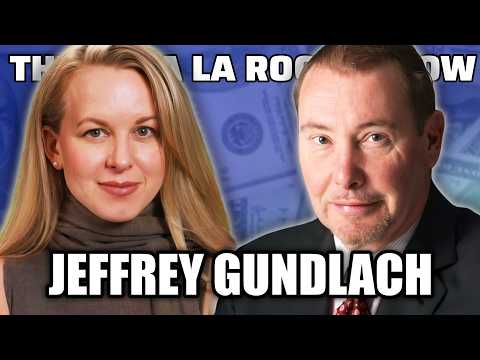
Jeffrey Gundlach: We've Crossed to the Hard Side of the StreetJeffrey Gundlach16 September 20261:02Legendary bond investor Jeffrey Gundlach, founder and CEO of DoubleLine Capital, returns to The Julia La Roche Show. He warns that the market has "crossed over to the hard side of the street." With the Shiller CAPE above 42, he says history points to negative real returns for the next decade. Cracks are already showing in AI-related credit, where junk bonds and bank loans have widened sharply while the rest of high yield holds up. Gundlach says he now wants out of the AI "epicenter" entirely. He walks through his current portfolio: equal-weight equities, a barbell of high-quality bonds and local-currency emerging market debt, gold, commodities, and short-duration "dry powder." He expects CPI to print above 4% as oil tops $100 and diesel hits $8 a gallon, and he predicts a 25 basis point hike from Fed Chair Kevin Warsh. He also explains why 30-year TIPS won't protect investors from rising rates and why he's skeptical of Treasury Secretary Scott Bessent's Operation Twist. He sees a dangerous web of private credit, arbitraged credit ratings, and offshore reinsurance, calling private credit the fuse and insurance companies the bomb.
Jeffrey Gundlach: Private Credit Is A Total, Unmitigated Disaster, And It’s Going To Get WorseJeffrey Gundlach27 March 20261:04Legendary bond investor Jeffrey Gundlach, founder and CEO of DoubleLine Capital, makes his debut on The Julia La Roche Show for a wide-ranging conversation on the most pressing risks facing investors in 2026. Gundlach makes the case that we are living through a fundamental regime shift — one where the next recession brings rising long-term interest rates and a falling dollar, the exact opposite of what most investors expect. He breaks down why the private credit market is shaping up to be the defining financial stress of this cycle, drawing parallels to subprime in 2006 and revealing just how opaque and potentially dangerous the marks in that market really are. He also shares his current asset allocation, explains why American investors should have 100% of their equity exposure outside the US, and lays out two scenarios — dollar debasement or outright debt restructuring — for how America's unsustainable fiscal path eventually resolves. Plus: why he's avoiding general obligation munis in California, Illinois and New York, where gold goes from here, and his non-consensus prediction for the next presidential election.
#302 Whitney Tilson: The Hedge Fund Manager Who Ran Against Mamdani on the "Trojan Horse" Mayor, Why NYC Will Thrive Anyway, Riding This Bull Market & His Top Stock Picks and "Stinky Six" to AvoidWhitney Tilson6 November 20251:01Value investor and former New York City mayoral candidate Whitney Tilson returns to The Julia La Roche Show following the election of Zohran Mamdani, a Democratic socialist, as NYC's new mayor. Tilson reflects on the election results, expressing concern about the candidate he called a "Trojan horse for the DSA" with dangerous ideas about defunding police and seizing private property—yet remains bullish on New York City's future. He also shares his market outlook, favorite long ideas including Berkshire Hathaway and Amazon, and the "stinky six" stocks he's avoiding right now. This episode is brought to you by VanEck. Learn more about the VanEck Rare Earth and Strategic Metals ETF: http://vaneck.com/REMXJulia This episode is brought to you by Monetary Metals.
#219 Campbell Harvey: End of Boom-Bust Cycle? | Will Yield Curve Show First False Signal?Campbell R. Harvey12 December 20241:05Professor Campbell Harvey, professor of finance at the Fuqua School of Business at Duke University and the inventor of the most famous recession indicator — the inverted yield curve — returns to The Julia La Roche Show for episode 219 to discuss the state of the economy, the yield curve, and what's ahead for U.S. growth. Links: DeFI and the Future of Finance: https://www.amazon.com/DeFi-Future-Finance-Campbell-Harvey/dp/1119836018 https://www.fuqua.duke.edu/faculty/campbell-harvey https://people.duke.edu/~charvey/ https://twitter.com/camharvey Timestamps: 00:02 Introduction to Professor Campbell Harvey 00:51 BlackRock's "end of boom-bust cycle" thesis 04:15 Historical perspective on market cycles 06:14 Impact of wealthy consumers on economy 07:13 Role of technological innovation 11:37 U.S. leadership in innovation 14:31 Growth prospects and productivity potential 16:09 Post-election growth outlook 24:56 U.S. debt and deficit challenges 28:16 Social Security sustainability issues 32:51 Inverted yield curve indicator discussion 40:11 Impact of technological innovations 45:21 Federal Reserve policy critique 50:20 Distortions from Fed's zero-rate policy 54:18 Future consequences of Fed decisions 59:40 Closing thoughts on U.S. prospects
Andrew Wilkinson On Going From A Barista To A BillionaireAndrew Wilkinson1 July 2024
The State Of The Economy, Markets, And The Mistake Of Predicting Doom And Gloom | Whitney TilsonWhitney Tilson12 March 202453 minFormer hedge fund manager Whitney Tilson, now Editor at Stansberry Research, returns to The Julia La Roche Show for a wide-ranging discussion on the economy, markets, and common mistakes investors make. Whitney discusses the strength of the macro picture and the importance of not betting against America. In this conversation, Whitney shares stock picks, reflects on missed opportunities, and discusses the importance of letting winners run. He also talks about closing his hedge fund, lessons learned, and the wisdom he gained from the late Charlie Munger. Tilson emphasizes the need for patience and discipline in investing and highlights the five calamities that can derail a successful life. Links: Stansberry Research: https://stansberryresearch.com/our-team/whitney-tilson The Art of Playing Defense: https://www.amazon.com/Art-Playing-Defense-Falling-Behind-ebook/dp/B091QFHJ6B Timestamps 00:00 Introduction 00:55 Big picture view of the economy and markets 02:43 Caution against letting politics influence investment decisions 03:38 The mistake of predicting gloom and doom 05:24 Betting against America doesn’t make sense 06:59 There are warning flags, but stocks aren’t in bubble territory 8:10 Bitcoin smells frothy, but ‘I would never short it’ 09:22 Stock Picks: Berkshire Hathaway, Meta, and other opportunities 10:02 Bitcoin is an instrument of pure speculation 15:56 Stock pick ideas - Berkshire Hathaway, Meta, etc.
Raoul Pal: Get Ready For 'Macro Summer'—Falling Rates, Falling Inflation, And Growth Picking UpRaoul Pal21 November 202359 minRaoul Pal, founder and CEO of Real Vision and author of the Global Macro Investor, joins Julia La Roche on episode 121 to share his macro outlook, views on cryptocurrency and AI, and his Exponential Age thesis. In this episode, Pal makes a case that we’re currently in the bottom of the business cycle and could be headed for what he’s coined as “macro summer” next year. According to Pal, a macro summer is the “holy grail for macro investing,” characterized by falling rates, falling inflation and growth picking up. Pal noted that tech stocks and crypto priced in a recession last year, and they’re forward-looking, indicating a more positive outlook for the economy, while the Russell 2000 and oil are more reflective of the present day and a slow economy. Pal, a Goldman Sachs alum, previously co-managed GLG's global macro fund, one of the world's largest. Since retiring back in 2004 at age 36, he now authors a research letter, The Global Macro Investor (GMI) , which is read by some of the most influential hedge funds and asset managers. He's also the founder of Real Vision, an online subscription media company specializing in long-form investor interviews.
Whitney Tilson On Avoiding The 5 Calamities That Can Ruin YouWhitney Tilson13 January 20231:34Former hedge fund manager Whitney Tilson, now the founder and CEO of newsletter publisher Empire Financial Research, joins Julia La Roche on episode 46 to share some worldly wisdom and his views on the market. The bulk of this conversation focuses on life lessons from his new book “The Art Of Playing Defense: How To Get Ahead By Not Falling Behind.” Whitney outlines five calamities to avoid, including: Loss of reputation and/or wealth Loneliness and/or suffering a permanently impaired relationship with a loved one A bad marriage, often ending in divorce Addiction and abuse The death, serious injury, or illness of yourself or a loved one In this episode, Whitney, 56, revisits his childhood, including growing up in Africa with his educator parents. He also shares whether or not he ate the marshmallow in the famed Stanford marshmallow experiment, a psychological study that examined delayed gratification among young children. He recounts how he met his wife Susan (thanks to his friend Bill Ackman!) and his journey from being the lowest-paid Harvard Business School graduate in his class working for a non-profit to the world of hedge funds (also thanks to Bill Ackman). Throughout the conversation, there are plenty of lessons gleaned over the years from being a long-time student and follower of Warren Buffett and Charlie Munger.
How To Invest And Beat The Pros | Dr. Burton MalkielBurton G. Malkiel
Jim Rogers: Out Of US Stocks, Not A Bubble Yet & Holding Not Buying GoldJim Rogers