Updates

  1. 137 new fund letters and reports, each with its own page: Kayne Anderson Rudnick (48 market briefings, KayneCast episodes and TV commentaries), Shelton Capital Management (48 shareholder reports and a commentary), Lakehouse Capital (10 Small Companies Fund letters), Smead (5 newsletters), RIT Capital Partners (5 monthly commentaries), Kovitz, Legal & General, Generation, Hosking, Marram, Munro, Oldfield and others.
  2. 200 new fund letters and reports, each with its own page: Spheria (41 monthly reports), Peapack Private (41 weekly recaps and planning newsletters), Fort Washington (23), Polen Capital (15), Aristotle Pacific (14), Riverwater (13), Chou (10), Apollo Asia Fund (8, back to 1998), Personal Asset Trust, Rockwood Strategic, J Capital Research, I/O Fund, Penn Davis McFarland, Pomona and others.
  3. Investor pages have one Investments tab with shares, changes, % owned, class, market cap and Market cap and Status filters, a Funds tab listing each fund the firm runs, and assets under management from Form ADV. The Investors table shows AUM and current investments, and its search finds investors by what they hold.
  4. Filters, search and sort stay as you left them when you come back to a section. Person cards look like book cards. Company pages name their Investors tab Ownership. Kind and Sector filters use four kinds and GICS sectors with industries. Dead links left the Links tabs.
  5. 190 more investors from fiscal.ai's list, with their sites, letters, partners and 13F holdings; 556 more partner descriptions. Experts now lists only people.
  6. Fund letters lists 144 new documents from 23 firms, each with its own page: a summary, key insights and quotes. Among them: 37 BlackRock articles, 21 Value Partners monthly notes, eight Baron Capital letters, six Stone Sentinel letters to partners, seven Value Line portfolio manager Q&As, BNY's 2026 earnings releases and Starboard Value's 2026 conference presentations.
  7. 584 more investors, with their websites, 6,776 letters from their own sites, 1,385 partners with pages and the 13F holdings of 213 firms. New letters arrive daily from 290 more archives.
  8. Media and Companies filter by GICS sector and industry group, taken from the companies an episode or page names. 1,860 more company pages show a logo, the SEC's list included.
  9. The home page counts what the platform holds and lists features such as the document reader, the player and saved marks. Settings sits at the foot of the rail. Book cards are a quarter wider, so rows hold fewer. Companies drops the Named in filter, and the Role list in your account runs A to Z.
  10. Investor pages of 13 firms show their newsroom's latest posts. New 13F filings are read as the SEC publishes them.
  11. Investor pages have an Investments tab: 13,975 holdings for 105 investors, from their 13F filings with the SEC and their own portfolio pages, with status and sector. 7,338 more companies have a page of their own.
  12. A podcast or YouTube episode keeps playing while you move around the site, in a bar with skip, speed and volume. Media tables show each episode's length and description.
  13. Press releases come from each company's own newsroom (167 companies); SEC filings sit on the Filings tab. Tickers name their exchange, and a company's Experts tab includes guests whose episode description names it.
  14. Letter types now include Market commentary, Fact sheet, Interim report, Annual report, Proxy circular and Governance document. The reader opens over the whole window.
  15. Partners of investment firms have 2,836 appearances and 580 pieces of writing on their pages; Derek Sivers's page lists every book he rates, with his rating.
  16. Fund letters lists three Akre Focus shareholder reports: the ETF's annual report for the year to July 2026, its semi-annual report to January 2026 and the fund's semi-annual report to January 2025, each with its own page: a summary, key insights and quotes.
  17. 837 partners of 73 investment firms now have their own pages, with title, description, photograph and social accounts; Andreessen Horowitz partners' pages also list their writing on a16z.com.
  18. Company pages have a Press releases tab: 8,229 releases for 203 companies, from SEC filings and company newsrooms. Companies filter by For-profit or Non-profit. Own media is a table with filters. Media filters by sector and industry. Publication pages link their publisher in the description.
  19. The Unilever page's Letters tab shows what each fund letter says about Unilever, word for word with its page, and whether the letter is bullish, bearish, mixed or neutral. Filter by sentiment, and see 10 letters at a time.
  20. 492 more fund letters and 3,183 more articles show the day they were published, read from each letter's first page or each article's own page.
  21. The PDF reader has a search box: type words to see every match in the document and step through them. About 540 letters that were web pages, among them Oakmark's commentaries, Bill Miller's letters and Howard Marks's memos, now open in the reader.
  22. Person pages: recommendations open with tier 1 books; one button per organisation; transcripts sit on their episodes; the books on 129 reading lists joined the Recommends tabs.
  23. Companies lists every company with a ticker on the SEC's list, with a Source filter. A quote on a company page opens the letter at that page with the words marked. A company's Media tab lists only episodes that name it, and a new Own media tab lists its podcasts, publications and YouTube channel. Show pages link their publisher. A page opened from a table no longer shows that table's filters beside it.
  24. Company, investor and person pages show more of their social accounts: Facebook, TikTok, Bluesky, Medium, GitHub, Discord and podcast shows. Investor pages list every partner the firm's own team page names: 965 people across 73 investors, 98 for Andreessen Horowitz.
  25. About 170 more letters and papers open in the reader: Mohnish Pabrai's letters and transcripts from his site's new folder, and free copies of papers by Asness, Harvey, Altman, Lo and others from their own or their schools' sites.
  26. Every company a fund letter names has a page, with the letters and quotes that name it: 47 new pages, among them Atom Computing, Hugging Face, Rolls-Royce Holdings and Westinghouse Electric. Company pages have a Quotes tab.
  27. A person's Writing tab has a Type column and filter (Article, Essay, Transcript, Speech, Foreword, Interview and the rest), and Publication names only the publication that published each piece.
  28. Fund letters opens on the newest published letter, and a letter or paper found by search opens its own page here instead of the publisher's site.
  29. A letter or paper with a copy on the site opens its PDF over its page, with a button to open it in a new tab. Select text to highlight or underline it; signed-in readers keep their marks in their account. Each quote opens the PDF at its page with its words marked, and a Source link leads to the publisher's original.
  30. Fund letters lists 61 more documents, each with its own page: Fairfax's 2025 and 2026 interim reports, proxy circulars and 2025 annual report (with their French editions), 26 Charlie Munger meeting transcripts, talks and essays, Third Point's 2026 monthly reports and Malibu Life's interim results, and a Seth Klarman interview. Papers adds Richard Thaler's two 2020 editorials on nudges.
  31. Fund letters lists Lux Capital's letters for Q2 and Q3 2026, by Josh Wolfe, each with its own page: a summary, key insights and quotes.
  32. Fund letters lists Brookfield's letter to shareholders for Q3 2026, by Bruce Flatt, with its own page: a summary, key insights and quotes.
  33. Fund letters lists Howard Marks's memo of 11 November 2026, A Layman Thinks About AI, with its own page: a summary, key insights and quotes.
  34. Fund letters lists 118 more letters, each with its own page: 44 weekly commentaries by Jeremy Siegel from 2026, 31 issues of Van Tharp's newsletter from 2018, 23 Pabrai Investment Funds letters from 2021 to Q3 2026, 13 Efficient Frontier essays by William Bernstein, Oakmark's three 3Q 2026 commentaries, two Lindsell Train reports, a John Hussman comment and Third Point's Q3 2026 letter.
  35. 2,027 more books carry a one-line description in the Books table and on their pages; 7,067 of 7,715 have one, every tier 1, 2 and 3 book among them.
  36. Fund letters lists 187 more letters from 19 firms, among them Permanent Equity, Social Capital, Lux Capital, Square Peg, Bestinver, Cobas, Sequoia Fund, Marketfield and EquityCompass; each shows on its investor's page and has a page of its own.
  37. 2,928 more books carry a one-line description in the Books table and on their pages, so every tier 1, 2 and 3 book has one; 5,040 in all.
  38. Every publication on Newsletters has its own page: its writing, its writers, its staff and who recommends it. Investor pages have a Management tab; a company's Experts tab now leaves out its own people, who list under Management. Tabs on a phone move sideways only.
  39. Every fund letter and research paper has its own page: the thesis, the PDF, the companies and books it names, and for 176 letters and 24 papers so far a summary, key insights and quotes with their page.
  40. 99 books that no page listed now sit under their topics in Books, among them Caste, American Prometheus and Pale Blue Dot.
  41. Newsletters lists every newspaper, magazine, investment newsletter, journal and blog the reference holds, 442 in all, with the people who write there. The search box keeps your last 20 searches. You can create an account.
  42. 283 books that fund managers recommend in their letters are on the shelf, each with the letter's own words and page; investor pages have a Recommends tab.
  43. Person, company, investor and show pages link their own accounts on X, Threads, Instagram, LinkedIn, YouTube and Substack: 275 people, 552 companies and organisations, 88 investors and 478 shows.
  44. 716 more book recommendations name their source: the person's own reading list, letter, blog post, speech or interview, or an article that reports it. 232 of them quote the person's own words about the book, on the book card and on the book's page.
  45. Every US-listed company has a page with its SEC filings. Company pages list their experts and their management, past and present. Fund managers sit under Investors. Each show has a page of its episodes, and an episode page names its guests and hosts. Biographies lists groups, then people. Breadcrumbs show where a page sits.
  46. Media lists every podcast episode, video, interview and talk, over 10,000, by person, company, publisher and event; each filter searches its own choices. Books opens on its table, then Browse, then Authors and Recommenders. A filter's count no longer covers its arrow.
  47. A book that no company, country or subject page lists shows its topics under Where it sits in the reference. On a phone, a page's tabs scroll sideways only. Descriptions read the same on every page. See them in the Experts tab lists every expert the page names.
  48. Every podcast episode, video and interview has its own page with a video or audio player and a link to the source. Investor pages show each company's sector and market cap; firms such as Berkshire Hathaway have one page that holds their letters and their company tabs. Letters tabs filter by company and search the theses. Companies filter by Public, Private and Defunct and link each company's website.
  49. Every tab, view and search has its own address, such as /books/table/asset or /letters/companies, so Back works and a link opens the same place. Page addresses no longer end in .html. Fund letters, Investors, Companies and Papers load about a fifth of the data they did.
  50. Fund letters has a Companies tab: every company the letters name, with its market cap, sector, country, and how many letters and investors name it. Investor pages link each investor's website. Lists in table cells end with “… and N more” at every width.
  51. 1,120 more book summaries; descriptions for 373 papers; pages for 137 more companies, each with the fund letters that discuss it; 215 official photographs; search has its own page.
  52. 411 more books have a summary; person pages list 930 more of the books they wrote; 147 people show their official photograph.
  53. Every investor has a page with its letters and the companies they discuss; company pages list the investors whose letters name them.
  54. A Companies section at the top of the rail lists every company the books, experts and fund letters name.
  55. Person pages list letters, writing, profiles and links as sortable tables with filters, and show each person's companies as links; Fund letters show each letter's description in its own column.
  56. Experts show a checked job title and a short description of each person; 30 more people have photographs.
  57. Every company, fund, university and publication the experts work for has a page listing the people there.
  58. Fund letters show each letter's thesis and filter by it; 225 person pages list the essays, columns and newsletter issues the person wrote.
  59. Person pages list every essay and newsletter issue a person wrote, and their own books as a table in List view.
  60. Recommends shows the five largest kinds of book and the rest under More; browse pictures load sooner.
  61. Podcasts and talks link the original episode, filter by Audio and video or Press, and list each publisher once.
  62. Pages are wider, Recommends has List and Grid, and a filter clicked again turns off.
  63. Book cards sit in a ruled grid with Open Library and Goodreads links and each book's one-line note.
  64. Funds is now Investors; each investor's styles are buttons that filter the table.
  65. Podcasts and talks on a person's page filter by year and publisher and show as a list or a grid of pictures.
  66. Quotes show only people's own words: 472 summaries written by list sites are gone.
  67. Country pages open from Browse again, and every link on the shelf lands on a page.
  68. Subject and person pages show their sections as tabs, and each book appears once on a person's page.
  69. Book cards show the quote, who said it and the source; grids show five cards to a row.
  70. On a phone, a menu holds the sections, search, Updates, Feedback and dark mode.
  71. Feedback takes a screenshot of the page with no browser prompt, opens a screenshot full size when you click it, and clears itself once sent.
  72. Book cards are centred, search names the topic each book sits in, and any text cut short shows whole on hover.
  73. Search groups its results by kind: people, companies, geographies, subjects, topics, books, funds, fund letters and papers.
  74. The Books table lists who recommended each book by name, and the browser tab names the section you are in.
  75. Feedback can take a screenshot of the page, or one you paste or choose, and opens in the corner beside Updates.
  76. Each rail button reopens its section where you left it, and Browse, Table and People show on every book and subject page.
  77. Filters grey out choices that hold nothing instead of hiding them, and Books › People filters by authors or recommenders.
  78. Feedback takes a subject line and up to three screenshots.
  79. Biographies are grouped by the person they are about: 41 new pages, from Abraham Lincoln to Lee Kuan Yew.
  80. Sport splits into 23 sports, and Religion into one topic per faith.
  81. Book lists show as cards: the cover, one recommendation quote and every recommender by name.
  82. Seventeen subjects that had two or three pages under different names now have one page each.
  83. Every page lists its Experts as authors and recommenders, with a link to them on the Experts tab.
  84. Economics, Financial history, Financial panics and Accounting are subjects of their own, with one page per financial crisis.
  85. Book, person and subject pages open inside the app, so the tabs stay in view.
  86. 996 more book covers, and photographs or logos for 227 more people and companies.
  87. Books › Browse shows every subject as cards, and the rail holds Fund letters, Papers, Experts, Books and Funds.
  88. Every topic over 150 books splits into narrower topics, each with a page of its own.

Send feedback

What is it?
Screenshots, up to 3 (optional)
or paste one with Ctrl+V

We use your email only to reply to you.

T

Podcast · 13 episodes in the reference, 2020 to 2021

The NFX Podcast

Published by NFX

Episodes
The 7 Powers with Hamilton Helmer & Jeff LawsonHamilton Helmer29 April 202136 minIn this special NFX Podcast episode, Jeff Lawson (Co-Founder & CEO at Twilio) interviews Hamilton Helmer to analyze the 7 Powers, getting at the core question: What is it about certain businesses that keeps the force of competition away? Helmer’s framework reveals that you can intentionally craft the conditions for persistent & durable differential returns. 7 Powers is Hamilton’s cognitive guide to building an enduringly great business and breaks fresh ground by constructing a comprehensive strategy toolset that is easy for you to learn, communicate and quickly apply. Hamilton has led over 200 strategy projects with major clients such as Adobe Systems, Hewlett-Packard, Netflix, Raychem, and Spotify. Jeff Lawson is a Co-Founder and CEO at Twilio, a cloud communications platform that adds messaging, voice and video to web and mobile apps. He is a serial inventor with over 15 years of entrepreneurial and product experience. Read the full NFX Essay here - https://www.nfx.com/post/seven-powers/
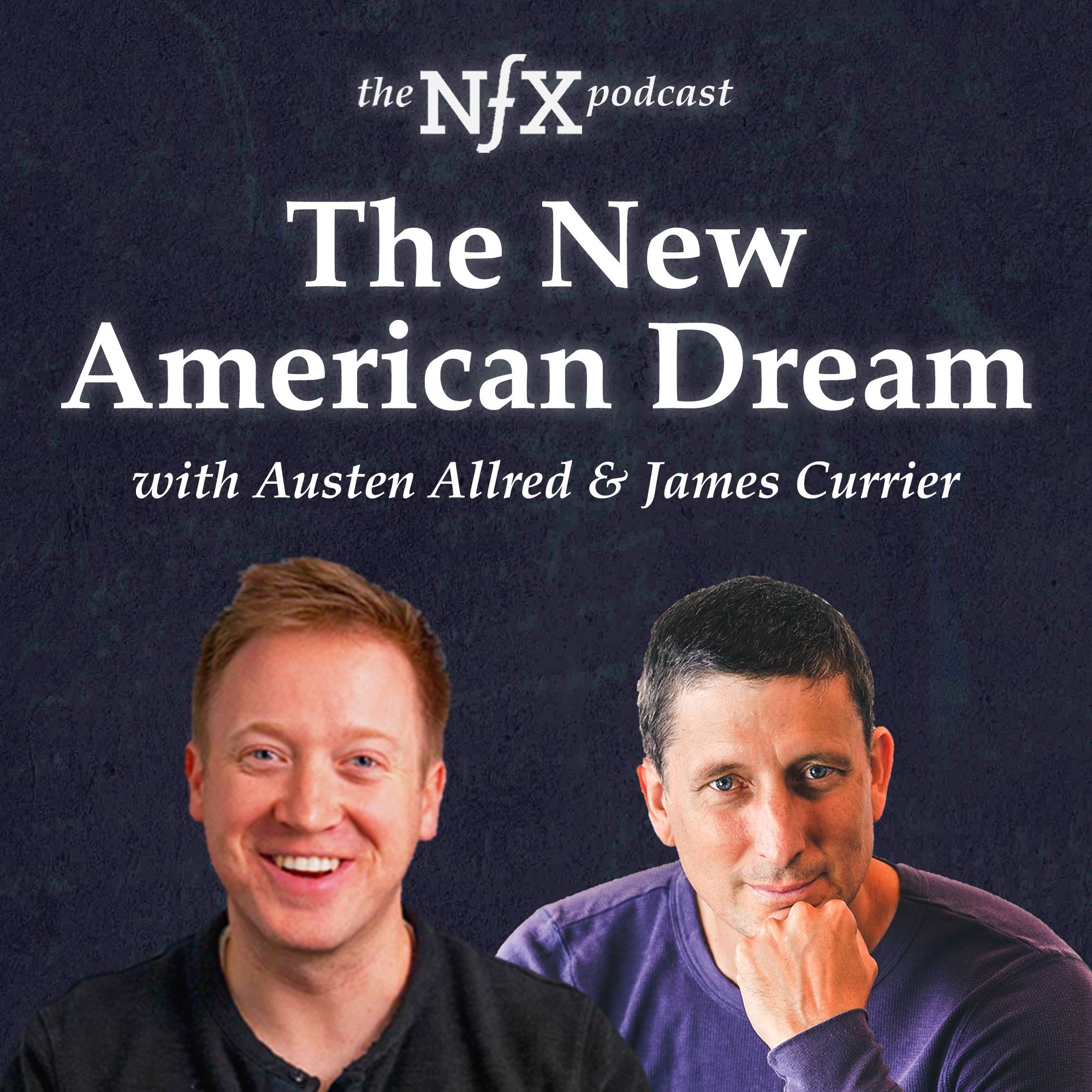
Austen Allred (Co-Founder of Lambda School) & James Currier (NFX) on The New American DreamAusten Allred22 April 202133 minThe new American dream is underway. The current US educational industrial complex is not serving young people anymore, and entrepreneurs outside the system are creating new alternatives. Austen Allred, Co-Founder/CEO of Lambda School earned this perspective by dropping out of college, setting his own path, and now building a successful company and movement to change education in our country. Austen sees our educational past, present, and future in ways few others do. In this conversation, James Currier (NFX) and Austen break down traditional and contrarian thinking on how we are educated, challenging what has gone unquestioned for decades: - The Psychology of Traditional College: Why “Normal is a hell of a drug” - Faulty Mechanics: The problem with America’s “Single Model” education system - The New American Dream: How “permissionless learning” unlocks opportunity - & 2 Trends to Watch Read the NFX Essay here - https://www.nfx.com/post/the-new-american-dream/
Vitalik Buterin on Space, Longevity, Mars & More ("The B- Side" with Morgan Beller)Vitalik Buterin18 February 202122 minToday we’re releasing the B-Side of our conversation with Vitalik Buterin, highlighting what may look strangely different in the coming decades. Here’s what great Founders know that others do not: What seems weird today may actually be signal of an outsized opportunity ahead. Last week, Vitalik and I took a synchronous-but-separate walk together for 3 hours. I was in San Francisco at 4 pm and Vitalik was in Singapore at 8 am the next day, living in the future in more ways than one. Read the full NFX Essay here - https://www.nfx.com/post/vitalik-buterin-the-b-sides/ Read the full NFX essay - https://www.nfx.com/post/vitalik-buterin-the-b-sides/
Vitalik Buterin on The Revolt of the Public ("The A-Side" with Morgan Beller)Vitalik Buterin16 February 202149 minToday we’re releasing the “A-Side” of a conversation with Vitalik Buterin, known as the creator of Ethereum and is a force behind much of the crypto movement. Vitalik shares his unique points of view on politics, crypto, Americanism, GameStop, and Wall Street Bets, Tesla, China, privacy, The Revolt of the Public, the decentralization of finance and so much more. But Vitalik is much more than just crypto. He is a close friend with a rare ability to see the present and future in a way few others do. With technology now at the forefront of society, the world is transforming faster than ever — and it’s incumbent on all of us to understand where we are, and where we’re going. Coming soon: The “B-Side” of our talk — the outtakes. The weird stuff. The good stuff you don’t get to hear when someone is on stage, on script, or in the media. Read the full NFX essay - https://www.nfx.com/post/vitalik-buterin-the-a-sides/
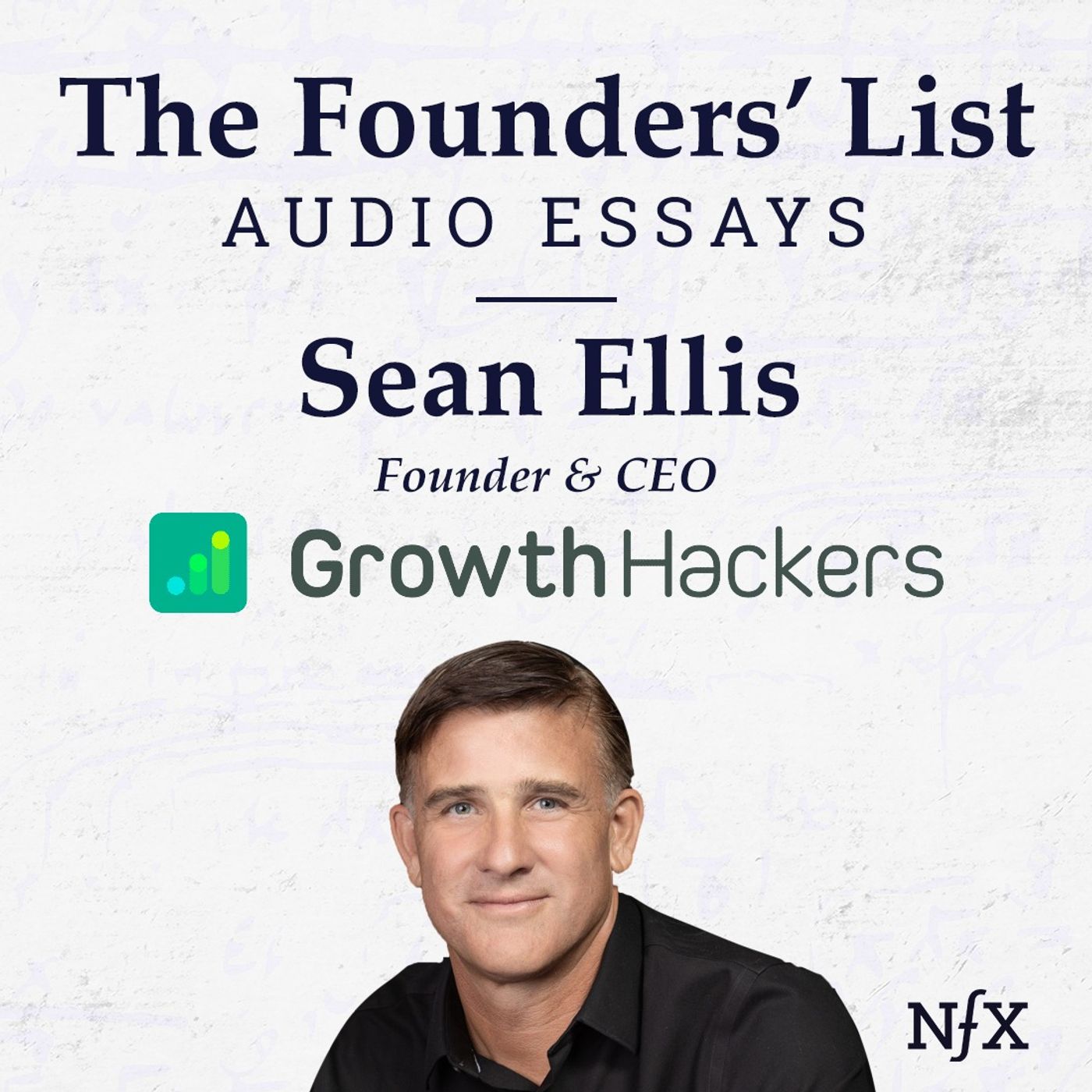
The Founder List: Sean Ellis (Founder & CEO of GrowthHackers) on "The Growth Pyramid Revisited"Sean Ellis26 January 20217 minThis is The Founders' List - audio versions of essays from technology’s most important leaders, selected by the founder community. Alongside our latest NFX Essay "The Hidden World of Pricing: Uber, Trulia, Etsy, Superhuman & More with Madhavan Ramanujam", we decided to release supplemental pricing articles on The Founders' List. Sean Ellis is an entrepreneur, angel investor, and startup advisor. He is the CEO of GrowthHackers and was previously founder and CEO of Qualaroo, an automated user research tool. He attended the University of California, Davis and graduated in 1994. "An optimal price allows the startup to grow at the fastest possible rate by maximizing profitable investments in customer acquisition programs and/or offering a free version to drive broad user adoption." Sean's featured article in this episode: - How to Determine the Optimal Price for Your Web Service Read the full NFX pricing essay here - https://www.nfx.com/post/the-hidden-world-of-pricing/
"Don't Just Be the Best, Be the Only" with Kevin Kelly & James CurrierKevin Kelly15 December 202041 minIn this candid conversation with iconic tech thinker Kevin Kelly (founding Editor of Wired), we discuss inspirational and transformative advice for early-stage Founders reflecting on the work they’re doing, why they’re doing it, and how it all adds up in the long term. Kevin and NFX General Partner James Currier talk about: “You want to work on something that nobody has a name for.” You don’t just want to be the best -- you want to be the only. This applies to the companies you start, the projects you tackle, as well as to how you live your life. “It’s fine to focus on scaling a wall, but you need to make sure your ladder is leaning against the right wall.” Transforming from short-term founder to long-term steward is a mental shift that many Founders need to start making. “If you operate on a longer term perspective you have an advantage because everyone else is completely short sighted.” Why Wired? What was the reason for it to exist? We need to listen to the technology to see how people actually use it vs. how it was invented. Kevin Kelly is Senior Maverick at Wired magazine. He co-founded Wired in 1993, and served as its Executive Editor for its first seven years. His most recent book is called The Inevitable, and is a New York Times and Wall Street Journal bestseller. He is also founding editor of the popular Cool Tools website, which has been reviewing tools daily since 2003.
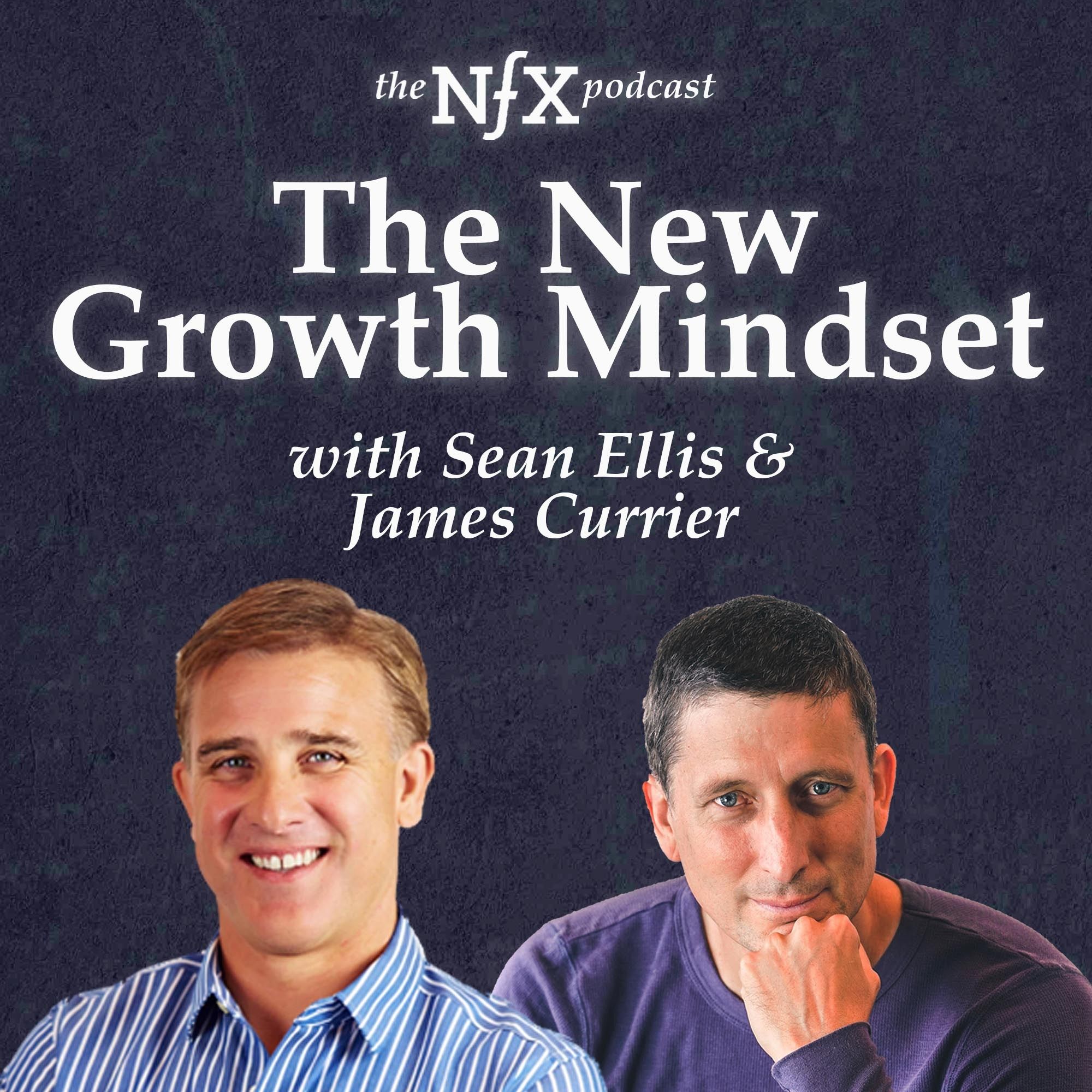
The New Growth Mindset with Sean Ellis & James CurrierSean Ellis16 November 202025 minIn order to drive growth, you need to be data-driven and relentlessly creative. The difficult part of implementing growth in your company is finding someone who is good at both. Growth expert and thought leader Sean Ellis (Dropbox, Eventbrite, GrowthHackers, LogMeIn) sits down with NFX General Partner James Currier to share his thoughts and insights around: - The current stage of growth hacking - The digital growth evolution - The balance of data and creativity - Understanding the physics of growth - Importance of word of mouth Be sure to check out Sean’s latest project GoPractice! as well as his famous book ‘Hacking Growth’.
The Founder List: Julie Zhuo (Former VP Product Design at Facebook) on "How to be Strategic"Julie Zhuo24 August 20208 minThis is The Founders' List - audio versions of essays from technology’s most important leaders, selected by the founder community. This essay was written and published on Oct 2, 2018 by Julie Zhuo, Former VP Product Design at Facebook & Co-Founder of Inspirit. Read the full article on Medium here: https://medium.com/the-year-of-the-looking-glass/how-to-be-strategic-f6630a44f86b
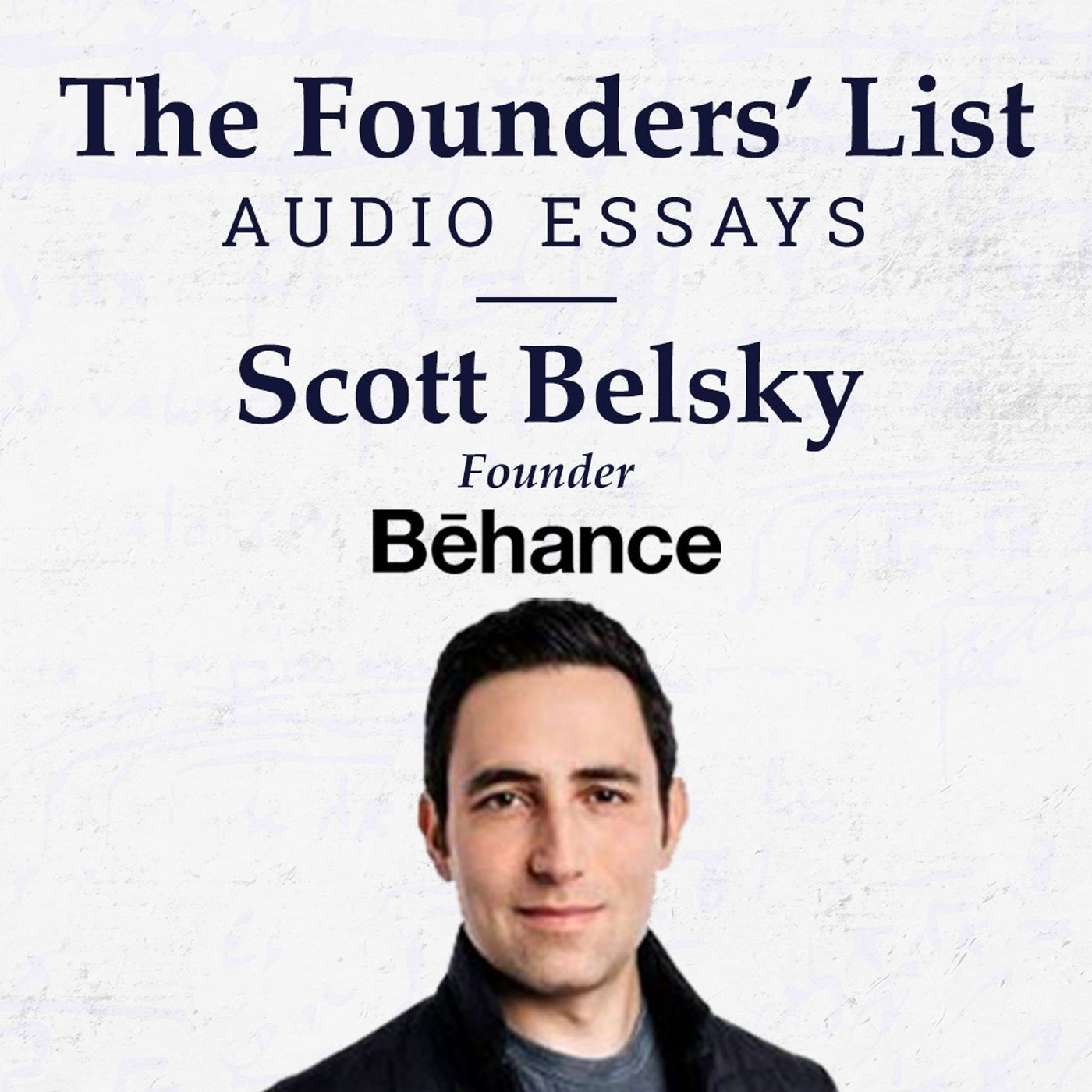
The Founder List: Scott Belsky (Founder of Behance) on "Creativity is The New Productivity"Scott Belsky24 August 202013 minThis is The Founders' List - audio versions of essays from technology’s most important leaders, selected by the founder community. This essay was written and published on Sep 9, 2019 by Scott Belsky, Founder of Behance. Read the full article on Medium here: https://marker.medium.com/creativity-is-the-new-productivity-d287d6ad7533
Craig Newmark on Building Craigslist, Teamwork, & The Golden Rule (The NFX Podcast)Craig Newmark13 August 202012 minAt NFX, we dig into network effects companies and their founding stories, so we emailed Craig Newmark, the founder of Craigslist. Craigslist is the purest example of a 2-sided network effect and has remained stronger than ever for the past 20+ years. NFX partner James Currier had a chance to sit down with Craig to talk and catch up. Craig handed over the operations of Craigslist in 2000 and is now more focused on his philanthropy, but when we catch up, we get to discuss his mental models for business and for life. Just like the product he built, his secret to success is simple - treat others the way you want to be treated and put service above all else.
How Contrarians Think: The Early Days of Square, Yelp, & PayPal with Keith Rabois (The NFX Podcast)Keith Rabois30 June 20201:04In this episode of the NFX Podcast, Keith Rabois and James Currier examine the rule deviation behind some of technology's greatest startup feats — PayPal, Square, Yelp, and even Apple, Tesla, and SpaceX. They discuss: - The 5 People You Spend the Most Time With: It's easy to be a contrarian. It's hard to be right. What are the environmental and psychological factors needed to really think for yourself? - The Extreme 1% of the Bell Curve: A framework for rule deviation that leads to invention, not replication. - Being a Founder is Like Chewing Glass: The 3 biggest factors Keith cites that made the early PayPal team so strong, going on to create YouTube, Tesla, SpaceX, LinkedIn, Yammer, & more. - Counterintuitive KPIs that Transformed Yelp, PayPal, & Square: The non-obvious (even ridiculous-at-first) KPIs that changed their trajectory. - & much more Read the essay - www.nfx.com/essays
Bill Trenchard (First Round Capital) on Pitch Deck StructureBill Trenchard
Bill Trenchard (First Round Capital) on Targeting the Right VCs: Do Your HomeworkBill Trenchard