 T
Podcast · 6 episodes in the reference, 2018 to 2023
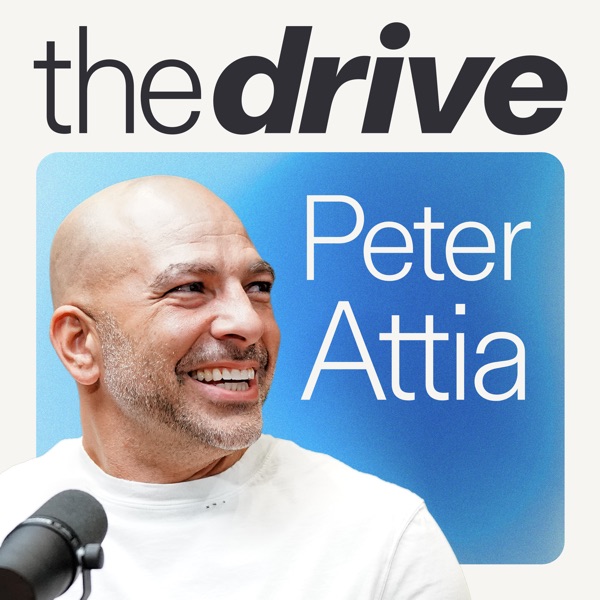
The Peter Attia Drive
Published by Peter Attia, MD
Host
Peter AttiaPeter AttiaPhysician and authorCanadian-American physician and former researcher who works in longevity medicine; wrote Outlive: The Science and Art of Longevity.
Episodes
| Rapamycin: potential longevity benefits, surge in popularity, unanswered questions, and more | David Sabatini, M.D., Ph.D. and Matt Kaeberlein, Ph.D. | David Sabatini | 25 September 2023 | 2:51 | View the Show Notes Page for This Episode Become a Member to Receive Exclusive Content Sign Up to Receive Peter's Weekly Newsletter In this episode of The Drive, Peter welcomes guests David Sabatini and Matt Kaeberlein, two world-leading experts on rapamycin and mTOR. David and Matt begin by telling the fascinating story of the discovery of rapamycin and its brief history as a pharmacological agent in humans. They then unravel the function of mTOR, a central regulator of numerous biological processes, and they discuss the pathways through which rapamycin exerts its potential benefits on lifespan. They touch upon initial studies that suggested rapamycin may have geroprotective effects and the ongoing research that continues to shed light on this unique molecule. Furthermore, they discuss the elusive details surrounding the frequency and dosing of rapamycin use in humans, and Peter emphasizes his reservations about indiscriminately prescribing rapamycin as a longevity drug for patients. |
 John Arnold: The most prolific philanthropist you may not have heard of | John Arnold | 24 August 2020 | 2:28 | John Arnold is widely regarded as the greatest natural gas trader of all time, but in his late 30's he walked away from it all and turned full-time philanthropist. He and his wife have committed to strategically give away most of their vast fortune in their lifetime and are already doing so at a staggering pace of nearly a half billion dollars a year. In this episode, John explains his quest to address the most challenging social programs plaguing the country, including criminal justice, health care policy, and K-12 education. John also shares self-identified attributes that contributed to his success in natural gas trading and how those same traits have translated to his philanthropic aspirations. |
 AMA with Jason Fried: Work-life balance, avoiding burnout, defining success, company culture, and more | Jason Fried | 17 February 2020 | 2:08 | In my first interview with Jason Fried, Jason explained his overall philosophy about work-life balance and how exactly he optimizes for efficiency. For this special follow-up AMA, we've decided to release the full episode to everyone (including non-subscribers), so all can hear Jason answer questions from listeners that dive deeper into topics such as work-life balance, the role of luck versus hard work in success, specifics around Basecamp's unique process-oriented approach to projects, 4-day work weeks, practical tips for people searching for the right company culture, tips on writing and parenting, and a whole bunch more. If Jason had taken his own advice about work-life balance at the start of his career, would he have achieved the same level of success? [2:05]; What is Jason's definition of success, and what is he optimizing for? [10:10]; Basecamp's policy on email and expectations for a quick response, and why Jason believes in sleeping on big decisions [14:30]; How Jason implements "true" work-life balance in his life and at Basecamp [19:15]; Does work and life have to be separated in order to have balance? [32:00]; How Jason makes time the fixed component to avoid the compulsion to keep pushing forward on a project perpetually [34:15]; Jason's tip for physicians who may be facing burnout [45:00]; Signs of "burnout" if you do the same thing for work and pleasure, and tips to avoid and manage that feeling [49:45]; Is a 40-hour work week the correct amount? |
 Jason Fried: Optimizing efficiency and work-life balance | Jason Fried | 7 October 2019 | 2:25 | In this episode, Jason Fried, co-founder of Basecamp, shares his beliefs around achieving business success in a modern world which tends to disproportionately focus on the massive success stories (the outliers). Jason gives his honest take on companies like WeWork, Uber, and Lyft that may give off the appearance of wild success but may instead provide an example of the dangers of perverse incentives. We get into Jason's backstory, and how his affinity for optimizing efficiency and production in the workplace culminated with the creation of Basecamp, his very successful web-based project management software business. Perhaps most importantly, we get really deep into all aspects of work-life balance and what it really means to "work hard" (Stay tuned for an AMA-style deep dive into the topic of work-life balance with Jason in the near future). In addition, Jason provides many more valuable nuggets including thoughts on some common mistakes made by businesses today, the value of giving employees autonomy, how to take the right types of risks, why he doesn't set any goals, and much, much more. |
 David Sabatini, M.D., Ph.D.: rapamycin and the discovery of mTOR — the nexus of aging and longevity? | David Sabatini | 13 August 2018 | 1:11 | In this episode, my good friend David Sabatini delves into his extensive work with the mechanistic target of rapamycin—better known as mTOR—and rapamycin. The compound rapamycin is the only known pharmacological agent to extend lifespan all the way from yeast to mammals—across a billion years of evolution. David, a professor of biology and a member of the Whitehead Institute at MIT, shares his remarkable journey and discovery of mTOR in mammalian cells and its central role in nutrient sensing and longevity. Fasting, rapamycin, mTOR, autophagy, gedankenexperiments: having this conversation with David is like being the proverbial kid in the world's greatest candy store. We discuss: mTOR and David's student years [4:30]; Rapamycin and the discovery of mTOR [8:15]; The connection between rapamycin, mTOR, and longevity [30:30]; mTOR as the cell's general contractor [34:45]; The effect of glucose, insulin, and amino acids on mTORC1 [42:50]; Methionine sensing and restriction [49:45]; An intermittent approach to rapamycin [54:30]; Rapamycin's effects on cancer, cardiovascular disease, and neurodegeneration [57:00]; Gedankenexperiment: couch potatoes on rapamycin vs perfectly behaved humans [1:03:15]; David's dream experiment with no resource constraints [1:07:00]; and More. Learn more at www.PeterAttiaMD.com Connect with Peter on Facebook | Twitter | Instagram . |
 Tim Ferriss: depression, psychedelics, and emotional resilience | Tim Ferriss | 2 July 2018 | 2:36 | Excited to kick off the podcast with special guest and close friend Tim Ferriss, lifehacker, podcaster extraordinaire, and author of multiple best-selling books that includes The 4-Hour Workweek, The 4-Hour Body, Tools of Titans, and Tribe of Mentors. In this podcast we cover mental health, depression, and our mutual interest in psychedelics as potential therapeutic agents. Tim talks both experientially and from his own deep dive into the literature of psychedelics and mental health. Tim is shifting his focus from investing in startups to funding experiments that he hopes will establish more reliable knowledge and therapeutic options for those suffering from anxiety, depression, and addiction. Tim also shared his list of acquired wisdom he returns to most reliably, which might be worth the price of admission alone. |
TRapamycin: potential longevity benefits, surge in popularity, unanswered questions, and more | David Sabatini, M.D., Ph.D. and Matt Kaeberlein, Ph.D.David Sabatini · 25 September 2023TJohn Arnold: The most prolific philanthropist you may not have heard ofJohn Arnold · 24 August 2020TAMA with Jason Fried: Work-life balance, avoiding burnout, defining success, company culture, and moreJason Fried · 17 February 2020TJason Fried: Optimizing efficiency and work-life balanceJason Fried · 7 October 2019TDavid Sabatini, M.D., Ph.D.: rapamycin and the discovery of mTOR — the nexus of aging and longevity?David Sabatini · 13 August 2018TTim Ferriss: depression, psychedelics, and emotional resilienceTim Ferriss · 2 July 2018