 T
Podcast · 29 episodes in the reference, 2020 to 2025
The Prof G Pod with Scott Galloway
Published by Vox Media Podcast Network
Episodes
 The AI Dilemma — with Tristan Harris | Prof G Conversations | Tristan Harris | 11 December 2025 | 1:01 | Tristan Harris, former Google design ethicist and co-founder of the Center for Humane Technology, joins Scott Galloway to explain why children have become the front line of the AI crisis. They unpack the rise of AI companions, the collapse of teen mental health, the coming job shock, and how the U.S. and China are racing toward artificial general intelligence. Harris makes the case for age-gating, liability laws, and a global reset before intelligence becomes the most concentrated form of power in history. Learn more about your ad choices. Visit podcastchoices.com/adchoices |
 Scott Galloway & Morgan Housel on the Art of Spending Money | Office Hours | Morgan Housel | 14 November 2025 | 27 min | In this special episode of Office Hours, Scott Galloway brings back Morgan Housel to answer your questions on “enough,” financial independence, and the art of spending. They discuss why our money goals keep moving, how to know when you can slow down, and why saving is really about buying independence, not things. Morgan also explains why holding extra cash can be a smart emotional hedge, while Scott shares how he spends today and what he wishes he’d known earlier. Morgan’s latest book, The Art of Spending Money: Simple Choices for a Richer Life , is out now. Want to be featured in a future episode? Send a voice recording to officehours@profgmedia.com , or drop your question in the r/ScottGalloway subreddit . Learn more about your ad choices. Visit podcastchoices.com/adchoices |
 Finding Meaning, Power & Mastery — with Robert Greene | Prof G Conversations | Robert Greene | 3 July 2025 | 54 min | Robert Greene, an author who writes about strategy, power, and seduction, joins Scott to discuss how to build power, the roles we all play in daily life, and how to find your life’s task and achieve mastery. Follow Robert, @RobertGreene . Learn more about your ad choices. Visit podcastchoices.com/adchoices |
 Sahil Bloom - A Transformative Guide to Design Your Dream Life | Prof G Conversations | Sahil Bloom | 30 January 2025 | 44 min | Sahil Bloom, an investor, entrepreneur and writer, known for his newsletter The Curiosity Chronicle, joins Scott to discuss his latest book, The 5 Types of Wealth: A Transformative Guide to Design Your Dream Life . Follow Sahil, @sahilbloom . Scott opens with his thoughts on the buzz surrounding DeepSeek's new AI model. Algebra of Happiness: the power of now. Learn more about your ad choices. Visit podcastchoices.com/adchoices |
 Eric Schmidt - The Risks and Opportunities of an AI Future | Prof G Conversations | Eric Schmidt | 21 November 2024 | 55 min | Eric Schmidt, a technologist, entrepreneur, philanthropist, and Google’s former CEO, joins Scott to discuss the dangers and opportunities AI presents and his latest book, Genesis: Artificial Intelligence, Hope, and the Human Spirit . Follow Eric, @ericschmidt . Scott opens with his thoughts on Netflix’s bet on live sports. Algebra of happiness: don’t let perfect be the enemy of good. Subscribe to No Mercy / No Malice Buy "The Algebra of Wealth," out now. Follow the podcast across socials @profgpod: Instagram Threads X Reddit Learn more about your ad choices. Visit podcastchoices.com/adchoices |
 Brian Chesky - Scaling Airbnb, Founder Mode, and What’s Next for Travel | Prof G Conversations | Brian Chesky | 17 October 2024 | 55 min | Brian Chesky, the co-founder and CEO of Airbnb, joins Scott to discuss the latest for Airbnb including their Co-Host Network, how the company views AI, and how it is a leading indicator for the broader economy. Brian also shares his thoughts on his viral moment around Founder Mode and what’s next for the platform. Follow Brian, @bchesky. Scott opens with his thoughts on private equity firms pouring millions of dollars into acquiring HVAC, plumbing, and electrical companies, per the WSJ . Algebra of Happiness™: don’t keep score. Subscribe to No Mercy / No Malice Buy "The Algebra of Wealth," out now. Follow the podcast across socials @profgpod: Instagram Threads X Reddit Learn more about your ad choices. Visit podcastchoices.com/adchoices |
 Niall Ferguson — Cold War II + An Update on Global Conflicts | Prof G Conversations | Niall Ferguson | 8 August 2024 | 1:01 | Niall Ferguson, a historian, author, senior fellow at the Hoover Institution, and columnist at The Free Press, joins Scott to discuss why we’re currently in Cold War II, his thoughts on the US presidential candidates, and gives us an update on conflicts happening around the world. @nfergus . Scott opens with his thoughts on the DOJ’s antitrust hammer on Google. Algebra of Happiness™: where you live. Subscribe to No Mercy / No Malice Buy "The Algebra of Wealth," out now. Follow the podcast across socials @profgpod: Instagram Threads X Reddit Learn more about your ad choices. Visit podcastchoices.com/adchoices |
| Global Elections, Foreign Affairs, and National Security — with Admiral James Stavridis | James Stavridis | 11 July 2024 | Admiral James Stavridis, a retired four-star U.S. naval officer, and currently Partner and Vice Chairman of Global Affairs for The Carlyle Group, joins Scott to discuss foreign affairs and the wars in the Middle East and Ukraine. Scott opens with his thoughts on Biden remaining in the race. Algebra of Happiness™: be open-minded. Subscribe to No Mercy / No Malice Buy "The Algebra of Wealth," out now. Follow the podcast across socials @profgpod: Instagram Threads X Reddit Learn more about your ad choices. Visit podcastchoices.com/adchoices | |
 Josh Wolfe — Where to be Bearish and Bullish in 2024 | Prof G Conversations | Josh Wolfe | 2 May 2024 | 44 min | Josh Wolfe, the co-founder of Lux Capital, joins Scott to discuss the sectors he’s most excited about and those he thinks are overhyped. We also hear his thoughts on the Magnificent Seven and where the crypto market is seeing new life. Follow Josh on X, @wolfejosh . Scott opens by giving his thoughts on the protests on college campuses, specifically UCLA. Algebra of Happiness: the circles of masculinity. Follow our podcast across socials @profgpod: Instagram Threads X Reddit Learn more about your ad choices. Visit podcastchoices.com/adchoices |
 Cal Newport — The Key to Productivity without Burnout | Prof G Conversations | Cal Newport | 18 April 2024 | 48 min | Cal Newport, a professor of computer science at Georgetown University and bestselling author, joins Scott to discuss productivity, the importance of work-life balance, and the disruption of AI on work. Learn more about Cal here , and his book , “Slow Productivity: The Lost Art of Accomplishment Without Burnout.” Scott opens with his thoughts on storytelling. Algebra of Happiness: A Dad Hack. Vote for No Mercy / No Malice in the Webby’s ! Pre-order "The Algebra of Wealth," out April 23rd Follow our podcast across socials @profgpod: Instagram Threads X Reddit Learn more about your ad choices. Visit podcastchoices.com/adchoices |
 Dan Ariely — Why People Believe Irrational Things | Prof G Conversations | Dan Ariely | 1 February 2024 | 58 min | Dan Ariely, a professor of psychology and behavioral economics at Duke University, joins Scott to discuss what makes rational people believe seemingly irrational things. He also shares how we avoid certain facts when we don’t like the solution, as well as how a lack of trust in one area can spiral into others. Follow Professor Ariely on X, @danariely . Scott opens with his thoughts on the podcast space and then discusses why tech companies are still laying people off in droves. Algebra of Happiness: the role of parents. Learn more about your ad choices. Visit podcastchoices.com/adchoices |
 First Time Founders with Ed Elson – ft. Ryan Petersen of Flexport | Ryan Petersen | 3 December 2023 | 43 min | Ed speaks with Ryan Petersen, the founder and CEO of Flexport, a supply chain management company. They discuss logistics, the company’s $8 billion valuation, finding fame as an entrepreneur, and how Ryan thinks about money. Learn more about your ad choices. Visit podcastchoices.com/adchoices |
 Morgan Housel - Behaviors that Influence our Money Decisions and Habits | Prof G Conversations | Morgan Housel | 16 November 2023 | 55 min | Morgan Housel, a partner at The Collaborative Fund, and the bestselling author of “The Psychology of Money,” joins Scott to discuss his new book, “Same as Ever: A Guide to What Never Changes.” They get into topics including what to think about when buying a house, how to make healthier financial decisions, and the role money plays in our happiness. Scott opens with his thoughts on the importance of the US and China’s relationship. He also discusses why thinks the new AI wearable on the market will be a thud. Algebra of Happiness: focus on exercise. Learn more about your ad choices. Visit podcastchoices.com/adchoices |
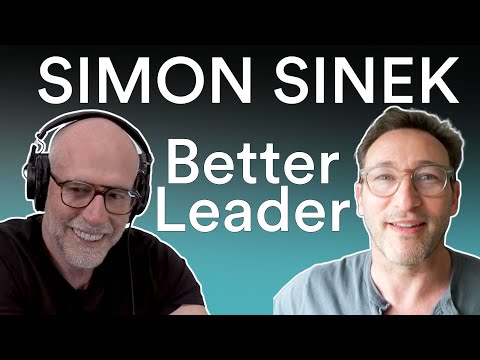 Simon Sinek - Be a Better Leader | Prof G Conversations | Simon Sinek | 17 August 2023 | Simon Sinek, a renowned leadership expert, author, and motivational speaker, joins Scott to discuss his visionary concept of “Start With Why,” along with insights on building strong teams, leadership, feeling stuck, and finding your purpose. Simon also gets Scott to open up about a meaningful memory of his mom. Follow Simon on Twitter, @simonsinek . P.S. Scott is on holiday, so we’ll be back with our business analysis and Algebra of Happiness in September! Learn more about your ad choices. Visit podcastchoices.com/adchoices | |
| State of Banking, Media, and AI — with Andrew Ross Sorkin | Andrew Ross Sorkin | 18 May 2023 | 59 min | Andrew Ross Sorkin shares his thoughts on the second-order effects of the banking crisis, recent media events, and AI. We also learn how Andrew is balancing work and time with his family. Follow Andrew on Twitter, @andrewrsorkin . Scott opens by discussing Vice’s bankruptcy, and what it means for buzzy news sites. Plus, he shares his thoughts on the writers' strike. Algebra of Happiness: just listen. Learn more about your ad choices. Visit podcastchoices.com/adchoices |
| Airbnb’s Next Phase — with Brian Chesky | Brian Chesky | 11 May 2023 | 1:05 | Brian Chesky, the co-founder and CEO of Airbnb, joins Scott to discuss a slew of updates, including how the firm is building a community, leveraging AI, and expanding its geographical reach. We also learn about Brian’s experiences with loneliness, and how work has impacted his relationships. Follow Brian on Twitter, @bchesky . (Disclosure: Scott invests in Airbnb). Scott opens by discussing why we need more third places. Algebra of Happiness: get out of the house. Learn more about your ad choices. Visit podcastchoices.com/adchoices |
| Bonus Episode: Elon Musk v. Twitter — with William Cohan | William D. Cohan | 25 May 2022 | 32 min | William Cohan, a founding partner and writer at Puck, as well as a former M&A investment banker, joins Scott to discuss how Elon Musk's deal to acquire Twitter might shake out, including what options he might have for backing out, how Twitter's lawyers might respond, and what it all could mean for shareholders. Follow William on Twitter, @WilliamCohan. Learn more about your ad choices. Visit podcastchoices.com/adchoices |
| Cryptocurrencies, Smart Contracts, and the Streaming Industry — with Mark Cuban | Mark Cuban | 21 October 2021 | 59 min | Mark Cuban, the serial entrepreneur and investor, joins Scott to discuss Bitcoin, Ethereum, use-cases for digital assets, and where SEC regulations might come in. Mark also shares why he’s bullish on AI, offers his thoughts on stimulus spending, and explains why Robinhood may not be as bad as Scott thinks. Follow Mark on Twitter, @mcuban . Scott opens with a prediction about the streaming wars. Related Reading (No Mercy/No Malice): Stream On ’22 Learn more about your ad choices. Visit podcastchoices.com/adchoices |
| Emerging Technologies and China’s Crackdown on Tech — with Josh Wolfe | Josh Wolfe | 5 August 2021 | 56 min | Josh Wolfe, the co-founder of Lux Capital, joins Scott to discuss his thoughts on the tech regulations coming out of China, and how investors should be thinking about them. He also discusses the sectors he’s keeping tabs on, including space and the metaverse, and the ones that he thinks are over and underhyped. Follow Josh on Twitter, @wolfejosh . Scott opens by having a conversation with Pascal Gauthier, the CEO of Ledger. Ledger is building a hardware wallet for crypto assets — and full disclosure — Scott’s an investor. Pascal explains the technology and shares his thoughts on the crypto space. Follow Pascal on Twitter, @_pgauthier . Learn more about your ad choices. Visit podcastchoices.com/adchoices |
| Amazon Unbound — with Brad Stone | Brad Stone | 3 June 2021 | 45 min | Brad Stone, the senior executive editor for Global Technology at Bloomberg News, joins to discuss his latest book: Amazon Unbound: Jeff Bezos and the Invention of a Global Empire . We hear how the company has transformed under Jeff Bezos’s leadership and the existential threats coming for its market dominance. Follow Brad on Twitter, @BradStone . Scott opens with his thoughts on “burning benjamins” — AKA what happens when billionaires lose other people’s money. Additional Reading: MeWork Learn more about your ad choices. Visit podcastchoices.com/adchoices |
| The Geopolitics of Cryptocurrencies — with Niall Ferguson | Niall Ferguson | 20 May 2021 | 1:06 | Niall Ferguson returns to the pod for a discussion about his latest book, Doom: The Politics of Catastrophe . Niall shares why "all disasters are in some sense man-made" and what history can teach us about handling crises. Niall also explains the state of play around digital currencies from a geopolitical perspective. Follow Niall on Twitter, @nfergus . Scott opens with his thoughts on AT&T’s reverse merger with Discovery, and what it means for the streaming wars. He also discusses the implications of stock buybacks and dividends. Related Reading: Companies Are Flush With Cash—and Ready to Pad Shareholder Pockets Algebra of Happiness: Find moments of engagement. Learn more about your ad choices. Visit podcastchoices.com/adchoices |
| Principles of Persuasion — with Bob Cialdini | Robert B. Cialdini | 6 May 2021 | 56 min | Bob Cialdini, one of the world’s leading social scientists, joins Scott to discuss his seven principles of persuasion and his revised edition of Influence — the psychology of why people say yes. Bob also shares how to use these principles in thoughtful debates, politics, and parenting. Follow him on Twitter, @RobertCialdini . Scott opens with his thoughts on Verizon selling Yahoo and AOL, Epic Games vs. Apple, and Biden’s economic plan. Algebra of Happiness: Tell someone how impressed you are with them. Learn more about your ad choices. Visit podcastchoices.com/adchoices |
| Inclusive Capitalism & Moral Leadership — with Jacqueline Novogratz | Jacqueline Novogratz | 22 April 2021 | 1:01 | Jacqueline Novogratz is the founder, and CEO of Acumen , a global nonprofit investing in sustainable businesses, leaders, and ideas. She is also the author of, Manifesto for a Moral Revolution: Practices to Build a Better World. Jacqueline shares her ideas around moral leadership and how to use capital and networks as means, not ends, to solving the issues of poverty. Follow Jacqueline on Twitter, @jnovogratz . Scott opens with his thoughts on Coinbase’s “broken IPO.” He also discusses Spotify’s recent developments and the broader social audio wave — AKA why every company is trying to become Clubhouse. Algebra of Happiness: teaching masculinity. Learn more about your ad choices. Visit podcastchoices.com/adchoices |
| Crypto, NFTs, and Blockchain ft. Raoul Pal | Raoul Pal | 25 March 2021 | 52 min | We’re mixing it up today and busting right into our interview with Raoul Pal, the co-founder and CEO of Real Vision Group and Global Macro Investor. Raoul breaks down everything from why the digital asset space is disrupting everything — including higher education, the future of blockchain, and how Bitcoin could actually be a catalyst in the push towards clean energy. Follow Raoul on Twitter, @RaoulGMI . Raoul's book reference: The Fourth Turning: An American Prophecy - What the Cycles of History Tell Us About America's Next Rendezvous with Destiny by Neil Howe and William Strauss. Learn more about your ad choices. Visit podcastchoices.com/adchoices |
| GameStop Saga Continued | Whitney Tilson | 4 February 2021 | 1:04 | Whitney Tilson, the founder and CEO of Empire Financial Research, joins Scott to discuss the learnings from the WallStreetBets short-squeeze and the markets more generally. We also find out why Whitney is bullish on Transportation as a Service (TaaS). Follow him on Twitter, @WhitneyTilson . (16:54) Scott opens with his thoughts on the latest developments involving GameStop. Scott also explains how Apple CEO Tim Cook discussing the importance of privacy is an example of “ laddering .” (9:56) This Week’s Office Hours (47:31): angel investing (51:50), why Apple should acquire Peloton instead of doing a product partnership (47:55), and Gap’s brand strategy (55:29). Have a question for Scott? Email a voice recording to officehours@section4.com . Algebra of Happiness: Marshall Plan for Moms (61:03) Reading Recommendation: Innovation & Recasting Your Life Opening joke credit: Simon Holland Additional Music: https://www.davidcuttermusic.com / @dcuttermusic Learn more about your ad choices. Visit podcastchoices.com/adchoices |
| Capitalism Needs Empathy | Nick Molnar | 3 December 2020 | 47 min | Nick Molnar , the co-founder and CEO of Afterpay, joins Scott to discuss the company’s ‘buy now, take now, pay later’ business model, how millennials' spending habits are changing, and Nick’s experience as an entrepreneur. Nick also compares and contrasts running a startup in San Francisco vs. Sydney. (7:48) Scott opens with his thoughts on the acceleration of e-commerce. This week’s Office Hours: Airbnb and tax regulations, deciding whether to get an M.B.A, and why experiential retail can’t save every retailer. (30:54) Algebra of Happiness: the vulnerability of capitalism. (41:24) Learn more about your ad choices. Visit podcastchoices.com/adchoices |
| Cold War II: China Tech vs. US Tech | Niall Ferguson | 5 November 2020 | 55 min | Niall Ferguson, a historian, author, and senior fellow at the Hoover Institution at Stanford University, joins Scott to discuss the state of play around the tech war between the U.S. and China. Niall talks about each of the country’s strengths and weaknesses, and why he thinks we’re moving toward Cold War II. Niall also shares his thoughts on the fintech space as it relates to Ant Group’s suspended IPO. Follow Niall on Twitter, @nfergus . Niall’s reading recommendations: We by Yevgeny Zamyatin Sir Walter Scott novels The Last Days of Mankind by Karl Kraus Learn more about your ad choices. Visit podcastchoices.com/adchoices |
| Love in the Time of Corona | Aswath Damodaran | 19 March 2020 | 49 min | Scott explores the idea of “Love in the Time of Corona” answering listener questions about how to prepare, adapt, and respond during these volatile times. He also sits down with Aswath Damodaran, Professor of Finance at the NYU Stern School of Business, to understand his take on the virus, markets, and investing. Learn more about your ad choices. Visit podcastchoices.com/adchoices |
 Reid Hoffman: The AI Optimist Makes His Case | Prof G Markets | Reid Hoffman |
TThe AI Dilemma — with Tristan Harris | Prof G ConversationsTristan Harris · 11 December 2025TScott Galloway & Morgan Housel on the Art of Spending Money | Office HoursMorgan Housel · 14 November 2025TFinding Meaning, Power & Mastery — with Robert Greene | Prof G ConversationsRobert Greene · 3 July 2025TSahil Bloom - A Transformative Guide to Design Your Dream Life | Prof G ConversationsSahil Bloom · 30 January 2025TEric Schmidt - The Risks and Opportunities of an AI Future | Prof G ConversationsEric Schmidt · 21 November 2024TBrian Chesky - Scaling Airbnb, Founder Mode, and What’s Next for Travel | Prof G ConversationsBrian Chesky · 17 October 2024TNiall Ferguson — Cold War II + An Update on Global Conflicts | Prof G ConversationsNiall Ferguson · 8 August 2024TGlobal Elections, Foreign Affairs, and National Security — with Admiral James StavridisJames Stavridis · 11 July 2024TJosh Wolfe — Where to be Bearish and Bullish in 2024 | Prof G ConversationsJosh Wolfe · 2 May 2024TCal Newport — The Key to Productivity without Burnout | Prof G ConversationsCal Newport · 18 April 2024TDan Ariely — Why People Believe Irrational Things | Prof G ConversationsDan Ariely · 1 February 2024TFirst Time Founders with Ed Elson – ft. Ryan Petersen of FlexportRyan Petersen · 3 December 2023TMorgan Housel - Behaviors that Influence our Money Decisions and Habits | Prof G ConversationsMorgan Housel · 16 November 2023TSimon Sinek - Be a Better Leader | Prof G ConversationsSimon Sinek · 17 August 2023TState of Banking, Media, and AI — with Andrew Ross SorkinAndrew Ross Sorkin · 18 May 2023TAirbnb’s Next Phase — with Brian CheskyBrian Chesky · 11 May 2023TBonus Episode: Elon Musk v. Twitter — with William CohanWilliam D. Cohan · 25 May 2022TCryptocurrencies, Smart Contracts, and the Streaming Industry — with Mark CubanMark Cuban · 21 October 2021TEmerging Technologies and China’s Crackdown on Tech — with Josh WolfeJosh Wolfe · 5 August 2021TAmazon Unbound — with Brad StoneBrad Stone · 3 June 2021TThe Geopolitics of Cryptocurrencies — with Niall FergusonNiall Ferguson · 20 May 2021TPrinciples of Persuasion — with Bob CialdiniRobert B. Cialdini · 6 May 2021TInclusive Capitalism & Moral Leadership — with Jacqueline NovogratzJacqueline Novogratz · 22 April 2021TCrypto, NFTs, and Blockchain ft. Raoul PalRaoul Pal · 25 March 2021TGameStop Saga ContinuedWhitney Tilson · 4 February 2021TCapitalism Needs EmpathyNick Molnar · 3 December 2020TCold War II: China Tech vs. US TechNiall Ferguson · 5 November 2020TLove in the Time of CoronaAswath Damodaran · 19 March 2020TReid Hoffman: The AI Optimist Makes His Case | Prof G MarketsReid Hoffman