Updates

  1. 137 new fund letters and reports, each with its own page: Kayne Anderson Rudnick (48 market briefings, KayneCast episodes and TV commentaries), Shelton Capital Management (48 shareholder reports and a commentary), Lakehouse Capital (10 Small Companies Fund letters), Smead (5 newsletters), RIT Capital Partners (5 monthly commentaries), Kovitz, Legal & General, Generation, Hosking, Marram, Munro, Oldfield and others.
  2. 200 new fund letters and reports, each with its own page: Spheria (41 monthly reports), Peapack Private (41 weekly recaps and planning newsletters), Fort Washington (23), Polen Capital (15), Aristotle Pacific (14), Riverwater (13), Chou (10), Apollo Asia Fund (8, back to 1998), Personal Asset Trust, Rockwood Strategic, J Capital Research, I/O Fund, Penn Davis McFarland, Pomona and others.
  3. Investor pages have one Investments tab with shares, changes, % owned, class, market cap and Market cap and Status filters, a Funds tab listing each fund the firm runs, and assets under management from Form ADV. The Investors table shows AUM and current investments, and its search finds investors by what they hold.
  4. Filters, search and sort stay as you left them when you come back to a section. Person cards look like book cards. Company pages name their Investors tab Ownership. Kind and Sector filters use four kinds and GICS sectors with industries. Dead links left the Links tabs.
  5. 190 more investors from fiscal.ai's list, with their sites, letters, partners and 13F holdings; 556 more partner descriptions. Experts now lists only people.
  6. Fund letters lists 144 new documents from 23 firms, each with its own page: a summary, key insights and quotes. Among them: 37 BlackRock articles, 21 Value Partners monthly notes, eight Baron Capital letters, six Stone Sentinel letters to partners, seven Value Line portfolio manager Q&As, BNY's 2026 earnings releases and Starboard Value's 2026 conference presentations.
  7. 584 more investors, with their websites, 6,776 letters from their own sites, 1,385 partners with pages and the 13F holdings of 213 firms. New letters arrive daily from 290 more archives.
  8. Media and Companies filter by GICS sector and industry group, taken from the companies an episode or page names. 1,860 more company pages show a logo, the SEC's list included.
  9. The home page counts what the platform holds and lists features such as the document reader, the player and saved marks. Settings sits at the foot of the rail. Book cards are a quarter wider, so rows hold fewer. Companies drops the Named in filter, and the Role list in your account runs A to Z.
  10. Investor pages of 13 firms show their newsroom's latest posts. New 13F filings are read as the SEC publishes them.
  11. Investor pages have an Investments tab: 13,975 holdings for 105 investors, from their 13F filings with the SEC and their own portfolio pages, with status and sector. 7,338 more companies have a page of their own.
  12. A podcast or YouTube episode keeps playing while you move around the site, in a bar with skip, speed and volume. Media tables show each episode's length and description.
  13. Press releases come from each company's own newsroom (167 companies); SEC filings sit on the Filings tab. Tickers name their exchange, and a company's Experts tab includes guests whose episode description names it.
  14. Letter types now include Market commentary, Fact sheet, Interim report, Annual report, Proxy circular and Governance document. The reader opens over the whole window.
  15. Partners of investment firms have 2,836 appearances and 580 pieces of writing on their pages; Derek Sivers's page lists every book he rates, with his rating.
  16. Fund letters lists three Akre Focus shareholder reports: the ETF's annual report for the year to July 2026, its semi-annual report to January 2026 and the fund's semi-annual report to January 2025, each with its own page: a summary, key insights and quotes.
  17. 837 partners of 73 investment firms now have their own pages, with title, description, photograph and social accounts; Andreessen Horowitz partners' pages also list their writing on a16z.com.
  18. Company pages have a Press releases tab: 8,229 releases for 203 companies, from SEC filings and company newsrooms. Companies filter by For-profit or Non-profit. Own media is a table with filters. Media filters by sector and industry. Publication pages link their publisher in the description.
  19. The Unilever page's Letters tab shows what each fund letter says about Unilever, word for word with its page, and whether the letter is bullish, bearish, mixed or neutral. Filter by sentiment, and see 10 letters at a time.
  20. 492 more fund letters and 3,183 more articles show the day they were published, read from each letter's first page or each article's own page.
  21. The PDF reader has a search box: type words to see every match in the document and step through them. About 540 letters that were web pages, among them Oakmark's commentaries, Bill Miller's letters and Howard Marks's memos, now open in the reader.
  22. Person pages: recommendations open with tier 1 books; one button per organisation; transcripts sit on their episodes; the books on 129 reading lists joined the Recommends tabs.
  23. Companies lists every company with a ticker on the SEC's list, with a Source filter. A quote on a company page opens the letter at that page with the words marked. A company's Media tab lists only episodes that name it, and a new Own media tab lists its podcasts, publications and YouTube channel. Show pages link their publisher. A page opened from a table no longer shows that table's filters beside it.
  24. Company, investor and person pages show more of their social accounts: Facebook, TikTok, Bluesky, Medium, GitHub, Discord and podcast shows. Investor pages list every partner the firm's own team page names: 965 people across 73 investors, 98 for Andreessen Horowitz.
  25. About 170 more letters and papers open in the reader: Mohnish Pabrai's letters and transcripts from his site's new folder, and free copies of papers by Asness, Harvey, Altman, Lo and others from their own or their schools' sites.
  26. Every company a fund letter names has a page, with the letters and quotes that name it: 47 new pages, among them Atom Computing, Hugging Face, Rolls-Royce Holdings and Westinghouse Electric. Company pages have a Quotes tab.
  27. A person's Writing tab has a Type column and filter (Article, Essay, Transcript, Speech, Foreword, Interview and the rest), and Publication names only the publication that published each piece.
  28. Fund letters opens on the newest published letter, and a letter or paper found by search opens its own page here instead of the publisher's site.
  29. A letter or paper with a copy on the site opens its PDF over its page, with a button to open it in a new tab. Select text to highlight or underline it; signed-in readers keep their marks in their account. Each quote opens the PDF at its page with its words marked, and a Source link leads to the publisher's original.
  30. Fund letters lists 61 more documents, each with its own page: Fairfax's 2025 and 2026 interim reports, proxy circulars and 2025 annual report (with their French editions), 26 Charlie Munger meeting transcripts, talks and essays, Third Point's 2026 monthly reports and Malibu Life's interim results, and a Seth Klarman interview. Papers adds Richard Thaler's two 2020 editorials on nudges.
  31. Fund letters lists Lux Capital's letters for Q2 and Q3 2026, by Josh Wolfe, each with its own page: a summary, key insights and quotes.
  32. Fund letters lists Brookfield's letter to shareholders for Q3 2026, by Bruce Flatt, with its own page: a summary, key insights and quotes.
  33. Fund letters lists Howard Marks's memo of 11 November 2026, A Layman Thinks About AI, with its own page: a summary, key insights and quotes.
  34. Fund letters lists 118 more letters, each with its own page: 44 weekly commentaries by Jeremy Siegel from 2026, 31 issues of Van Tharp's newsletter from 2018, 23 Pabrai Investment Funds letters from 2021 to Q3 2026, 13 Efficient Frontier essays by William Bernstein, Oakmark's three 3Q 2026 commentaries, two Lindsell Train reports, a John Hussman comment and Third Point's Q3 2026 letter.
  35. 2,027 more books carry a one-line description in the Books table and on their pages; 7,067 of 7,715 have one, every tier 1, 2 and 3 book among them.
  36. Fund letters lists 187 more letters from 19 firms, among them Permanent Equity, Social Capital, Lux Capital, Square Peg, Bestinver, Cobas, Sequoia Fund, Marketfield and EquityCompass; each shows on its investor's page and has a page of its own.
  37. 2,928 more books carry a one-line description in the Books table and on their pages, so every tier 1, 2 and 3 book has one; 5,040 in all.
  38. Every publication on Newsletters has its own page: its writing, its writers, its staff and who recommends it. Investor pages have a Management tab; a company's Experts tab now leaves out its own people, who list under Management. Tabs on a phone move sideways only.
  39. Every fund letter and research paper has its own page: the thesis, the PDF, the companies and books it names, and for 176 letters and 24 papers so far a summary, key insights and quotes with their page.
  40. 99 books that no page listed now sit under their topics in Books, among them Caste, American Prometheus and Pale Blue Dot.
  41. Newsletters lists every newspaper, magazine, investment newsletter, journal and blog the reference holds, 442 in all, with the people who write there. The search box keeps your last 20 searches. You can create an account.
  42. 283 books that fund managers recommend in their letters are on the shelf, each with the letter's own words and page; investor pages have a Recommends tab.
  43. Person, company, investor and show pages link their own accounts on X, Threads, Instagram, LinkedIn, YouTube and Substack: 275 people, 552 companies and organisations, 88 investors and 478 shows.
  44. 716 more book recommendations name their source: the person's own reading list, letter, blog post, speech or interview, or an article that reports it. 232 of them quote the person's own words about the book, on the book card and on the book's page.
  45. Every US-listed company has a page with its SEC filings. Company pages list their experts and their management, past and present. Fund managers sit under Investors. Each show has a page of its episodes, and an episode page names its guests and hosts. Biographies lists groups, then people. Breadcrumbs show where a page sits.
  46. Media lists every podcast episode, video, interview and talk, over 10,000, by person, company, publisher and event; each filter searches its own choices. Books opens on its table, then Browse, then Authors and Recommenders. A filter's count no longer covers its arrow.
  47. A book that no company, country or subject page lists shows its topics under Where it sits in the reference. On a phone, a page's tabs scroll sideways only. Descriptions read the same on every page. See them in the Experts tab lists every expert the page names.
  48. Every podcast episode, video and interview has its own page with a video or audio player and a link to the source. Investor pages show each company's sector and market cap; firms such as Berkshire Hathaway have one page that holds their letters and their company tabs. Letters tabs filter by company and search the theses. Companies filter by Public, Private and Defunct and link each company's website.
  49. Every tab, view and search has its own address, such as /books/table/asset or /letters/companies, so Back works and a link opens the same place. Page addresses no longer end in .html. Fund letters, Investors, Companies and Papers load about a fifth of the data they did.
  50. Fund letters has a Companies tab: every company the letters name, with its market cap, sector, country, and how many letters and investors name it. Investor pages link each investor's website. Lists in table cells end with “… and N more” at every width.
  51. 1,120 more book summaries; descriptions for 373 papers; pages for 137 more companies, each with the fund letters that discuss it; 215 official photographs; search has its own page.
  52. 411 more books have a summary; person pages list 930 more of the books they wrote; 147 people show their official photograph.
  53. Every investor has a page with its letters and the companies they discuss; company pages list the investors whose letters name them.
  54. A Companies section at the top of the rail lists every company the books, experts and fund letters name.
  55. Person pages list letters, writing, profiles and links as sortable tables with filters, and show each person's companies as links; Fund letters show each letter's description in its own column.
  56. Experts show a checked job title and a short description of each person; 30 more people have photographs.
  57. Every company, fund, university and publication the experts work for has a page listing the people there.
  58. Fund letters show each letter's thesis and filter by it; 225 person pages list the essays, columns and newsletter issues the person wrote.
  59. Person pages list every essay and newsletter issue a person wrote, and their own books as a table in List view.
  60. Recommends shows the five largest kinds of book and the rest under More; browse pictures load sooner.
  61. Podcasts and talks link the original episode, filter by Audio and video or Press, and list each publisher once.
  62. Pages are wider, Recommends has List and Grid, and a filter clicked again turns off.
  63. Book cards sit in a ruled grid with Open Library and Goodreads links and each book's one-line note.
  64. Funds is now Investors; each investor's styles are buttons that filter the table.
  65. Podcasts and talks on a person's page filter by year and publisher and show as a list or a grid of pictures.
  66. Quotes show only people's own words: 472 summaries written by list sites are gone.
  67. Country pages open from Browse again, and every link on the shelf lands on a page.
  68. Subject and person pages show their sections as tabs, and each book appears once on a person's page.
  69. Book cards show the quote, who said it and the source; grids show five cards to a row.
  70. On a phone, a menu holds the sections, search, Updates, Feedback and dark mode.
  71. Feedback takes a screenshot of the page with no browser prompt, opens a screenshot full size when you click it, and clears itself once sent.
  72. Book cards are centred, search names the topic each book sits in, and any text cut short shows whole on hover.
  73. Search groups its results by kind: people, companies, geographies, subjects, topics, books, funds, fund letters and papers.
  74. The Books table lists who recommended each book by name, and the browser tab names the section you are in.
  75. Feedback can take a screenshot of the page, or one you paste or choose, and opens in the corner beside Updates.
  76. Each rail button reopens its section where you left it, and Browse, Table and People show on every book and subject page.
  77. Filters grey out choices that hold nothing instead of hiding them, and Books › People filters by authors or recommenders.
  78. Feedback takes a subject line and up to three screenshots.
  79. Biographies are grouped by the person they are about: 41 new pages, from Abraham Lincoln to Lee Kuan Yew.
  80. Sport splits into 23 sports, and Religion into one topic per faith.
  81. Book lists show as cards: the cover, one recommendation quote and every recommender by name.
  82. Seventeen subjects that had two or three pages under different names now have one page each.
  83. Every page lists its Experts as authors and recommenders, with a link to them on the Experts tab.
  84. Economics, Financial history, Financial panics and Accounting are subjects of their own, with one page per financial crisis.
  85. Book, person and subject pages open inside the app, so the tabs stay in view.
  86. 996 more book covers, and photographs or logos for 227 more people and companies.
  87. Books › Browse shows every subject as cards, and the rail holds Fund letters, Papers, Experts, Books and Funds.
  88. Every topic over 150 books splits into narrower topics, each with a page of its own.

Send feedback

What is it?
Screenshots, up to 3 (optional)
or paste one with Ctrl+V

We use your email only to reply to you.

T

Podcast · 9 episodes in the reference, 2021 to 2022

The Quest Pod with Justin Kan

Published by The Quest Media

Host
Justin KanJustin KanCo-founderCo-founded Justin.tv, Twitch and Socialcam; ran the law-tech company Atrium until it closed in March 2020 and launched the NFT marketplace Fractal, renamed Stash, in 2021.

Episodes

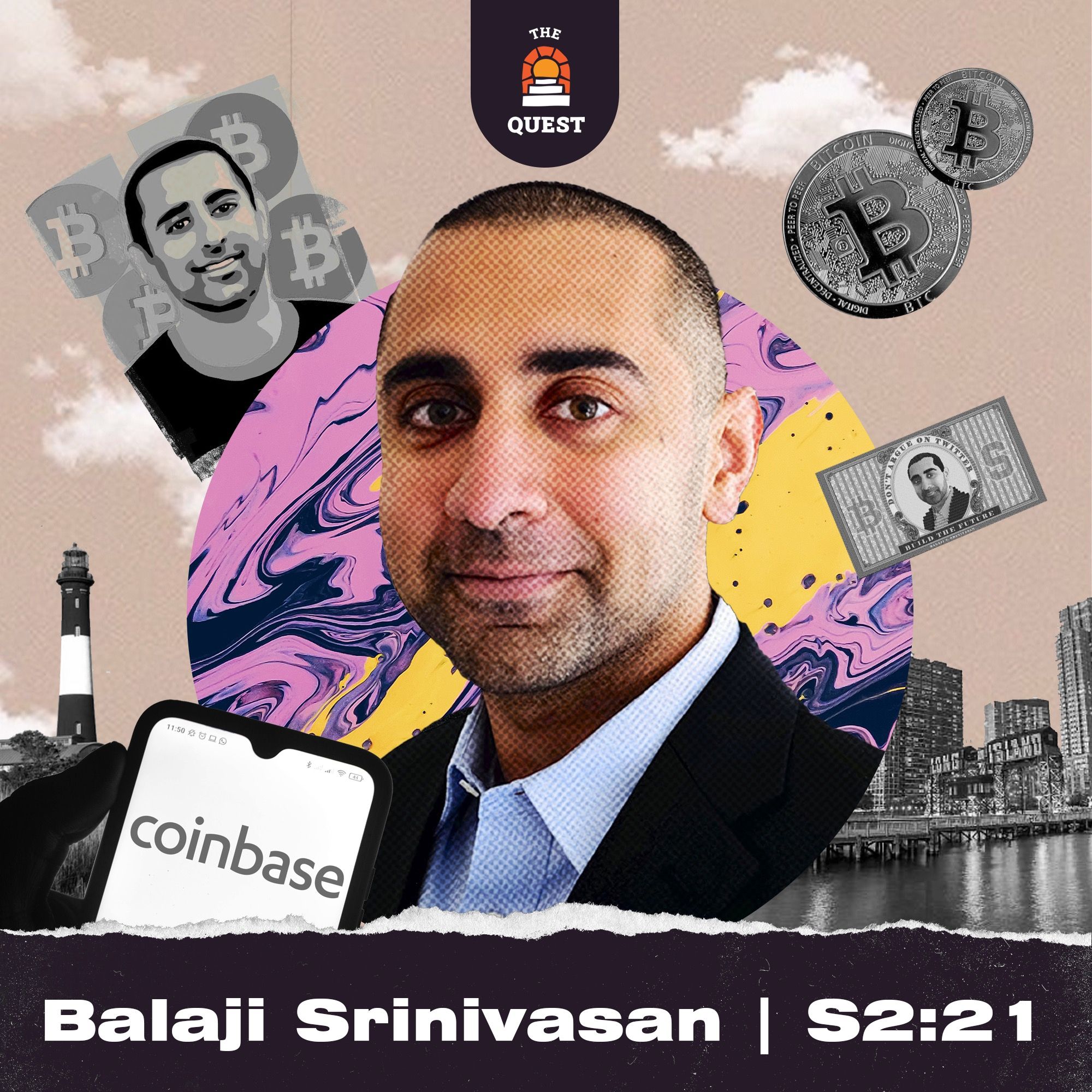
@Balaji Srinivasan Explains His Vision of The Decentralised WorldBalaji S. Srinivasan25 January 20221:29It’s Balaji’s world, and we’re all just living in it. If you’ve been hanging out on tech Twitter long enough or listen to any other tech podcasts, then you’re probably familiar with Balaji. He is an angel investor, entrepreneur, and formerly the CTO of Coinbase and General Partner at Andreessen Horowitz. In this epic episode, you’ll hear topics ranging from decentralization, crypto, media tech, social networking, China, machine learning, digital privacy and much more. Balaji has one of the most incredible minds I have ever met, and I am excited to bring you along on this journey. You can find Balaji on Twitter , and read his personal blog here. The incredible stories on this podcast are made possible by our sponsors, check them out to support The Quest: Magic Mind (This episode was originally released as S2:E20 in 2021) 🎥 Watch the full episode in 4K: https://youtu.be/CHQi1HnCZGY 🍎 iTunes: https://apple.co/3lU3fZs 🎵 Spotify: https://spoti.fi/3srzJwq ✍️ The Quest Pod in print: https://thequest.media 🌎 Everything Quest: https://bio.thequest.media
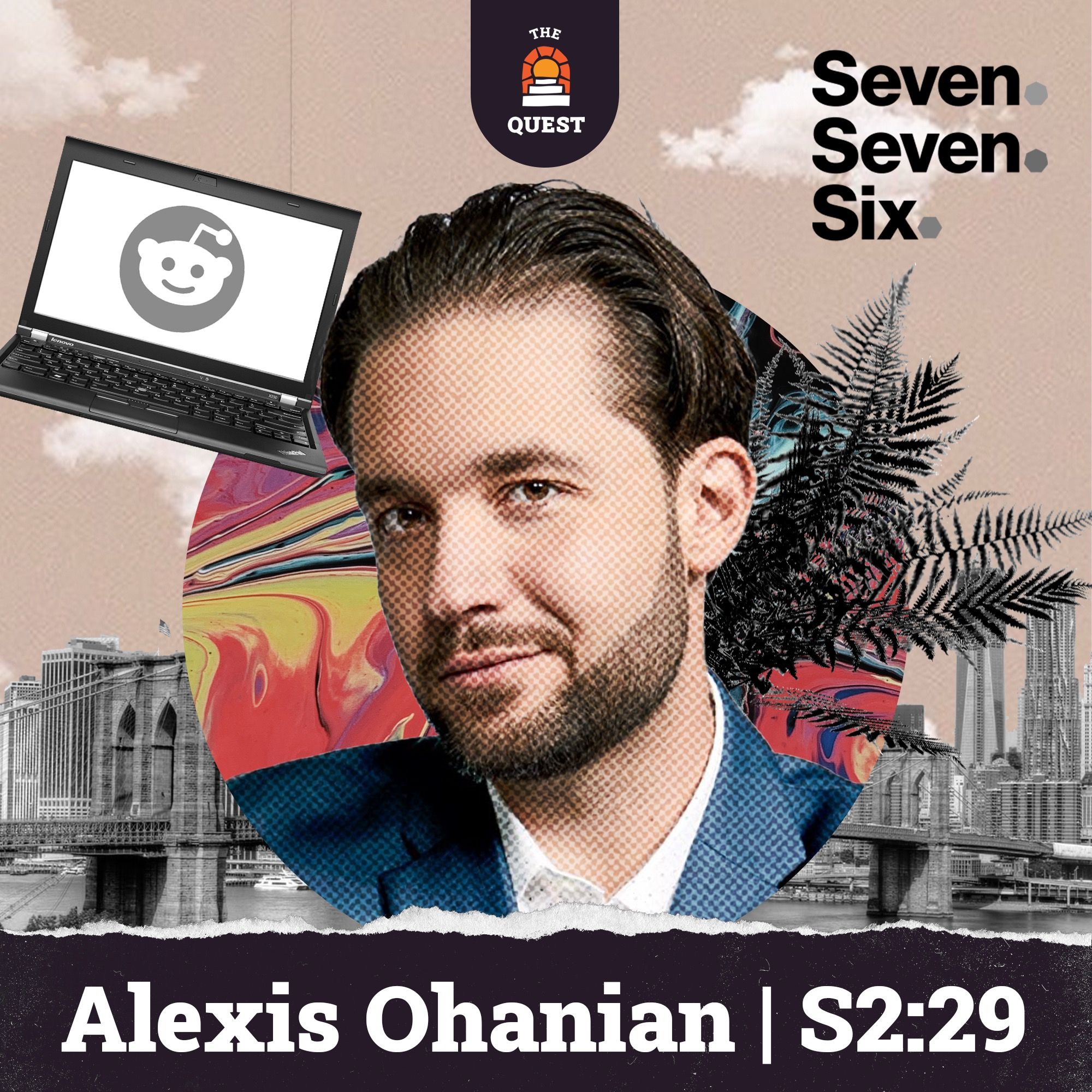
Alexis Ohanian: Reddit Founder, Y-Combinator, Seven Seven Six, Parenting, InvestingAlexis Ohanian17 August 202150 minI’ve known Alexis Ohanian for almost fifteen years, ever since we were in the trenches together as part of the first Y Combinator cohort. He is best known as the co-founder of Reddit, a fellow former partner at YC, and the founder of his new venture fund, Seven Seven Six. Alexis and I became close friends during our time at YC together, and I witnessed the trials and tribulations he went through while building Reddit first-hand. I’ve had the pleasure of watching my friend grow into a great founder, leader, investor, and parent. In this episode, Alexis opens up about his personal struggles during the early days of Reddit, the challenges of modern parenthood, and the philosophy behind Seven Seven Six. I really appreciate Alexis for being so vulnerable in this episode, and I think it is a powerful message that all founders need to hear. Follow Alexis on Twitter here , and find out more about Seven Seven Six here. Enjoyed this episode? The incredible stories on this podcast are made possible by our sponsors, check them out to support The Quest Pod: Universe | The best mobile command centre for building your online business and content. Cashapp | Spend, save, invest in stocks and cryptocurrency easily 📺 Watch this episode in 4K: https://youtu.be/k4x7fF6G2C8 🍎 iTunes: https://apple.co/3lU3fZs 🎵 Spotify: https://spoti.fi/3srzJwq ✍️ The Quest Pod in print: https://thequest.media 🌎 Everything Quest: https://bio.thequest.media
Austen Allred: Lambda School, Y-Combinator, Free Education, Programming and CodeAusten Allred10 August 202156 minAusten Allred is the founder and CEO of Lambda School, an online coding school that doesn’t charge students tuition until they get hired. Growing up Mormon, Austen worked as a missionary and lived out of a car before applying to Y-Combinator. These experiences taught him about resilience, which kept him laser focused on candidate success through media praise and controversy. Austen’s mission to democratize education really resonates with me. In this episode, we discuss moving to the Valley, going through Y-Combinator and being caught in the political tensions surrounding free education. We dive into the concepts of ISAs, the future of education and American Dream as a service. You can follow Austen on his Twitter, and check out Lambda School here. The Quest x Universe Site-Building Contest (until 17th August): The Quest Pod is partnering with Universe App to give away $1000 in cash, plus a chance to pitch me your worst startup ideas (and get roasted ) in a YouTube video! The rules are simple: Come up with the worst startup/product idea ever - the more unethical, inefficient, or useless it is, the better, Download the Universe app and build a basic landing page for your idea. Must clearly state what the product/company is, and its purpose, Follow me on Twitter, and submit your site URL and basic details on the attached entry form Keep an eye on your Twitter DM’s - I’ll contact you if you win. The entry form is available here. Enjoyed this episode?
Balaji Srinivasan: Balaji’s World (Part 2) | Network States, Building Cities, the Digital Frontier, and WokenessBalaji S. Srinivasan15 June 202138 minYou are listening to Part 2 of the episode. The full uncut conversation is available on The Quest Youtube Channel . Join the conversation there and drop a comment on what you've learned! Picking up where we left off last week, Balaji dives right into the future of Network States and crypto-voting. You’ll learn about the historical relationship between socio-economic ideologies and technological capabilities, and what this means for a crypto future. We discuss how building startups potentiates building cities in the near future, the concept of Crowdchoice, and revolutionizing voting systems with crypto technologies. The new digital frontier is waiting to be conquered, and Balaji is leading the charge. You can find Balaji on Twitter , and read his personal blog here. The incredible stories on this podcast are made possible by our sponsors, check them out to support The Quest: Universe | The best command centre for building your online business and content. Cashapp | Spend, save, invest in stocks and cryptocurrency easily 🎥 Watch the full episode in 4K: https://youtu.be/CHQi1HnCZGY 🍎 iTunes: https://apple.co/3lU3fZs 🎵 Spotify: https://spoti.fi/3srzJwq ✍️ The Quest Pod in print: https://thequest.media 🌎 Everything Quest: https://bio.thequest.media
Balaji Srinivasan: Balaji’s World (Part 1) | Crypto, China, Capitalism, and a Decentralized Creator EconomyBalaji S. Srinivasan8 June 20211:03You are listening to Part 1 of the episode. The full, uncut conversation is available on The Quest YouTube Channel . Help us get to 50 comments on YouTube and we will make Part II available everywhere next week! It’s Balaji’s world, and we’re all just living in it. If you’ve been hanging out on tech Twitter long enough or listen to any other tech podcasts, then you’re probably familiar with Balaji. He is an angel investor, entrepreneur, and formerly the CTO of Coinbase and General Partner at Andreessen Horowitz. In this epic two-part episode, you’ll hear topics ranging from decentralization, crypto, media tech, social networking, China, machine learning, digital privacy and much more. Balaji has one of the most incredible minds I have ever met, and I am excited to bring you along on this journey. There is a lot to take in from our conversation, which is why we have decided to release this in two parts. Help us get to 50 comments on YouTube and we will make Part II available everywhere! You can find Balaji on Twitter , and read his personal blog here. The incredible stories on this podcast are made possible by our sponsors, check them out to support The Quest: Universe | The best command centre for building your online business and content.
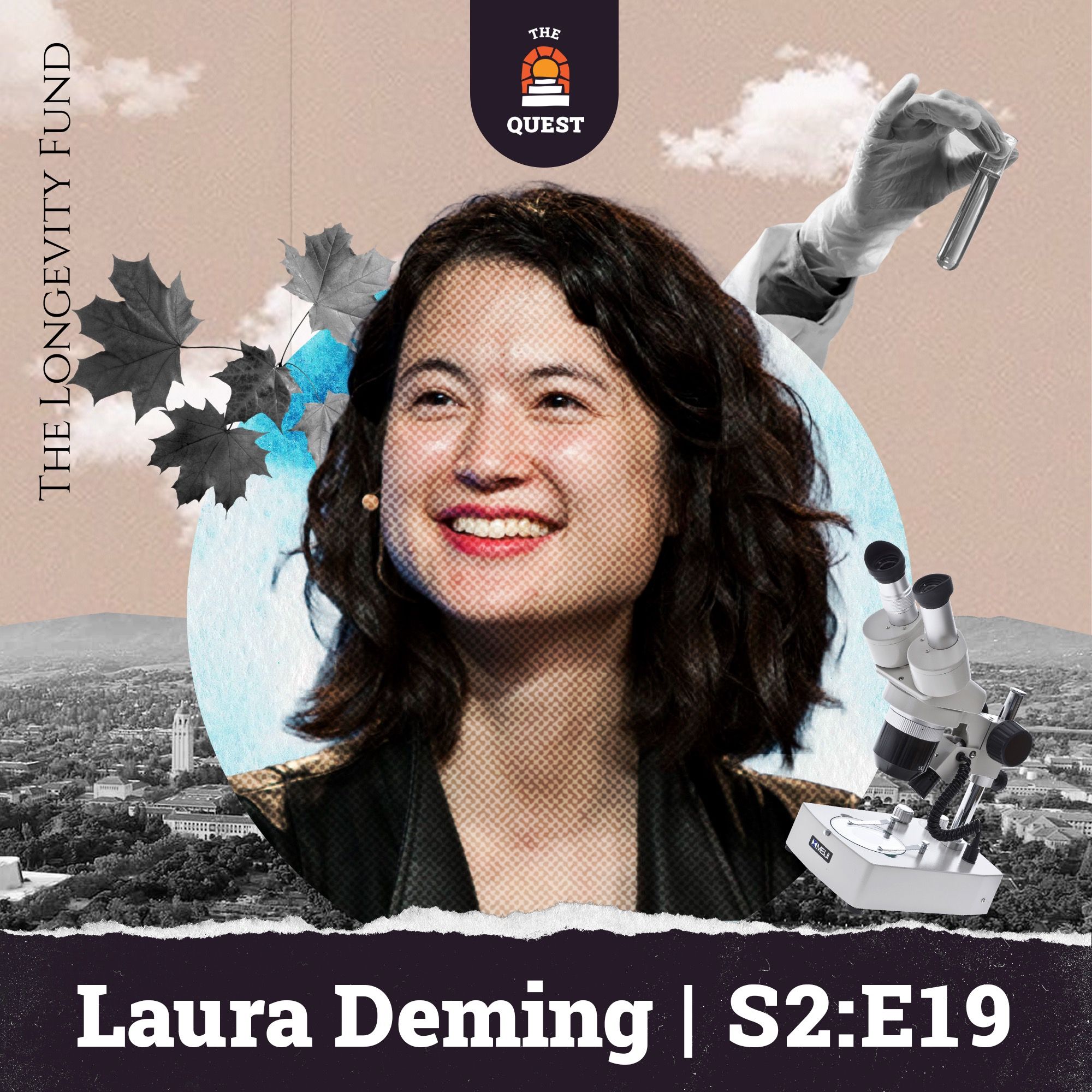
Laura Deming: Solving Immortality | Longevity, Venture Capital, Life Science and BiotechLaura Deming25 May 202151 minLaura Deming is not your typical VC. She is the founder and partner of The Longevity Fund, a venture capital firm focused on the study of aging and life extension in humans. Home-schooled in New Zealand, she moved to the U.S with her family to work in an age genetics lab at just twelve years old before dropping out of MIT at fourteen following her acceptance as a Thiel Fellow. In this episode, Laura and I discuss her journey to become an effective leader, taking risks, dealing with failure, and being motivated to change the world for a better place. Beyond her impressive resume, she is a reminder that great founders can come from anywhere, so long as you have the passion to pursue something relentlessly and are not afraid to step outside your comfort zone. If you are interested in discussions about pushing the boundaries of science, technology, and concepts of biological immortality, you definitely don’t want to miss this episode. You can find Laura on Twitter and check out her blog here . 📺 Experience The Quest Pod in 4K: https://youtube.com/c/TheQuestwithJustinKan 🍎 iTunes: https://apple.co/3lU3fZs 🎵 Spotify: https://spoti.fi/3srzJwq ✍️ The Quest Pod in print: https://thequest.media 🌎 Everything Quest: https://bio.thequest.media
Garry Tan: Designer, Engineer, Investor, Human | Family, Culture, Venture Capital and Self-WorkGarry Tan13 April 202148 minGarry Tan is a very close friend of mine. The co-founder of Initialized Capital is a veteran entrepreneur, investor, and online content creator. We share a familiar story: a couple of young Asian guys from a family of immigrants in America, building a career in tech, and eventually partnering at Y-Combinator. He also runs a popular YouTube channel, which has inspired me to create my own online content. This episode is particularly special to me because of how vulnerable Garry was willing to be, and how deeply connected I felt to him after our conversation. It was his trust in me that allowed us to discuss topics he hasn’t revealed anywhere else – growing up with an alcoholic father, going through therapy, learning to pull back the mask, and recognizing when expectations can be self-destructive. I am incredibly grateful for the amount of trust Garry has placed in me as a friend. This episode is a reminder for me personally that everyone is fighting their own battles. Conversations like this one with Garry represent why I started this podcast: to bring these stories to you. 🎥 Watch this episode in 4K: https://youtu.be/y9ARFwBxz00 🍎 iTunes: https://apple.co/3lU3fZs 🎵 Spotify: https://spoti.fi/3srzJwq ✍️ The Quest Pod in print: https://thequest.media 🌎 Everything Quest: https://bio.thequest.media
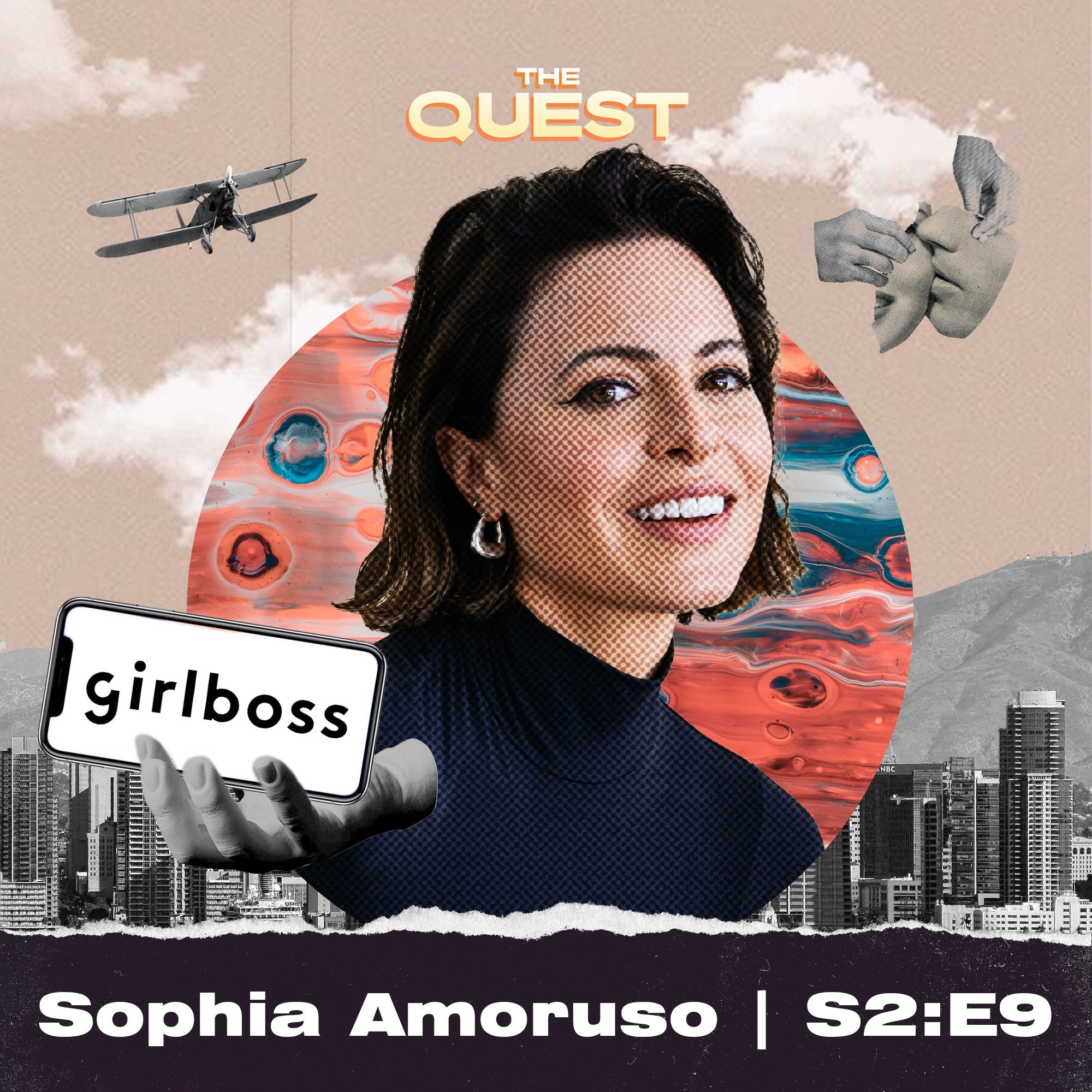
Sophia Amoruso: Rebel With a Cause | Nasty Gal, GirlBoss, Fashion, Failure and Moving ForwardSophia Amoruso16 March 202150 min‘I don’t know why everything has to happen in f***ing biblical proportions in my life, but it does.’ I resonate with Sophia's story a lot. After bootstrapping her Ebay vintage store Nasty Gal to $28 million in revenue, she was named by Forbes as one of the richest self-made women in America. But in a sudden swing, both her marriage and career fell apart within 3 months. The ultimate dagger: the divorce and bankruptcy news broke while the Netflix show about her life, Girlboss, was aired. But Sophia didn’t give up. She launched her book, podcast, media company and business class. As a community-college dropout with no pedigree, she proved everyone wrong by going on to start many more businesses, including her newest one, Business Class, which she bootstrapped to a million in revenue in under a year. In this episode, we talk about the highlights and lowlights: what happened during that fateful year, how she dealt with the pain and moved forward. Sophia exemplifies what The Quest is about - I am excited and humbled to share our conversation with you. 🎥 Watch The Quest with video: https://www.youtube.com/TheQuestwithJustinKan 🍎 iTunes: https://apple.co/3lU3fZs 🎵 Spotify: https://spoti.fi/3srzJwq ✍️ Newsletter: https://thequestpod.substack.com 🎧 Transcripts (soon): https://justin.quest​ 🌎 Everything Quest: https://listen.justin.quest ​
Emmett Shear: Twitch, 10 Years Later | Justin.tv, Y-Combinator, Founder to CEOEmmett Shear2 February 20212:15Emmett Shear is my co-founder and the CEO of Twitch, the world's biggest live-streaming platform. Growing up, Emmett and I never lived more than a mile and a half away from each other. We've always wanted to build things: from dreaming of our own Scientology-like religion to launching an experiment with NASA into space (which we actually did as high school students). Many of these experiments failed, one turned out different - and we sold it to Amazon for a billion dollars. On this episode, we reminisce on how the past 10 years went. We talk about writing web applications, building Kiko and Justin.tv, what we learned as investors, and whether capitalism works. Being a CEO is challenging - it's especially great to hear Emmett share some of his learnings, many of which I resonate with deeply. 🎥 Watch this episode with video: https://youtu.be/XCzPh-nq4bM 🍎 iTunes: https://apple.co/3lU3fZs 🎵 Spotify: https://spoti.fi/3srzJwq ✍️ Newsletter: https://thequestpod.substack.com 🎧 Transcripts (soon): https://justin.quest​ 🌎 Everything Quest: https://listen.justin.quest ​