 T
Podcast · 93 episodes in the reference, 2015 to 2026
The Twenty Minute VC (20VC): Venture Capital | Startup Funding | The Pitch
Published by Harry Stebbings
Host
HSHarry Stebbings
Episodes
 20VC: Atlassian CEO on Why Agents Won't Replace Interfaces | Why Enterprises Won't Trust Chinese Models | Why The Jury Is Still Out On The Benefits of Specialised Models with Mike Cannon-Brookes | Mike Cannon-Brookes | 12 October 2026 | 55 min | Mike Cannon-Brookes is the Co-Founder and CEO of Atlassian, the company behind Jira, Confluence, Trello and Loom. Atlassian generated $6.5BN in ARR in 2026, and serves more than 350,000 customers, including over 85% of the Fortune 500. Today, Mike is leading its expansion into enterprise AI through Rovo and the Teamwork Graph, connecting company knowledge with AI agents. AGENDA: 03:00 Do AI Agents Turn Traditional Software Into Just Databases? 16:00 Will Enterprises Ever Trust Chinese AI Models? 20:00 Is Building Your Own AI Model a Losing Bet? 24:00 Can AI Startups Survive When They Finally Have to Care About Costs? 30:00 What Happens When AI Gets Cheaper Than Anyone Expects? 35:00 Is Company Context the Real Moat in Enterprise AI? 41:00 What Happens When OpenAI and Anthropic Come for Your Customers? 44:00 Why Are Young Founders Cashing Out More Than Ever? 49:00 What Does Nobody Tell You About Getting Rich? |
| 20VC: Inside Sequoia's Investment Committee: Lessons from Don Valentine, Doug Leone and Alfred Lin | How the SpaceX and Citadel Deals Went Down | What Sequoia Specifically Looks for in Founders with Julien Bek | Doug Leone, Julien Bek | 24 August 2026 | Julien Bek is a Partner at Sequoia Capital, one of the most renowned venture firms in the world. At Sequoia, he has partnered with companies including Rillet, Tacto, and Auctor. Before joining Sequoia, Julien spent five years at Accel, where he worked with companies including Miro, Melio, and BeReal. He is also an angel investor in Revolut and Attio. AGENDA: 06:35 – What did Julien only discover about Sequoia after joining the firm? 08:05 – What does everyone get wrong about Sequoia? 13:00 – Is Series A the hardest stage at which to invest today? 14:00 – Is Sequoia less focused on ownership as outcomes become larger? 19:20 – Does Sequoia simply pay more than everyone else to win deals? 22:00 – Is the "triple, triple, double, double" growth model dead? 25:00 – What is Sequoia's investment process really like behind the scenes? 27:15 – Can a partner still invest when the rest of Sequoia votes against them? 30:00 – Why can a flawless founder pitch actually be a warning sign? 31:00 – How do you judge whether a founder is exceptional in just 30 minutes? 33:00 – How can investors tell whether a founder's story is genuine? 35:10 – Is arrogance a bad trait in a founder? 36:00 – Which great founder did Julien completely misread? 37:15 – How should investors adjust their founder assessment across different cultures? 39:00 – What does a founder's childhood reveal about their future trajectory? 40:30 – What has Julien learned from Doug Leone, Pat Grady, Alfred Lin and Shaun Maguire? | |
 20VC: Shopify's Tobi Lütke on How AI is a Scapegoat for Mass Layoffs & What Will Labour Markets Be in the Future | Why We Need More Scrutiny on Charitable Giving, Governments are Bad at What They Do and Trump Derangement Syndrome in Canada | Tobi Lütke | 4 May 2026 | 1:14 | Tobi Lütke is the co-founder and CEO of Shopify, the global e-commerce titan with a $160 billion market cap. Under his leadership, the company generates over $7 billion in annual revenue and has seen its valuation grow nearly 100x since its 2015 IPO. Today, Shopify has over 8,000 employees and AI now generates over 50% of the Shopify's code. AGENDA: 00:10:36 - The $160 billion CEO who did not want to be CEO. 00:11:51 - Why don't companies become public? Because it is much worse to be an untrusted public company. 00:16:53 - Why we are about to enter a golden age of entrepreneurship. 00:17:54 - Why AI is being used as a scapegoat for mass layoffs. 00:17:41 - How will labor markets change in a world of AI? 00:24:43 - Why we should praise Elon Musk so much more than we do. 00:27:59 - Why we need to place more, not less, scrutiny on charitable giving. 00:31:56 - Why we have too many charity dollars and why they are inefficient. 00:34:57 - Why governments are so bad at what they do. 00:37:27 - The Trump derangement syndrome in Canada. 00:39:51 - Why will governments regulating technology push us into the hands of the Chinese? 00:41:59 - Europe has to get rid of the bullshit green parties and go back to Prussian economics. 00:48:29 - Why is looking at the ticker such bullshit? 00:50:48 - Why young coders are not as advantaged in AI as I thought they would be. 00:53:56 - The best engineers in Shopify are not writing code anymore and the AI does it for them. |
 20VC: Everyone is Wrong; We Will Have More Developers in Five Years | Why Frontier Labs Will Be Way More Valuable Than They Are Today | Are SaaS Companies Cooked: Which Thrive & Which Die with Aaron Levie, Founder at Box | Aaron Levie | 20 April 2026 | 54 min | Aaron Levie is one of the most forward-thinking public company CEOs when it comes to enterprise adoption of AI. Aaron is the CEO of Box, the enterprise storage company that does over $1BN in revenue but only has a market cap of $3.2BN. Something we discuss today… AGENDA: 00:00 — Why the Experts are DEAD WRONG About the US-China AI Race 10:55 — Everyone is Wrong About Labour Markets: You Will Not Lose Your Job 13:10 — What Role Does Not Exist Today But Will Be So Common in 5 Years 16:45 — Is Your SaaS Tool Actually a Valueless Database in an Agentic World? 20:50 — The Cybersecurity Tsunami: Why Agents are Your Biggest Threat 25:50 — Token Maxing: What Every Company Needs to Know About Budgeting Tokens 34:55 — Is Silicon Valley Secretly Being Powered by Open-Source CCP Models? 39:15 — The Brutal Truth: Is This Generation of CEOs Too Low-IQ for AI? 46:55 — Frontier Labs: Why Aaron is Still Betting Everything on the Labs |
| 20VC: Anthropic Surpasses OpenAI Revenue | OpenAI Acquisition of TBPN: Analysed | OpenAI Management Team Reboot | YC Kicks Delve Out | Mercor Hack and Why Now is the Time for Cyber | Supabase Raising at $10BN & Doug Leone Returns to Sequoia | Doug Leone | 9 April 2026 | AGENDA: 03:59 — Anthropic Surpasses OpenAI in Revenue 12:43 — OpenAI Management Reboot 18:24 — OpenAI Buys TBPN 29:00 — SpaceX Files for IPO Targeting $2 Trillion Valuation 37:21 — Doug Leone Returns to Sequoia Capital 41:14 — YC Kicks Out Delve 45:21 — The Rise of Open Router 57:59 — Supabase Targeting $10B Valuation 01:08:18 — The Mercor Hack and AI Cyber Threats Moving Forward 01:17:25 — The $1.8B Two-Person Company | |
| 20VC: Inside Coatue's $70BN Machine: Why Price Matters Least | Why Mega Markets are the Most Important | How to Assess Durability of Revenue and Margins in AI with Lucas Swisher | Mamoon Hamid | 23 February 2026 | Lucas Swisher co-leads the growth fund at Coatue where he has partnered with iconic companies like OpenAI, Harvey, Deel, Canva, Openevidence, Anthropic, and others. Prior to Coatue, he was on the investment team at Kleiner Perkins, where he focused on growth stage software businesses. AGENDA: 04:23 Why Public SaaS Is Getting Crushed in the AI Wave 06:01 How to Find Value in the Deluge of Public SaaS 10:34 Durability of Revenue in AI 17:42 Market Size vs. Founder Quality: What Wins? 19:04 Why Price is the Last Thing to Matter 24:58 Mega-Funds Math: Can $5B+ Funds Still Generate Venture Returns? 28:04 What Returns Are 'Enough'? Why 3x Isn't Exciting at Growth 30:34 When Double-Downs Go Wrong: Overestimating TAM and Multi-Product Expansion 33:03 Margin Matters… But at Scale: AI Gross Margins, Cost Curves & Efficiency 36:42 Why it has never been harder to be a seed investor 39:25 Is 'Kingmaking' a Myth: When Capital Helps (and When It Hurts) 44:12 Is Canva Really a Platform Company? Multi S-Curves and Leaning into AI Early 46:05 Lessons from Mary Meeker: Modeling, Storytelling with Data, and Not Missing the Forest 48:27 Lessons from Mamoon Hamid: Spotting Inflection Points with Minimal Data (Figma Story) 49:54 LP 'Pick One' Games: Mamoon Hamid, Mary Meeker, Insight Partners 51:41 OpenAI vs Anthropic: Who Wins? 56:52 Most Memorable Founder Meeting: Harvey and Founder-Market Fit 59:00 Career Decisions & Misses: Leaving Insight, Missing Anduril, and Looking Ahead | |
| 20VC: Is SaaS Dead in a World of AI | Do Margins Matter Anymore | Is Triple, Triple, Double, Double Dead Today? | Who Wins the Dev Market: Cursor or Claude Code | Why We Are Not in an AI Bubble with Anish Acharya @ a16z | Anish Acharya | 9 February 2026 | Anish Acharya is a General Partner at Andreessen Horowitz (a16z), where he leads consumer and fintech investing at Series A. He serves on the boards of standout portfolio companies including Deel, Mosaic, Clutch, Titan, and HappyRobot and has led early bets in companies like Runway and Carbonated. Before a16z, he founded and exited two startups—Snowball (acquired by Credit Karma) and SocialDeck (acquired by Google) and scaled Credit Karma's U.S. Card business to over 100 million members. AGENDA: 00:03 - Why building an AI company today requires being in San Francisco 06:58 - The "SaaS Apocalypse" myth: Why "vibe coding" everything is a lie 09:11 - How AI agents are finally breaking the lock-in of legacy software providers 10:13 - Incumbents vs. Startups: Who actually wins the AI distribution war? 14:39 - Why the developer tool market looks more like Cloud than Uber and Lyft 22:43 - The death of the Chatbox? Why browse-based interfaces are still preferable 27:14 - Why power users are 10x more valuable in the age of AI consumption 28:36 - Do margins matter in a world of AI? 34:46 - Why we are definitively not in an AI bubble right now 38:58 - Why the Legal and Customer Support industries will have dozens of winners 39:44 - Lessons from Marc Andreessen: Why the "quality of being right" supersedes process 44:51 - Is "Triple, Triple, Double, Double" dead? The new physics of growth 01:10:41 - The a16z Playbook: How to win 100% of the deals you chase | |
| 20VC: How Model Performance is Plateauing | Two Key Rules for Effective Deal-Making | Company Building Lessons from Keith Rabois, Brian Halligan and Pat Grady | Why Enterprise AI Adoption is Years Off with Harvey CEO Winston Weinberg | Brian Halligan, Pat Grady | 19 January 2026 | Winston Weinberg is the CEO and Co-Founder of Harvey, the leading professional services platform engineered with AI for law, tax, and finance. Winston has raised over $980M for Harvey from Sequoia, a16z, GV, Elad Gil and more with a last round price of $9.2BN post-money. Before founding Harvey in August 2022, Winston was an attorney at O'Melveny & Myers LLP, specializing in antitrust and securities litigation. AGENDA: 04:10 #1 Thing Every Founder Needs to Do Everyday 05:33 Must Do Daily Routines and Productivity Tips for CEOs 12:45 How to Get Sequoia and a16z Term Sheets 15:06 Why VCs Suck at Helping Companies Hire? 27:01 What No One Understands About Enterprise AI Adoption 38:06 AI's Impact on Professional Services 39:26 Future of Law Firms: Do They Die? 43:38 What Everyone Should Know That No One Tells You About Hiring in Europe 47:08 I Have Massive Trust Issues… 54:17 Biggest Lessons on Effective Deal-Making 59:20 Cold Emailing OpenAI and It Leading to a Term Sheet 01:02:33 Quick Fire Round Try NEXOS.AI for yourself with a 14-day free trial: https://nexos.ai/20vc | |
| 20VC: a16z's $15BN Fundraise with Alex Rampell | The Best Companies Have Hostages Not Customers | The Best Founders Materialise Capital, Customers and Labour | Mid-Sized Funds with Die and The Future of Venture Capital | Alex Rampell | 12 January 2026 | Alex Rampell is a General Partner at Andressen Horowitz, where he leads their $1.7BN apps fund. Just last week, a16z announced they had raised $15BN for their latest funds, over 20% of all capital raised by venture firms. At a16z, Alex has led deals into Plaid, Mercury and OpenDoor to name a few. AGENDA: 04:55 How to Do 5x on a $15BN Fund Pool? 09:21 What Two Groups of Funds Will Win the Next Decade in VC? 14:39 What Three Things Are the Best Founders Able to Do? 19:22 The Best Companies Have Hostages, Not Customers 31:37 The Two Types of Deals You Want To Do In VC 38:52 The Importance of Founder/Capital Fit 40:34 Multiple Successive Rounds Are Dangerous… Here is Why? 42:13 Challenges of High Valuations 45:27 The Importance of Ownership in Deals 52:47 Is Triple, Triple, Double, Double Dead 58:33 Advice on Selling Companies 01:11:55 What is the Future of Venture Capital | |
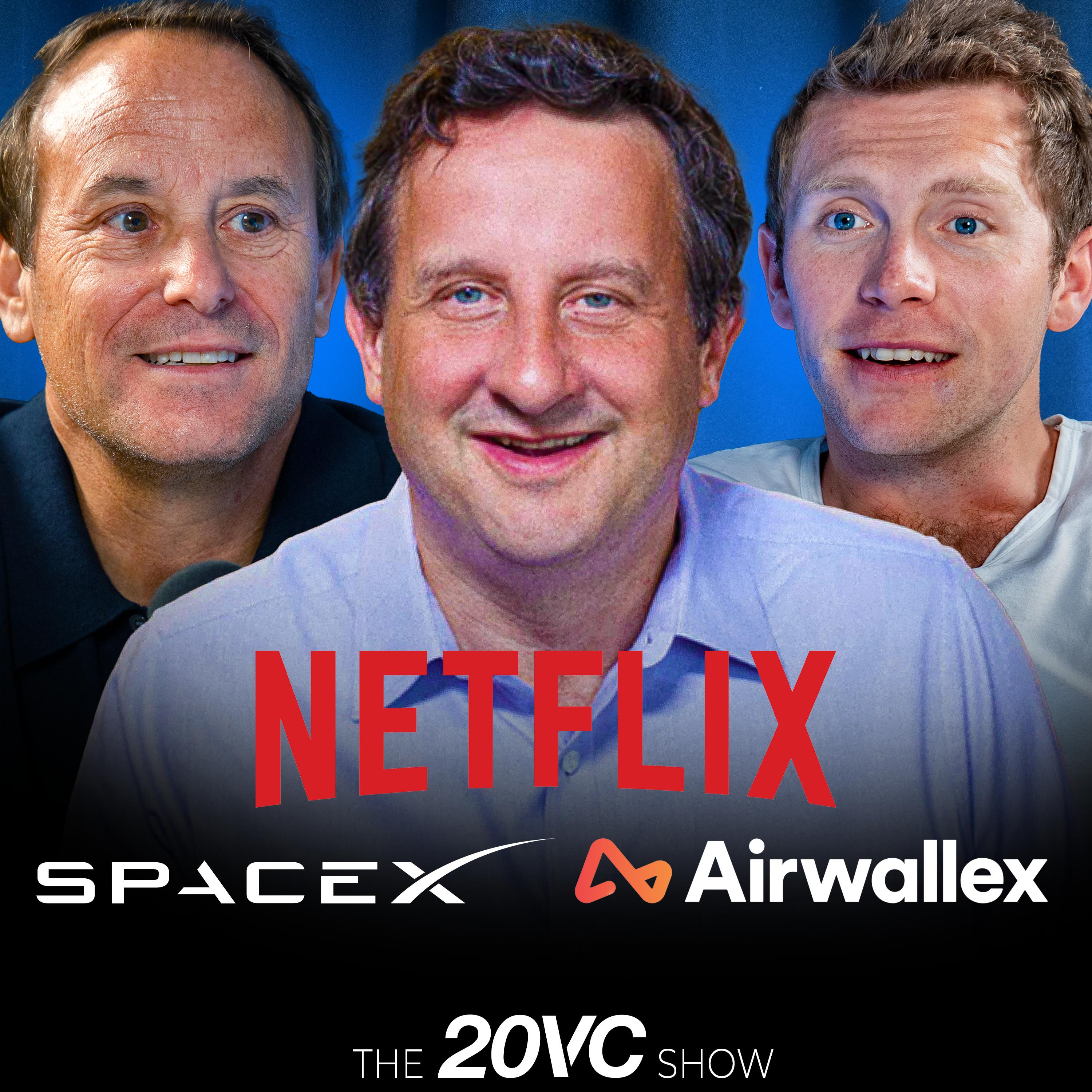 20VC OGs: SpaceX Valued at $800BN & Harvey Raises $160M at an $8BN Price | Airwallex Raises $330M and The Battle with Keith Rabois | Netflix Acquires Warner Brothers | IPO Market Predictions for 2026: Anthropic, Stripe, Databricks and SpaceX | Keith Rabois | 11 December 2025 | 1:32 | AGENDA: 03:46 SpaceX's $800 Billion Valuation: A Deep Dive 09:18 IPO Market Predictions for 2026 18:18 Netflix's Bold Move: Acquiring Warner Brothers 27:43 Tiger's New Fund Strategy 33:02 Databricks' Head of AI $500 Million Seed Round 36:38 Harvey Raises $160M at an $8BN Valuation 48:22 Will LLMs Kill the App Layer 01:02:02 Google's AI Capabilities 01:06:58 Chinese Open Source Models in US Startups 01:08:57 Airwallex Raises $330M at an $8BN Valuation 01:23:50 Prediction Markets and Insider Trading |
| 20VC: Benchmark's Newest General Partner Ev Randle on Why Margins Matter Less in AI | Why Mega Funds Will Not Produce Good Returns | OpenAI vs Anthropic: What Happens and Who Wins Coding | Investing Lessons from Peter Thiel and Mamoon Hamid | Mamoon Hamid | 10 November 2025 | Ev Randle is a General Partner @ Benchmark, one of the best funds in venture capital. In their latest fund, they have Mercor ($10BN valuation), Sierra ($10BN valuation), Firework ($4BN valuation), Legora ($2Bn valuation) and Langchain ($1.4Bn valuation). To put this in multiples on invested capital, that is a 60x, two 30x and two 20x. Before Benchmark, Ev was a Partner @ Kleiner Perkins and before Kleiner, Ev was an investor at Founders Fund and Bond. AGENDA: 05:25 Biggest Investing Lessons from Peter Thiel, Mary Meeker and Mamoon Hamid 14:36 OpenAI Will Be a $TRN Company & OpenAI or Anthropic: Who Wins Coding? 22:27 Why We Should Not Focus on Margin But Gross Dollar Per Customer 30:25 Why AI Labs are the Biggest Threat to AI App Companies 44:26 Do Benchmark Fire Founders? If so… Truly the Best Partner? 54:38 People, Product, Market: Rank 1-3 and Why? 57:36 Why the Mega Funds Have Just Replaced Tiger 01:04:08 GC, Lightspeed and a16z Cannot Do 5x on Their Funds… 01:14:09 Single Biggest Threat to Benchmark | |
| 20VC: Sequoia's David Cahn on The Winners and Losers in AI | The $0-$100M Revenue Club: Is Triple, Triple, Double, Double Dead? | The Future of Defence: Who Wins and Who Loses | How to Analyse Margins and Growth Rates in a World of AI | David Cahn | 27 October 2025 | David Cahn is a Partner at Sequoia Capital and one of the world's leading AI investors. At Sequoia David has led investments in Clay, Juicebox, Sesame, Kela, Stark, etc.. Before Sequoia, David was a General Partner @ Coatue where he led investments in Notion and Hugging Face. AGENDA: 00:00 We Are in an AI Bubble 05:04 Why Building Physical Data Centres is a Moat 13:58 Winners and Losers in a World of AI 19:13 The Role of Big Tech and Monopolies 23:37 Breaking Down Circular Deals in AI: The Truth No One Sees? 38:19 Why Kingmaking is BS and VCs Do Not Make or Break Companies 41:30 The Importance of Margins in AI Investments 43:41 The Required Growth Rates in AI to Get Funded by Sequoia 45:30 The $0-$100M Revenue Club: Is Triple, Triple, Double, Double Dead? 51:53 Why the Most Important Hire for Startups Today is 23 Year Olds 01:01:19 The Future of Defence: Who Wins and Who Loses 01:10:15 Quickfire: Biggest Miss, Parenting Advice, Doug Leone Advice | |
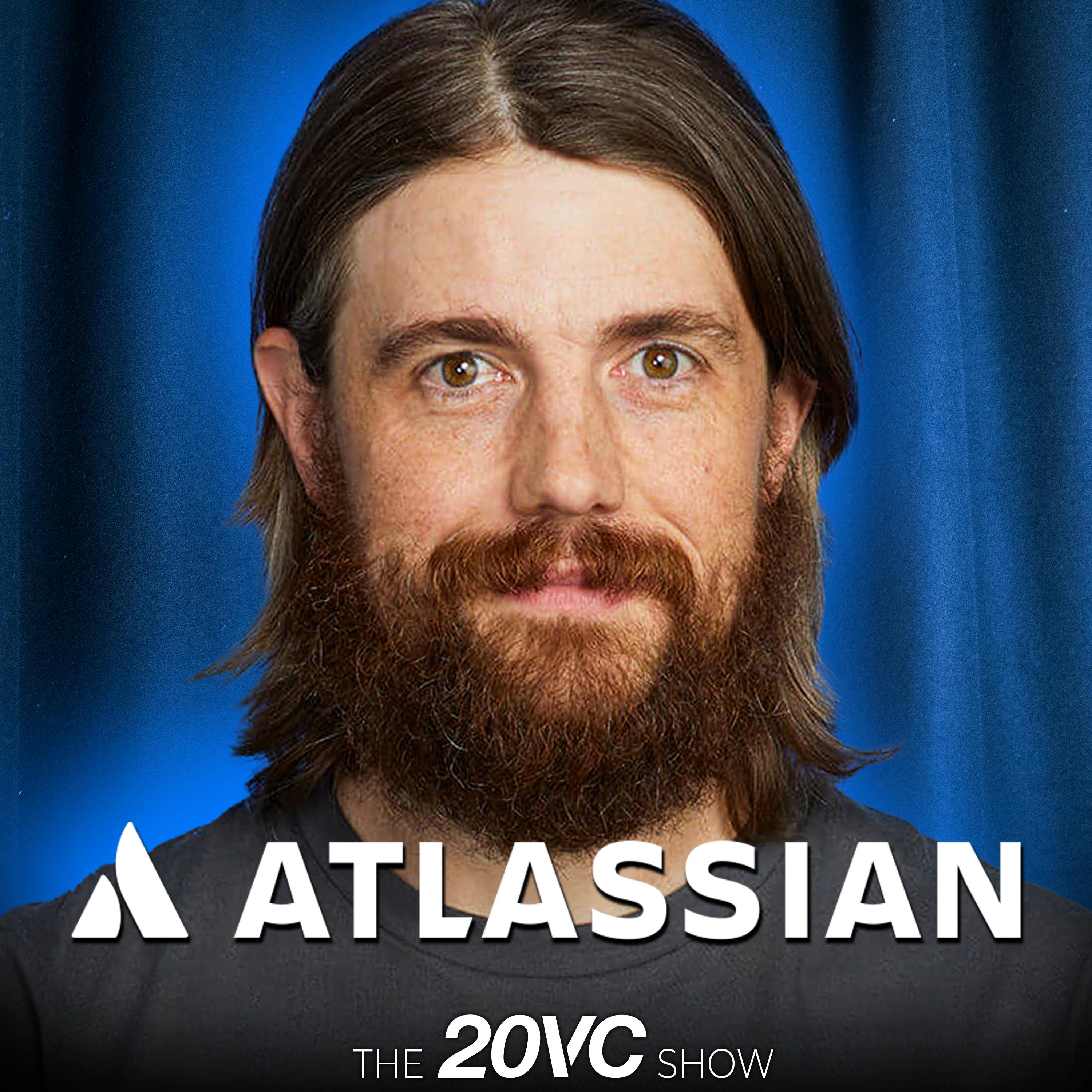 20VC: Atlassian CEO on Why Everything is Overvalued & Are We in an AI Bubble | Do Margins Matter & Does Defensibility Exist in an AI World | Is Per Seat Pricing Dead & The Future of Vibe Coding with Mike Cannon-Brookes | Mike Cannon-Brookes | 13 October 2025 | 1:03 | Mike Cannon-Brookes is the Co-Founder and Co-CEO of Atlassian, the $50BN software giant behind products like Jira, Confluence, and Trello. Since founding the company in 2002, he has scaled it to over 300,000 customers globally, generating more than $5BN in annual revenue. Atlassian now employs over 10,000 people across 13 countries and is one of the most successful bootstrapped-to-IPO stories in tech history. Mike is also a leading climate investor and co-owner of several major sports teams. AGENDA: 00:00 Why Unreasonable Men Win in Startups 07:22 How to Make Co-CEOs Work 13:22 Are We in an AI Bubble? Is Everything Overvalued? 26:46 The Future of Software Development: More or Less Devs 32:53 Do Margins Matter in a World of AI 34:02 The Future of Vibe Coding… 36:35 Does Defensibility Exist in a World of AI 42:09 Is Per Seat Pricing Dead in a World of AI 49:01 The Founder Journey and Leadership 54:28 Quick Fire Round: Parenting Advice, Relationship to Money |
| 20VC: Anthropic's $10BN Round | Klarna's IPO Broken Down | Inside a16z's 72 Deal Seed Investment Machine | Martin Casado: Is Consensus Investing the Only Game | Why Satya is Chatting S*** on SaaS Apps Disappearing featuring Marc Benioff | Martin Casado | 28 August 2025 | AGENDA: 00:00 – Marc Benioff vs Snowflake, Databricks & Palantir: Who Wins the Data Cloud War? 05:10 – Does Benioff Feel The Need to Buy AI Talent Like Zuck Is? 09:00 – What Salesforce has Learned From Palantir on Forward Deployed Engineers? 18:00 – Will SaaS apps disappear in an AI world? Why Satya is Chatting S*** 23:40 – Are SDRs really screwed by AI… or just evolving? 26:10 – Benioff on Who Wins: OpenAI or Anthropic? 30:00 – Nat Friedman reports to Alex Wang: Genius move or career downgrade? 34:00 – Anthropic's $10B round: Have we hit peak AI hype? 47:00 – Klarna's wild ride: From $45B to $6B to IPO at $15B 55:00 – Inside a16z's seed machine: 72 bets vs Sequoia's 27 57:45 – Martìn Casado: Is consensus investing dangerous—or the only game? 01:05:00 – The big lesson: consensus, contrarian, and why investing is harder than ever | |
| 20VC: a16z's Martin Casado on Anthropic vs OpenAI: Where Value Accrues | Cursor vs Replit vs Lovable: Who Wins and Who Loses | The One Sin in AI Investing | Why Open Source is a National Security Risk with China | Martin Casado | 28 July 2025 | Martin Casado is a General Partner @ a16z where he leads the firms $1.25BN infrastructure fund. At a16z, Martin has led investments in companies like Cursor, dbt Labs, and Fivetran to name a few. Before joining a16z, he co-founded Nicira, acquired by VMware for $1.26B. At VMware, he served as CTO of Networking. Widely regarded as a visionary in enterprise infrastructure, Martin has helped shape the modern cloud computing stack. Agenda: 00:00 – Analysis of Current AI Investment Landscape 04:45 – Will Anthropic Kill the AI App Layer? 09:20 – "The Oligopoly Is Coming—Just Like Cloud" 12:50 – Are AI Models Actually Terrible Venture Investments? 15:40 – Why it is BS to Put Down AI Apps for Having Temporary Revenue 21:30 – "Open Source Is a National Security Weapon—And We're Losing" 26:40 – "Have the Foundation Models of the Future All Been Founded Already" 34:30 – Why it is BS to Denigrate AI Apps for Having Low Margins 38:40 – Does AI Make 1x Engineers 10x or 10x Becomes 100x 44:10 – "We're All Dead Wrong About AI and Job Loss" 50:30 – "The Only Sin in Venture: Backing the Wrong Winner" 55:10 – What People Think They Know About Wealth But Do Not | |
| 20VC: Daniel Gross and Nat Friedman: Acquired by Meta | OpenAI's SBC Bombshell: More Stock Comp Than Revenue | Privat Equity is Back: Olo Bought for $2BN | Microsoft Lays Off 9,000 People: Is This Just the Start | Will Sequoia Part with Shaun Maguire | Shaun Maguire | 10 July 2025 | Agenda: [00:00] The AI Talent Crisis No One's Ready For [03:00] Daniel Gross and Nat Friedman: Why Two Legendary VCs Walked Away From $1B to Join Meta [12:00] Meta's AI Talent Magnet: Will It Actually Work? [15:00] Cursor Is Breaking the Market: Can Anyone Compete? [18:30] OpenAI's SBC Bombshell: More Stock Comp Than Revenue [22:00] CoreWeave's Power Play: Buying Their Landlords [26:00] Is Circle Next to Go Shopping with Meme Equity? [28:00] PE Is Back: The Olo Take-Private Explained [35:00] Why Triple, Triple, Double, Double Is No Longer Sexy [41:00] QSBS Hack: The Billionaire's Tax Loophole You're Missing [48:00] Microsoft's AI Layoffs: Salespeople Are Dead, Long Live Engineers [50:00] "If You Need a Week to Learn AI, You Should Be Fired" [53:00] Will Sequoia's Sean Maguire Be Pushed Out? Place Your Bets [57:00] Will There Be a Recession in 2025? Jason Bets $75K It's a No [1:00:00] Is Linda Yaccarino Still CEO of X by Year-End? [1:03:00] Circle and CoreWeave's Meme Rally: Real or Mirage? | |
| 20VC Exclusive: Why Mega Platforms Will Win in VC | Why You Cannot Do VC If You Do Not Do Pre-Seed | Why Market Sizing is BS | Where Will Foundation Models Build/Buy Apps vs Where Will They Not with Bucky Moore | Mamoon Hamid | 5 May 2025 | Bucky Moore is a Partner @ Lightspeed Venture Partners, announced exclusively in the show today on 20VC. Prior to Lightspeed, Bucky spent an incredibly successful 7 years at Kleiner Perkins working with Mamoon Hamid to build one of the most successful early stage firms of the last decade. Bucky has made investments in the likes of Prisma, Netlify, Browserbase and more. In Today's Episode We Discuss: 03:07 Big News: Joining Lightspeed Venture Partners 04:09 Why Mega Platforms Will Win the Next 10 Years of VC 09:33 Are Foundation Model Companies Good Venture Investments 16:04 What Applications Will Model Providers Buy/Build? What Will They Not? 22:03 How to Approach Price Sensitivity in a World of AI 28:25 Why is it BS to do Market Sizing When Making Investments in AI 34:03 Is the Future of VC Domain Specialization 38:38 How to Know What Company Wins in Super Competitive Markets 41:06 Why Every Firm Has to do Pre-Seed To Win in VC Today? 44:43 The Risks of Multi-Stage Investing: Is Signalling Risk Real? 48:53 Investing Lessons from Leading Rounds in Glean and Windsurf 56:54 Quick Fire Round: Lessons from Mamoon, Fave CEO, Next 10 Years | |
| 20VC: How to Fix the UK Tech Ecosystem | Why We Need to Flood the UK with Venture Capital | What the UK Can Learn From Sequoia, Stripe and Norway | Why Now is the Time to be Bullish on China & Lessons from Jensen Huang with Tom Hulme & Stan Boland | Tom Hulme | 10 April 2025 | Tom Hulme is a General Partner @ GV and leads GV's European investing. He has led rounds in Monzo, Nothing, GoCardless, Lemonade, Snyk and is widely considered one of the best investors in Europe. Stan Boland is one of the most successful and respected entrepreneurs in the UK. In 1999, he co-founded Element 14 which was acquired by Broadcom in 2000 for $640 million. Following this, Boland co-founded Icera Inc. in 2002, a fabless semiconductor company which he sold to Nvidia for $367 million. In Today's Discussion We Cover: 04:26 Is The UK's Biggest Problem a Talent Problem 09:50 Why We Need to Flood the UK With Venture Capital 10:38 What Europe Can Learn from Stripe and the Collisons 15:21 How the UK Can Use Visas to Retain the Best Talent 16:46 Why the Government Needs to Put 10x More Cash Into Fund of Funds 24:32 Is the London Stock Exchange F****** and Does it Matter? 34:38 What The UK Can Learn From Sequoia and the Norwegian Sovereign Wealth Fund 40:42 What is a "National Goal for Wealth Creation" & How Do We Implement It? 48:10 What are the Most Broken Elements of the UK Tax Regime 52:11 Is It Stupid to Remove the Non-Dom Tax Status 53:15 Why is Now the Time to Be Bullish on China 01:00:19 Biggest Lessons from Working with Jensen Huang 01:08:04 Quick Fire Round: Insights and Predictions | |
 20VC: Salesforce Founder Marc Benioff on The Future of LLMs | The Future of Agents | The Future of Labour | Management Lessons from Steve Jobs | Marc Benioff | 9 December 2024 | 44 min | Marc Benioff is one of the iconic founders and visionaries of our time. From the founding of Salesforce 25 years ago, Marc has in many ways created an entire industry. He has scaled the company to a market cap of $346BN, $38BN in revenue and over 72,000 employees. Ask Me Anything with Marc Benioff: The Future of Models: Why does Marc believe we are at the upper end of LLMs and they are commoditising? Why does Marc believe the future of models is many smaller, verticalised models specialised in different areas? OpenAI vs Anthropic vs Xai. Which would Marc buy and which would he short? What is the single biggest barrier to Salesforce winning the AI war in the next 10 years? The Future of Agents: What does Salesforce need to do to prevent becoming a database in the next generation of AI? To what extent do agents hurt vs help Salesforce? What do very few people understand about agents that is very important? The Future of Labour: Will Salesforce replace it's human labour with digital labour? Will Salesforce be bigger or smaller in 10 years time, people wise? Why does Marc believe that layoffs are a crucial tool for CEOs to win? How will a future of digital labour change the pricing model of SaaS tools today? Management Lessons from Marc Benioff: How did one meeting with Steve Jobs change how Marc views leadership? How does Marc analyse the required mindset to win as a CEO today? What has Marc changed his mind on most in the last 12 months? |
| 20VC: Kleiner Perkins' Mamoon Hamid on Investing Lessons from Leading Rounds in Figma, Slack and Rippling | Lessons Building a Generational Defining Firm with Kleiner Perkins | AI: Where Value Accrues, Startups vs Incumbents & Scaling Laws | Mamoon Hamid | 21 October 2024 | Mamoon Hamid is a General Partner @ Kleiner Perkins and one of the greatest venture investors of our time. In the past, Mamoon has led rounds in Figma, Slack, Rippling, Intercom, Glean and Box. Prior to joining Kleiner Perkins, Mamoon was a Co-Founder of Social Capital, and prior to that a Partner at U.S. Venture Partners (USVP). In Today's Episode with Mamoon Hamid We Discuss: 1. The Greatest Venture Deal of All Time: Figma or Slack: What is Mamoon's highest returning deal? What did Mamoon see in Dylan and Figma when they had no revenue and very little user data? What compelled Mamoon to write Stewart the check with Slack? What did he not see with Slack that he should have seen? 2. Taking Control of the Great Brand in Venture: Kleiner Perkins: Is it true that Kleiner approached Mamoon and gave him the keys to the Kleiner kingdom? How did it go down? Will Kleiner go back to having multiple products, large growth funds, international funds? What does Mamoon want Kleiner to be in 5 years? What was the hardest element of the transition into Kleiner? What did Mamoon not know that he wishes he had known? 3. Becoming a Generational Defining Investor: Market, founder, product, how does Mamoon rank them 1-3? How has Mamoon changed most significantly as an investor? What does he know now that he wishes he had known when he became a VC 19 years ago? What is his biggest loss? How did it shape his mindset and go forward investing approach? 4. | |
| 20VC: Sequoia's Shaun Maguire: Will We See WW3 Shortly | Why DEI is a Cancer for Society | Why Iran is the World's Greatest Evil | Why Trump is the Only Hope for Peace in the Middle East | Trump vs Harris: Who Wins & What Happens | Shaun Maguire | 12 August 2024 | Shaun Maguire is a Partner at Sequoia Capital . At Sequoia he led their investment into SpaceX, The Boring Co and X among many others. Before Sequoia he co-founded a cybersecurity company called Expanse which Palo Alto Networks acquired for $1B. Before Expanse, Shaun worked at DARPA and was deployed to Afghanistan. In Today's Episode with Shaun Maguire We Discuss: 1. Why Iran is the Greatest Evil in the World: What specifically makes Iran the greatest danger to the world today? How should the US respond to the threat posed by Iran? Does the US have to go to war with Iran knowing that they now have nuclear weapons? How did the Biden-Harris administration worsen relations both with Iran and Saudi? Is Trump the best chance we have of bringing peace and stability to the Middle East? 2. Russia, Ukraine, Gaza and Israel: What is the Right Next Step: Does Shaun believe that the US should remove funding from Ukraine? How would Trump change the US' relationship with Putin? What does Shaun believe is the right next step for the US in Gaza and Israel? What does Shaun mean when he says the public have no idea how much crazy s**** happens? 3. Freedom of Speech and DEI: Remnants of the Past: Does Shaun believe we live in a society with freedom of speech? How does it differ between the US and Europe? Is Shaun negative on the future of Europe? Does he agree with Larry Summers that "it is a museum"? How does Shaun evaluate the state of diversity, equity and inclusion (DEI)? | |
| 20VC: Sequoia's David Cahn on AI's $600BN Question | Why the Data Centre is the Most Important Asset | Servers, Steel and Power: The Core Pillars Powering the Future of AI | David Cahn | 5 August 2024 | David Cahn is a Partner @ Sequoia Capital , one of the great venture firms of the last 5 decades. Before joining the Sequoia partnership, David led Coatue's venture business as a General Partner and COO where he led investments in Hugging Face, Runway and Supabase. David also joined the boards of Weights & Biases and Replit. In Today's Episode with David Cahn We Discuss: 1. AI's $600BN Question: What is the $600BN question in AI today? Is it possible to believe "AI will change the world" and "Capex levels are too high" at the same time? Why do the cloud players have to act now? When does the Capex reduce for them? How does Meta not having a core cash cow in cloud change the way they can respond? Why is all the risk today being borne by the large incumbents? Why is that good for startups? How will we see Satya and Zuckerberg change their narrative towards their Capex spend to the public markets? 2. The Data Centre is the Most Important Asset: Why does David believe that data centre is the most important asset? What does he mean when he says "servers, steel and power" are the pillars of AI? What happens when the development of models outpaces the construction of data centres? Why does David believe no one will ever train a frontier model on the same data centre twice? 3. The Biggest Opportunities in AI: Why does David believe the biggest opportunity right now is in the build-out of data centres? What does the supply chain look like for the build-out of data centres? | |
| 20VC: Why We Are in a Bubble & Now is Frothier Than 2021 | Why $1M ARR is a BS Milestone for Series A | Why Seed Pricing is Rational & Large Seed Rounds Have Less Risk | Why Many AI Apps Have BS Revenue & Are Not Sustainable with Saam Motamedi @ Greyloc | Saam Motamedi | 15 July 2024 | Saam Motamedi is a General Partner at Greylock, where he has led investments in Abnormal Security (incubated at Greylock), Apiiro Security and Opal Security, as well as AI companies like Adept, Braintrst, Cresta, Predibase, Snorkel, and more. Before Greylock, Saam founded Guru Labs, a machine learning-driven fintech startup, and worked in product management at RelateIQ, one of the first applied AI software companies. In Today's Conversation We Discuss: 1. Seed Today is Frothier than 2021: How does Saam evaluate the seed market today? With seed pricing being so high, how does he reflect on his own price sensitivity? When does he say too much and does not do it? Despite seed pricing being higher than ever before, why does Saam believe it is rational? How has the competition at seed changed in the last few years? 2. Series B and Growth are not a Viable Asset Class Today: Why does Saam believe that you cannot make money at Series B today? Why has pricing gone through the roof? Who is the new competition? When does it make sense to "play the game on the field" vs say this is BS and do something else? What would need to happen in the public markets for Series B to be a viable asset class again? 3. Markets vs Founders: The Billion Dollar Mistake and Lessons: How does Saam prioritise between founder vs market? What have been Saam's biggest lessons when it comes to market sizing and timing? What is Saam's biggest miss? How did it change his approach and company evaluation? | |
| 20VC: The Sequoia Investment Process | Investing Lessons from Doug Leone, Roelof Botha & Alfred Lin | Sequoia's Framework for Analysing Founders | The True Benefit of Having Sequoia on a Cap Table & Sequoia's Biggest Threat with Pat Grady | Doug Leone, Pat Grady | 8 July 2024 | Pat Grady is one of the most successful growth investors of the last decade. As the Head of Sequoia's growth investing practice, Pat has invested in companies with a combined market cap exceeding $250BN. Among Pat's immense portfolio is Hubspot, Snowflake, ServiceNow, Okta, Amplitude, Zoom and Qualtrics. Pat is also one of the best acquirers of talent in venture hiring Andrew Reed, Matt Huang, Julien Bek. In Today's Episode with Pat Grady We Discuss: 1. The Sequoia Investment Process: What is the Sequoia investment process today? How has it changed over time? What could be improved about the process? Where is it weak? What is the biggest strength of the process? How do Sequoia remove politics from the investment decision-making process? Are the best deals "contrarian"? What does Pat mean when he says you do not "get extra points for being contrarian and right"? 2. What Sequoia Look for When Investing: What is Pat's framework for assessing founders? How does it differ when investing early vs late? Team, traction, TAM, how does Pat rank the three when investing? What have been Pat's biggest lessons on market sizing? Does Pat take market timing risk? How much weight does Pat place on "traction" when investing? How sustainable is PMF? 3. The Three Core Pillars of Venture: Sourcing: What does Pat rank Sequoia for sourcing? Who is the best at sourcing in the firm? Selecting: How does Pat rank Sequoia at picking? How has it changed over time? | |
| 20VC: GV's Tom Hulme on Why Investing in Foundation Models is like Investing in "Power Stations", The Conventional Wisdom in VC that is BS & Lessons from a 24x Angel Track Record, 255x on Robinhood and Making Billions on Uber | Tom Hulme | 8 May 2024 | Tom Hulme is a Managing Partner of GV (Google Ventures), and leads the European team. Today, GV has over $10BN in AUM and Tom has led investments in Lemonade.com (IPO), Snyk, Secret Escapes, Blockchain.com, GoCardless, Blue Vision Labs (exited to Lyft), and Currency Cloud (exited to Visa). Prior to joining venture full-time, Tom was one of Europe's most successful angel investors with a 5x DPI track record and 20x+ TVPI. In Today's Episode with Tom Hulme We Discuss: 1. Lessons from a 24x TVPI Angel Track Record: What are Tom's biggest lessons from his biggest winners angel investing? What are Tom's biggest takeaways from the 0's in his angel track record? What is the biggest advice Tom would give to angel investors starting out today? What are the single biggest mistakes Tom sees angel investors make today? 2. The Four Pillars of Venture Capital: What does Tom believe are the four key components of being successful as a VC? Why does Tom describe VC as "being a founder on anti-depressants"? How does Tom categorise the three different types of investors that exist? Sourcing, selecting, servicing: What is Tom best at and what is he worst at? 3. The Conventional Wisdom in Venture That is Not True: Why does Tom believe it is BS that you should never sell your winners? Why does Tom believe he has never had complete conviction in any of the companies he invests in? Why does Tom believe the "everything has to be a fund returner mindset" is BS? | |
 20VC: The Memo: Keith Rabois and Ramp's Eric Glyman on Behind The Scenes at The Best Run Private Company on the Planet; The Tools, Tips, Secrets and Process That Drive Efficiency | Keith Rabois | 3 May 2024 | 43 min | Eric Glyman is the Co-Founder and CEO of Ramp, America's fastest growing corporate card and finance automation platform. Under Eric's leadership, Ramp has raised more than $1 billion in financing, with a valuation of $8.1 billion. Prior to Ramp, Eric co-founded Paribus, a price-tracking app to help consumers save money (acquired by Capital One). Ramp recently raised another $150 million series D round co-led by Founders Fund and Khosla ventures, with a post-money valuation of $7.65 billion. Keith Rabois is a Managing Director @ Khosla Ventures and one of the most respected venture investors of the last decade. Keith has led investments in Stripe, Faire, Ramp, Affirm and many more. Prior to Khosla Ventures, Keith was General Partner at Founders Fund, where he led investments for Ramp, Trade Republic, and Aven. In Today's Episode with Eric Glyman and Keith Rabois We Discuss: Behind Ramp's Partnership with Founders Fund & Khosla Ventures How did the first Founders Fund deal come to be? How was the first meeting? What does Keith mean when he says Ramp has the "secret sauce" to be successful? What are 1-2 things Keith thinks Eric is world-class at? What are 1-2 things Eric thinks Keith is world-class at? How did the latest Khosla deal come to happen? Ramp: The Fastest Executing Company on the Planet. How is Eric so good at executing at Ramp? What is his biggest advice to founders on speed of execution? What are Eric's biggest challenges in the next 12 months at Ramp? |
| 20VC: Founders Fund's Trae Stephens on Why The Most Competitive Deals are the Worst, Why No Company is Successful Because of their VC, Why We are Making ZIRP Mistakes Again Today, Why Loss Ratio is BS and Upside Maximisation is Everything | Trae Stephens | 3 April 2024 | Trae Stephens is a Partner at Founders Fund , one of the world's leading funds where he has worked with some of the best and backed the likes of Palmer Luckey with Oculus and Ryan Peterson @ Flexport since the very early days. Trae is also Co-founder and Executive Chairman of Anduril Industries, a defense technology company focused on autonomous systems, and Co-founder of Sol, a next-generation wearable e-reader. Previously, Trae was an early employee at Palantir Technologies, where he was also an integral part of the product team, leading the design and strategy for new product offerings. In Today's Episode with Trae Stephens We Discuss: 1. From Hustling into Georgetown to Peter Thiel Ushering You into VC: What is Trae's story of how he got into Georgetown University, despite being rejected the first time? How did Trae make his way into the world of VC? How did Peter Thiel recruit him to Founders Fund? What advice did Brian Singerman give Trae in his first week in VC? Why is it so important? 2. How the Best Venture Firm in the World Invests: Decision-Making Process: Why do Founders Fund not have partner meetings? What is the investment decision-making process? Why does more process lead to mediocre outcomes? Competitive Deals: Why does Trae believe the most competitive deals are always the worst? What do Founders Fund do to specifically avoid the "herd mentality"? Upside Maximisation: Why does no one at Founders Fund care about "downside protection"? | |
 20VC: a16z's Chris Dixon on Who Will Win the Next Generation of Venture, The Two Ways to Make Great Venture Investments and Find the Best Entrepreneurs & Why AI Will Strengthen the Position of the Incumbents Moving Forward | Chris Dixon | 27 March 2024 | 55 min | Chris Dixon is a General Partner at Andreessen Horowitz, one of the leading venture firms of the last decade with investments in Oculus (acquired by Facebook), Coinbase, and many more. Chris also founded and leads a16z crypto, a division of the firm that he has grown from $300 million in 2018 to more than $7 billion of committed capital. Due to his many successes, Chris was named #1 on the Forbes Midas List in 2022. In Today's Episode with Chris Dixon We Discuss: From Founder to Leading GP in Venture: How did Chris make his way into the world of venture and startups? When did he realize investing was his calling? How did Chris Dixon come to co-found Founder Collective with Dave Frankel and Eric Paley? Lessons from 12 years Investing: What are Chris' biggest lessons from working with Marc Andreesen and Ben Horowitz? Does Chris agree with Doug Leone, "venture has transitioned from a boutique high margin business to a low margin commoditised industry"? What are the two ways to win in venture? Does Chris agree the best founders don't need their VCs? What is Chris' biggest investing miss? How did it impact his mindset? Are Incumbents Too Big To Be Replaced: What is the biggest problem with open-source internet today? Does Chris think incumbents can be replaced? Why does Chris think AI will strengthen incumbents? Does Chris think OpenAI should be open-sourced? Biggest Challenges in Crypto: What is the biggest misconception of crypto today? |
| 20VC: Doug Leone, Bill Ackman, Bill Gurley and Orlando Bravo on "Does Price Matter"; When to Pay Up vs When to Stay Disciplined, The Biggest Lessons on Price Discipline from 8 of the World's Best Investors | Doug Leone | 9 February 2024 | Doug Leone is the Global Managing Partner @ Sequoia Capital , one of the world's most renowned and successful venture firms with a portfolio including the likes of Google, Airbnb, Whatsapp, Stripe, Zoom and many more. Marcelo Claure is the Founder & CEO of Claure Group, a multi-billion-dollar global investment firm. He is the Executive Chairman and Managing Partner of Bicycle Capital, a $500M Latin America-focused growth equity fund, and was appointed Chairman in Latin America of SHEIN , the global #1 on-demand fashion company in the world. Claure was also the CEO of SoftBank Group International where he launched SoftBank's $8B Latin America Funds, and had direct oversight for SoftBank's operating companies. Geoff Lewis is a Founder and Managing Partner of Bedrock , one of the breakout and new venture firms of the last decade, famously in search of narrative violations. He serves or has served on the Board of Directors for companies including Lyft (NASDAQ: LYFT), Nubank (NYSE: NU), Epirus, and Vercel. Bill Ackman is the CEO of Pershing Square Capital Management , L.P., an SEC-registered investment adviser founded in 2003. Pershing Square is a concentrated research-intensive fundamental value investor in long and occasionally short investments in the public markets. Martín Escobari is Co-President, Managing Director and Head of General Atlantic's business in Latin America. | |
 20VC Exclusive: Keith Rabois on Rejoining Khosla Ventures | Keith Rabois | 12 January 2024 | 1:06 | Keith Rabois is a Managing Director @ Khosla Ventures and one of the most respected venture investors of the last decade. Keith has led investments in Stripe, Faire, Ramp , Affirm and many more. Just last week, Keith announced he would be rejoining Khosla from Founders Fund, where he spent an immensely successful 5 years as a General Partner. Prior to Founders Fund, Keith started his career at Khosla where he spent 6 years and led investments in DoorDash, Opendoor, Webflow and more. In Today's Episode with Keith Rabois We Discuss: 1. The Decision to Rejoin Khosla Ventures: Why did Keith decide to rejoin Khosla Ventures from Founders Fund? What did Keith miss most that Khosla did, that Founders Fund did not? How did Delian take the news? 2. Comparing Two Great Firms: Founders Fund vs Khosla Ventures: Investing Style: How does Keith compare the investing styles when analyzing FF and KV? Price Discipline: Which firm is more price-disciplined? Does price discipline even matter? What are the single biggest mistakes Keith has made on price? How did it change how he invests? Founder Type: What sort of founder would choose KV? What founder would choose FF? How did the depth & quality of investment decision-making compare between KV and FF? 3. What It Takes To Win in Venture in 2024: Liquidity: What have been Keith's biggest lessons on when is the right time to sell positions? Capital Planning: What have been Keith's biggest lessons on the most effective use of reserves? |
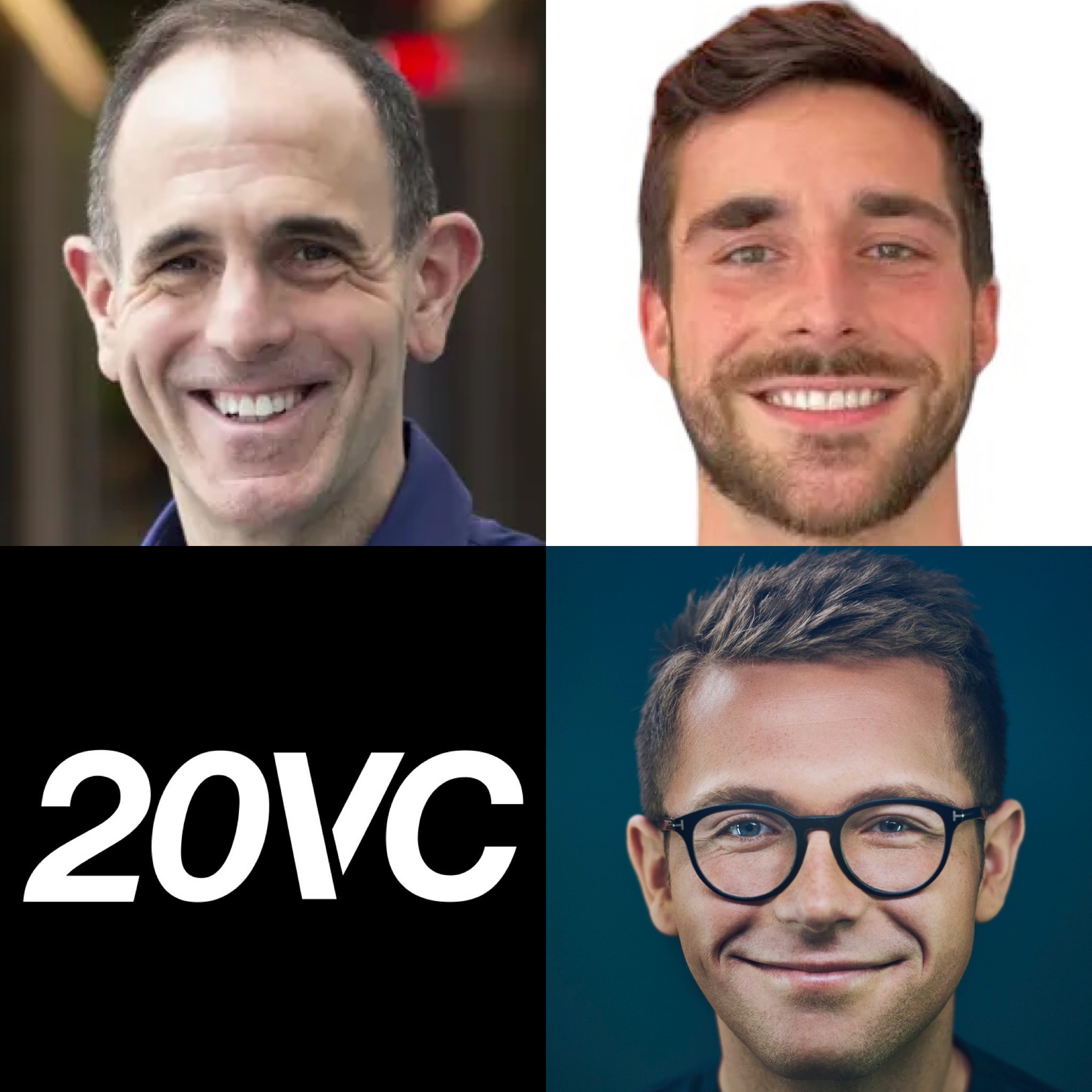 20VC: Keith Rabois and Mike Shebat on Creating an Olympian Mindset to Work Ethic, Why First-Time Founders are Better Than Serial Entrepreneurs, Why Remote Work Does Not Work, Why the Best Founders Always Start in their Teens & Why Companies are Cults? | Keith Rabois | 27 November 2023 | 57 min | Keith Rabois is a General Partner @ Founders Fund , one of the world's best venture funds with a portfolio including the likes of Facebook, SpaceX, Anduril, Tesla and many more. For the last 23 years straight, Keith has either invested in or founded a $BN company. Keith is also the Co-Founder and CEO @ Openstore, the company that will buy or run your Shopify business. Mike Shebat is the Founder and CEO @ Traba , the company providing industrial staffing when and where you need it. To date, Mike has raised $49M with Traba from some of the best including Founders Fund, General Catalyst and Khosla Ventures. In Today's Episode We Discuss: 1. What it Takes to Build a Great: Why does Mike expect everyone to work in office 12 hours per day, 4 days per week? At what point does an extra hour of work not lead to more output? What are the expectations in terms of emails, out of office, the weekends? Keith, from the 23 BN companies you have worked with, is this insane work ethic aligned to all of them? Which had it? What did not? What core components of PayPal's work ethic made it so strong? What does Keith mean when he says Linkedin could and should have been 5x bigger? 2. The Hiring Process for the Swat Team: What does the hiring process look like for this type of work environment? What are the signs that someone is really aligned to it vs faking it for the interview process? What have been Keith's biggest lessons on both compensation and title in the hiring process? |
 20VC: Atlassian Co-Founder Scott Farquhar on The Biggest Lessons Scaling Atlassian to $50BN Market Cap; The Four Roles of the CEO, The Funding Round That Net Accel $6BN, The Regrets of Omission and Commission & The Honeymoon Cut Short | Scott Farquhar | 9 October 2023 | 53 min | Scott Farquhar is the Co-Founder & Co-CEO @ Atlassian . Scott co-founded the company with his university friend, Mike Cannon-Brookes, in 2002 from Australia. Over an incredible 20-year journey they have grown to a market cap of $50BN today, over 11,000 staff globally and serving over 260,000 customers. Scott is also a co-founder of Skip Capital , a private investment fund with a portfolio including Figma, Snyk, Canva and more. In Today's Episode with Scott Farquhar We Discuss: 1. The 20-Year Journey to $50BN Market Cap: How did Scott first make his way into the world of tech and come to co-found Atlassian? What does Scott know now that he wishes he had known at the beginning? From 20 years with Mike, what is Scott's biggest advice on choosing your co-founder? 2. The Fundraising Masterclass with Atlassian: An emergency phone call, a honeymoon cut short; how did the first funding round for Atlassian come to be? Where was the business revenue-wise at the time? Why did Scott not like the traditional fundraising process? What did he do to add game theory and ensure that they got the best deal as a company? Why did Scott choose Accel with their offer? How did Peter Fenton lose a $3BN deal with Atlassian? 3. Lessons Scaling Atlassian to $4BN in Revenue: What does Scott believe are the 4 core roles of the CEO? Is resource allocation the most important? What are the single biggest acts of commission and omission that Scott regrets? |
| 20VC: Lessons Building Nubank to the Largest Neobank in the World, How AI Changes The Future of Finance, Leadership Lessons from Sequoia's Doug Leone & What European and US Fintech Can Learn From LATAM with David Velez, Founder @ Nubank | Doug Leone | 11 September 2023 | David Velez is the Founder and CEO of Nubank , one of the largest and fastest-growing financial institutions in the world. 1 in 2 people in Brazil alone have a Nubank account. Nubank's purple credit card in Mexico is the highest-rated NPS product of any consumer product in the world. Before founding Nubank in 2013, David was a partner at Sequoia Capital between 2011 and 2013, in charge of the firm's Latin American investments group. Before Sequoia, David worked in investment banking and growth equity at Goldman Sachs, Morgan Stanley and General Atlantic. In Today's Episode with David Velez We Discuss: 1. From Sequoia Partner to Creating One of the Largest Financial Institutions: What was the Sequoia interview process like? What questions did Doug Leone really dive into when hiring David? What impressed David most about how Sequoia interview and win talent? What are 1-2 of David's biggest lessons from working with Doug Leone? 2. From a Small House to a $BN Public Company: What does David believe are the 1-2 core but non-obvious reasons why Nubank scaled so fast? What does David believe are the most non-obvious but massive opportunities Nubank has to 10x from here? Why does David believe emerging market fintech providers will be more valuable than Western fintechs? What does David believe Western fintechs and regulators can learn from BRIC economy fintechs? 3. How AI Changes The Future of Financial Services: How does David believe AI will change financial services? | |
 20VC: Vinod Khosla on How AI Impacts The Future of Healthcare, Education, Income Equality, Geo-Politics, Music and Climate Change | Vinod Khosla | 7 August 2023 | 44 min | Vinod Khosla is the Founder of Khosla Ventures , one of the leading venture firms of the last decade with investments in OpenAI, Stripe, DoorDash , Commonwealth Fusion Systems and many more. Prior to founding Khosla, Vinod was a co-founder of Daisy Systems and founding CEO of Sun Microsystems. In Today's Episode with Vinod Khosla We Discuss: 1. The State of AI Today: Does Vinod believe we are in a bubble or is the excitement justified based on technological development? What are the single biggest lessons that Vinod has from prior bubbles? What is different about this time? What is Vinod concerned about with this AI bubble? 2. The Future of Healthcare and Music: How does Vinod evaluate the impact AI will have on the future of healthcare? How does Vinod analyse the impact AI will have on the future of music and content creation? Does Vinod believe that humans will resist these advancements? Who will be the laggards, slow to embrace it and who will be the early adopters? 3. Solving Income Inequality: Does Vinod believe AI does more to harm or to hurt income inequality? What mechanisms can be put in place to ensure that AI does not further concentrate wealth into the hands of the few? Does Vinod believe in universal basic income? What does everyone get wrong with UBI? 4. The Future of Energy, Climate and Politics: Why is forcing non-economic solutions the wrong approach to climate? What is the right approach? Why is Vinod so bullish on fusion and geothermal? |
 20VC: Shopify Founder Tobi Lütke on Why Micromanagement is Good | Why You Will Learn More From Studying World of Warcraft Guilds Than You Will Companies | Why Happiness is BS; Lessons on Marriage, Fatherhood & Decision-Making Quality | Tobi Lütke | 3 April 2023 | 57 min | Tobi Lütke is the CEO and Co-Founder of Shopify , the powerhouse company allowing anyone to start and grow their e-commerce business. Over an incredible 18 years, Tobi has scaled Shopify to 10% of total US e-commerce, millions of merchants in over 170 countries, and a market cap today of over $60BN. Huge thanks to Harley Finkelstein for making this happen. In Today's Episode with Tobi Lütke We Discuss: 1. From a Small German Town to One of the World's Most Powerful CEOs: What did Tobi want to be when he was growing up? Who did Tobi learn most from in his younger years? How does Tobi think about the importance of mentorship in learning? What does Tobi know now that he wishes he had known when he started Shopify? 2. You Can Learn More from World of Warcraft Than You Can Companies: Why does Tobi believe you can learn more from World of Warcraft than you can from studying companies? Why does Tobi believe that humans are terrible at company building? What are the most obvious ways we can improve the quality of the companies we build? Why does Tobi believe that in-person is far superior to remote working? What are the nuances? 3. The Best Companies Operate with Many Constraints: Why does Tobi believe in all cases, constraints produce creativity? What is the difference between an enforced constraint and an artificial constraint? How can leaders create and enforce artificial constraints when they are not real? |
 20VC: USV's Albert Wenger on What Elon Musk Should Do with Twitter | The State of Crypto Today; The Impact of SBF and Why Now is the Best Time To Invest in Crypto | Are We Too Late to Save The Climate and Why Civil Disobedience is Required | Will TikTok | Albert Wenger | 23 January 2023 | 46 min | Albert Wenger is a managing partner at Union Square Ventures , one of the most successful venture firms of the last decade with a portfolio including Coinbase , Twitter, Twilio, Etsy, and many more. Before joining USV, Albert was the president of del.icio.us through the company's sale to Yahoo and an angel investor (Etsy, Tumblr). He previously founded or co-founded several companies, including a management consulting firm and an early-hosted data analytics company. In Today's Episode with Albert Wenger We Discuss: 1.) From Failed Startup Founder to Leading VC: How Albert transitioned from being a failed entrepreneur to being one of the most respected venture investors with USV today? What were the clear signs for Albert that he was not a good entrepreneur? Why does Albert believe this downturn is different compared to the dot-com bubble? Why was there more hope and promise coming out of the dot-com bubble? 2.) Income Inequality, The Rise of Depression & The Role of Politics: Why is income and wealth inequality more concerning than ever? Why does Albert believe universal basic income is the right solution? Why is mental health worse than ever? What can be done to improve this? Why are our politicians failing us? What should our politicians be doing? How does the rise of Trump show us what society is looking for in politicians? 3.) |
 20VC: Why Financial Planning and Goals Do Not Work, The Decision to Ban Politics in the Workplace and Losing 1/3 of the Team Overnight & The One Question That Will Drive All Decision-Making for Leaders with Jason Fried, CEO @ 37Signals | Jason Fried | 6 January 2023 | 43 min | Jason Fried the Co-Founder and CEO at 37signals, makers of Basecamp and HEY . Over an incredible 21-year journey, Jason and his co-founder David have scaled Basecamp to become the communication tool trusted by millions. Jason is also the co-author of the widely acclaimed, ReWork and has also made several angel investments in the likes of Intercom, Gumroad and Hodinkee to name a few. In Todays Episode with Jason Fried We Discuss 1. From Web Design Agency to Founding Basecamp: What was the a-ha moment for Jason when they had to make the pivot from a design agency to going full-time launching and running Basecamp as a SaaS company? What is Jason running towards? What is he running from? What is the single biggest fear that Jason is trying to avoid? 2. Jason Fried: The Leader: Why does Jason believe he is running from his position as leader and CEO @ Basecamp? Why does Jason not like or agree with goals or targets? Why are they not helpful? How does Jason make decisions today as a leader and CEO? What one question does he ask that determines his decision-making process? Why does Jason never compare himself to the competition? Why does he believe competition is for losers? 3. Jason Fried: The Politicisation of Leadership: Why did Jason and David decide to not allow politics in the workplace? How did they manage with 1/3 of their team leaving overnight? How was that experience for them personally? How did it impact the company? Is there anything they would do differently? |
| 20VC: a16z's Martin Casado on How the Venture Model is Broken, Why VCs Should Be Running Wall St, Who Wins and Who Loses in the Next Generation of Venture & Investing Lessons from Marc Andreesen, Ben Horowitz and Chris Dixon | Martin Casado | 5 December 2022 | Martin Casado is a General Partner @ a16z where he focuses on enterprise investing. At a16z, Martin has led investments and serves on the board of dbt Labs, Fivetran, Material Security, Ambient AI and many more incredible companies. Before venture, Martin was previously the Co-Founder and CTO at Nicira, acquired by VMware for $1.26 billion in 2012. While at VMware, Martin served as Senior VP and General Manager of the Networking and Security Business Unit, which he scaled to a $600 million revenue run-rate business. In Today's Episode with Martin Casado We Discuss: 1. From $1.26BN Founder to Leading Enterprise Investing for a16z: How did Martin make his way into the world of VC and come to lead enterprise investing for a16z? What does Martin know now that he wishes he had known when he started investing? What have been some of his biggest investing lessons from Marc and Ben? 2. The VC Model is Broken and Why: Why does Martin believe that the current model for venture is broken? Why does Martin believe that VCs are not oracles and they were not gifted with picking ability? How will asset allocation more broadly fundamentally change over the next decade? Why will Silicon Valley take over and run Wall St? Why does Wall St not care about innovation and true technological development? Who will be the winners and who will be the losers in the next 10 years of venture? 3. | |
 20VC: Chris Sacca, Chamath Palihapitiya, Gary Vee, Brad Gerstner and more on Their Relationship To Money, How It Has Changed with Time and Wealth, How They Bring Up Their Children To Engender the Same Values of Ambition and Hard Work? | Chris Sacca | 28 October 2022 | 27 min | Chris Sacca is the Founder and Chairman @ Lowercase Capital , one of the best performing funds in the history of venture capital with a portfolio including Uber, Stripe, Twitter, Instagram, Twilio, Docker and many more. From interviewing some of the world's richest married couples, how did gaining wealth change their relationship and marriage? What does Chris do to actively ensure his children remain hungry and know the value of money? Chamath Palihapitiya is Founder & CEO @ Social Capital . Social's portfolio includes the likes of Slack, Yammer, Front, Intercom and Carta to name a few. What does Chamath mean when he says we need to think through the mindset of "infinite games" not finite games? How does this change how you think about money? How does Chamath think about his relationship to risk today as a result? Brad Gerstner is the Founder and CEO of Altimeter . Brad's notable deals that he has helped lead include Snowflake, Mongo, Bytedance, Gusto, Unity, Okta, dbt, Modern Treasury, EPIC Games, Hotel Tonight and Zillow. What is the most important thing parents can do to ensure that despite wealth, their children remain grounded and ambitious? Why does Brad, despite being a billionaire, still live in a modest house and not spend on the excesses of life? How does Brad embrace essentialism with wealth? Cyan Banister is one of the most successful and renowned early-stage investors in the last decade. |
 20VC: Forerunner's Kirsten Green on The Biggest Challenges Scaling Both Teams and AUM, What Truly is High Performance in Fund Management & Why Parenting and Relationships are an Enabler To Your Best Work | Kirsten Green | 1 August 2022 | 41 min | Kirsten Green is the Founder and Managing Partner @ Forerunner Ventures , one of the leading firms of the last decade investing at the intersection of innovation and culture. As a founder, Kirsten has led efforts to raise over $2B+ from leading institutional investors and invest in more than 100 companies. She currently serves as a board member at Glossier, Ritual, Faire, Hims & Hers, and Curated, to name a few. She has also invested in other smash hits including Chime, Jet, Warby Parker, Hotel Tonight and many more. Due to her immense success, Kirsten has been honored in Time's 100 Most Influential People and named a Top 20 Venture Capitalists by The New York Times in 2018 & 2017. Prior to Forerunner, Kirsten was an equity research analyst and investor at Banc of America Securities. In Today's Episode with Kirsten Green We Discuss: 1.) Entry in Venture at 40 and Founding Forerunner: How did Kirsten make her way into VC at 40 with the founding of Forerunner having never had a role in VC before? What did everyone tell Kirsten when she was looking to break into venture? What did she tell herself when she heard this? What does Kirsten believe she is running from? What does she believe she is running toward? 2.) Fund Management and Leadership: How does Kirsten define high-performance today? What are the nuances of high performance in fund management? How would Kirsten describe her leadership style today? How has it changed over time? |
| 20VC: The Memo: Bill Gurley, Doug Leone, Keith Rabois; Investing Lessons from Prior Busts, How Their Investor Psychology Changed, What Can Be Applied To Today's Market | Doug Leone | 29 June 2022 | Bill Gurley is a General Partner @ Benchmark Capital , Bill, is widely recognized as one of the greats of our time having worked with the likes of GrubHub, NextDoor, Uber, OpenTable, Stitch Fix, and Zillow. Doug Leone is the Global Managing Partner @ Sequoia Capital , one of the world's most renowned and successful venture firms with a portfolio including the likes of Google, Airbnb, Whatsapp, Stripe, Zoom and many more. Keith Rabois is a General Partner @ Founders Fund , one of the best performing funds of the last decade with a portfolio including Facebook, Airbnb, SpaceX, Stripe, Anduril, the list goes on. Arthur Patterson and Jim Swartz founded Accel in 1983. Under their leadership, they have built Accel into one of the most prominent venture firms of the last 4 decades. Michael Eisenberg is a Co-Founder and Equal Partner @ Aleph, with a portfolio including the likes of Lemonade, Melio and HoneyBook, they are one of the leading early-stage firms of the last decade. Sonali De Rycker is a Partner @ Accel , one of the leading firms of the last 3 decades with a portfolio that includes the likes of UiPath, Miro, Spotify and many more incredible companies. Fabrice Grinda is the Founding Partner @ FJ Labs , with over 700 investments, Fabrice has had over 250 exits and built a portfolio including Alibaba, Coupang, Airbnb, Instacart, Flexport, and many more. In Today's Episode You Will Learn: 1.) How does the current environment compare to prior busts? 2.) | |
 20VC: The Memo: Chris Sacca on Why We Are Breeding a Generation of Entitled Assholes, Harley Finkelstein on What Great Fatherhood Really Means, Deena Shakir on How Kids Make You a Better Investor and Anne Wojcicki on How Children Change Your Approach to | Chris Sacca, Deena Shakir | 4 May 2022 | 36 min | Chris Sacca is the Founder and Chairman @ Lowercase Capital , one of the best performing funds in the history of venture capital with a portfolio including Uber, Stripe, Twitter, Instagram, Twilio, Docker and many more. Why does Chris believe we have bred a generation of asshole kids? What is the right way to negotiate with children? How has that impacted how he manages his team? Anne Wojcicki is the Founder & CEO @ 23andMe , offering DNA testing with the most comprehensive ancestry breakdown, personalized health insights, and more. How did having kids change Anne's approach to time allocation and risk? Harley Finkelstein is the President of Shopify. Over the last 12 years, Harley has partnered with Tobi to the tune of building Shopify's revenue to over $4.6BN in 2021 and the team to over 10,000 employees. Does Harley believe he has always been a good father? What changes has Harley made to be more present and there for his children? Why does Harley advise couples therapy as early in a relationship as possible? Deena Shakir is a Partner at Lux Capital , one of the leading firms investing in emerging science and technology ventures at the outermost edges of what is possible. What specific negotiation tactics from parenting can be applied to business? How can a parent show their children they listen, they understand and are there for them? Why does Deena believe children make you more productive and more efficient? |
| 20VC: Why You Should Think Twice Before Taking Multi-Stage Money at Seed, Why Venture Has Never Been Less Collaborative, How Becoming a Parent Made Me a Better Investor and Why We Should Be Optimistic About the Future of Diversity in Venture with Deena | Deena Shakir | 25 April 2022 | Deena Shakir is a Partner at Lux Capital , one of the leading firms investing in emerging science and technology ventures at the outermost edges of what is possible. Deena has led a number of investments including in Maven Clinic, Mos, Ramp, Alife and SteadyMD to name a few. Before joining Lux, Deena was a Partner at GV and previously led product partnerships at Google for early-stage products in healthcare, AI/ML and search at Google. Before tech and venture, Deena was an aspiring anthropologist, journalist, diplomat, aid worker and was a Presidential Management Fellow at the U.S. Department of State under Secretary Clinton. There Deena helped launch President Obama's first Global Entrepreneurship Summit in 2010. In Today's Episode with Deena Shakir You Will Learn: 1.) Origins into Venture: How Deena made her way from journalism and the world of politics to rockstar healthcare investor? What were Deena's biggest takeaways from seeing her parents build a new life in the US? 2.) Competition in Venture: Why should founders not take multi-stage fund money at seed? What problems does it cause? How do VCs try and justify it? What red flags should founders look for? How does Deena advise her companies when it comes to pre-emptive rounds? When should they take them? When should they not take them? 3.) Deena Shakir: The Person How has becoming a parent changed Deena's operating mentality? Why does Deena believe she has never been better as an investor post becoming a mother? | |
| 20VC Exclusive: Sequoia's Luciana Lixandru Unveils Sequoia's New 8 Week Accelerator, Arc | Biggest Takeaways from Working with Doug Leone and Roelof Botha | The Journey From a Small Town In Romania to Partner @ Sequoia | Doug Leone | 21 March 2022 | Luciana Lixandru is a Partner @ Sequoia , one of the world's most renowned and successful venture firms with Sequoia-backed companies accounting for more than 20% of NASDAQ's total value. As for Luciana, at Sequoia she has led investments in the likes of PennyLane, Xentral, Veed and Ledgy to name a few. Prior to joining Sequoia in 2020, Luciana was a Partner @ Accel where she made investments in Hopin, Miro, UiPath, Tessian and Deliveroo. As a result of such investing success, Luciana was #2 on the Midas List in 2021. In Today's Episode with Luciana Lixandru You Will Learn: 1.) Origins: How did Luciana make her way from a small town in Romania to being Partner @ Sequoia? What were the 1-2 crucible moments in her life that changed the course of her life? 2.) Luciana: The Investor How has Luciana's investing style changed and developed over the years? How does Luciana reflect on her own relationship to price? What misses caused these changes? Hopin, Miro, Deliveroo, UiPath, how did having such winners so early impact Luciana's investing mindset? What would Luciana say is her biggest insecurity today? What drives this? 3.) Sequoia: The Team What are Luciana's biggest takeaways from working with Doug Leone, Alfren Lin, Roelof Botha and Pat Grady? What does the decision-making process look like for new deals within Sequoia? How does the Sequoia partnership create an environment of safety where everyone can discuss and debate freely? | |
 20VC: Box's Aaron Levie on Why Founders Cannot Hedge Their Bets, The 2 Categories of Wrong Decision and How To Avoid Them & The Biggest Dangers of Being Over-Funded as a Startup | Aaron Levie | 11 February 2022 | 35 min | Aaron Levie is the Founder and CEO @ Box , the company incorporating the best of secure content collaboration with an intuitive user experience suited to the way people work today. Prior to their IPO in 2015, Aaron raised from some of the best in the business including the main man Mark Cuban, a16z, Emergence, DST, Coatue, DFJ and many more. Aaron founded the company from his dorm room at the University of Southern California and has led the company to 1,900 employees and over $770M in revenue, as of 2021 data. In Today's Episode with Aaron Levie You Will Learn: 1.) How Aaron founded Box from his dorm room at the University of Southern California? What was that founding a-ha moment? What did the first year look like? Does Aaron agree, "serial entrepreneurship is overrated"? 2.) Phases of Leadership and Company Growth: How does Aaron define the different phases of leadership required as a company grows? Which phase did Aaron find the most challenging? How did he overcome it? What are the first things to break when companies grow? What can founders do to prevent this? Does Aaron agree, "the best CEOs are the best resource allocators"? 3.) The Market: How does Aaron thinkj about the dislocation between private company valuations and public company market caps? What does Aaron believe are the biggest challenges founders face when they are over-capitalised? What does Aaron mean when he says, "raise when cash is cheap, spend as if it was expensive"? |
 20 Product: Scott Belsky on How to Hire Your Product Leader and Team, 3 Questions All Great Product Leaders Ask, How To Structure and Run Effective Product Reviews & Is Product More Art or Science? | Scott Belsky | 9 February 2022 | 45 min | Scott Belsky is an entrepreneur, author, investor, and currently serves as Adobe's Chief Product Officer and Executive Vice President, Creative Cloud. Scott oversees all of product and engineering for Creative Cloud, as well as design for Adobe. In 2006, Scott founded Behance, the leading online platform for the creative industry, and served as CEO until Adobe acquired Behance in 2012. Behance now has over 25M members. Scott is also an early advisor and investor in Pinterest, Uber, Sweetgreen, Carta, Flexport, Airtable, and several others. Finally, if that was not enough, Scott is the author of two national bestselling books - Making Ideas Happen and The Messy Middle. In Today's Episode with Scott Belsky You Will Learn: 1.) Narrow the Focus, Increase the Quality: What does Scott believe is the core challenge in product? What was the single biggest product challenge Scott faced at Behance? How did they overcome it? When should product teams listen to customer feedback vs ignore it? What are the core questions product teams should ask user groups to extract the most feedback and value? 2.) The Importance of the First Mile: What does Scott believe makes a great first mile when it comes to the product experience? Where do so many companies go wrong in creating the first mile user experience? Which company at scale has retained this simplicity of the first mile? How did they do it? What does Scott mean when he says, "the devil is in the defaults"? |
 20VC: Chris Sacca on Coming Out of Retirement To Unf**k The Planet with Lowercarbon, How Chris Evaluates His Relationship To Money Today, Why We Have Bred a Generation of Ass**** Kids, Do VCs Provide Any Real Value and The True Unfiltered Opinion on Fac | Chris Sacca | 11 October 2021 | 1:16 | Chris Sacca is the Founder and Chairman @ Lowercase Capital , one of the best performing funds in the history of venture capital with a portfolio including Uber, Stripe, Twitter, Instagram, Twilio, Docker and many more. Despite this incredible success, in 2017, Chris and his wife, Crystal announced they would be stepping back from day to day investing to focus on ongoing efforts to rescue our democracy, heal the planet, promote diversity within venture capital. Earlier this year, they announced Lowercarbon Capital , with $800M AUM, with the mission to back companies that make real money slashing CO2 emissions, and buying us time to unf**k the planet. Fun fact: As a result of his incredible investing success Chris has also been a Shark on Shark Tank and even starred in an episode of Billions. In Today's Episode with Chris Sacca You Will Learn: 1.) How Chris made his way into the world of investing having started life as a lawyer? What was his first investment? How did the first Twitter $25K angel check come about? 2.) How does Chris evaluate his own relationship to money and wealth? Why did Chris and Crystal interview some of the wealthiest people? What did they learn from those discussions? How does Chris view the role of luck? Why was it when Chris lacked optimism he lost the most money? How did being $4M in the hole from public markets impact his mindset? 3.) What does it mean for Chris to bring up healthy and happy children? |
| 20VC: Sequoia's Doug Leone on What Has Been Instrumental To Scaling Sequoia Over Generations, How Sequoia Think About International Expansion and What They Learned From China and India & Why When You Lose Pre-Seed You Become Private Equity | Doug Leone | 14 September 2021 | Doug Leone is the Global Managing Partner @ Sequoia Capital , one of the world's most renowned and successful venture firms with a portfolio including the likes of Google, Airbnb, Whatsapp, Stripe, Zoom and many more. As for Doug, he joined Sequoia over 33 years ago and has led investments in Nubank, Meraki, ServiceNow and TradeRepublic to name a few. In Today's Episode with Doug Leone You Will Learn: 1.) How a 5PM Monday meeting with Don Valentine led to Doug joining Sequoia over 33 years ago? What did Don ask Doug in the meeting? What does Doug believe led Don to offer him his first role at Sequoia? 2.) The Leader: How did Doug change when he made the transition from a "COO" role to more of a "CEO" role with Sequoia? Doug has previously said, "Sequoia is a team, not a family". What does he mean by this? How do Doug and Sequoia do to give the team an unwavering sense of duty to the Sequoia brand? What does Doug believe Sequoia have done so well to allow them to move seamlessly from generation to generation? 3.) The Investor: Doug's first 3 investments all went on to successful IPOs, how did this impact his mindset at the time? What does Doug mean when he discusses "the abyss" he went through post this time? How does Doug advise others going through the abyss? What are the signs certain people will make it through vs not? 4.) The Landscape Today: How does Doug think about and react to newer entrants like Tiger and Softbank? | |
| 20VC LATAM Part 2: a16z's Angela Strange on When To Expand Beyond Your Core Market, Why Serving the Unbanked is Such Good Business & Whether the Startup Will Acquire the Distribution before The Incumbent Acquires the Innovation? | Angela Strange | 19 August 2021 | Angela Strange is a General Partner at Andreessen Horowitz , one of the leading venture firms of the last decade with a portfolio including the likes of Facebook, Github, Slack, Airbnb, Asana and more. As for Angela, she largely focuses on investments in financial services and a16z has made significant investments in LATAM in the likes of Loft, Jeeves, Pomelo and Addi to name a few. Prior to a16z, Angela was a product manager at Google where she launched and grew Chrome for Android and Chrome for iOS into two of Google's most successful mobile products. In Today's Episode with Angela Strange You Will Learn: 1.) How Angela made her way into the world of venture from a career of running marathons and product management at Google? 2.) Does Angela believe we are going to see regional winners in LATAM with players owning their segment for Argentina, Mexico, Brazil etc? Why does Angela believe there is a huge business to be had in catering to the unbanked? How does Angela analyze whether startups can acquire distribution before incumbents acquire innovation? 3.) How does Angela respond to the suggestion that LATAM merely produces copycat companies of Western alternatives? How does Angela respond to claims that there is a lack of viable exit opportunities with insufficient local public markets and few international acquirers in the region? Does Angela believe there is a sufficient depth of engineering talent in the region? 4.) What has been Angela's biggest miss? | |
 20VC: The Lyft Memo: Floodgate's Ann Miura Ko on Why Successful Seed Investing Is Not Investing In a Company But The Development of a Set of Secrets, Whether Capital Is a Defensible Moat Today &How Startups Should Approach Competition | Ann Miura-Ko | 12 August 2021 | 41 min | Ann Miura Ko is the Co-Founding Partner @ Floodgate , one of the leading early-stage firms of the last decade with a portfolio including the likes of Twitter, Twitch, Lyft, Okta, Outreach and more. As for Ann, not only did she lead the round for Lyft but in the last 12 months has led rounds for 2 of the hottest companies in the valley; Popparazzi and Popshop Live. Due to her immense investing success, Ann is a multiple Forbes Midas Lister and is also a lecturer in entrepreneurship at Stanford, a co-director of the Mayfield Fellows Program at Stanford, and a member of the Board of Trustees for Yale University. In Today's Episode with Ann Miura Ko You Will Learn: 1.) How Ann made her way from a PhD in Quantitative Modelling at Stanford to co-founding one of the leading early-stage firms in the valley? 2.) What does Ann believe is the secret to successful seed investing? What insight development did Ann believe Lyft had? How had they approached customer development in such a unique way? What are the leading signals to Ann today that founders really understand the customer development process? What questions does she ask to discover this? 3.) Why does Ann not engage in the compression of fundraising timelines today? How does she build relationships of trust and honesty with founders so early? Does Ann worry that founders have such large capital injections too early today? Why should employees examine capital efficiency, not capital raised? |
| 20VC: The Roblox Memo: First Round's Chris Fralic on The 17 Year Journey to Build a $41BN Market Cap Company, Why It Is Way Harder To Increase Ownership Across Rounds Today & What Happens Post SPACMania | Chris Fralic | 29 April 2021 | Chris Fralic is a Board Partner @ First Round Capital , one of the leading seed-stage venture firms of the last decade with investments in the likes of Uber, Square, Notion, Warby Parker and more. As for Chris, he has led deals in Roblox, Ring.com, HotelTonight, Rec Room and many more incredible companies. Prior to the world of venture, Chris was VP of Business Development at social bookmarking and tagging company del.icio.us through the Yahoo! acquisition. He was also one of the early employees at Half.com and after the eBay, acquisition spent six years with eBay in a variety of business development, media and entertainment roles. In Today's Episode with Chris Fralic You Will Learn: 1.) How did Chris come to first meet Dave and the team at Roblox? Where was the first meeting? Who was in attendance? How did Chris feel post that first meeting with the team? 2.) Turning the company down: Why did First Round turn down Roblox on first look? How does Chris assess his own relationship to price? Through what mechanism does he determine whether to pay up or not? How does Chris retain relationships with founders when saying no? Does Chris believe you can buy up ownership post first check today, with the capital proliferate we have? 3.) What does Chris mean when he discusses the lessons from First Round's portfolio when it comes to "slow bake vs fast bake"? How did the First Round partnership analyse the Uber, Square, Roblox portfolio at the time? | |
 20VC: Spotify Founder Daniel Ek on Optimising Decision-Making, Structuring Effective Learning Processes, The Trials and Tribulations in The Transition From Founder To CEO & The Future of Building Prima Materia with Shakil Khan | Daniel Ek | 8 March 2021 | 51 min | Daniel Ek is the founder, Chief Executive Officer, and Chairman of the board of directors of Spotify , the world's most popular audio streaming subscription service with 345m users, including 155m subscribers, across 170 markets. In Today's Episode With Daniel Ek You Will Learn: 1.) How Daniel made his way into the world of startups and came to found the most popular audio streaming subscription service in the world in the form of Spotify? 2.) How does Daniel approach effective decision-making today? What is his core process? How does Daniel determine between reversible and irreversible decisions? What does Daniel's learning process look like for new topics and material? How does this differ from topic to topic? What does Daniel mean when he says "I look to become the Chief of X Officer" for a time? 3.) How does Daniel think about the transition from Founder to CEO? Why is the topic not discussed enough? Where does Daniel see many founders struggle to make the transition? Which elements did Daniel find the most challenging? How has he scaled into them over time? Is it possible to change who you are as a person with this transition? 4.) How does Daniel think about what it takes to create an environment of safety where everybody can feel free to express their ideas, thoughts and concerns? What sort of failure does Daniel accept? What sort of failure does Daniel not accept? How does good news flow through an organisation differently to bad news? |
 20VC: The Memo: Sequoia's Alfred Lin on Why Chasing GMV Leads To Bad Behaviours, How To Approach Competition and Capital Efficiency & The Core Importance of Understanding the Difference Between Input and Output Metrics | Alfred Lin | 27 January 2021 | 41 min | Alfred Lin is a Partner @ Sequoia Capital , one of the world's most renowned and successful venture firms with a portfolio including the likes of Google, Airbnb, Whatsapp, Stripe, Zoom, Doordash and many more. As for Alfred, he has led deals in the likes of Airbnb, Doordash, Instacart, Reddit and Houzz to name a few. Prior to the world of venture, Alfred was Chairman and COO @ Zappos for 6 years leading to their acquisition by Amazon. In Today's Episode You Will Learn: 1.) How Alfred made his way into the world of venture and came to be a Partner @ Sequoia? How Alfred first met DoorDash? Where did the meeting take place? Who was there? What were the first impressions? 2.) Market: How did Alfred breakdown the food delivery market when doing the diligence for the investment? How did Alfred forsee the market changing over time? What were some unexpected elements of the market Alfred did not forsee? What does Alfred look for in markets; size or growth? 3.) Competition: How did Alfred analyse the competitive landscape for food delivery at the time? Why does Alfred believe that great companies are not built by focusing on the competition? What does Alfred mean when he says, "you have to be customer-obsessed and competitor aware"? 4.) Traction: Does Alfred agree with Sarah Tavel in the dangers of chasing topline GMV? What negative behaviours can chasing GMV trigger? What does Alfred mean when he says, "founders have to be able to distinguish between input and output metrics"? 5.) |
 20VC: Twitter Co-Founder Biz Stone on The 3 Stages of Wealth, The Return To Twitter in 2017 and the Associated Missions and Challenges & Why Silicon Valley is not an "Insiders Only" Universe? | Biz Stone | 8 January 2021 | 36 min | Biz Stone is best known as the Co-Founder of Twitter and Medium. Biz is also an investor in the likes of Slack, Square, Intercom, Beyond Meat and Blue Bottle Coffee. Biz also co-founded Jelly, a "human in the loop" AI search service, which was acquired by Pinterest. Due to his many successes, Biz has been recognized as INC Magazine Entrepreneur of the Decade and one of TIME's 100 Most Influential People in the World. In Today's Episode You Will Learn: 1.) How did Biz make his way into the world of startups and come to found Odeo/Twitter one day on a car trip with Ev Williams? 2.) How does Biz evaluate his relationship to money? How does Biz think about teaching his son the value of money? What does Biz mean when he says wealth 'accentuates your current self"? How did Biz get off the treadmill of always wanting and chasing more? 3.) How does Biz think about insecurity and self-doubt? How does Biz approach saying no? How does he get comfortable with not always being Mr Popular? What is so challenging here? How does Biz feel about founding tieing their identities to their company? 4.) Why did Biz come back to Twitter in 2017? With hindsight, what would he have done differently if he were to return again? What were the biggest challenges when he arrived? Why was internal morale low? What did he and Jack do to increase it? What worked? What did not? 5.) Why does Biz not feel Silicon Valley is an "insider-only" universe? Why does Biz feel Silicon Valley is a mindset? |
| 20VC: Sequoia's Roelof Botha on His Biggest Lessons Working Alongside Don Valentine, Mike Moritz and Doug Leone, Leading Sequoia's US Business and What Sequoia Do To Retain Their Edge at the Top & The Crucible Moments That Define Startup Success | Doug Leone | 26 October 2020 | Roleof Botha is a Partner @ Sequoia Capital , one of the world's leading venture firms with a portfolio including the likes of Airbnb, Instacart, Stripe, UiPath, Zoom, the list goes on. As for Roelof, at Sequoia he has led rounds into the likes of YouTube, Instagram, Eventbrite, Square, MongoDB, 23andMe and Unity Technologies to name a few. Before joining the world of venture, Roelof was the CFO @ Paypal playing a key role in their hyper-growth from 2000-2003. In Today's Episode You Will Learn: 1.) How did Roelof go from actuary in South Africa to CFO @ Paypal? What were his biggest lessons from seeing Paypal burn $10M per month? How did Paypal lead to his joining Sequoia as a Partner? 2.) Market Evaluation: Does Roelof agree that the market is crazy today? How does today compare to prior vintages? How does Roelof assess the compression of fundraising timelines? With compressed timelines, how does he build relationships of trust with founders? 3.) Founder Evaluation: What were Roelof's lessons on founder assessment from Don Valentine? What matrix did Don teach Roelof to assess founders on? How does Roelof feel about the rise of competitive rounds? When should founders take them vs remain heads down on execution? 4.) Investment Mentality: How did Roelof prevent becoming too confident when early investments went well? How does Roelof prevent relying on past failures as a reason for turning down opportunities today? What can investors do to retain a very flexible mind? | |
 20VC: Lambda School Founder, Austen Allred on How To Assess Your Relationship To Risk and Money, Why San Francisco Is A Case Study For The Greatest Squandering of Wealth in History & Why Complexity Increases Exponentially with Scale | Austen Allred | 18 September 2020 | 32 min | Austen Allred is the Founder & CEO @ Lambda School , the startup that remotely trains people to become a web developer or data scientist and the students pay no tuition until they are hired. Just last month, Lambda's $74M Series C was announced led by Gigafund bringing their total funding to date to over $129M with prior investors including Stripe, Bedrock, GV, Gigafund and GGV to name a few. Prior to founding Lambda, Austen was Senior Manager for Growth @ LendUp and before that co-founded Grasswire. In Today's Episode You Will Learn: 1.) How Austen made his way into startups having slept in a Honda Civic and how he went from homeless to rockstar founder @ Lambda? 2.) How does Austen evaluate his own attitude to risk? How does Austen think about downside protection today? How has this changed over time? How does Austen feel about founders taking secondaries? How does Austen think about his own relationship to money? 3.) Having raised his Series C last month, why did Austen choose the investors he did? How did the round progress? What made Gigafund different to alternate options? What makes the best board members in Austen's mind? What makes the worst? 4.) What have been the most challenging elements for Austen of scaling the team? How does complexity change with time in team scaling? Why did Austen bring in a COO? What did he look for in the role? How does Austen advise others on bringing in a COO? 5.) |
| 20VC: a16z's Angela Strange on Why Every Company Will Be A Fintech Company, How Founders Should Think About Niches and Optimal Insertion Points, How To Transition To Become The System of Record & Are We Entering A Period of Bundling Or Unbundling for Fi | Angela Strange | 8 September 2020 | Angela Strange is a general partner at Andreessen Horowitz , one of the leading venture firms of the last decade with a portfolio including the likes of Facebook, Github, Slack, Airbnb, Asana and more. As for Angela, she largely focuses on investments in financial services and is currently a board member of Addi, SynapseFi, and Tally. Prior to a16z, Angela was a product manager at Google where she launched and grew Chrome for Android and Chrome for iOS into two of Google's most successful mobile products. In Today's Episode You Will Learn: 1.) How Angela made her way into the world of venture and came to be one of the leading fintech VCs with Andreesen Horowitz? 2.) Why does Angela believe that every company is going to be a fintech company? What is driving this shift? How does removing the barriers to entry for more products change both product quality and cost? How does Angela think about the role of regulation here? 3.) How does Angela think about what makes the best insertion points? How big does the initial wedge into the market have to be? When do you need to be able to prove you can transition from the insertion to the wider market? How does Angela fundamentally assess market size today? 4.) How does one transition to being the system of record? Do you have to be the system of record from day 1? Which examples are most striking for Angela on becoming a system of record? What are the biggest challenges in making this transition? | |
 20VC: Sahil Lavingia on Rolling Funds and Their Impact on The Future of Venture, How To Evaluate Market, Team and Product, The Value of Party Rounds & The Pros and Cons of Multi-Stage Funds Investing at Seed | Sahil Lavingia | 24 August 2020 | 45 min | Sahil Lavingia is the Founder and CEO @ Gumroad , the company that helps creators do more of what they love. With Gumroad, Sahil has raised funding from an all-star list of investors including Accel, Kleiner Perkins, First Round and then Max Levchin, Chris Sacca, Ron Conway and Naval Ravikant on the individual side. However, most recently Sahil has made waves launching one of the first rolling funds on AngelList with his being $6M per year. In the past, Sahil has backed the likes of Lambda School, Figma, HelloSign and Haus to name a few. In Today's Episode You Will Learn: 1.) How did Sahil make his way into the world of startups and angel investing? What were his biggest takeaways from being employee #2 at Pinterest? How did that experience impact his mindset? 2.) Why did Sahil decide to make his new fund an AngelList rolling fund? How is it structured? Does Sahil think this will represent a seismic shift in early stage investing? Is this a game of the 1%? Why does Sahil think early-stage remains so undervalued? How will this impact Series A pricing? 3.) How does Sahil assess his own price sensitivity today? How does Sahil think about the right way to turn down a founder? Where do many go wrong? How does Sahil feel about the rise of pre-empted rounds? How does Sahil advise seed founders with offers from multi-stage firms? 4.) What does Sahil believe founders care most about today in their investors base? How does Sahil think about investor brand and distribution? |
 20VC: Steve Jurvetson on 20 Years of Friendship with Elon Musk, How To Analyse Market Timing, Why Venture Does Not Scale & Why He Has Never Sold A Share in Any Company He Holds | Steve Jurvetson | 3 August 2020 | 55 min | Steve Jurvetson is the Co-Founder @ Future Ventures who announced their debut and flagship $200M Fund in 2019. Steve's incredible portfolio includes the likes of SpaceX, Tesla, Planet, Memphis Meats, Hotmail, and the deep learning companies Mythic and Nervana. Steve also sits on the board of both SpaceX and Tesla. Prior to founding Future, Steve was the co-founder of renowned valley firm Draper Fisher Jurvetson where he led investments in 5 companies that went public in successful IPOs and several others that became billion-dollar acquisitions. In Today's Episode You Will Learn: 1.) How Steve made his way into the world of startups and Silicon Valley and how that led to his creation of "The Lean Startup Movement"? 2.) How does Steve think about and assess market timing? How does Steve assess technical risk? Given the long term horizons of such deep tech projects, does Steve think we need to change the 10 + 2-year fund life structure? How would Steve like to see funds structured? 3.) Given the sheer size of outcomes if these plays work, how does Steve assess his own price sensitivity? How does Steve approach the challenge there is a lack of downstream investors for such deep tech projects? How does Steve try and catch an industry on the cusp of a transition? 4.) How does Steve assess his own relationship to money? How has it changed over the years? Why does Steve fundamentally believe that venture partnerships do not scale? Where do venture partnerships breakdown? |
| Building The Berkshire Hathaway of Tech | Andrew Wilkinson | 22 June 2020 | Andrew Wilkinson is the Managing Partner @ Tiny , a vehicle that buys, builds and invests in wonderful internet companies. Within their family of companies is Dribble; home to the world's best design professionals; MetaLab and Supercast to name a few. Tiny does also make venture investments in the likes of Superhuman, SpaceX, Pitch and Buffer. Today Andrew oversees a group of companies with over 300 employees and tens of millions in revenue. In Today's Episode You Will Learn: 1.) How Andrew made his way from founding a design agency in Canada to starting Tiny and building a family of companies with over 300 people? 2.) What does Andrew mean when he says, when buying companies he looks for companies like New Zealand? What qualities/features do they have? How does Andrew think about price sensitivity when acquiring these companies? What determines paying a premium price to Andrew? 3.) How does Andrew assess and analyse true defensibility within company strategies today? Why does Andrew not believe they will lose any companies? How does Andrew think about grow vs profitability? Are they mutually exclusive? When does one pour fuel on the fire and raise big? 4.) How has Andrew seen himself develop and change as a leader over the last 5 years? What does truly great delegation look like? What is Andrew's biggest weakness? What is his biggest insecurity? How does Andrew think about sink the boat vs non-sink the boat decisions? 5.) | |
 20VC: Vinod Khosla on What Venture Assistance Really Means, Why Many VCs Are Not Qualified To Advise Founders & Why Startups Can Innovate So Much Faster Than Incumbents | Vinod Khosla | 24 February 2020 | 36 min | Vinod Khosla is the Founder @ Khosla Ventures , one of the valley's most renowned firms of the last decade with a portfolio including Square, Affirm, DoorDash, Impossible Foods and OpenDoor just to name a few. As for Vinod, he started his career as a Founder, founding Daisy Systems, a company that went on to IPO. Then in 1982, Vinod founded Sun Microsystems where he pioneered open systems and commercial RISC processors. In 1986, Vinod joined his longtime friend, John Doerr and became a General Partner @ KPCB where he helped incubate Juniper Networks and helped transform the telecommunications business with Cerent Corporation, which was acquired by Cisco Systems in 1999 for $7.2 billion. In Today's Episode You Will Learn: 1.) How Vinod made his way into the world of startups with the founding of Daisy and Sun Microsystems and how that led to his entry into the world of venture with KPCB and ultimately founding Khosla Ventures? 2.) How does Vinod feel about the term "venture assistance" today? Where does Vinod believe VCs can really drive value? How does Vinod allocate his time to drive as much value for the portfolio as possible? How does Vinod get involved when it comes to talent acquisition for the portfolio? 3.) Why does Vinod believe that most board members are not qualified to advise entrepreneurs today? Why does Vinod believe that most value is driven outside of the board? What can founders to do make their boards as efficient as possible? |
| 20VC: Khosla Ventures Founding Partner, Samir Kaul on Why Pro Rata Is A Cop Out, Why He Likes Technical Risk and Does Not Take Market Risk & How To Approach Time Allocation Across The Portfolio In Venture | Samir Kaul | 13 January 2020 | Samir Kaul is a Founding Partner and Managing Director at Khosla Ventures , one of the valley's most renowned firms of the last decade with a portfolio including Square, Affirm, DoorDash, Impossible Foods and OpenDoor just to name a few. As for Samir, he led the firm's investment in Guardant Health, Impossible Foods , Nutanix [NASDAQ: NTNX], Oscar , among others. Prior to Khosla, Samir spent five years at Flagship Ventures where he started and invested in early-stage biotechnology companies, including Helicos Biosciences which went on to IPO. Samir was also founding CEO of Codon Devices and led the Arabidopsis Genome Initiative at Craig Venter's Institute for Genomic Research. In Today's Episode You Will Learn: 1.) How Samir made his way into the world of venture from the world of biotech and came to found one of the leading firms of the last decade? 2.) How did seeing the booms and busts of the last 2 decades impact Samir's investing mindset? Why does Samir think it is dangerous for a VC to have a "conservative mindset"? How does Samir analyse and think about upside maximisation when investing today? How does Samir think about when to sell your position and how to determine the right time? 3.) What does investment decision-making look like at Khosla? What are the criteria that re-investments are made upon? Why does Samir believe that pro-rata is a kop out? Which should be the core questions that determine whether to double down or not? | |
 20VC: Webflow's Vlad Magdalin on The Journey To Breakeven and Raising A Monster $72m Series A, The Single Most Important Question To Ask When Determining Which Investor To Select & The Challenges of Founders Angel Investing | Vlad Magdalin | 1 November 2019 | 41 min | Vlad Magdalin is the Founder & CEO @ Webflow , the startup that allows you to build better business websites, faster, without coding. To date, Vlad has raised over $73m with Webflow from some dear friends of the show including Accel, Ron @ Rainfall, Brianne @ Work Life, Benjamin Ling and Y Combinator to name a few. Prior to founding Webflow, Vlad was a Senior Software Engineer @ Intuit. Before Intuit, Vlad co-founded Chatterfox, a web application allowing people to stay in touch with groups of friends, family, or co-workers. In Today's Episode You Will Learn: 1.) How Vlad made his way into the world of startups? How did the original idea to democratise the world of design and site creation with Webflow come about? 2.) Webflow has had an unorthodox funding path with their recent $73m Series A, how was it for Vlad raising the seed round with Webflow? What lessons did he learn from that raise? Why did they drive to be breakeven so much earlier than others might? Why did Vlad believe now was the right time to go big and raise the Series A? 3.) Vlad chose to partner with Accel, what advice does Vlad give to founders in determining which funding partner to choose? What makes for the best VC <> founder relationships? What is the optimal way to build those relationships? Where does Vlad believe that VCs can strategically move the needle? Where do many think VCs can really help but they most often cannot? 4.) |
| 20VC: Sequoia's Pat Grady on What Sequoia Is Focused On Today, How Sequoia Think About Investment Decision-Making Processes & Why It Is Important To Trade A Few Points of Efficiency for Culture When It Comes To Attribution | Jim Goetz, Pat Grady | 1 July 2019 | Pat Grady is a Partner @ Sequoia , one of the world's leading and most renowned venture firms with a portfolio including WhatsApp, Zoom, Stripe, Airbnb, Github and many more incredible companies. As for Pat, at Sequoia he co-leads the firms growth investment team and has been involved with some of the true greats, Hubspot, Zoom, Okta, Qualtrics, the list goes on. Prior to Sequoia Pat spent three years with Summit Partners. In Today's Episode You Will Learn: 1.) How Pat made his way from Summit Partners to co-leading Sequoia's growth investment team? Was it intimidating for Pat entering a partnership with Jim Goetz, Don Valentine, Roelof Botha? How did he manage those nerves? 2.) So many different funds and activities, so what is Sequoia focused on today? Where does Sequoia think about their ideal insertion point today? How do they see the deployment of their blended capital across rounds? Does Pat believe in ownership on first check or building ownership over time? How does Pat think about the extended window of privatisation with IPOs being continuously delayed? 3.) Does Pat believe that VC really is a team sport today? Does Pat agree with Josh Kopelman's statement, "I would rather be a better picker of partners than investments"? What are the core requirements, skills and traits that Sequoia looks for when adding to their partnership? 4.) What is the investment decision-making process at Sequoia? How do they feel about unanimity vs conviction based investment decisions? | |
| 20VC: Kleiner Perkins' Mamoon Hamid on The Strategy Behind The New $600m "Back To The Future" Fund, The Truth To Price Sensitivity at Series A & Why Venture Team Building Is Like Basketball Team Building | Mamoon Hamid | 13 May 2019 | Mamoon Hamid is a Partner @ Kleiner Perkins , one of Silicon Valley's most prestigious venture firms counting Google, Airbnb, Amazon, Spotify, Square and many more $Bn companies among their portfolio. As for Mamoon, he has invested in and served on the boards of some of the most innovative software companies of recent times including Box, Figma, Intercom, Netskope, Slack and Yammer. Prior to joining Kleiner Perkins, Mamoon was a Co-Founder and General Partner at Social Capital and before that Mamoon was a Partner at U.S. Venture Partners (USVP), where he spent six years. In Today's Episode You Will Learn: 1.) How did Mamoon make the transition from electrical engineer to VC and how did that translate to his role today as Partner @ KPCB? 2.) With Kleiner's new $600m early stage fund, Mamoon had a blank canvas, how does Mamoon think about portfolio construction from a bottom-up perspective? Why is that strategy optimal? How important does Mamoon believe it is for VCs to have a sector focus today? What does he mean when he says, "VCs need to have both majors and minors"? 3.) In today's heated early stage ecosystem, how does Mamoon analyse and reflect on his own price sensitivity? What deal has changed the way he thought about price and he either regrets not paying it or is thrilled he did pay it? How does Mamoon feel about the compressed fundraising timelines we are seeing today? Is this a concern? 4.) How does KPCB think about reserve allocation with the new $600m fund? | |
 20VC: Initialized's Garry Tan on The Most Important Thing A Seed Investor Can Do For Founders, How Ownership Requirements Change With Evolution of Funds & Why There Is Not Too Much Capital Chasing Too Few Deals | Garry Tan | 1 April 2019 | 33 min | Garry Tan is the Co-Founder and Managing Partner @ Initialized Capital , one of the West Coast's leading early-stage funds with a portfolio including the likes of Coinbase, Instacart, Cruise, Flexport and Opendoor, just to name a few. As for Garry, before co-founding Initialized, he was a partner at Y Combinator for nearly five years where he advised and funded over 600 companies. He was also co-founder of YC-backed blog platform Posterous (acquired by Twitter in 2012). Before that he was employee #10 at Palantir, where he was a founding member of the engineering team for Palantir's financial analysis product, and also fun fact, Garry designed Palantir's logo. In Today's Episode You Will Learn: 1.) How Garry made his way from Founder and YC Partner to managing over $500m AUM today with his leading of Initialized? How did Garry's investment mindset change with the transition from angel to an institutional investor? 2.) What does Garry believe is the one thing pre-seed and seed investors must do that is more important than anything else? What relationship to the very best founders have with failure? How do they think about and approach it? How has Garry seen his own conviction building process in founders change over time? How does Garry approach the turning down of opportunities? What is the right way to deliver that feedback? 3.) |
 20VC: Lambda School Founder, Austen Allred on Why Unemployment Is An Optimisation Problem That Will Be Solved Over The Next 20 Years, Why The Speed and Quality of Decisions Are Not Mutually Exclusive & The 1 Question All Founders Must Ask Themselves Bef | Austen Allred | 8 March 2019 | 36 min | Austen Allred is the Founder & CEO @ Lambda School , a 9 month, immersive program that gives you the tools and training you need to launch your new career—from the comfort of your own home. As a Lambda student, you pay nothing until you're earning $50k or more. And if you don't, it's free. To date, Austen has raised over $48m with Lambda from a personal favourite of mine Bedrock, GGV, GV, Stripe and Ashton Kutcher just to name a few. Prior to founding Lambda, Austen was Senior Manager for Growth @ LendUp and before that co-founded Grasswire. In Today's Episode You Will Learn: 1.) How Austen made his way from being broke, sleeping in a car to founding one of Silicon Valley's hottest startups in the form of Lambda School? 2.) Austen lived in his car for many months in Palo Alto, what did Austen come to learn about himself from that experience? Before Austen has said, "it is not about money", so how would Austen describe his personal relationship to money? Consequently, what does this mean for Austen's relationship to risk? 3.) Austen previously stated he was "determined to never raise VC again before Lambda School". 2 years and $47m later, what changed in his attitude to raising VC? How mus every founder examine their business model before raising VC? What is the one question they must ask pre-raise? 4.) Austen recently raised a $30m Series B round, how did that round come about? What is Austen's biggest advice when it comes to investor selection? |
| 20VC: First Round's Josh Kopelman on Why Price Is Both An Art and A Science, Why Ownership Must Be Built on First Check and The Negative Consequences of Attribution in Venture | Josh Kopelman | 28 January 2019 | Josh Kopelman is Founder & Partner @ First Round, one of the world's leading seed funds with a portfolio including the likes of Uber, Warby Parker, Flatiron Health, Square, HotelTonight, GOAT and more incredible companies. As for Josh, he founded First Round in 2004 to reinvent seed stage investing. Since he has invested in over 200 startups and been ranked 4th in Forbes Midas List and named one of the top ten 'angel investors' in the US by Newsweek magazine. Josh has previously sat on the boards of Flatiron Health, Clover Health, AppNexus and more. In Today's Episode You Will Learn: 1.) How Josh made his way into the wonderful world of venture from angel investing and what the inspiration behind the founding of First Round was? 2.) How does Josh think about price sensitivity today? What were his learnings from being priced out of the seed round for Twitter and Dropbox? How has Josh seen his relationship to price change over time? How did witnessing the boom and bust both as operator and investor affect his investing mentality today? 3.) How does Josh and First Round think about reserve allocation? How has their thinking changed and evolved over time? Does Josh believe that ownership is fundamentally built on first check? What does the investment decision-making process look like for reserves? In terms of allocation, how does Josh think about time allocation across portfolio? Spend it with the winners, they return the fund or the strugglers and save cents on the dollar? 4.) | |
| 20VC: A Framework For Approaching Risk and How It Affects Portfolio Construction | Lessons and Advice From Working with Dropbox's Drew Houston | Why Being A Learning Animal Is The Most Important Factor For Success with Ted Wang, Partner @ Cowboy Venture | Ted Wang | 17 December 2018 | Ted Wang is a Partner @ Cowboy Ventures , one of Silicon Valley's leading early-stage funds with the likes of Philz Coffee, Dollar Shave Club, Brandless, DocSend, Accompany and Brit + Co all in their portfolio. As for Ted, prior to VC, Ted spent X years as a leading Silicon Valley lawyer with Fenwick & West where he worked with some of the most notable companies of our times including Facebook, Dropbox, Twitter, Square and Spotify just to name a few. Ted also created the Series Seed Documents - a set of open-sourced financing documents posted on Github used by thousands around the world today. In Today's Episode You Will Learn: 1.) How Ted made his way from one of the most renowned lawyers in the valley with Fenwick & West to partner @ Cowboy alongside Aileen Lee? 2.) How does Ted fundamentally approach risk today? Given this mindset, how does this impact Ted's thinking on optimizing portfolio construction? On the flip side, how has Ted seen many founders wrongly approach the theme of risk? What is the question they need to be asking? What is Ted's story about risk related to his time working with Jet? 3.) What is it that makes Ted believe that "advice is often oversimplified"? If so, how can VCs provide tangible advice to their portfolio companies today? How can founders determine what is the right advice to accept and integrate vs listen and disregard? How does this lead Ted's thinking on the 2 core value adds a VC can provide? | |
 20VC: Why Raising A First Time Fund Is Like Raising A Seed Round, Why We Need New and Different Fund Models & Why Longevity Is The Most Rewarding Place To Invest with Laura Deming, Founding Partner @ The Longevity Fund | Laura Deming | 26 November 2018 | 30 min | Laura Deming is Founding Partner @ The Longevity Fund , the first VC firm dedicated to funding high-potential longevity companies. To date, Laura has raised $26m across 2 Longevity funds and has backed the likes of Unity Biotechnology , Precision Biosciences , Metacrine , Navitor , and Alexo Therapeutics . Prior to Longevity, Laura was accepted to MIT at the age of 14 to study physics and then dropped out to join the Thiel Fellowship and start The Longevity Fund. If that wasn't enough, Laura most recently founded Age1, a four-month startup accelerator program focused on founders creating longevity companies. In Today's Episode You Will Learn: 1.) How Laura made her way from studying physics at MIT at just 14 to founding The Longevity Fund and dropping out to join The Thiel Fellowship? 2.) As a 16-year-old, looking to raise a fund to invest in longevity, how was the fundraise process for Laura? Why does Laura believe that raising your first fund is very much like raising a seed round for a company? What was the catalytic moment when the fundraise started to come together? What were the biggest challenges of the raise? 3.) Why does Laura believe that there is a shortage of young biotech founders today? What can be done to solve this and increase pipe? How does Laura find biotech founders compare to more traditional consumer and B2B founders she engages with? How does what they look for from their investor base differ? 4.) |
 20VC: Why Warm Intros Are Mostly Dumb, Why Ownership is Built On First Check and 4 Crucial Elements To Make Cold Inbound Attractive with Leo Polovets, General Partner @ Susa Ventures | Leo Polovets | 12 November 2018 | 34 min | Leo Polovets is a General Partner @ Susa Ventures , one of the valley's leading early-stage seed funds with a portfolio including the likes of Flexport, Robinhood, Lendup, Qadium, Rigetti, the list goes on. As for Leo, prior to joining the world of VC, he started his career as the second non-founding engineer at LinkedIn . After two years at LinkedIn, Leo spent 3 years at Google , largely working on real-time payment fraud detection. Finally, his last stop pre-Susa involved spending 4 years at Factual , a location data platform. In Today's Episode You Will Learn: 1.) How Leo made his way into the world of VC from being the 2nd non-founding engineer at LinkedIn? 2.) Why does Leo believe that the hailed "warm intro" is actually dumb? What are the biggest drawbacks to this being commonplace in our ecosystem? What does Leo believe the mindset of investors should be instead? How does Leo filter through cold inbound? What are the 4 elements Leo looks for in all inbound? What can founders do to really make them stand out? 3.) Leo has previously heavily emphasised the importance of moats, how does Leo define moats and defensibility? When do founders have to think about moat building? Pre-product? Pre-launch? Pre-scaling? What questions suggest that a founders mindset is heavily oriented to moat building? With the majority of incumbents being usurped by platform shifts, does that not render moats significantly futile in the long term? 4.) |
 20VC: Phil Libin on Why The Concept of A Silicon Valley Style Startup Is Made To Benefit VCs, Why The Very Structure of Companies Is Outdated and Inefficient & What It Means To Build The Netflix of Product | Phil Libin | 26 October 2018 | 31 min | Phil Libin is the Co-Founder & CEO @ All Turtles , the startup that believes they have a better way to make technology products, placing products first and companies later. Today they are building AI products in San Francisco, Paris and Tokyo. As for Phil, prior to All Turtles he was a Managing Director @ General Catalyst. Before that he spent 23 years founding different companies including founding Evernote, taking it from idea generation to productivity powerhouse raising over $160m in VC funding in the process, from some of the very best including Sequoia Capital. Phil is also an extremely successful angel with a portfolio including Gusto, TellApart and Binary Thumb just to name a few. In Today's Episode You Will Learn: 1.) How Phil made his way into the world of tech startups many years ago, how that led to his entering VC with General Catalyst and to now, founding All Turtles? 2.) How does Phil assess the state of Silicon Valley today? Why does Phil believe that Silicon Valley has been becoming increasingly redundant over the last 20 years? Why does Phil argue that the VC Silicon Valley model has been primarily effective at serving it's own needs? What needs to occur for this to change? 3.) Why does Phil argue that the balance of power between startups and incumbents is shifting for 5 core reasons? Why does Phil believe that the data incumbency argument with AI startups is largely overstated and a fear tactic? |
| 20VC: The 4 Key Skills All VCs Need To Be Successful, How To Build, Maintain and Scale Your Network in VC and What is The Process Through Which VCs Build Conviction in Opportunities with Max Motschwiller, General Partner @ Meritech Capital | Pat Grady | 25 June 2018 | Max Motschwiller is a Partner with Meritech Capital , one of the West Coast's leading growth investment firms with over $150Bn in IPOs and a portfolio that includes the likes of Facebook, Salesforce, Snap, Box, Mulesoft and Cloudera just to name a few. As for Max, prior to Meritech he spent 3 years with Kleiner Perkins (KPCB) where he was actively involved with investments in Dropcam (Nest/Google), Duolingo, MyFitnessPal (Under Armour), RelateIQ (Salesforce.com) and Stance. Before joining KPCB, Max worked for 3 years at Summit Partners and was actively involved across Summit's technology portfolio. In Today's Episode You Will Learn: 1.) How did Max make his way into the world of VC with Summit and KP from University? What did that decision-making process look like for Max? 2.) As a career VC, would Max agree with Pat Grady @ Sequoia, "the rate of decay on operating experience has never been greater"? What would Max say are the biggest elements he missed through lack of operational experience? How do the skills required from early to pre-IPO change the type of background required? 3.) Max has said before, "to be a good VC you have to do 4 things well", what are those 4 things? Why does Max believe that picking is the greatest skill to develop? At growth, what does Max mean when he says "the picking is around price"? How do the very best VCs approach price sensitivity? 4.) | |
 20VC: Why, How and When To Think About Growth Teams, The Right Way To Think About Network Effects & Scaling from Phase 1 To Phase 2 of Startup Life with Anu Hariharan, Partner @ YC Continuity Fund | Anu Hariharan | 5 March 2018 | 33 min | Anu Hariharan is a Partner @ Y Combinator's Continuity Fund , the growth stage investing arm of Y Combinator that has made investments in the likes of Segment, Lob (coming on Friday), Convoy, where Anu is a board member and RazorPay. Prior to YC, Anu was an investment partner at Andreessen Horowitz, where she worked actively with the management teams of portfolio companies including Airbnb, Instacart, Medium, OfferUp and Udacity. Before that Anu was a Principal at The Boston Consulting Group's Private Equity practice where she led multiple growth equity due diligences in the consumer and fintech sector. In Today's Episode You Will Learn: 1.) How Anu made her way from engineer to consultant to Andreesen investment partner to now, one of the leading members of YC's growth stage investing vehicle? 2.) How does Anu truly define "network effect"? Where does Anu think startups most commonly misunderstand network effects? Which form of network effect does Anu find most exciting? Why? How has this evolved over the years? 3.) What are the 2 core indicators that show the sustainability of network effect? Looking at past examples of products and founders, who has best executed on this? What are the signs that founding teams fundamentally analyze and optimize network effect virality? 4.) Why does Anu believe that growth teams will be a fundamental requirement for companies in the future? What are the 2 mistakes startups make when establishing their growth team? |
| 20VC: Investing Lessons From Fred Wilson and Brad Burnham @ USV, How CEO's Can Operationally Utilise Their Board & The Single Most Important Quality of A CEO with Andrew Parker, General Partner @ Spark Capital | Brad Burnham | 29 January 2018 | Andrew Parker is a General Partner @ Spark Capital , one of the best performing funds of the last decade with a portfolio including the likes of Twitter, Slack, Oculus, Medium, PostMates, Cruise (acq $1Bn) the list goes on. As for Andrew, he has led Spark's investments in Carta , Kik , PanoramaEducation , Socratic , Splash , Particle and Quantopian . Prior to joining Spark in 2010, Andrew was a member of the investment team at Union Square Ventures. Before becoming an investor, Andrew did UI design and user-experience testing at Homestead Technologies and was a web developer at Groupspace.org. In Today's Episode You Will Learn: 1.) How Andrew made his way from UI design and user-experience testing to joining the investment team @ USV and then joining Spark? 2.) Andrew credits USV with 2 big takeaways that influence how he invests today, what are they? What were his big lessons from working alongside Fred Wilson and Brad Burnham? How did this experience change and improve his thinking of developing and investing in a thesis?? 3.) Question from Henry Ward @ eShares: What is the most important quality in a CEO? How does Andrew balance between founder naivety and realism? What are the signs that although a vision is present, a founder is also realistic? 4.) What is the most important quality in being a board member to a CEO? How has Henry @ eShares constructed his board to allow them to have maximum impact in the internal operations of the company? | |
 20VC: 2nd Most Downloaded Episode of 2018: Kirsten Green, Founding Partner @ Forerunner Ventures | Kirsten Green | 20 December 2017 | 28 min | Kirsten Green is the Founding General Partner @ Forerunner Ventures , where she has raised over $250M from leading investors and has invested in more than 40 early-stage companies. Forerunner Ventures is the only VC firm to invest in both Dollar Shave Club and Jet.com, two of the biggest and highest-profile e-commerce exits in recent years, and counts Birchbox, Bonobos, Glossier, Hotel Tonight, Warby Parker and Zola among its portfolio companies. She's been honored in Time's 100 Most Influential People in 2017, named VC of the Year at TechCrunch's 2017 Crunchies Awards, and is part of Forbes 2017 Midas List. In Today's Episode You Will Learn: 1.) How Kirsten came to found one of the most successful early stage funds of the past decade in Forerunner? 2.) Question from Michael Kim @ Cendana: How does Kirsten view the optimal portfolio construction theory for a thematically specialized consumer fund? What is the one question Kirsten asks herself pre-investing in a startup? 3.) Question from David Pakman @ Venrock: Given the scope of consumer as a space, is Forerunner large enough to attain the required ownership levels? What does this mean for the future of Forerunner in terms of further funds, opportunity funds and entry points? 4.) What are the 3 core principles to developing an exciting investment opportunity in the consumer space? What commonalities do they have? What do you look for in a consumer brand founder that might be different from a software founder? 5.) |
| 20VC: a16z's Alex Rampell on The Struggle Between Innovation vs Distribution, When How To Determine Whether An Application is Optimised Through Centralised or Decentralised Networks & Why Most ICOs Today Are Ridiculous | Alex Rampell | 13 November 2017 | Alex Rampell is a General Partner at Andreessen Horowitz where he leads the firms fintech investments and serves on the boards of Branch, PeerStreet, Point, and Quantopian. Prior to joining a16z, he was the CEO and co-founder of TrialPay, a leading transactional advertising and payments company with 100 employees and over $300M in revenue. TrialPay was acquired by Visa in 2015. Previously, Alex cofounded FraudEliminator, the first consumer anti-phishing company, which merged into SiteAdvisor and was acquired by McAfee for $75M in 2006. Prior to joining the firm, Alex had been an active angel investor with the likes of Pinterest, Bloomreach, SiftScience among many others in his portfolio and served as an advisor to the SV Angel fund. He also co-founded three other companies: TXN, Point, and Affirm, with Max Levchin. In Today's Episode You Will Learn: 1.) How did Alex make the move from serial entrepreneur with numerous successful exits to General Partner @ a16z? 2.) Question from Chris Dixon: What were the key takeaways for Alex from his time in operations? Having been both entrepreneur and VC, how does Alex view the continuous struggle between innovation and distribution? Can you succeed with only one? 3.) How does Alex believe the new generation of large incumbents are acting in the market? Why does he believe that a counter-revolutionary strike from them would not be atypical? 4.) How does Alex really define "data network effects"? | |
 20VC: Duolingo's Luis von Ahn on How CEO's Can Scale With The Company, How VC Herd Mentality In The Valley Really Works and How Chatbots & AI Play A Role In The Future of EdTech | Luis von Ahn | 13 October 2017 | 26 min | Luis Von Ahn is the Founder & CEO @ Duolingo, the leading language learning platform with over 100m users. They have backing from some of the best in the investing world with over $100m in funding from the likes of USV, Kleiner Perkins, NEA, Google Capital and even Ashton Kutcher. Prior to Duolingo, Luis is known for inventing CAPTCHAs , being a MacArthur Fellow ("genius grant" recipient), and selling two companies to Google in his 20's. Luis has been named one of the 10 Most Brilliant Scientists by Popular Science Magazine , one of the 20 Best Brains Under 40 by Discover . In Today's Episode You Will Learn: 1.) How Luis, a man as he describes "never great at learning languages", came to found the leading language learning app, Duolingo? 2.) Why do VCs generally believe Edtech to be such a "hard" space? Is that really a fair assumption? How does the role of government change the distribution and landscape of edtech? How does content creation play a pivotal role in edtech today? 3.) What role does Luis believe AI and ML will play for the future of edtech? Will the transition to bots represent a transformational shift in the interface paradigm? How does gamification and edtech integrate? Why does Luis always measure themselves against the most addictive of games? 4.) How has Luis seen himself scale and change as a leader with the scaling of the firm? What story shows an element that Luis struggled with and how did he overcome it? |
 20VC: VC of The Year: Forerunner's Kirsten Green on 2 $Bn+ Exits in 1 Year, Why We Are In The Very Early Innings For Commerce & How Brand Has Fundamentally Changed Over The Last Decade | Kirsten Green | 17 July 2017 | 28 min | Kirsten Green is the Founding General Partner @ Forerunner Ventures , where she has raised over $250M from leading investors and has invested in more than 40 early-stage companies. Forerunner Ventures is the only VC firm to invest in both Dollar Shave Club and Jet.com, two of the biggest and highest-profile e-commerce exits in recent years, and counts Birchbox, Bonobos, Glossier, Hotel Tonight, Warby Parker and Zola among its portfolio companies. She's been honored in Time's 100 Most Influential People in 2017, named VC of the Year at TechCrunch's 2017 Crunchies Awards, and is part of Forbes 2017 Midas List. In Today's Episode You Will Learn: 1.) How Kirsten came to found one of the most successful early stage funds of the past decade in Forerunner? 2.) Question from Michael Kim @ Cendana: How does Kirsten view the optimal portfolio construction theory for a thematically specialized consumer fund? What is the one question Kirsten asks herself pre-investing in a startup? 3.) Question from David Pakman @ Venrock: Given the scope of consumer as a space, is Forerunner large enough to attain the required ownership levels? What does this mean for the future of Forerunner in terms of further funds, opportunity funds and entry points? 4.) What are the 3 core principles to developing an exciting investment opportunity in the consumer space? What commonalities do they have? What do you look for in a consumer brand founder that might be different from a software founder? 5.) |
 20VC: Kevin Rose on Putting The Entire Fund Into Uber, The Future For Mobile & Whether Angels Should Have Super Pro-Rata Rights? | Kevin Rose | 12 June 2017 | 35 min | Kevin Rose is a Venture Partner @ True Ventures , one of the leading early stage funds on the West Coast with portfolio companies including the likes of Automattic, Blue Bottle Coffee, About.me and recent unicorn, Peloton. As for Kevin, he is a serial entrepreneur best known for founding Digg and Revision3. Following such success in the field of operations, Kevin made the move into VC becoming a General Partner and advisor @ Google Ventures. Kevin has also been a prolific angel investor with a portfolio including the likes of Twitter, Square, Facebook, Foursquare, and Zynga just to name a few incredible companies. In Today's Episode You Will Learn: 1.) How Kevin made his way from founding Digg to moving into VC with Google Ventures? 2.) How did Kevin alter his investment mindset when making the transition from angel to General Partner @ Google Ventures? How does the decision making process change? How does asset allocation change? How does portfolio theory change? 3.) Why is Kevin so bullish on the future of mobile? Why does Kevin believe that distribution channels are actually becoming more equal, allowing for greater startup access? Why does Kevin not believe in the future of VR? 4.) How does Kevin view the optimal relationship between VC and founder? Can a VC be a friend as well as an advisor and board member? What can the VC do to ensure their positioning alongside not above the founder? 5.) How does Kevin view the age old debate of work like balance? |
 20VC: Why Cheque Size & Follow On Decision-Making Does Not Matter, Why Intelligence Is Overrated & Why You Should Do Everything You Can To Make Other People Successful with Anthony Pompliano, Founding Partner @ Full Tilt Capital | Anthony Pompliano | 7 June 2017 | 27 min | Anthony Pompliano is the General Partner @ Full Tilt Capital , the firm that wants to reinvent friends and family investingby democratizing access to opportunity for the thousands of founders who are underserved. They have done 22 deals in just 90 days and shows no signs of pulling back. Prior to VC, Anthony lead the growth team at Snapchat and before that ran product and growth teams @ Facebook. In Today's Episode You Will Learn: 1.) How Anthony made his way from leading startup exec with Facebook and Snapchat to being General Partner @ Full Tilt Capital? 2.) Anthony has previously said that he likes to 'prioritize the founder over the company', is this any different to the traditional 'founder-friendly VC'? How does Anthony like to stress test the founder's ability to withstand stress *& establish comfort with unpopular decisions? 3.) How does Anthony respond to suggestions that 39 investments in 9 months is 'spray and pray'? Why does Anthony believe that cheque size and follow on allocation does not matter? 4.) How does Anthony differentiate between 'picking' and 'building' investments? Why do most VCs go wrong with their thesis around this and the belief in the 'J Curve'? Is it possible that the traditional J curve does not correspond to outsized returns? 5.) How does Anthony respond to Hunter Walk's thesis around the presence of 'dark deal flow'? With such a growing portfolio, how does Anthony scale his ability to add value with the ever scaling portfolio number? |
 20VC: Investing; A Game Of Access Or Picking, Why Technical DD At Seed Is Irrelevant & Why A Contrarian Mindset Does Not Always Lead To Optimal Returns with Leo Polovets, Co-Founder & General Partner @ Susa Ventures | Leo Polovets | 19 April 2017 | 25 min | Leo Polovets is a Co-Founder and General Partner @ Susa Ventures , one of the west coast's most exciting new seed funds. They have investments in the likes of previous guests RobinHood, Flexport, Andela, LendUp, and Qadium, just to name a few from their stellar portfolio. As for Leo, Prior to Susa, Leo was one of the first engineers at LinkedIn in 2003, then worked on payment fraud detection at Google, then designed and built the data cleaning and deduping engines at Factual. He is an angel investor in over a dozen companies, including DataFox, Boomtrain, Lumoid, and Momentum Machines. In Today's Episode You Will Learn: 1.) How Leo made the transition from the world of operations with LinkedIn to co-founding Susa Ventures? 2.) How does Leo evaluate the supposed success that comes from investing with a contrarian mindset? This that the only way? Is investing merely a game of access without picking? 3.) If one is to follow the crowd, there is often a high price? What is Leo's approach to valuation sensitivity? At what stage does price become unreasonable? How does Leo instill a sense of disciple and rigor in maintaining this mindset? 4.) How does Leo react to founders who raise large sums of capital on slowly increasing caps? How central should dilution be to the mindset of founders when raising? 5.) Why does Leo think there is very little valuable to be gained from enaging in technical due diligence at seed? What else does need to be examined pre-investment? |
| 20VC: Sequoia Partner, Carl Eschenbach on Building and Scaling High Performace Teams and The Common Mistakes In Scaling A Go-To-Market Strategy | Carl Eschenbach, Pat Grady | 15 March 2017 | Carl Eschenbach is a Partner @ Sequoia Capital , one of the world's leading funds with investments in the likes of Google, Apple, Whatsapp, Paypal and Stripe just to name a few. As for Carl, prior to Sequoia, Carl was President and CEO @ VMWare where he grew the team from 200 to 20,000 people. If that was not enough Carl has also stepped in as CFO at a $5Bn company and transitioned 3 CEOs. In Today's Episode You Will Learn: 1.) How Carl made the move from President and CEO @ 20,000 person company, VMWare to Partner @ Sequoia? 2.) Question from Alfred Lin, Partner @ Sequoia: How did Carl look to build a culture of performance at VMWare? 3.) Question from Pat Grady, Partner @ Sequoia: What were Carl's biggest learnings with regards to high performance teams? What are the common mistakes in scaling a go to market strategy? 4.) How does Carl view the internal workings at Sequoia to the external perception? Was the move to Sequoia everything he expected? What was different or challenging? 5.) What does Carl believe are the core components that make a great board member? How has Carl's time in operations affected his view of boards and their working? Items Mentioned In Today's Show: Carl's Fave Book: Half Time Carl's Most Recent Investment: Zoom As always you can follow Harry , The Twenty Minute VC and Carl on Twitter here! Likewise, you can follow Harry on Snapchat here for mojito madness and all things 20VC. | |
| 20VC: Sequoia Partner, Pat Grady on Why Data Is The New Oil, Why We Will See The Return of The Apprenticeship Model in VC & The Defining Characteristics of The Next Generation of Great Software | Pat Grady | 13 March 2017 | Pat Grady is a Partner @ Sequoia Capital , one of the world's leading funds with prior investments in the likes of Apple, Google, Whatsapp, Paypal, Stripe and many more. At Sequoia, Pat has made investments in many past guests of this show and the SaaStr podcast including Zoom, Namely and Qualtrics, just to name a few. Prior to Sequoia, Pat spent 3 years with the team at Summit Partners. In Today's Episode You Will Learn: 1.) How Pat made his way into the world of VC and one of the most famous funds in the world, Sequoia? 2.) How does Pat view the apprenticeship model in VC? How can VCs attempt to develop and convey the founder empathy when they have not been a founder? Do 'career VCs' get the same respect from founders? 3.) What does Pat believe to be the defining characteristics of the next generation of great software? What are the commonalities? 4.) Pat has said before that 'data is the new oil', what makes Pat think this? How does this affect his investment thesis going forward? Are there elements of being 'data long' that make Pat nervous? 5.) How does Pat think the data incumbency advantage can be mitigated? What can startups do to build a moat? Items Mentioned In Today's Show: Pat's Fave Book: The Boys In The Boat Pat's Fave Blog: CB Insights Pat's Most Recent Investment: Namely As always you can follow Harry , The Twenty Minute VC and Pat on Twitter here! Likewise, you can follow Harry on Snapchat here for mojito madness and all things 20VC. | |
 20VC: Benchmark's Scott Belsky on What Makes Truly The Best VCs? Why Entrepreneurs Must Focus on 'The First Mile' & The Key Ingredients To The Perfect Onboarding Process | Scott Belsky | 27 February 2017 | 29 min | Scott Belsky is a Venture Partner @ Benchmark, one of the world's leading VC funds. As an early-stage investor himself he has made investments in the likes of Uber, Warby Parker, Pinterest and Flexport just to name a few. Prior to Benchmark, Scott co-founded Behance in 2006, and served as CEO until Adobe acquired Behance in 2012. After Behance's acquisition, Scott served as Adobe's Vice President of Products, rebooting Adobe's mobile product strategy and leading Behance until 2016. If that was not enough Scott is also, the co-founder and Chairman of a new marketplace product under development. In Today's Episode You Will Learn: 1.) How Scott made his move into VC with Benchmark having founded Behance and been a VP @ Adobe? 2.) How did Scott see his investment decision making process change when comparing being an angel to a VC? What was it about VC that made Scott realise that he would not be a traditional VC? 3.) Why does Scott believe that when momentum is growing too fast it is generally likely to fade out? At what point is the transition point between large momentum that is and is not sustainable? 4.) Why is Scott fascinated by 'the journey in between'? What gives Scott hope when reviewing a company in this stage? What does he always look for? 5.) Why does Scott think that autonomous vehicles in cities will be a public utility? Will the data sets produced be publicly or privately owned? Who will operate mass transit systems? |
| 20VC: Why We Are Valuation & Ownership Insensitive, Why We Do Not Take Board Seats & The Effects Of The Series A Crunch with Topher Conway, Co-Managing Partner @ SV Angel | Topher Conway | 13 February 2017 | Topher Conway is a Co-Managing Partner of SV Angel , one of Silicon Valley's leading seed funds with investments in the likes of Facebook, AirBnB, Twitter, Dropbox and many more. At SV Angel, Topher works particularly close with Gusto, Github, Lookout and many more incredible companies. He was included in Forbes Magazine's 30 Under 30 in 2015. Prior to SV Angel, he worked at EQAL, Inc. At EQAL, he worked with the Business Development and Sales teams and lead efforts in creating new business opportunities. Prior to EQAL, he held positions at eCost and a 2004 summer internship in Google's Direct Sales Organization. He is also a member of the UCLA VC Fund, helping foster entrepreneurship at the University. In Today's Episode You Will Learn: 1.) How Topher made his way into the wonderful world of VC and came to be Managing Partner @ SV Angel? 2.) How has the rise of the pre-seed market affected Topher's access to deals? How has Topher reacted to the creation of this new market segment with their new fund size? 3.) How does Topher evaluate grit within founders? Do Topher and SV prefer serial or first-time founders? How does Topher and SV approach startup pivots? Where is the line between stubbornness and vision? 4.) To what extent does Topher focus on valuation and ownership? Why does he believe that it is not important at this stage? What is his determinant to see whether it will be a problem? 5.) To what extent has Topher witnessed the Series A Crunch? | |
 20VC: Evernote's Phil Libin on The Pros and Cons Of Moving To VC, The Future For Bots & Having Marc Benioff & Reid Hoffman As Mentors | Phil Libin | 4 January 2017 | 22 min | Phil Libin is Managing Director @ General Catalyst and Founder and Executive Chairman @ Evernote . At Evernote, Phil took the company from idea generation to productivity powerhouse allowing millions of users around the world to remember everything and in the meantime, providing Evernote with over $160m in VC funding from some of the very best including Sequoia Capital. Now in the world of VC, Phil has a particularly fondness towards all things bots, a theme we discuss heavily today. Phil has also made several angel investments in the likes of Gusto, TellApart and Binary Thumb just to name a few. In Today's Episode You Will Learn: 1.) How Phil made his way from Founder @ Evernote to Managing Director @ General Catalyst? 2.) Niko Bonatsos, Managing Director @ General Catalyst asks: What were your biggest takeaways from your time with Evernote that lend to you being a better investor? What are the biggest surprises about the move into VC? 3.) Why have we seen an explosion of hype and excitement around the bot space over the past year? What was the catalyst for the rise of the bot? 4.) Why are we not there yet with bots? Should all be conversational? How does the infancy of messaging platforms affect the rise of bots? What unsolved technical challenges remain? 5.) Will the transition to bots and conversational interfaces represent a major point of disruption or more of an evolution in the interface paradigm? |
 20VC: Garry Tan on The Biggest Takeaways From Advising 700 Companies @ Y Combinator & Why Now Is The Golden Age For The Early Stage? | Garry Tan | 14 December 2016 | 30 min | Garry Tan is a Co-Founder and Managing Partner @ Initialized Capital , one of Silicon Valleys leading early stage seed funds. Prior to founding Initialized, Garry was a Partner at Y Combinator where he invested in and directly worked with over 700 companies in 5 years from the earliest possible stage, often just an idea. Garry's portfolio includes the likes of previous guests Tilt, Eero, Flexport, LendUp and many more incredible companies. Before being at YC, Garry Co-Founded Posterous and helped build it to a world-class website used by millions, ultimately acquired by Twitter. Garry also co-founded the engineering team for Palantir Technology's quant finance analysis platform. In Today's Episode You Will Learn: 1.) How Garry made the transition from Founder @ PostHaven to YC Partner to Initialized GP? 2.) What were Garry's biggest takeaways from advising 700 startups at YC that he has taken with him to Initialized? 3.) Why does Garry believe now is the golden age for early stage investing? What opportunity does the mass of late stage capital provide the early stage? 4.) How does Garry approach desired ownership? What level of ownership provides incentive for a VC to work whilst also allowing collaboration with other VCs in a round? 5.) What are Garry's thoughts on the rise of thematic investing? Why does he not believe it to be optimal at the seed stage? |
 20VC: How To Win The Strategic Process Of Fundraising and Optimising Co-Founder Relationships and Break Ups with Kathryn Minshew, Founder & CEO @ The Muse | Kathryn Minshew | 2 September 2016 | 30 min | Kathryn Minshew is the Founder & CEO @ The Muse , named to Forbes' 30 Under 30 in Media and Inc.'s 15 Women to Watch in Tech. Before founding The Muse, Kathryn worked on vaccines in Rwanda and Malawi with the Clinton Health Access Initiative and was previously at McKinsey. Kathryn has spoken at MIT and Harvard, appeared on The TODAY Show and CNN, and contributes on career and entrepreneurship to the Wall Street Journal and Harvard Business Review. In Today's Episode You Will Learn: 1.) How Kathryn came to be Founder of The Muse following charity work in Rwanda? 2.) Question from Adam Quinton (investor): What is it about Kathryn and Alex's relationship that works so well? How do they deal with founder disputes? 3.) Prior to The Muse, Alex and Kathryn founded another business with 2 other founders. What did they learn from the breakup and how have they applied to The Muse? 4.) How has Kathryn managed to maintain startup ownership culture as the team has grown to over 100 people ? 5.) The Muse has now raised large Series A & B rounds. What were the lessons Kathryn learnt along the way and what would she do differently for the C round? Items Mentioned In Today's Show: Kathryn's Fave Blog and Newsletter: The Atlantic , The New York Times Kathryn's Fave Book: Arcadia by Tom Stoppard As always you can follow Harry , The Twenty Minute VC and Kathryn on Twitter here! Likewise, you can follow Harry on Snapchat here for mojito madness and all things 20VC. |
| 20VC: USV's Brad Burnham on Co-Founding USV with Fred Wilson, What They Look For In Potential Partners & Whether We Are Entering a Period of Consolidation or Expansion | Brad Burnham | 13 July 2016 | Brad Burnham is the Co-Founder & Managing Partner @ Union Square Ventures. I feel Brad is far better described by his partner Fred Wilson , than I ever could so this is Fred's words on Brad. "Brad and I founded USV together in 2003. We had both been in the venture business for more than a decade, had made a fair bit of money, but were still hungry to prove ourselves. Brad is the strategist and the most principled investor in our firm. It was Brad's idea to write a treatise on venture capital and the internet before we set off to raise our first fund and that exercise we did together continues to be our guiding light. Brad is the person behind phrases like "the application layer of the technology stack" and "large networks of engaged users" that I use all the time. He gives me most of my good stuff which I often get credit for." In Today's Episode You Will Learn: 1.) How Brad made his way into VC? How did he come to co-found USV with Fred in 2003? 2.) How did Brad approach team building with USV? What does he look for in his partners? 3.) Brad has previously stated his belief that 'history does not repeat itself but it does rhyme. How does this affect Brad's view toward market cycles, the way tech is adopted and ultimately replaced? 4.) What does Brad make of the extension of the private market? Are we entering a period of consolidation? What makes Brad believe this? 5.) | |
 20VC: USV's Albert Wenger on Automation Replacing Humans, The Universal Basic Income and The Instalment & The Deployment Phase | Albert Wenger | 11 July 2016 | 27 min | Albert Wenger is a partner at Union Square Ventures , one of the world's leading VC firms with investments in Twitter, Twilio, Zynga, Soundcloud, Tumblr, Lending Club and many more. Before joining USV, Albert was the president of del.icio.us through the company's sale to Yahoo and an angel investor (Etsy, Tumblr). He previously founded or co-founded several companies, including a management consulting firm and an early hosted data analytics company. Albert also writes a fantastic blog at Continuations.com and did a brilliant Ted X Talk here ! In Today's Episode You Will Learn: 1.) How Albert made his way into the wonderful world of VC? 2.) Albert breaks down the differences between the instalment and the deployment phases of technology? At what stage USV choose to invest and why? 3.) How much of a role does valuation play in Albert's investment decision making process? At what level does speculation become irrational exuberance? 4.) Why does Albert want to limit network effects that are provided to winning companies? What does Albert think makes a contestable market? What are the characteristics? 5.) Why is Albert such a protagonist for the basic income guarantee? What are the challenges? How will this affect human's relationship to automation? What will mankind do with this increased abundance of time? 6.) Why does Albert believe that every individual has the right to be presented by a personal bot? What are the prominent use cases? |
 20VC: Start Niche, Move Broader & Become Profitable Quickly with Melanie Perkins, Founder & CEO @ Canva | Melanie Perkins | 10 June 2016 | 26 min | Melanie Perkins , Founder & CEO at Canva the disruptive online platform allowing anyone to create professional quality designs. They have over 10m users from 179 countries and have funding from our friends at Shasta , Felicis and upcoming guests Blackbird Ventures and Airtree in Australia. Prior to Canva, Melanie was the Fusion Yearbooks which she grew to be the largest Yearbook publisher in Australia. In Today's Episode You Will Learn: 1.) How did Melanie come to found Canva, what was the a-ha moment for her? 2.) How has Melanie looked to scale the team whilst maintaining the same core startup values and company ethos? What are the strategies at play here? 3.) What does it take to grow in international markets? Where were the benefits of founding Canva in the isolated tech ecosystem of Perth?? 4.) What did Melanie look for in her investors? As a newbie to the VC scene how did she approach the fundraising process and what would she like to improve on? 5.) How can products that have both a free and a paid model offer enough in the free version to entice users, whilst retain enough for the paid to justify the price? Items Mentioned In Today's Episode: Melanie's Fave Book: Designing The Obvious As always you can follow The Twenty Minute VC , Harry and Melanie on Twitter here! If you would like to see a more colourful side to Harry with many a mojito session, you can follow him on Instagram here! |
 20 VC FF 026: Ryan Hoover, Founder @ ProductHunt on Relationship Building, Habit Forming and The Vision for ProductHunt | Ryan Hoover | 11 December 2015 | 31 min | Ryan Hoover is the Founder and CEO @ ProductHunt , winner of TechCrunch "Best New Startup 2014" . ProductHunt is a community of people sharing, upvoting, and geeking out about new technology products, games, and books. Before Product Hunt, Ryan was an EIR at Tradecraft and Director of Product at PlayHaven. As a writer, Ryan has contributed to Hooked: How to Build Habit-Forming Products by Nir Eyal and written many essays, including features for TechCrunch , Forbes , Pando, Fast Company , and The Next Web . He writes about startup trends, product designs, and production growth on his blog, ryanhoover.me. I would like to thank Mattermark for providing all the data and analysis for this interview and you can check them out here! CLICK TO PLAY In Today's Episode You Will Learn: 1.) How did ProductHunt get started and what was the a-ha moment for Ryan in the founding of ProductHunt? 2.) PH has gone from a newsletter to friends to a a16z backed startup with employees around the globe. What have been the drivers of PH's success? 3.) PH harness the crowd for feedback on everything from designs to features. Why does Ryan prefer this open sourced feedback approach? What are the benefits? What would Ryan suggest to founders looking to adopt a similar feedback style? 4.) Question from Matt Hartman at Betaworks: Considering Ryan's work with Nir Eyal on Hooked, are there elements of Hooked that Ryan baked into the infrastructure of PH and what were they? 5.) |
T20VC: Atlassian CEO on Why Agents Won't Replace Interfaces | Why Enterprises Won't Trust Chinese Models | Why The Jury Is Still Out On The Benefits of Specialised Models with Mike Cannon-BrookesMike Cannon-Brookes · 12 October 2026T20VC: Inside Sequoia's Investment Committee: Lessons from Don Valentine, Doug Leone and Alfred Lin | How the SpaceX and Citadel Deals Went Down | What Sequoia Specifically Looks for in Founders with Julien BekDoug Leone, Julien Bek · 24 August 2026T20VC: Shopify's Tobi Lütke on How AI is a Scapegoat for Mass Layoffs & What Will Labour Markets Be in the Future | Why We Need More Scrutiny on Charitable Giving, Governments are Bad at What They Do and Trump Derangement Syndrome in CanadaTobi Lütke · 4 May 2026T20VC: Everyone is Wrong; We Will Have More Developers in Five Years | Why Frontier Labs Will Be Way More Valuable Than They Are Today | Are SaaS Companies Cooked: Which Thrive & Which Die with Aaron Levie, Founder at BoxAaron Levie · 20 April 2026T20VC: Anthropic Surpasses OpenAI Revenue | OpenAI Acquisition of TBPN: Analysed | OpenAI Management Team Reboot | YC Kicks Delve Out | Mercor Hack and Why Now is the Time for Cyber | Supabase Raising at $10BN & Doug Leone Returns to SequoiaDoug Leone · 9 April 2026T20VC: Inside Coatue's $70BN Machine: Why Price Matters Least | Why Mega Markets are the Most Important | How to Assess Durability of Revenue and Margins in AI with Lucas SwisherMamoon Hamid · 23 February 2026T20VC: Is SaaS Dead in a World of AI | Do Margins Matter Anymore | Is Triple, Triple, Double, Double Dead Today? | Who Wins the Dev Market: Cursor or Claude Code | Why We Are Not in an AI Bubble with Anish Acharya @ a16zAnish Acharya · 9 February 2026T20VC: How Model Performance is Plateauing | Two Key Rules for Effective Deal-Making | Company Building Lessons from Keith Rabois, Brian Halligan and Pat Grady | Why Enterprise AI Adoption is Years Off with Harvey CEO Winston WeinbergBrian Halligan, Pat Grady · 19 January 2026T20VC: a16z's $15BN Fundraise with Alex Rampell | The Best Companies Have Hostages Not Customers | The Best Founders Materialise Capital, Customers and Labour | Mid-Sized Funds with Die and The Future of Venture CapitalAlex Rampell · 12 January 2026T20VC OGs: SpaceX Valued at $800BN & Harvey Raises $160M at an $8BN Price | Airwallex Raises $330M and The Battle with Keith Rabois | Netflix Acquires Warner Brothers | IPO Market Predictions for 2026: Anthropic, Stripe, Databricks and SpaceXKeith Rabois · 11 December 2025T20VC: Benchmark's Newest General Partner Ev Randle on Why Margins Matter Less in AI | Why Mega Funds Will Not Produce Good Returns | OpenAI vs Anthropic: What Happens and Who Wins Coding | Investing Lessons from Peter Thiel and Mamoon HamidMamoon Hamid · 10 November 2025T20VC: Sequoia's David Cahn on The Winners and Losers in AI | The $0-$100M Revenue Club: Is Triple, Triple, Double, Double Dead? | The Future of Defence: Who Wins and Who Loses | How to Analyse Margins and Growth Rates in a World of AIDavid Cahn · 27 October 2025T20VC: Atlassian CEO on Why Everything is Overvalued & Are We in an AI Bubble | Do Margins Matter & Does Defensibility Exist in an AI World | Is Per Seat Pricing Dead & The Future of Vibe Coding with Mike Cannon-BrookesMike Cannon-Brookes · 13 October 2025T20VC: Anthropic's $10BN Round | Klarna's IPO Broken Down | Inside a16z's 72 Deal Seed Investment Machine | Martin Casado: Is Consensus Investing the Only Game | Why Satya is Chatting S*** on SaaS Apps Disappearing featuring Marc BenioffMartin Casado · 28 August 2025T20VC: a16z's Martin Casado on Anthropic vs OpenAI: Where Value Accrues | Cursor vs Replit vs Lovable: Who Wins and Who Loses | The One Sin in AI Investing | Why Open Source is a National Security Risk with ChinaMartin Casado · 28 July 2025T20VC: Daniel Gross and Nat Friedman: Acquired by Meta | OpenAI's SBC Bombshell: More Stock Comp Than Revenue | Privat Equity is Back: Olo Bought for $2BN | Microsoft Lays Off 9,000 People: Is This Just the Start | Will Sequoia Part with Shaun MaguireShaun Maguire · 10 July 2025T20VC Exclusive: Why Mega Platforms Will Win in VC | Why You Cannot Do VC If You Do Not Do Pre-Seed | Why Market Sizing is BS | Where Will Foundation Models Build/Buy Apps vs Where Will They Not with Bucky MooreMamoon Hamid · 5 May 2025T20VC: How to Fix the UK Tech Ecosystem | Why We Need to Flood the UK with Venture Capital | What the UK Can Learn From Sequoia, Stripe and Norway | Why Now is the Time to be Bullish on China & Lessons from Jensen Huang with Tom Hulme & Stan BolandTom Hulme · 10 April 2025T20VC: Salesforce Founder Marc Benioff on The Future of LLMs | The Future of Agents | The Future of Labour | Management Lessons from Steve JobsMarc Benioff · 9 December 2024T20VC: Kleiner Perkins' Mamoon Hamid on Investing Lessons from Leading Rounds in Figma, Slack and Rippling | Lessons Building a Generational Defining Firm with Kleiner Perkins | AI: Where Value Accrues, Startups vs Incumbents & Scaling LawsMamoon Hamid · 21 October 2024T20VC: Sequoia's Shaun Maguire: Will We See WW3 Shortly | Why DEI is a Cancer for Society | Why Iran is the World's Greatest Evil | Why Trump is the Only Hope for Peace in the Middle East | Trump vs Harris: Who Wins & What HappensShaun Maguire · 12 August 2024T20VC: Sequoia's David Cahn on AI's $600BN Question | Why the Data Centre is the Most Important Asset | Servers, Steel and Power: The Core Pillars Powering the Future of AIDavid Cahn · 5 August 2024T20VC: Why We Are in a Bubble & Now is Frothier Than 2021 | Why $1M ARR is a BS Milestone for Series A | Why Seed Pricing is Rational & Large Seed Rounds Have Less Risk | Why Many AI Apps Have BS Revenue & Are Not Sustainable with Saam Motamedi @ GreylocSaam Motamedi · 15 July 2024T20VC: The Sequoia Investment Process | Investing Lessons from Doug Leone, Roelof Botha & Alfred Lin | Sequoia's Framework for Analysing Founders | The True Benefit of Having Sequoia on a Cap Table & Sequoia's Biggest Threat with Pat GradyDoug Leone, Pat Grady · 8 July 2024T20VC: GV's Tom Hulme on Why Investing in Foundation Models is like Investing in "Power Stations", The Conventional Wisdom in VC that is BS & Lessons from a 24x Angel Track Record, 255x on Robinhood and Making Billions on UberTom Hulme · 8 May 2024T20VC: The Memo: Keith Rabois and Ramp's Eric Glyman on Behind The Scenes at The Best Run Private Company on the Planet; The Tools, Tips, Secrets and Process That Drive EfficiencyKeith Rabois · 3 May 2024T20VC: Founders Fund's Trae Stephens on Why The Most Competitive Deals are the Worst, Why No Company is Successful Because of their VC, Why We are Making ZIRP Mistakes Again Today, Why Loss Ratio is BS and Upside Maximisation is EverythingTrae Stephens · 3 April 2024T20VC: a16z's Chris Dixon on Who Will Win the Next Generation of Venture, The Two Ways to Make Great Venture Investments and Find the Best Entrepreneurs & Why AI Will Strengthen the Position of the Incumbents Moving ForwardChris Dixon · 27 March 2024T20VC: Doug Leone, Bill Ackman, Bill Gurley and Orlando Bravo on "Does Price Matter"; When to Pay Up vs When to Stay Disciplined, The Biggest Lessons on Price Discipline from 8 of the World's Best InvestorsDoug Leone · 9 February 2024T20VC Exclusive: Keith Rabois on Rejoining Khosla VenturesKeith Rabois · 12 January 2024T20VC: Keith Rabois and Mike Shebat on Creating an Olympian Mindset to Work Ethic, Why First-Time Founders are Better Than Serial Entrepreneurs, Why Remote Work Does Not Work, Why the Best Founders Always Start in their Teens & Why Companies are Cults?Keith Rabois · 27 November 2023T20VC: Atlassian Co-Founder Scott Farquhar on The Biggest Lessons Scaling Atlassian to $50BN Market Cap; The Four Roles of the CEO, The Funding Round That Net Accel $6BN, The Regrets of Omission and Commission & The Honeymoon Cut ShortScott Farquhar · 9 October 2023T20VC: Lessons Building Nubank to the Largest Neobank in the World, How AI Changes The Future of Finance, Leadership Lessons from Sequoia's Doug Leone & What European and US Fintech Can Learn From LATAM with David Velez, Founder @ NubankDoug Leone · 11 September 2023T20VC: Vinod Khosla on How AI Impacts The Future of Healthcare, Education, Income Equality, Geo-Politics, Music and Climate ChangeVinod Khosla · 7 August 2023T20VC: Shopify Founder Tobi Lütke on Why Micromanagement is Good | Why You Will Learn More From Studying World of Warcraft Guilds Than You Will Companies | Why Happiness is BS; Lessons on Marriage, Fatherhood & Decision-Making QualityTobi Lütke · 3 April 2023T20VC: USV's Albert Wenger on What Elon Musk Should Do with Twitter | The State of Crypto Today; The Impact of SBF and Why Now is the Best Time To Invest in Crypto | Are We Too Late to Save The Climate and Why Civil Disobedience is Required | Will TikTokAlbert Wenger · 23 January 2023T20VC: Why Financial Planning and Goals Do Not Work, The Decision to Ban Politics in the Workplace and Losing 1/3 of the Team Overnight & The One Question That Will Drive All Decision-Making for Leaders with Jason Fried, CEO @ 37SignalsJason Fried · 6 January 2023T20VC: a16z's Martin Casado on How the Venture Model is Broken, Why VCs Should Be Running Wall St, Who Wins and Who Loses in the Next Generation of Venture & Investing Lessons from Marc Andreesen, Ben Horowitz and Chris DixonMartin Casado · 5 December 2022T20VC: Chris Sacca, Chamath Palihapitiya, Gary Vee, Brad Gerstner and more on Their Relationship To Money, How It Has Changed with Time and Wealth, How They Bring Up Their Children To Engender the Same Values of Ambition and Hard Work?Chris Sacca · 28 October 2022T20VC: Forerunner's Kirsten Green on The Biggest Challenges Scaling Both Teams and AUM, What Truly is High Performance in Fund Management & Why Parenting and Relationships are an Enabler To Your Best WorkKirsten Green · 1 August 2022T20VC: The Memo: Bill Gurley, Doug Leone, Keith Rabois; Investing Lessons from Prior Busts, How Their Investor Psychology Changed, What Can Be Applied To Today's MarketDoug Leone · 29 June 2022T20VC: The Memo: Chris Sacca on Why We Are Breeding a Generation of Entitled Assholes, Harley Finkelstein on What Great Fatherhood Really Means, Deena Shakir on How Kids Make You a Better Investor and Anne Wojcicki on How Children Change Your Approach toChris Sacca, Deena Shakir · 4 May 2022T20VC: Why You Should Think Twice Before Taking Multi-Stage Money at Seed, Why Venture Has Never Been Less Collaborative, How Becoming a Parent Made Me a Better Investor and Why We Should Be Optimistic About the Future of Diversity in Venture with DeenaDeena Shakir · 25 April 2022T20VC Exclusive: Sequoia's Luciana Lixandru Unveils Sequoia's New 8 Week Accelerator, Arc | Biggest Takeaways from Working with Doug Leone and Roelof Botha | The Journey From a Small Town In Romania to Partner @ SequoiaDoug Leone · 21 March 2022T20VC: Box's Aaron Levie on Why Founders Cannot Hedge Their Bets, The 2 Categories of Wrong Decision and How To Avoid Them & The Biggest Dangers of Being Over-Funded as a StartupAaron Levie · 11 February 2022T20 Product: Scott Belsky on How to Hire Your Product Leader and Team, 3 Questions All Great Product Leaders Ask, How To Structure and Run Effective Product Reviews & Is Product More Art or Science?Scott Belsky · 9 February 2022T20VC: Chris Sacca on Coming Out of Retirement To Unf**k The Planet with Lowercarbon, How Chris Evaluates His Relationship To Money Today, Why We Have Bred a Generation of Ass**** Kids, Do VCs Provide Any Real Value and The True Unfiltered Opinion on FacChris Sacca · 11 October 2021T20VC: Sequoia's Doug Leone on What Has Been Instrumental To Scaling Sequoia Over Generations, How Sequoia Think About International Expansion and What They Learned From China and India & Why When You Lose Pre-Seed You Become Private EquityDoug Leone · 14 September 2021T20VC LATAM Part 2: a16z's Angela Strange on When To Expand Beyond Your Core Market, Why Serving the Unbanked is Such Good Business & Whether the Startup Will Acquire the Distribution before The Incumbent Acquires the Innovation?Angela Strange · 19 August 2021T20VC: The Lyft Memo: Floodgate's Ann Miura Ko on Why Successful Seed Investing Is Not Investing In a Company But The Development of a Set of Secrets, Whether Capital Is a Defensible Moat Today &How Startups Should Approach CompetitionAnn Miura-Ko · 12 August 2021T20VC: The Roblox Memo: First Round's Chris Fralic on The 17 Year Journey to Build a $41BN Market Cap Company, Why It Is Way Harder To Increase Ownership Across Rounds Today & What Happens Post SPACManiaChris Fralic · 29 April 2021T20VC: Spotify Founder Daniel Ek on Optimising Decision-Making, Structuring Effective Learning Processes, The Trials and Tribulations in The Transition From Founder To CEO & The Future of Building Prima Materia with Shakil KhanDaniel Ek · 8 March 2021T20VC: The Memo: Sequoia's Alfred Lin on Why Chasing GMV Leads To Bad Behaviours, How To Approach Competition and Capital Efficiency & The Core Importance of Understanding the Difference Between Input and Output MetricsAlfred Lin · 27 January 2021T20VC: Twitter Co-Founder Biz Stone on The 3 Stages of Wealth, The Return To Twitter in 2017 and the Associated Missions and Challenges & Why Silicon Valley is not an "Insiders Only" Universe?Biz Stone · 8 January 2021T20VC: Sequoia's Roelof Botha on His Biggest Lessons Working Alongside Don Valentine, Mike Moritz and Doug Leone, Leading Sequoia's US Business and What Sequoia Do To Retain Their Edge at the Top & The Crucible Moments That Define Startup SuccessDoug Leone · 26 October 2020T20VC: Lambda School Founder, Austen Allred on How To Assess Your Relationship To Risk and Money, Why San Francisco Is A Case Study For The Greatest Squandering of Wealth in History & Why Complexity Increases Exponentially with ScaleAusten Allred · 18 September 2020T20VC: a16z's Angela Strange on Why Every Company Will Be A Fintech Company, How Founders Should Think About Niches and Optimal Insertion Points, How To Transition To Become The System of Record & Are We Entering A Period of Bundling Or Unbundling for FiAngela Strange · 8 September 2020T20VC: Sahil Lavingia on Rolling Funds and Their Impact on The Future of Venture, How To Evaluate Market, Team and Product, The Value of Party Rounds & The Pros and Cons of Multi-Stage Funds Investing at SeedSahil Lavingia · 24 August 2020T20VC: Steve Jurvetson on 20 Years of Friendship with Elon Musk, How To Analyse Market Timing, Why Venture Does Not Scale & Why He Has Never Sold A Share in Any Company He HoldsSteve Jurvetson · 3 August 2020TBuilding The Berkshire Hathaway of TechAndrew Wilkinson · 22 June 2020T20VC: Vinod Khosla on What Venture Assistance Really Means, Why Many VCs Are Not Qualified To Advise Founders & Why Startups Can Innovate So Much Faster Than IncumbentsVinod Khosla · 24 February 2020T20VC: Khosla Ventures Founding Partner, Samir Kaul on Why Pro Rata Is A Cop Out, Why He Likes Technical Risk and Does Not Take Market Risk & How To Approach Time Allocation Across The Portfolio In VentureSamir Kaul · 13 January 2020T20VC: Webflow's Vlad Magdalin on The Journey To Breakeven and Raising A Monster $72m Series A, The Single Most Important Question To Ask When Determining Which Investor To Select & The Challenges of Founders Angel InvestingVlad Magdalin · 1 November 2019T20VC: Sequoia's Pat Grady on What Sequoia Is Focused On Today, How Sequoia Think About Investment Decision-Making Processes & Why It Is Important To Trade A Few Points of Efficiency for Culture When It Comes To AttributionJim Goetz, Pat Grady · 1 July 2019T20VC: Kleiner Perkins' Mamoon Hamid on The Strategy Behind The New $600m "Back To The Future" Fund, The Truth To Price Sensitivity at Series A & Why Venture Team Building Is Like Basketball Team BuildingMamoon Hamid · 13 May 2019T20VC: Initialized's Garry Tan on The Most Important Thing A Seed Investor Can Do For Founders, How Ownership Requirements Change With Evolution of Funds & Why There Is Not Too Much Capital Chasing Too Few DealsGarry Tan · 1 April 2019T20VC: Lambda School Founder, Austen Allred on Why Unemployment Is An Optimisation Problem That Will Be Solved Over The Next 20 Years, Why The Speed and Quality of Decisions Are Not Mutually Exclusive & The 1 Question All Founders Must Ask Themselves BefAusten Allred · 8 March 2019T20VC: First Round's Josh Kopelman on Why Price Is Both An Art and A Science, Why Ownership Must Be Built on First Check and The Negative Consequences of Attribution in VentureJosh Kopelman · 28 January 2019T20VC: A Framework For Approaching Risk and How It Affects Portfolio Construction | Lessons and Advice From Working with Dropbox's Drew Houston | Why Being A Learning Animal Is The Most Important Factor For Success with Ted Wang, Partner @ Cowboy VentureTed Wang · 17 December 2018T20VC: Why Raising A First Time Fund Is Like Raising A Seed Round, Why We Need New and Different Fund Models & Why Longevity Is The Most Rewarding Place To Invest with Laura Deming, Founding Partner @ The Longevity FundLaura Deming · 26 November 2018T20VC: Why Warm Intros Are Mostly Dumb, Why Ownership is Built On First Check and 4 Crucial Elements To Make Cold Inbound Attractive with Leo Polovets, General Partner @ Susa VenturesLeo Polovets · 12 November 2018T20VC: Phil Libin on Why The Concept of A Silicon Valley Style Startup Is Made To Benefit VCs, Why The Very Structure of Companies Is Outdated and Inefficient & What It Means To Build The Netflix of ProductPhil Libin · 26 October 2018T20VC: The 4 Key Skills All VCs Need To Be Successful, How To Build, Maintain and Scale Your Network in VC and What is The Process Through Which VCs Build Conviction in Opportunities with Max Motschwiller, General Partner @ Meritech CapitalPat Grady · 25 June 2018T20VC: Why, How and When To Think About Growth Teams, The Right Way To Think About Network Effects & Scaling from Phase 1 To Phase 2 of Startup Life with Anu Hariharan, Partner @ YC Continuity FundAnu Hariharan · 5 March 2018T20VC: Investing Lessons From Fred Wilson and Brad Burnham @ USV, How CEO's Can Operationally Utilise Their Board & The Single Most Important Quality of A CEO with Andrew Parker, General Partner @ Spark CapitalBrad Burnham · 29 January 2018T20VC: 2nd Most Downloaded Episode of 2018: Kirsten Green, Founding Partner @ Forerunner VenturesKirsten Green · 20 December 2017T20VC: a16z's Alex Rampell on The Struggle Between Innovation vs Distribution, When How To Determine Whether An Application is Optimised Through Centralised or Decentralised Networks & Why Most ICOs Today Are RidiculousAlex Rampell · 13 November 2017T20VC: Duolingo's Luis von Ahn on How CEO's Can Scale With The Company, How VC Herd Mentality In The Valley Really Works and How Chatbots & AI Play A Role In The Future of EdTechLuis von Ahn · 13 October 2017T20VC: VC of The Year: Forerunner's Kirsten Green on 2 $Bn+ Exits in 1 Year, Why We Are In The Very Early Innings For Commerce & How Brand Has Fundamentally Changed Over The Last DecadeKirsten Green · 17 July 2017T20VC: Kevin Rose on Putting The Entire Fund Into Uber, The Future For Mobile & Whether Angels Should Have Super Pro-Rata Rights?Kevin Rose · 12 June 2017T20VC: Why Cheque Size & Follow On Decision-Making Does Not Matter, Why Intelligence Is Overrated & Why You Should Do Everything You Can To Make Other People Successful with Anthony Pompliano, Founding Partner @ Full Tilt CapitalAnthony Pompliano · 7 June 2017T20VC: Investing; A Game Of Access Or Picking, Why Technical DD At Seed Is Irrelevant & Why A Contrarian Mindset Does Not Always Lead To Optimal Returns with Leo Polovets, Co-Founder & General Partner @ Susa VenturesLeo Polovets · 19 April 2017T20VC: Sequoia Partner, Carl Eschenbach on Building and Scaling High Performace Teams and The Common Mistakes In Scaling A Go-To-Market StrategyCarl Eschenbach, Pat Grady · 15 March 2017T20VC: Sequoia Partner, Pat Grady on Why Data Is The New Oil, Why We Will See The Return of The Apprenticeship Model in VC & The Defining Characteristics of The Next Generation of Great SoftwarePat Grady · 13 March 2017T20VC: Benchmark's Scott Belsky on What Makes Truly The Best VCs? Why Entrepreneurs Must Focus on 'The First Mile' & The Key Ingredients To The Perfect Onboarding ProcessScott Belsky · 27 February 2017T20VC: Why We Are Valuation & Ownership Insensitive, Why We Do Not Take Board Seats & The Effects Of The Series A Crunch with Topher Conway, Co-Managing Partner @ SV AngelTopher Conway · 13 February 2017T20VC: Evernote's Phil Libin on The Pros and Cons Of Moving To VC, The Future For Bots & Having Marc Benioff & Reid Hoffman As MentorsPhil Libin · 4 January 2017T20VC: Garry Tan on The Biggest Takeaways From Advising 700 Companies @ Y Combinator & Why Now Is The Golden Age For The Early Stage?Garry Tan · 14 December 2016T20VC: How To Win The Strategic Process Of Fundraising and Optimising Co-Founder Relationships and Break Ups with Kathryn Minshew, Founder & CEO @ The MuseKathryn Minshew · 2 September 2016T20VC: USV's Brad Burnham on Co-Founding USV with Fred Wilson, What They Look For In Potential Partners & Whether We Are Entering a Period of Consolidation or ExpansionBrad Burnham · 13 July 2016T20VC: USV's Albert Wenger on Automation Replacing Humans, The Universal Basic Income and The Instalment & The Deployment PhaseAlbert Wenger · 11 July 2016T20VC: Start Niche, Move Broader & Become Profitable Quickly with Melanie Perkins, Founder & CEO @ CanvaMelanie Perkins · 10 June 2016T20 VC FF 026: Ryan Hoover, Founder @ ProductHunt on Relationship Building, Habit Forming and The Vision for ProductHuntRyan Hoover · 11 December 2015