 U
Podcast · 27 episodes in the reference, 2025 to 2026
Uncapped | Benchmark Breakfast
Published by Benchmark
Episodes
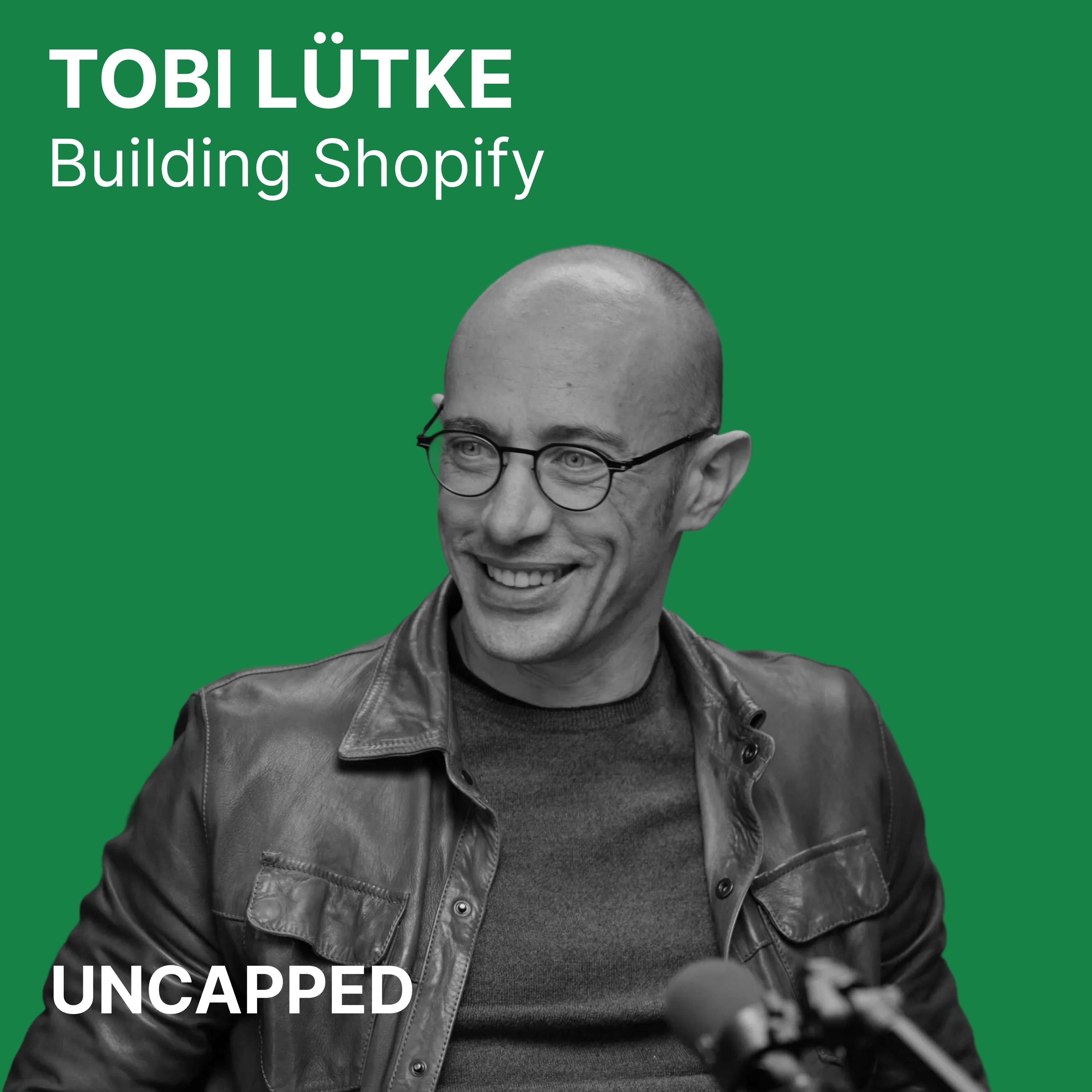 Uncapped #50 | Tobi Lütke from Shopify | Tobi Lütke | 20 May 2026 | 58 min | Tobi Lütke is the co-founder of Shopify, where he has served as the company's CEO since 2008. Under his leadership, Shopify grew from an online snowboard shop in Ottawa, Canada in 2004 to the world's leading e-commerce platform, powering over 4 million merchants in more than 175 countries. The company went public in 2015 at a $1.27 billion valuation and has since grown to a market cap exceeding $100 billion. As a programmer Tobi has served on the core team of the Ruby on Rails framework and has created many popular open source libraries such as the Typo weblog engine, Liquid and Active Merchant. We discussed building Shopify over more than 20 years, what it takes to sustain a life’s work, and why founder-led companies can move faster through major technological shifts. We also talked about how AI is reshaping software, entrepreneurship, and team building. Along the way, Tobi shared his views on originality, product craftsmanship, the future of work, and why he believes AI will create far more opportunity than scarcity. |
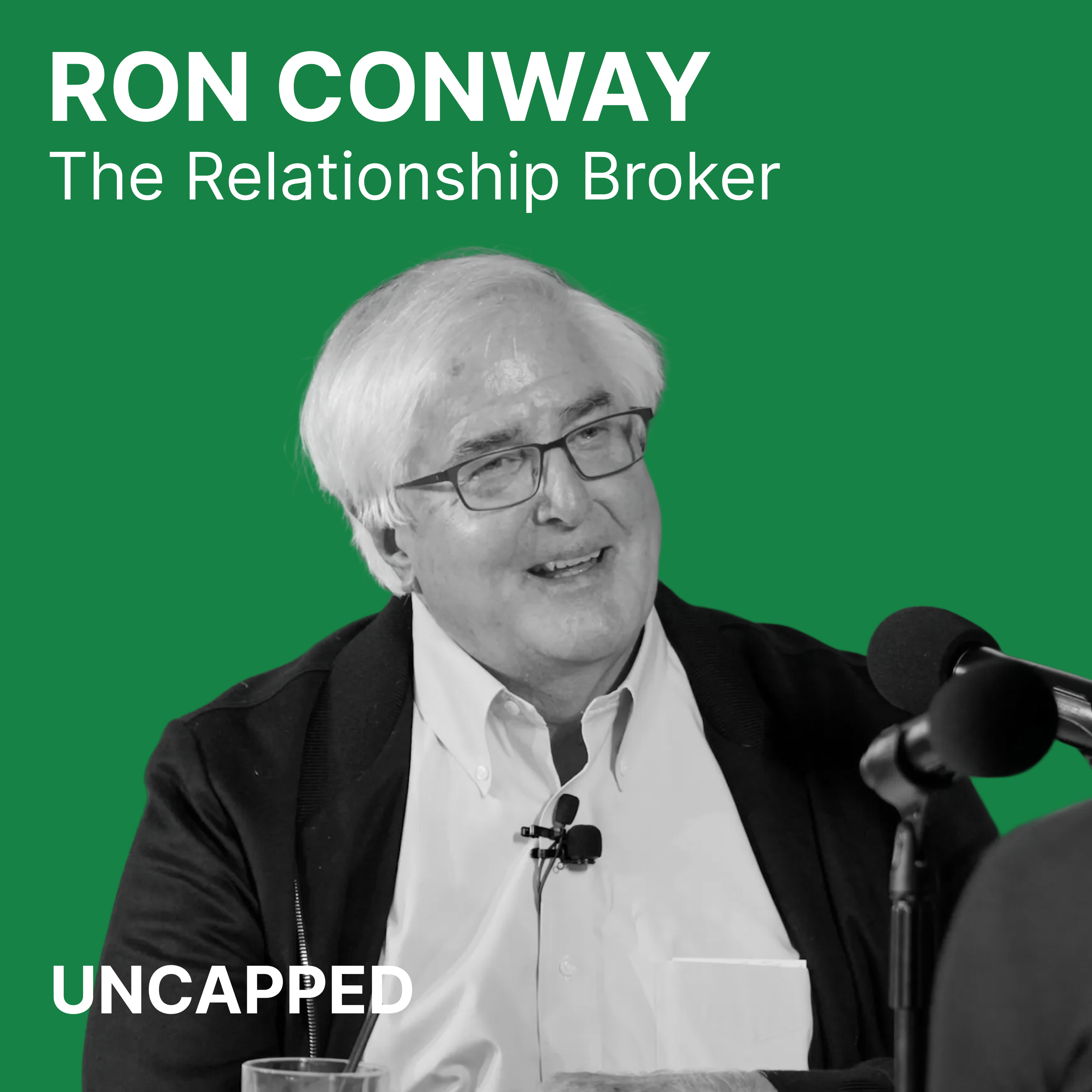 Uncapped #45 | Ron Conway from SV Angel | Ron Conway | 25 March 2026 | 41 min | Ron Conway is the Founder and a Managing Partner of SV Angel. He has been an active angel investor since the mid-90s and has received wide recognition for his role in the tech ecosystem. He has been included on Vanity Fair’s 100 most influential people in the Information Age, awarded Best Angel at the TechCrunch Crunchies Awards, and has been named on Forbes Magazine's Midas list of top “deal-makers” since 2011. Prior to founding SV Angel, Ron was with National Semiconductor Corporation in marketing positions (1973-1979), Altos Computer Systems as a co-founder, President, and CEO (1979-1990), taking the company public on Nasdaq in 1982. Ron reflects on decades of investing, from semiconductors to AI, and what it really means to be an “all in” partner to founders. He shares how relationships compound into an unfair advantage, why the best investors show up at inflection points, and how being willing to fight, whether in boardrooms or Washington, can change outcomes. --- Timestamps: (0:00) Intro (1:50) From semiconductors to AI (8:39) Two investments that changed everything (11:46) Nonpassive angel investing (14:57) Becoming a relationship broker (18:00) Building authentic relationships (24:48) Going deep with OpenAI and Airbnb (29:19) Fighting for founders (31:39) Remarkable returns at seed (33:20) The state wealth tax (37:17) Tech and politics --- Links: https://x.com/RonConway https://x.com/jaltma https://svangel.com/ https://uncappedpod.com/ --- friends@uncappedpod.com |
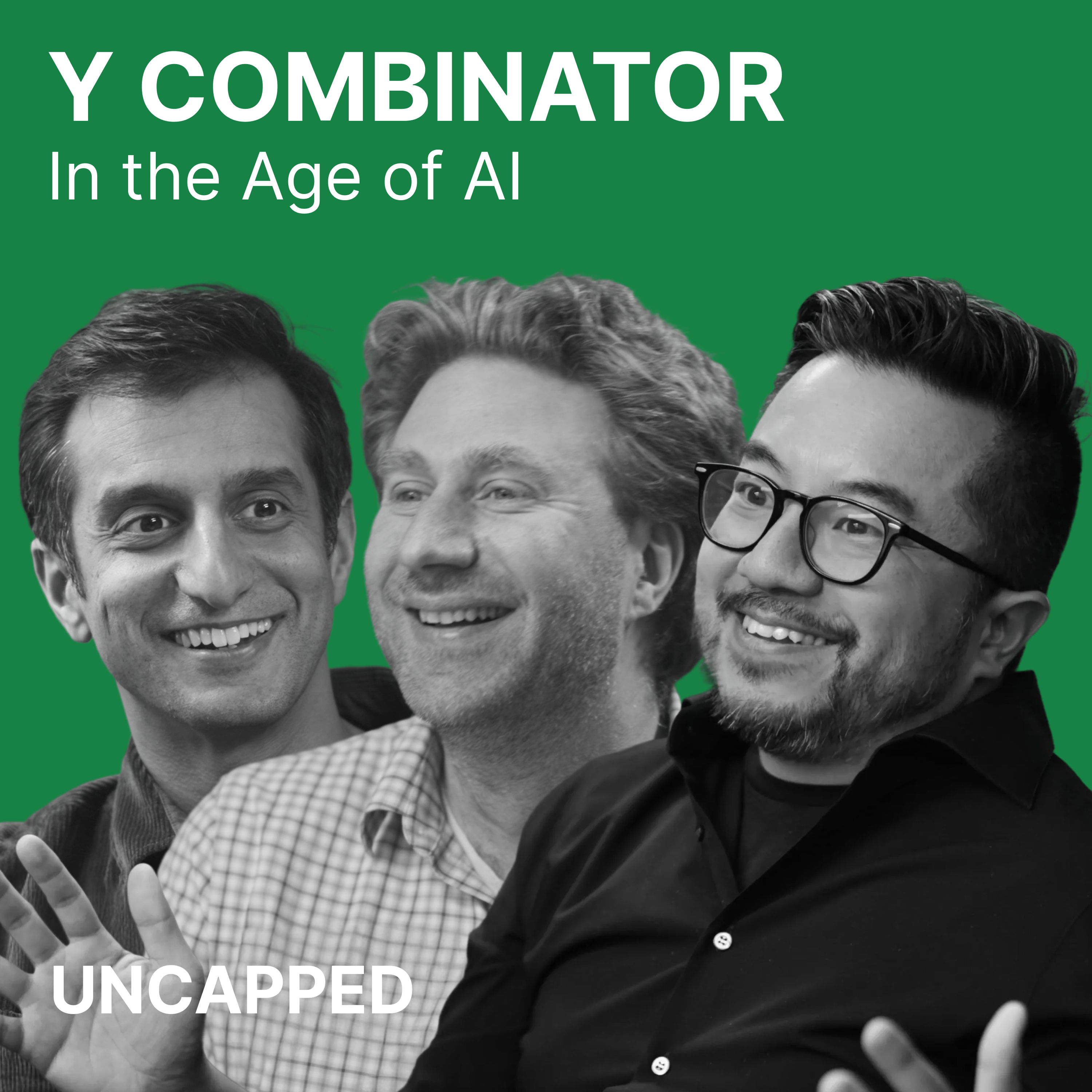 Uncapped #43 | Garry Tan, Harj Taggar, and Jared Friedman from YC | Garry Tan | 3 March 2026 | 59 min | In this episode, the team behind Y Combinator reflects on what has — and hasn’t — changed since the early days of YC, and how AI is reshaping what it means to be a founder. They discuss how they evaluate builders now, why execution still matters more than competition, and what YC is prioritizing as the startup landscape evolves. At its core, the mission remains the same: increase the number of great startups in the world. Garry Tan is president and CEO of Y Combinator and a group partner. He was a partner at Y Combinator from 2011 to 2015, where he built key parts of the YC experience for founders including Bookface and the Demo Day website. Garry is the co-founder of Initialized Capital and Posterous (YC S08), a blog platform acquired by Twitter, and prior to that, he was an early designer and engineering manager at Palantir. Harj Taggar is a Managing Partner at YC. Of the 1,000+ companies Harj has advised while at YC, 5 have gone public. He was previously founder and CEO of Triplebyte (YC S15) and Auctomatic (YC W07), which was acquired by Live Current Media in 2008. He first joined YC as a partner in 2010, leaving in 2014 to start Triplebyte and rejoining in 2020. Jared Friedman is a Managing Partner at YC. Jared has advised more than 20 YC unicorns while at YC. He was co-founder of Scribd, which was funded by Y Combinator in 2006 and grew to be one of the top 100 sites on the web. Jared previously worked at a pioneering AI company. |
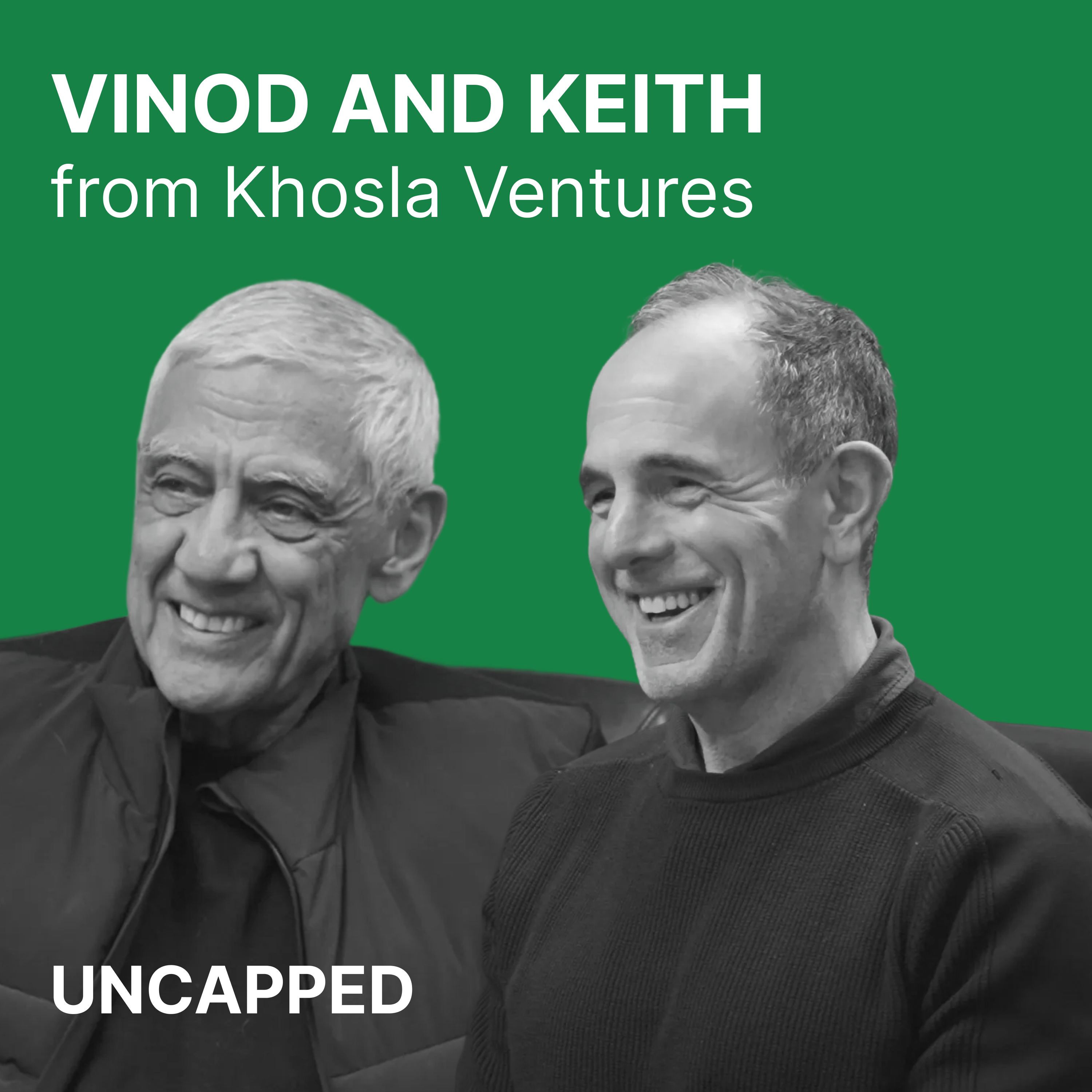 Uncapped #40 | Vinod Khosla and Keith Rabois from Khosla Ventures | Vinod Khosla | 21 January 2026 | 1:05 | Vinod Khosla and Keith Rabois are Managing Directors at Khosla Ventures. Vinod is an entrepreneur, investor and technologist. In 2004, Vinod formed Khosla Ventures to focus on both for-profit and social impact investments that have included OpenAI, Stripe, DoorDash, Commonwealth Fusion Systems and many more. Vinod previously co-founded Daisy Systems, the first significant computer-aided design system for electrical engineers, which led to an IPO. He later went on to co-found Sun Microsystems in 1982, serving as its first chairman and CEO. After joining Kleiner Perkins Caulfield and Byers (KPCB), Vinod incubated the idea for Juniper Networks to take on Cisco System’s dominance of the router market. Keith is also currently the CEO of OpenStore and led the first institutional investments in DoorDash, Affirm, and Faire, invested early in Stripe, and co-founded Opendoor. While a General Partner at Founders Fund, he led investments in Ramp, Trade Republic, and Aven, and before that made early personal investments in YouTube, Airbnb, Palantir, Lyft, Udemy, and Eventbrite. Keith started his career in leadership roles at PayPal and LinkedIn before becoming COO of Square. |
 Uncapped #38 | Ben Horowitz from a16z | Ben Horowitz | 9 January 2026 | 58 min | Ben Horowitz is a cofounder and general partner at the venture capital firm Andreessen Horowitz, a venture capital firm that manages $60 billion in assets under management. He is also the author of the New York Times bestsellers, The Hard Thing About Hard Things and What You Do Is Who You Are. Prior to a16z, Ben was cofounder and CEO of Opsware (formerly Loudcloud), which was acquired by Hewlett-Packard for $1.6 billion in 2007. Earlier, he was vice president and general manager of America Online’s E-commerce Platform division, where he oversaw development of the company’s flagship Shop@AOL service. Ben also ran several product divisions at Netscape. Ben serves on the board of Anyscale, Databricks, Mayvenn, NationBuilder, Navan, and UnitedMasters. |
| Uncapped #37 | Saam Motamedi from Greylock Partners | Saam Motamedi | 16 December 2025 | Saam Motamedi is a General Partner at Greylock Partners working with enterprise software entrepreneurs at the seed and early stages who are focused on new opportunities in intelligent applications, cybersecurity, AI, and data infrastructure. In 2019 at just 26 years old, Saam became the Greylock’s youngest General Partner in its 54-year history – a remarkable achievement at an institution that had backed Airbnb, AppDynamics, Coinbase, Discord, Figma, Instagram, LinkedIn, among others. Saam’s portfolio spans 14+ companies with collective valuations exceeding $10 billion. Abnormal Security, which Greylock incubated in its offices in 2018 with Saam as founding investor, grew into a multi-billion-dollar email security powerhouse. Cresta, where he led the Series A in 2019, became the leading generative AI platform for contact centers. Snorkel AI, Braintrust, Orb, and a portfolio of other infrastructure companies position Saam at the center of AI's business model transformation. | |
| Uncapped #36 | Pat Grady & Alfred Lin from Sequoia | Pat Grady | 9 December 2025 | Pat Grady and Alfred Lin are partners at Sequoia and were recently named as the storied firm’s new co-stewards. Alfred joined the firm in 2010, where he has led major investments into category-defining companies like Airbnb, DoorDash, and Kalshi. Pat has been a partner at the firm for nearly 19 years and has led Sequoia’s growth-stage investing since 2015, backing companies like Snowflake, OpenAI, and Harvey. In this episode, we unpack how Sequoia actually works: their partnership model, how they pick outliers, and what stewardship means inside one of the most respected firms in venture capital. | |
| Uncapped #35 | Trae Stephens from Founders Fund | Trae Stephens | 3 December 2025 | Trae Stephens is a Partner at Founders Fund. He is also Co-founder and Executive Chairman of Anduril, a defense tech company focused on autonomous systems, and Co-founder of Sol, a next generation wearable e-reader. Previously, Trae was an early employee at Palantir Technologies, where he led teams focused on growth in the intelligence/defense space as well as international expansion. He was also an integral part of the product team, leading the design and strategy for new product offerings. Prior to Palantir, Trae worked as a computational linguist building enterprise solutions to Arabic/Persian name matching and data enrichment within the United States Intelligence community. He began his career working in the office of then Congressman Rob Portman and in the Political Affairs Office at the Embassy of Afghanistan in Washington, D.C. immediately following the installation of Hamid Karzai’s transitional government. | |
 Uncapped #33 | Vlad Tenev from Robinhood | Vlad Tenev | 20 November 2025 | 50 min | Vlad Tenev is the co-founder and CEO of Robinhood (NASDAQ: HOOD), which transformed financial services by introducing commission-free stock trading and democratizing access to the markets for millions of investors. As of Q3 2025, the company is doing $1.27 billion in revenue with 11 business lines each doing roughly $100 million. We discuss the evolution of online brokerage platforms from Schwab to E-Trade to now Robinhood. Vlad delves into the launch of Robinhood, the impact of the global financial crisis, and how mobile and high-frequency trading have transformed finance. The conversation explores the rise and success of prediction markets, the importance of engaging younger generations, and how AI is enhancing the future of trading. --- Timestamps: (0:00) Intro (00:27) History of online brokers (4:15) The rise of Robinhood (9:15) Changing sentiment among generations (14:18) Incentive alignment with customers (18:47) The emergence of prediction markets (25:50) Economic value vs entertainment (28:26) Growing degree of risk taking (35:21) Tokenization and private markets (39:33) The impact of AI on Robinhood (43:35) What excites Vlad about AI (46:59) Reflections on being a founder --- More on Vlad: https://robinhood.com/us/en/ https://x.com/vladtenev More on Jack: https://www.altcap.com/ https://x.com/jaltma --- https://linktr.ee/uncappedpod Email: friends@uncappedpod.com |
 Uncapped #24 | Balaji Srinivasan | Balaji S. Srinivasan | 18 September 2025 | 51 min | Balaji Srinivasan is an angel investor, tech founder, and WSJ bestselling author of The Network State. He is currently the founder of The Network School, a frontier community for techno-optimists. Formerly the CTO of Coinbase and General Partner at Andreessen Horowitz, he is an early investor in many successful tech companies, including Anduril, Perplexity, OpenSea, Alchemy, StarkWare, Dapper Labs, Benchling, and Polymarket to name a few. Balaji also led the launch of USDC as Coinbase CTO, and was an early investor in many important crypto protocols including Bitcoin, Ethereum, and Solana among others. In this conversation, we discuss the evolving political landscape, emphasizing the disruptions caused by technology and the internet. Balaji outlines the four factions in the current political climate: the internet, Blue America, Red America, and China. We also explore the implications of tariffs, the rise of AI, and the future of network states. |
| Uncapped #23 | Martin Casado from a16z | Martin Casado | 3 September 2025 | Martin Casado is a general partner at a16z, where he leads the firm’s $1.25 billion infrastructure practice. Martin has led investments in Cursor, dbt Labs, and Fivetran to name a few. Prior to joining a16z in 2016, he was the co-founder and CTO of Nicira, which was acquired by VMware for $1.26B. While at VMware, Martin was the SVP and GM of network and security, which he scaled to a $600 million run-rate business. Martin started his career at Lawrence Livermore National Laboratory where he worked on large-scale simulations for the Department of Defense before moving over to work with the intelligence community on networking and cybersecurity. We covered: What necessitates specialization The conflicts dynamic Infra vs app companies Importance of open source The only sin in VC --- Timestamps: (0:00) Intro (0:27) Importance of media for VC (3:50) Evolution of a16z (7:00) Specialization (10:32) Value of distribution (13:16) Staying power in infra (19:49) The conflicts dynamic (26:32) State of play in AI (30:48) The future of coding (34:58) Significance of open source (39:48) Marc Andreessen’s leadership (44:02) The only sin in VC (48:37) Scaling a lot of board seats --- More on Martin: https://a16z.com/author/martin-casado/ https://x.com/martin_casado More on Jack: https://www.altcap.com/ https://x.com/jaltma --- https://linktr.ee/uncappedpod Email: friends@uncappedpod.com | |
 Uncapped #21 | Brian Armstrong from Coinbase | Brian Armstrong | 13 August 2025 | 47 min | Brian Armstrong is the co-founder and CEO of Coinbase, a leading cryptocurrency company that provides exchange, brokerage, and custody services to 100M+ verified users in over 100 countries. Founded in 2012, Coinbase went public in 2021 on the NASDAQ under the ticker COIN and as of August 2025 has a market cap of $83 billion. Brian is also the co-founder of New Limit, a longevity biotech company on a mission to significantly extend human lifespan that recently raised a $130M Series B led by Kleiner Perkins and angels including John and Patrick Collison, Elad Gil, and Joshua Kushner, among others. We covered: Working with the government When to jump to the hot new thing Choosing what frontiers to prioritize The inner game of being contrarian --- Timestamps: (0:00) Intro (0:26) Becoming the everything chain (4:20) Story behind the GENIUS Act (5:33) Working with regulators (10:45) The future of crypto and the government (17:10) When to jump to the hot new thing (23:03) Choosing what frontiers to prioritize (29:59) Brain-computer interface tech (34:48) Inside the mind of a contrarian (43:52) Creating a sustainable lifestyle --- More on Brian: https://www.coinbase.com/ https://www.newlimit.com/ https://x.com/brian_armstrong More on Jack: https://www.altcap.com/ https://x.com/jaltma --- https://linktr.ee/uncappedpod Email: friends@uncappedpod.com |
| Uncapped #16 | Mamoon Hamid from Kleiner Perkins | Mamoon Hamid | 9 July 2025 | Mamoon Hamid is a Partner at Kleiner Perkins. He has been an early investor in and served on the boards of some of the most innovative software companies of recent times including Slack, Figma, Rippling, Glean and Box. Prior to joining Kleiner Perkins, Mamoon was a Co-founder and General Partner at Social Capital. He started his venture career in 2005 at U.S. Venture Partners (USVP) where he eventually became Partner. Mamoon came to Silicon Valley in 1997 to join Xilinx, a Kleiner Perkins company, where he spent six years, initially as an engineer and later in product and marketing roles. We covered: Comparing innovation cycles AI’s $60 trillion opportunity The future of robotics Reigniting a storied firm Investing in Box, Slack, and Figma --- Timestamps: (0:00) Intro (0:29) The dot-com bubble (7:12) Web 2.0 and cloud (16:03) Early days of mobile (17:51) AI’s $60 trillion opportunity (21:48) Where to invest in AI (28:39) The future of robotics (32:35) Reigniting a storied firm (41:36) Growing vs recruiting talent (46:42) Win rate aspirations (49:16) Investing in Box, Slack, and Figma (54:36) Assessing founders (57:14) Kleiner Perkins’ strategy (1:00:52) Family and faith --- More on Kleiner Perkins and Mamoon: https://www.kleinerperkins.com/ https://x.com/mamoonha More on Alt Capital and Jack: https://www.altcap.com/ https://x.com/jaltma --- https://linktr.ee/uncappedpod Email: friends@uncappedpod.com | |
 Uncapped #15 | Vinod Khosla from Khosla Ventures | Vinod Khosla | 1 July 2025 | 1:20 | Vinod Khosla is an entrepreneur, investor and technologist. In 2004, Vinod formed Khosla Ventures to focus on both for-profit and social impact investments that have included OpenAI, Stripe, DoorDash, Commonwealth Fusion Systems and many more. After graduating college, Vinod co-founded Daisy Systems, the first significant computer-aided design system for electrical engineers, which led to an IPO. He later went on to co-found Sun Microsystems in 1982, serving as its first chairman and CEO. After joining Kleiner Perkins Caulfield and Byers (KPCB), Vinod intubated the idea for Juniper Networks to take on Cisco System’s dominance of the router market, a company that would give KPCB a 2,500x return on its early investment. Vinod is driven by the belief that technology is a positive force multiplier to accelerate societal reinvention in food, health, climate, energy transportation, education, housing finance, media, retail and entertainment for billions around the globe. His greatest passion lies in being a mentor to entrepreneurs who are building companies to tackle society’s largest challenges. |
 Uncapped #12 | Marc Andreessen from a16z | Marc Andreessen | 11 June 2025 | 1:40 | Marc Andreessen is a cofounder and general partner at the venture capital firm Andreessen Horowitz, a venture capital firm that manages $45 billion in assets under management. He is an innovator and creator, one of the few to pioneer a software category used by more than a billion people and one of the few to establish multiple billion-dollar companies. Marc co-created the highly influential Mosaic internet browser and co-founded Netscape, which later sold to AOL for $4.2 billion. He also co-founded Loudcloud, which as Opsware, sold to Hewlett-Packard for $1.6 billion. He later served on the board of Hewlett-Packard from 2008 to 2018. Marc serves on the board of the following Andreessen Horowitz portfolio companies: Applied Intuition, Carta, Coinbase, Dialpad, Flow, Golden, Honor, OpenGov, Samsara, Simple Things, and TipTop Labs. He is also on the board of Meta. |
| Uncapped #8 | Josh Kopelman from First Round Capital | Josh Kopelman | 1 May 2025 | It was a pleasure to sit down this week with Josh Kopelman, one of the original architects of seed stage investing who continues to re-invent what it means to operate within venture. Josh co-founded First Round Capital, which has invested at the earliest stages in companies like Square, Uber, and Roblox. Some of Josh’s more recent investments include Notion, Pomelo Care, Loyal, and Perpay. Since First Round’s inception in 2004, Josh has invested in 500+ startups and has frequently made the Forbes “Midas List” which ranks the top 100 tech investors. Josh has been a founder three times (four if you include founding First Round). In 1992, while in college, he co-founded Infonautics Corporation – and took it public on NASDAQ in 1996. Josh co-founded Half.com in 1999 and led it to become one of the largest sellers of used books, movies and music in the world. Half.com was acquired by eBay in 2000, where Josh remained for three years. In late 2003, Josh helped to found TurnTide, an anti-spam company that created the world’s first anti-spam router. TurnTide was acquired by Symantec just six months later. | |
 Uncapped #7 | Garry Tan from Y Combinator | Garry Tan | 17 April 2025 | 46 min | This week I sat down with Garry Tan, President & CEO of Y Combinator. YC has funded 5,000+ startups including Airbnb, Stripe, DoorDash, Rippling, and Reddit, among others that have totaled $600B in combined valuation. Garry is a designer, engineer, and investor in early stage startups. Previously Founder & Managing Partner of Initialized Capital, an early stage venture capital fund that was earliest in Coinbase and Instacart. Before that, Garry was a partner at Y Combinator where he invested in and directly worked with over 700 companies at the earliest stage. He previously co-founded Posterous and helped build it to a world-class website used by millions (acquired by Twitter). Garry is a builder at heart. We covered: Running YC like a founder Advice for founders Picking winners What changes because of AI YC being the “YC of hard tech” Public service --- Timestamps: (0:00) Intro (0:25) Running YC like a founder (6:25) Focusing on growth and prosperity (12:40) Incredible pick rate (14:34) Role of the Group Partner (19:21) Lean vs fat startups (20:53) Archetypes of special founders (25:18) Rule changes because of AI (33:00) YC being the “YC of hard tech” (37:40) Community and political involvement --- Linktree: https://linktr.ee/uncappedpod Twitter: https://x.com/jaltma Email: friends@uncappedpod.com |
 Uncapped #3 | Aaron Levie from Box | Aaron Levie | 25 March 2025 | 37 min | This week I sat down with Aaron Levie, Co-Founder and CEO of Box. Aaron came up with the idea behind the cloud computing company as a 19 year old college student and has led the company since its inception in 2005. Today, Box does over $1B in revenue with a market cap of $4.4B, and has raised over $560 million from the likes of DFJ, Andreesen Horowitz, and Meritech Capital. --- Timestamps: (0:00) Intro (0:10) Excitement in AI (6:50) Startups vs incumbents (15:04) Pricing agents (17:42) AI over or under hyped (19:17) Being first to cloud (24:55) Staying motivated (28:29) Shifting political landscape --- Linktree: https://linktr.ee/uncappedpod Twitter: https://x.com/jaltma Email: friends@uncappedpod.com |
| Uncapped #1 | Shaun Maguire from Sequoia | Shaun Maguire | 13 March 2025 | This week I spoke with Shaun Maguire, a Partner at Sequoia Capital. He led their investments into SpaceX, The Boring Co, and X among others. Prior to Sequoia Shaun co-founded a cybersecurity company which was acquired for $1B and worked at DARPA. I could have happily spoken with Shaun for four hours. --- We covered: (0:00) Speaking his mind in public (13:38) Trust and the media (24:27) Tech’s political flip (29:27) Investing in hard tech vs. software (45:27) Thinking with a beginner's mind (52:30) Fulfillment in investing (59:33) Investing in outlier people --- Linktree: https://linktr.ee/uncappedpod Twitter: https://x.com/jaltma Email: friends@uncappedpod.com | |
| Anduril & Founders Fund’s Trae Stephens on Choosing Good Quests in the Age of AI | Ep. 35 | Trae Stephens | |||
 Ben Horowitz on How a16z Built a Venture Machine | Ep. 38 | Ben Horowitz | |||
| David George on Growth Investing, AI, and Why the Power Law Is Stronger Than Ever | Ep. 58 | David George | |||
| Greylock’s Saam Motamedi on How Venture Firms Endure | Ep. 37 | Saam Motamedi | |||
| Investing in Outliers | Shaun Maguire, Partner at Sequoia | Ep. 1 | Shaun Maguire | |||
 Marc Andreessen on The Future of Venture Capital | Ep. 12 | Marc Andreessen | |||
| Pat Grady & Alfred Lin on the Tactics of Great Venture Investing | Ep. 36 | Pat Grady | |||
| The Next Generation of Software | Mamoon Hamid, Partner at Kleiner Perkins | Ep. 16 | Mamoon Hamid |
UUncapped #50 | Tobi Lütke from ShopifyTobi Lütke · 20 May 2026UUncapped #45 | Ron Conway from SV AngelRon Conway · 25 March 2026UUncapped #43 | Garry Tan, Harj Taggar, and Jared Friedman from YCGarry Tan · 3 March 2026UUncapped #40 | Vinod Khosla and Keith Rabois from Khosla VenturesVinod Khosla · 21 January 2026UUncapped #38 | Ben Horowitz from a16zBen Horowitz · 9 January 2026UUncapped #37 | Saam Motamedi from Greylock PartnersSaam Motamedi · 16 December 2025UUncapped #36 | Pat Grady & Alfred Lin from SequoiaPat Grady · 9 December 2025UUncapped #35 | Trae Stephens from Founders FundTrae Stephens · 3 December 2025UUncapped #33 | Vlad Tenev from RobinhoodVlad Tenev · 20 November 2025UUncapped #24 | Balaji SrinivasanBalaji S. Srinivasan · 18 September 2025UUncapped #23 | Martin Casado from a16zMartin Casado · 3 September 2025UUncapped #21 | Brian Armstrong from CoinbaseBrian Armstrong · 13 August 2025UUncapped #16 | Mamoon Hamid from Kleiner PerkinsMamoon Hamid · 9 July 2025UUncapped #15 | Vinod Khosla from Khosla VenturesVinod Khosla · 1 July 2025UUncapped #12 | Marc Andreessen from a16zMarc Andreessen · 11 June 2025UUncapped #8 | Josh Kopelman from First Round CapitalJosh Kopelman · 1 May 2025UUncapped #7 | Garry Tan from Y CombinatorGarry Tan · 17 April 2025UUncapped #3 | Aaron Levie from BoxAaron Levie · 25 March 2025UUncapped #1 | Shaun Maguire from SequoiaShaun Maguire · 13 March 2025UAnduril & Founders Fund’s Trae Stephens on Choosing Good Quests in the Age of AI | Ep. 35Trae StephensUBen Horowitz on How a16z Built a Venture Machine | Ep. 38Ben HorowitzUDavid George on Growth Investing, AI, and Why the Power Law Is Stronger Than Ever | Ep. 58David GeorgeUGreylock’s Saam Motamedi on How Venture Firms Endure | Ep. 37Saam MotamediUInvesting in Outliers | Shaun Maguire, Partner at Sequoia | Ep. 1Shaun MaguireUMarc Andreessen on The Future of Venture Capital | Ep. 12Marc AndreessenUPat Grady & Alfred Lin on the Tactics of Great Venture Investing | Ep. 36Pat GradyUThe Next Generation of Software | Mamoon Hamid, Partner at Kleiner Perkins | Ep. 16Mamoon Hamid