 Y
Podcast · 18 episodes in the reference, 2019 to 2026
Young and Profiting (YAP) with Hala Taha: Entrepreneurship and Self-Improvement Podcast
Published by Hala Taha | Entrepreneurship, Sales, Marketing | YAP Media Network
Host
HTHala Taha
Episodes
 Morgan Housel: What Investors Get Wrong About the Next Market Crash | Morgan Housel | 9 October 2026 | 1:06 | As a financial educator, Morgan Housel explains why investing success depends on more than choosing the right stocks. Fear can cause investors to sell at the worst possible time, while overconfidence can lead entrepreneurs to risk everything on a single bet. The author of The Psychology of Money argues that lasting wealth comes from having enough margin for things to go wrong without losing it all. In this episode, Morgan shares how entrepreneurs can stay invested through uncertainty, balance ambition with financial security, and use money as a tool for greater freedom and independence. In this episode, Hala and Morgan will discuss: (00:00) Introduction (01:58) Financial Systems That Outlast Your Resolutions (04:36) Balancing Saving, Spending, and Building Wealth (10:10) Investing Wisely in the Stock Market and Your Business (16:33) Financial Biases Every Entrepreneur Should Know (23:15) How Nostalgia Distorts Financial Reality (31:28) Wealth Inequality in the Social Media Era (35:28) Turning Anxiety About the Future Into Action (41:13) Why Every Generation Repeats Financial Mistakes (49:22) Lessons From Elon Musk’s Biggest Risks (53:48) Universal Laws Behind Financial Decisions Morgan Housel is an author, investor, and partner at Collaborative Fund whose writing explores money and human behavior. He is best known for the international bestseller The Psychology of Money , which has sold more than 10 million copies worldwide. |
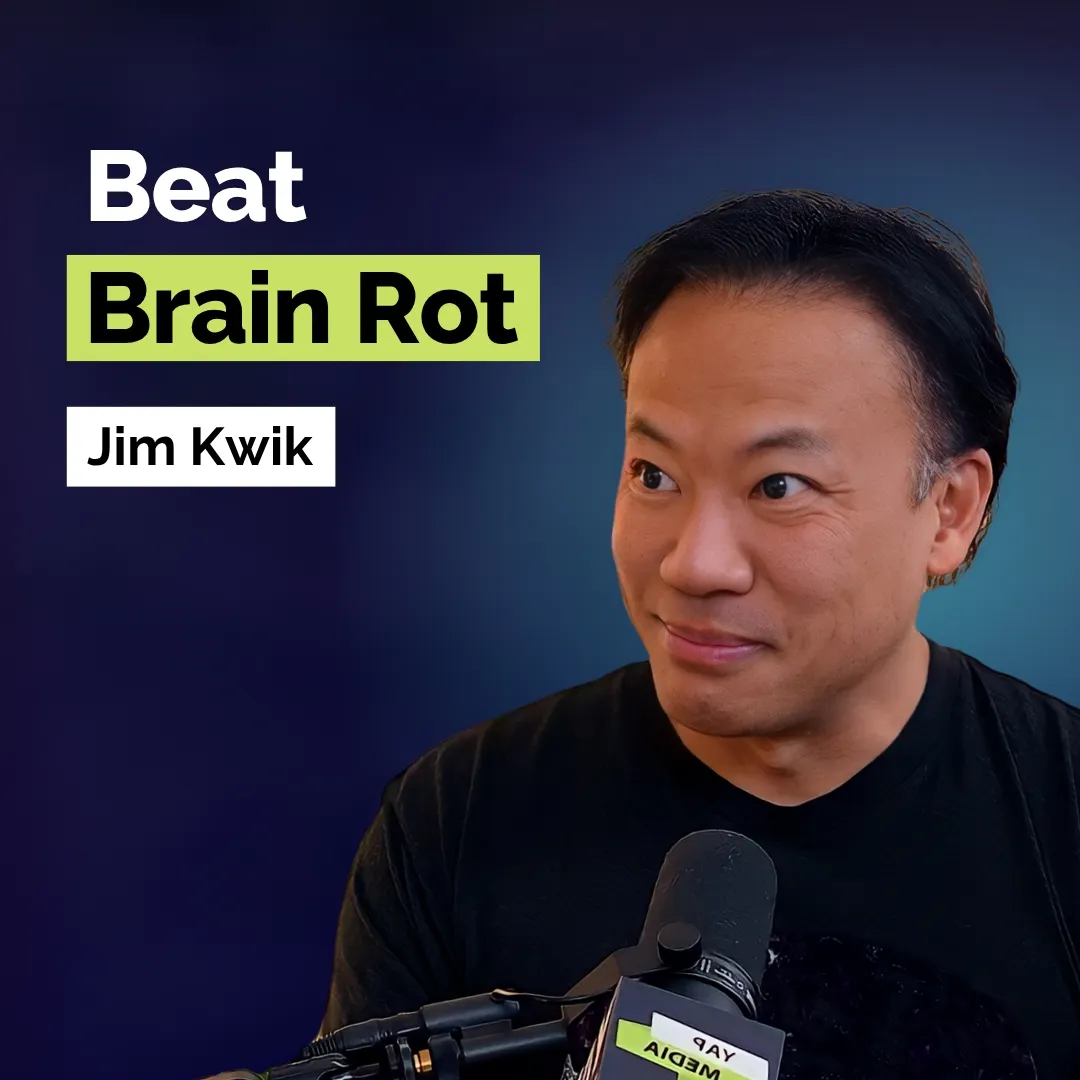 Jim Kwik: How to Protect Your Brain Health, Memory, and Focus in the Age of AI | Mental Health | E414 | Jim Kwik | 31 August 2026 | 1:31 | Jim Kwik’s brain health challenges began at age five, after a childhood injury left him struggling to read, learn, and remember. Once labeled “the boy with the broken brain,” he spent years discovering how memory, focus, and learning can be trained. Now, AI, smartphones, and constant distraction are making these abilities easier to neglect, especially as entrepreneurs increasingly rely on technology to work faster and more efficiently. In this episode, Jim shares how to strengthen your memory, protect your attention, use AI more intentionally, and keep your mind sharp in an increasingly automated world. In this episode, Hala and Jim will discuss: (00:00) Introduction (00:00) Why Memory Matters for Entrepreneurs (09:37) How Remembering Names Builds Trust (13:45) Training Your Brain to Remember (18:11) The MOM Framework for Memory Recall (24:49) Jim’s Ten-Item Memory Test (38:51) Hacks to Strengthen Focus and Attention (48:35) Using AI Without Losing Human Intelligence (1:01:12) Why Women Should Embrace AI (1:08:11) Beating Brain Rot and Doomscrolling Jim Kwik is the world’s leading brain performance coach, a New York Times bestselling author, and the founder of Kwik Brain. For over 30 years, he has trained CEOs, entrepreneurs, athletes, and world leaders in speed learning, memory improvement, and mental performance. As the host of the top-ranked Kwik Brain podcast, Jim focuses on brain health, cognitive wellness, and unlocking human potential in a rapidly changing world. |
 Codie Sanchez: AI Is Killing Online Jobs, Buy These 3 Boring Businesses Now! | Codie Sanchez | 3 April 2026 | 1:11 | Codie Sanchez watched aspiring entrepreneurs chase startup dreams, only to end up overwhelmed, underpaid, or stuck. After 12 years in finance, she saw a different reality: the ultra-wealthy weren’t starting a business from scratch; they were buying “boring”, profitable companies hiding in plain sight. That insight changed everything. She left corporate, built her own portfolio, and wrote Main Street Millionaire to share the playbook. In this episode, Codie breaks down how to find, finance, buy, and exit overlooked businesses to build real ownership, scalable income, and lasting financial freedom. In this episode, Hala and Codie will discuss: (00:00) Introduction (02:21) Why Boring Businesses Create Real Wealth (06:42) Ownership as the True Path to Freedom (15:56) What Are Main Street Businesses? (25:58) Preparing to Buy a Boring Business (33:30) Creative Financing Secrets for Entrepreneurs (41:28) Hidden Business Opportunities You Can Buy (48:44) Key Financials Before Buying a Business (52:57) How to Exit a Business Profitably (57:45) What Main Street Millionaire Will Teach You (01:00:17) AI and the Future of “Boring” Businesses Codie Sanchez is an investor, entrepreneur, and founder of Contrarian Thinking, a platform focused on financial freedom through business ownership. She is the co-founder of Unconventional Acquisitions and has built a portfolio of cash-flowing "Main Street" businesses. |
 Nir Eyal: Fix the Mindset Sabotaging Your Success in Business and Life | Nir Eyal | 23 March 2026 | 1:23 | Mindset is everything, but what if your beliefs are holding you back? Nir Eyal faced this painful reality when readers praised his work, yet still struggled to change their habits or act on a single piece of advice. It led him to a deeper truth: in a world overflowing with information, knowledge isn’t the problem; hidden limiting beliefs are. That realization led him to write Beyond Belief . In this episode, Nir returns with personal development tools to help you uncover and destroy the beliefs silently sabotaging your success in business, relationships, and life. In this episode, Hala and Nir will discuss: (00:00) Introduction (01:56) Why Nir Wrote Beyond Belief (05:56) The Rat Study: How Beliefs Drive Persistence (10:31) How Beliefs Become Your Biology (18:47) What Is the Motivation Triangle? (24:30) How Beliefs Hijack Your Reality (36:03) Building Entrepreneurial Alertness and Luck (44:29) Reframing Beliefs to Improve Relationships (55:05) The Power of Anticipation in Business (1:01:02) The Danger of Limiting Identity Beliefs (1:08:13) Live Coaching to Overcome Limiting Beliefs Nir Eyal is a bestselling author, behavioral design consultant, and former Stanford lecturer known for teaching the intersection of psychology, technology, and business. His groundbreaking books, Hooked and Indistractable, have sold over one million copies in more than 30 languages, helping entrepreneurs and leaders worldwide. |
 Jim Kwik: The Truth About AI and Your Brain | Jim Kwik | 9 February 2026 | 1:09 | Artificial intelligence promises efficiency, but at what cost to your brain health? Jim Kwik, the world’s leading brain coach, has observed a concerning trend: the more we rely on AI, the less we engage our own brains, ultimately making us mentally weaker. In this episode, Jim returns to introduce the concept of augmented intelligence, a tool meant to amplify human thinking, not replace it. He also shares his proven strategies to strengthen brain health, ensuring that your memory, sleep, focus, and cognitive function stay sharp in an AI-driven world. In this episode, Hala and Jim will discuss: (00:00) Introduction (03:22) A New Mind for the AI Era (08:20) AI vs. Human Intelligence Comparison (11:55) Setting Boundaries With Artificial Intelligence (15:20) The MEDS Brain Health Framework (18:47) Sleep Optimization for Cognitive Wellness (23:40) Training Your Brain in the Modern World (34:08) Mastering Focus in a Distracted World (42:08) Understanding Brain Types: The CODE Framework (50:19) Actionable Advice for Entrepreneurs Jim Kwik is the world’s leading brain performance coach, a New York Times bestselling author, and the founder of Kwik Brain. For over 30 years, he has trained CEOs, entrepreneurs, athletes, and world leaders in speed learning, memory improvement, and mental performance. As the host of the top-ranked Kwik Brain podcast, Jim focuses on brain health, cognitive fitness, and unlocking human potential in a rapidly changing world. |
 Sahil Bloom: The 5 Types of Wealth (Money Is The Lowest) | Sahil Bloom | 23 January 2026 | 1:15 | Entrepreneurship often promises freedom, but for many high performers, success can come at the cost of time, health, and relationships. After years in private equity, Sahil Bloom realized that money alone doesn’t guarantee fulfillment, freedom, or a meaningful life. That realization deepened when he learned he might only see his parents 15 more times before they passed if he stayed on his current path. Within 45 days, he left his job, sold his house, and rebuilt his life around what mattered most. In this episode, now on Spotify Video, Sahil breaks down the five types of wealth entrepreneurs need to acquire to win in both business and life. In this episode, Hala and Sahil will discuss: (00:00) Introduction (02:01) Life Razor: How to Decide What Matters (06:34) Breaking Free from Limiting Beliefs (08:22) The Turning Point That Changed Sahil’s Priorities (18:24) Protecting Your Energy as an Entrepreneur (22:20) Starting Entrepreneurship Without a Plan (27:47) Time Management Tips for Entrepreneurs (31:23) Understanding the Five Types of Wealth (46:41) The Brain Trust Approach to Mentorship (49:43) Building Wealth Through Business Ownership (01:00:30) Balancing Wealth, Health, and Life (01:03:11) Sahil’s Daily Routine for Success Sahil Bloom is an entrepreneur, investor, and writer best known for his newsletter, The Curiosity Chronicle , which reaches over 800,000 readers worldwide. |
 The Productivity Framework That Eliminates Burnout and Maximizes Output | Productivity | Presented by Working Genius | Patrick Lencioni | 14 January 2026 | 2:26 | Many leaders think burnout is solved by better time management, when the real issue is role alignment. When people spend most of their day doing work that drains their energy, productivity stalls, and teamwork suffers. Now on Spotify Video! In this episode, presented by Working Genius, Hala Taha and Patrick Lencioni break down the Working Genius framework, showing how individuals can identify the type of work that fuels them, rather than exhausts them. They also reveal team-building strategies for matching people to their natural strengths, reducing friction, improving synergy, and driving long-term success. In this episode, Hala and Patrick will discuss: (00:00) Introduction and Warm-Up (13:55) The Burnout Barometer Activity (21:15) The Problem With Modern Work (31:16) The Birth of the Working Genius Framework (43:50) The Six Types of Working Genius (01:02:49) Hala and Pat’s Working Genius Results (01:14:32) Understanding Your Working Genius Results (01:25:37) Building Work Around Your Productivity Strengths (01:41:18) Leveraging Working Genius for Team Building (01:52:54) Common Friction Areas in Workplace Dynamics (02:10:57) Q&A Section Working Genius is a productivity and teamwork model created by Patrick Lencioni to address the root cause of workplace burnout and frustration. It has helped millions worldwide gain clarity, boost productivity, and build more effective teams by understanding their natural work strengths. |
 Reid Hoffman: Why the AI Doom Narrative is a Total Lie | Reid Hoffman | 15 December 2025 | 51 min | When Reid Hoffman first began studying artificial intelligence at Stanford, the world wasn’t ready for it yet. Years later, inspired by conversations with top tech innovators, he recognized AI’s potential and seized the moment. As the founding investor in OpenAI and co-founder of Inflection AI, he’s at the forefront of shaping AI and the future of work. Now on Spotify Video! In this episode of the AI Vault series, Reid introduces the concept of "superagency," where AI enhances human capabilities rather than replacing them. He also addresses common fears surrounding AI and shares his vision for a future powered by AI-driven agents. In this episode, Hala and Reid will discuss: (00:00) Introduction (01:49) Reid's Early Interest in Artificial Intelligence (04:18) AI, Jobs, and Concerns for the Future (08:25) Superagency: Amplifying Human Capability with AI (19:34) Training AI to Be a Better Human Companion (23:15) Trust and Misinformation in the Age of AI (25:56) Why Human Expertise Still Matters in AI (28:13) Reid’s AI Twin (31:07) Leveraging AI for Content Creation (32:39) How AI in Action Will Shape the Future Reid Hoffman is an entrepreneur, investor, partner at Greylock, and the co-founder of LinkedIn and Inflection AI. He's also a bestselling author and host of the Masters of Scale podcast. Reid majored in artificial intelligence at Stanford through the Symbolic Systems program, one of the earliest undergraduate AI majors. |
 Codie Sanchez: How to Get Rich Buying a Business No One Wants | Entrepreneurship | YAPClassic | Codie Sanchez | 31 October 2025 | 57 min | After years in high finance, Codie Sanchez watched investors chase flashy startups even though 80% of them failed. This made her wonder: Where is the 80% win rate? The answer led her to “boring” businesses, the small, steady cash-flow companies most entrepreneurs overlook. Today, she owns more than 26 companies and is one of the world’s top female business influencers, teaching others how to build wealth through contrarian entrepreneurship. In this episode, Codie shares how to acquire profitable small businesses using creative financing strategies that require little to no upfront capital. In this episode, Hala and Codie will discuss: (00:00) Introduction (00:43) Codie’s Background and Path to Entrepreneurship (09:46) The Contrarian Thinking Strategy (19:07) Diversifying Income and Reducing Financial Risk (26:29) How to Buy a Business with No Money Down (32:12) How to Find and Acquire Profitable Small Businesses (38:37) Simple and Profitable Business Selection Criteria (45:03) The Best “Boring” Businesses to Start or Buy (51:39) Entrepreneur Mindset and Daily Success Habits Codie Sanchez is a former journalist turned investor and entrepreneur who spent over a decade climbing the ranks at major financial firms like Goldman Sachs, State Street, and First Trust. |
 Codie Sanchez: BORING Businesses You Can Buy Right Now To REPLACE Your 9-5 | The Money Expert | Codie Sanchez | 6 December 2024 | 58 min | After climbing the ranks of the high finance ladder, Codie Sanchez felt lost. She was no longer in charge of her day-to-day life, despite her years of schooling and hard work. She decided to use the insights she had gained to build her own portfolio of what she calls “boring businesses.” Now, she is out to help others do the same, quickly becoming one of the biggest female business influencers in the world. In this episode, Codie breaks down her step-by-step approach to identifying, buying, and scaling small businesses that most people ignore but yield big returns. In this episode, Hala and Codie will discuss: (00:00) Introduction (03:18) From Journalism to Finance (05:11) Breaking Corporate Chains (08:09) Battling Bias as a Woman in Finance (11:21) Unorthodox Wealth Creation Strategies (20:00) Should You Really Diversify Your Income Streams? (24:06) Wealth from Boring Businesses (27:09) Six Creative Strategies to Buy a Business (35:11) Spotting Motivated Sellers (37:05) Key Metrics for Evaluating Businesses (40:27) Finding Hidden Gem Businesses (53:53) Codie’s Secrets to Success Codie Sanchez is the founder of Contrarian Thinking and co-founder of Unconventional Acquisitions, focusing on small business acquisitions and roll-ups in the micro-PE space. She runs a holding company of service-based SMBs under $10M EBITDA, emphasizing "boring businesses." |
 Codie Sanchez: How to Make Extraordinary Wealth Buying Boring Businesses | Codie Sanchez | 2 December 2024 | 1:12 | Codie Sanchez started out on the traditional corporate path, working long hours and steadily rising through the ranks. But she soon noticed a pattern: the wealthiest people weren't just starting flashy tech companies—they were buying "boring businesses." Codie decided to break away from the corporate world to invest in steady, everyday businesses that others ignored, like laundromats and vending machines, building her wealth that way. In today’s episode, Hala and Codie dive into how these unglamorous businesses can be your ticket to financial freedom and why sometimes the smartest move is going against the grain. In this episode, Hala and Codie will discuss: (00:00) Introduction (01:58) Wealth Myths Shattered (05:55) The Power of Ownership (10:59) True Entrepreneurship vs. Just Another Job (15:14) Main Street Businesses: The Hidden Wealth Builders (25:03) How to Prep to Buy a Business (32:49) Creative Financing Secrets (38:20) Where to Hunt for Business Deals (43:00) Go Strategic or Diversify? (47:42) Key Financials Before You Buy (49:56) Scaling Smarter, Not Harder (52:00) Plotting the Perfect Exit Strategy (59:43) AI & The Future of “Boring” Business Codie Sanchez is the founder of Contrarian Thinking and co-founder of Unconventional Acquisitions, focusing on small business acquisitions and roll-ups in the micro-PE space. She runs a holding company of service-based SMBs under $10M EBITDA, emphasizing "boring businesses." |
 Ginni Rometty, IBM CEO: Fortune’s “Most Powerful Woman” Shares How to Lead with Purpose | Ginni Rometty | 8 July 2024 | 1:06 | Ginni Rometty was often the only woman in her engineering classes. But, she was determined to excel in a male-dominated field and eventually became the first female CEO of IBM. Her trailblazing leadership revitalized the company and set new standards for women in tech and business. In this episode, Ginni shares her best insights on leadership, resilience, and the importance of being in service of a greater purpose. Ginni Rometty is the former president, chairman, and CEO of IBM. She led the company through significant transformations and advocated for diversity and inclusion in tech. She is also the author of Good Power, a Wall Street Journal bestseller. In this episode, Hala and Ginni will discuss: - How Ginni turned tough situations into positive power - The need for leaders to have ‘good power’ - The five principles of ‘good power’ - Why loving conflict can be good - The importance of never striving for perfection - Why continuous learning is key to success - The difference between a job and a career - Why you must reframe how you think about risk - The responsible use of technology - Why leaders must inspire and not force - And other topics… Ginni Rometty is the former chairman, president, and CEO of IBM, and the first woman to hold the position. She led IBM's transformation, building a $21 billion hybrid cloud business and establishing the company’s leadership in AI, quantum computing, and blockchain. |
 Anne Wojcicki: How 23andMe's DNA Testing is Disrupting the Healthcare Industry | Anne Wojcicki | 25 September 2023 | 1:07 | Anne Wojcicki and her co-founders started 23andMe back in 2006 with a clear mission: to make genetic testing and its results, including findings about predisposition to disease, widely available to consumers. And, in exchange for a swab of spit and a fee, 23andMe provided its customers with unprecedented insight into their own genetic makeup. Now, Wojcicki and her company are at the forefront of a broader movement to expand personalized care and drug options in healthcare. In today’s episode, Anne talks about the challenges in understanding the code of life, the benefits of DNA testing, concerns over privacy in the healthcare industry, and the future of medicine and new drug discovery. Anne Wojcicki is a biologist, entrepreneur, and the co-founder and CEO of the personal genomics company 23andMe, which provides genetic testing for individuals curious about their ancestry and genetic makeup. In this episode, Hala and Anne will discuss: - Anne's disillusionment with the U.S. |
 Kathryn Minshew: Reinvent Your Career, Avoid Burnout, and Learn to Navigate the New Rules of Work | Kathryn Minshew | 10 October 2022 | 54 min | The rise of social media has made it easier than ever to seek out other job opportunities. Hence, countless people are seeing all that the job market has to offer and they’re leaving their jobs to pursue something that is better aligned with their personal values. When it comes to value alignment in the workplace, there are few people as knowledgeable as Kathryn Minshew. Kathryn’s goal is to help people find careers that are aligned with their preferences and hobbies and assist companies in solidifying their company culture in order to attract the right employees. In this episode, Kathryn and Hala discuss some hot topics in career news, like quiet quitting and shift shock. They talk about how to pull yourself out of burnout at work and what it means to work in alignment with your values. Additionally, Kathryn explains how to evaluate a company’s culture before working there and how to know when it’s time to quit your current job. Topics Include: - Kathryn’s early passion for politics and international relations - The effects of The Great Resignation - The shifting power dynamic between workers and employers - Quiet quitting - The two approaches to work - Pulling yourself out of burnout at work - Shift shocks - How to evaluate company culture - The cost of quitting - How do you know when to quit your job? |
 Shoot Your Loonshot with Safi Bahcall | Safi Bahcall | 29 July 2019 | 1:04 | Shoot your loonshot and nurture your next crazy big idea! In #33 , Hala yaps with Safi Bahcall, a trained physicist who has transformed his career every 5 years or so. He’s done everything from business consulting to co-founding a pharmaceutical company to now becoming a best-selling author. In this episode we’ll find out how Safi is able to reinvent himself so often and his tips for getting into a new field. In addition, we’ll cover his super fascinating concept and book, "Loonshots: How to Nurture the Crazy Ideas That Win Wars, Cure Diseases, and Transform," which has been noted as one of the top business books for 2019. If you liked this episode, please write us a review! Fivver: Get services like logo creation, whiteboard videos, animation and web development on Fivver: https://track.fiverr.com/visit/?bta=51570&brand=fiverrcpa Fivver Learn: Gain new skills like graphic design and video editing with Fivver Learn: https://track.fiverr.com/visit/?bta=51570&brand=fiverrlearn Get a copy or download Safi’s ‘Shoot Your Loonshots’: https://amzn.to/2Pnl8mL Want to connect with other YAP listeners? Join the YAP Society on Slack: bit.ly/yapsociety Follow YAP on IG: www.instagram.com/youngandprofiting Follow Hala on Linkedin: www.linkedin.com/in/htaha/ Follow Hala on Instagram: www.instagram.com/yapwithhala Reach out to Hala directly at Hala@YoungandProfiting.com Check out our website to meet the team, view show notes and transcripts: www.youngandprofiting.com |
 Patrick Lencioni: 5 Dysfunctions of a Team, How to Turn Conflict into a Leadership Advantage | Patrick Lencioni | |||
 Post-COVID Predictions and Investing Tips with Peter Mallouk | Peter Mallouk | |||
 The Secret to Building Companies That Last for Generations! w/ Sam Parr | Sam Parr |
YMorgan Housel: What Investors Get Wrong About the Next Market CrashMorgan Housel · 9 October 2026YJim Kwik: How to Protect Your Brain Health, Memory, and Focus in the Age of AI | Mental Health | E414Jim Kwik · 31 August 2026YCodie Sanchez: AI Is Killing Online Jobs, Buy These 3 Boring Businesses Now!Codie Sanchez · 3 April 2026YNir Eyal: Fix the Mindset Sabotaging Your Success in Business and LifeNir Eyal · 23 March 2026YJim Kwik: The Truth About AI and Your BrainJim Kwik · 9 February 2026YSahil Bloom: The 5 Types of Wealth (Money Is The Lowest)Sahil Bloom · 23 January 2026YThe Productivity Framework That Eliminates Burnout and Maximizes Output | Productivity | Presented by Working GeniusPatrick Lencioni · 14 January 2026YReid Hoffman: Why the AI Doom Narrative is a Total LieReid Hoffman · 15 December 2025YCodie Sanchez: How to Get Rich Buying a Business No One Wants | Entrepreneurship | YAPClassicCodie Sanchez · 31 October 2025YCodie Sanchez: BORING Businesses You Can Buy Right Now To REPLACE Your 9-5 | The Money ExpertCodie Sanchez · 6 December 2024YCodie Sanchez: How to Make Extraordinary Wealth Buying Boring BusinessesCodie Sanchez · 2 December 2024YGinni Rometty, IBM CEO: Fortune’s “Most Powerful Woman” Shares How to Lead with PurposeGinni Rometty · 8 July 2024YAnne Wojcicki: How 23andMe's DNA Testing is Disrupting the Healthcare IndustryAnne Wojcicki · 25 September 2023YKathryn Minshew: Reinvent Your Career, Avoid Burnout, and Learn to Navigate the New Rules of WorkKathryn Minshew · 10 October 2022YShoot Your Loonshot with Safi BahcallSafi Bahcall · 29 July 2019YPatrick Lencioni: 5 Dysfunctions of a Team, How to Turn Conflict into a Leadership AdvantagePatrick LencioniYPost-COVID Predictions and Investing Tips with Peter MalloukPeter MalloukYThe Secret to Building Companies That Last for Generations! w/ Sam ParrSam Parr