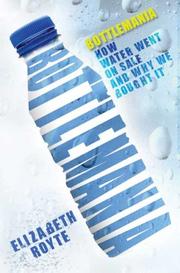
Bottlemania
How drinking water became bottled water, and the local fights over extraction.
Local water-extraction fights, several of them with Nestle Waters.
Summary
Royte investigates the commercialisation of drinking water, as bottled water, having passed milk and beer and trailing only soda, nears becoming the most popular drink in the United States. She notes that Poland Spring and Evian were once real springs in remote parts of Maine and France, and she follows the people, machines, economies and cultural trends that bring water from distant aquifers to supermarkets, including local fights over water extraction, several of them with Nestle Waters.
The book is narrative journalism organised around questions: who owns water, how much people should drink, whether they should pay for it, whether tap water is safe, what chemicals make it drinkable, what happens to the plastic bottles, and which is better, tap or bottled. It was published in 2008.
Key takeaways 4
- Bottled water grew into an industry worth billions by selling a product most Americans can get from a tap.
- Brands such as Poland Spring and Evian began as real springs that companies now draw on at scale.
- Towns have fought bottlers, Nestle Waters among them, over the right to extract groundwater.
- The plastic bottles carry costs that the price of the water does not include.
Who should read it
Readers interested in consumer industries, water rights or environmental costs who want a reported case study of bottled water.
Similar books 6
Chosen by shared topics, the entries that hold them, and the people who recommended both.
Corruption and child labour in the cocoa trade, traced to Cote d'Ivoire's farms.
The hard economics of cocoa in West Africa, from child labour to smallholders.
How processed-food makers engineer salt, sugar and fat to make people eat more.

How free tap water became bottled water, one of the most profitable products sold.
Four meals traced to their sources, from fast food and organic to hunted and grown.
How Coca-Cola's bottling and distribution reached consumers as far as New Guinea.