Updates

  1. Person pages list letters, writing, profiles and links as sortable tables with filters, and show each person's companies as links; Fund letters show each letter's description in its own column.
  2. Experts show a checked job title and a short description of each person; 30 more people have photographs.
  3. Every company, fund, university and publication the experts work for has a page listing the people there.
  4. Fund letters show each letter's thesis and filter by it; 225 person pages list the essays, columns and newsletter issues the person wrote.
  5. Person pages list every essay and newsletter issue a person wrote, and their own books as a table in List view.
  6. Recommends shows the five largest kinds of book and the rest under More; browse pictures load sooner.
  7. Podcasts and talks link the original episode, filter by Audio and video or Press, and list each publisher once.
  8. Pages are wider, Recommends has List and Grid, and a filter clicked again turns off.
  9. Book cards sit in a ruled grid with Open Library and Goodreads links and each book's one-line note.
  10. Funds is now Investors; each investor's styles are buttons that filter the table.
  11. Podcasts and talks on a person's page filter by year and publisher and show as a list or a grid of pictures.
  12. Quotes show only people's own words: 472 summaries written by list sites are gone.
  13. Country pages open from Browse again, and every link on the shelf lands on a page.
  14. Subject and person pages show their sections as tabs, and each book appears once on a person's page.
  15. Book cards show the quote, who said it and the source; grids show five cards to a row.
  16. On a phone, a menu holds the sections, search, Updates, Feedback and dark mode.
  17. Feedback takes a screenshot of the page with no browser prompt, opens a screenshot full size when you click it, and clears itself once sent.
  18. Book cards are centred, search names the topic each book sits in, and any text cut short shows whole on hover.
  19. Search groups its results by kind: people, companies, geographies, subjects, topics, books, funds, fund letters and papers.
  20. The Books table lists who recommended each book by name, and the browser tab names the section you are in.
  21. Feedback can take a screenshot of the page, or one you paste or choose, and opens in the corner beside Updates.
  22. Each rail button reopens its section where you left it, and Browse, Table and People show on every book and subject page.
  23. Filters grey out choices that hold nothing instead of hiding them, and Books › People filters by authors or recommenders.
  24. Feedback takes a subject line and up to three screenshots.
  25. Biographies are grouped by the person they are about: 41 new pages, from Abraham Lincoln to Lee Kuan Yew.
  26. Sport splits into 23 sports, and Religion into one topic per faith.
  27. Book lists show as cards: the cover, one recommendation quote and every recommender by name.
  28. Seventeen subjects that had two or three pages under different names now have one page each.
  29. Every page lists its Experts as authors and recommenders, with a link to them on the Experts tab.
  30. Economics, Financial history, Financial panics and Accounting are subjects of their own, with one page per financial crisis.
  31. Book, person and subject pages open inside the app, so the tabs stay in view.
  32. 996 more book covers, and photographs or logos for 227 more people and companies.
  33. Books › Browse shows every subject as cards, and the rail holds Fund letters, Papers, Experts, Books and Funds.
  34. Every topic over 150 books splits into narrower topics, each with a page of its own.

Send feedback

What is it?
Screenshots, up to 3 (optional)
or paste one with Ctrl+V

We use your email only to reply to you.

Closed-End Funds, Exchange-Traded Funds, and

Closed-End Funds, Exchange-Traded Funds, and Hedge Funds

Seth C. Anderson, Jeffery A. Born, Oliver Schnusenberg
2009
T4 140 pages · about 2h 20m to read Open Librarygoodreads

Academic review of the discount puzzle and related structures.

Summary

The reference has not verified this book in detail; the summary states only what the title, author and subject establish.

Anderson and Born wrote this academic survey covering three pooled investment vehicles and the research literature on each. The reference has not verified the detailed contents.

The subject connects three structures with different mechanics. A closed-end fund issues a fixed number of shares that then trade on an exchange, so the share price can and does diverge from the net asset value of the underlying holdings. That divergence is the puzzle the academic literature has examined for decades: funds typically launch at a premium, fall to a discount within months, and trade at persistent discounts thereafter, with the discounts varying over time in correlated ways across funds that no risk-based explanation accounts for. Exchange-traded funds solved this by permitting authorised participants to create and redeem shares in kind against the underlying basket, which arbitrages away any material divergence from net asset value. Hedge funds are private pools with limited redemption rights, performance fees and unconstrained strategies.

The research questions across these include the closed-end fund discount and the sentiment explanations proposed for it, the performance and persistence of returns, the fee structures and their effect on investor outcomes, the survivorship and backfill biases in hedge fund databases that overstate reported returns, and the liquidity mismatch when a vehicle offering frequent redemption holds illiquid assets.

The volume is a literature survey rather than a practitioner text. It was published around 2010 and the exchange-traded fund market in particular has changed enormously since, both in scale and in the range of strategies packaged into the structure.

Key takeaways 7

  1. Closed-end fund shares trade at prices that diverge persistently from the net asset value of the holdings, which no risk-based explanation accounts for.
  2. Closed-end funds typically launch at a premium and fall to a discount within months, which means buyers at launch lose systematically.
  3. Discounts across unrelated closed-end funds move together, which suggests a common sentiment factor rather than fund-specific causes.
  4. Exchange-traded funds eliminate the discount by permitting in-kind creation and redemption against the underlying basket.
  5. Hedge fund database returns are overstated by survivorship and backfill biases, since failed funds leave and successful ones are added retrospectively.
  6. A vehicle offering frequent redemption while holding illiquid assets carries a mismatch that only appears under stress.
  7. The structure of a pooled vehicle determines its behaviour more than the underlying holdings do.

Who should read it

Investors and researchers who want the academic literature on pooled vehicle structures summarised, verified against current market developments.

Similar books 6

Chosen by shared topics, the entries that hold them, and the people who recommended both.

Seth C. Anderson, Jeffery A. Born · 1992

Academic study of how discounts and premiums behave over time.

Tomas Hjelstrom · 2007

Doctoral treatment of the discount anomaly; narrow but the real literature.

Albert J. Fredman, George Cole Scott · 1991

How closed-end fund discounts and premiums work, and how to pick funds.

Jonathan Davis · 2017

A yearly survey of UK investment trusts: research, opinion and data.
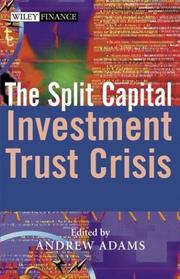
Andrew Adams · 2004

The UK trust sector's own blow-up: gearing, cross-holdings and collapse.
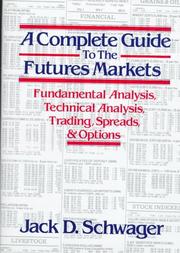
Jack D. Schwager · 1984

Second edition 2017 with Mark Etzkorn, titled A Complete Guide to the Futures Market.

Where it sits in the reference 1

Assets

Topics

InvestingFinance and Markets