Updates

  1. Person pages list letters, writing, profiles and links as sortable tables with filters, and show each person's companies as links; Fund letters show each letter's description in its own column.
  2. Experts show a checked job title and a short description of each person; 30 more people have photographs.
  3. Every company, fund, university and publication the experts work for has a page listing the people there.
  4. Fund letters show each letter's thesis and filter by it; 225 person pages list the essays, columns and newsletter issues the person wrote.
  5. Person pages list every essay and newsletter issue a person wrote, and their own books as a table in List view.
  6. Recommends shows the five largest kinds of book and the rest under More; browse pictures load sooner.
  7. Podcasts and talks link the original episode, filter by Audio and video or Press, and list each publisher once.
  8. Pages are wider, Recommends has List and Grid, and a filter clicked again turns off.
  9. Book cards sit in a ruled grid with Open Library and Goodreads links and each book's one-line note.
  10. Funds is now Investors; each investor's styles are buttons that filter the table.
  11. Podcasts and talks on a person's page filter by year and publisher and show as a list or a grid of pictures.
  12. Quotes show only people's own words: 472 summaries written by list sites are gone.
  13. Country pages open from Browse again, and every link on the shelf lands on a page.
  14. Subject and person pages show their sections as tabs, and each book appears once on a person's page.
  15. Book cards show the quote, who said it and the source; grids show five cards to a row.
  16. On a phone, a menu holds the sections, search, Updates, Feedback and dark mode.
  17. Feedback takes a screenshot of the page with no browser prompt, opens a screenshot full size when you click it, and clears itself once sent.
  18. Book cards are centred, search names the topic each book sits in, and any text cut short shows whole on hover.
  19. Search groups its results by kind: people, companies, geographies, subjects, topics, books, funds, fund letters and papers.
  20. The Books table lists who recommended each book by name, and the browser tab names the section you are in.
  21. Feedback can take a screenshot of the page, or one you paste or choose, and opens in the corner beside Updates.
  22. Each rail button reopens its section where you left it, and Browse, Table and People show on every book and subject page.
  23. Filters grey out choices that hold nothing instead of hiding them, and Books › People filters by authors or recommenders.
  24. Feedback takes a subject line and up to three screenshots.
  25. Biographies are grouped by the person they are about: 41 new pages, from Abraham Lincoln to Lee Kuan Yew.
  26. Sport splits into 23 sports, and Religion into one topic per faith.
  27. Book lists show as cards: the cover, one recommendation quote and every recommender by name.
  28. Seventeen subjects that had two or three pages under different names now have one page each.
  29. Every page lists its Experts as authors and recommenders, with a link to them on the Experts tab.
  30. Economics, Financial history, Financial panics and Accounting are subjects of their own, with one page per financial crisis.
  31. Book, person and subject pages open inside the app, so the tabs stay in view.
  32. 996 more book covers, and photographs or logos for 227 more people and companies.
  33. Books › Browse shows every subject as cards, and the rail holds Fund letters, Papers, Experts, Books and Funds.
  34. Every topic over 150 books splits into narrower topics, each with a page of its own.

Send feedback

What is it?
Screenshots, up to 3 (optional)
or paste one with Ctrl+V

We use your email only to reply to you.

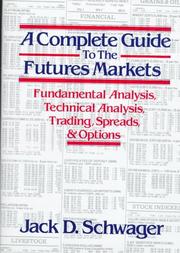
A Complete Guide to the Futures Markets

A Complete Guide to the Futures Markets

Jack D. Schwager
1984
T4 741 pages · about 12h 21m to read Open Librarygoodreads

Second edition 2017 with Mark Etzkorn, titled A Complete Guide to the Futures Market.

Summary

Schwager wrote this as a comprehensive reference on futures, covering market mechanics, fundamental analysis, technical analysis, trading systems and portfolio application. It has been revised, with the second edition adding coverage of options and of newer instruments.

The mechanics sections explain what a futures contract is, how margin works, how contracts are specified and settled, the role of the clearing house in eliminating counterparty risk, the relationship between futures and spot prices, and the carrying cost model that determines the shape of the forward curve. Schwager explains contango and backwardation through the underlying storage and convenience yield economics rather than as descriptive labels, which is what makes the treatment useful.

The fundamental analysis sections cover the supply and demand structure of individual markets, the data sources, and the construction of price forecasting models, with attention to the specific characteristics of agricultural, energy and metals markets.

The technical sections cover chart analysis, trend following systems, and the construction and testing of mechanical trading rules. Schwager is unusually careful here about the ways backtests mislead, covering overfitting, the selection of parameters after the fact, and the difference between a system's tested and realised performance.

The portfolio sections cover spreads, hedging applications for commercial users, and position sizing.

The book is long and reads as a textbook. The specific markets and data sources are dated, and electronic trading has changed execution and market structure substantially since the original edition. The conceptual material on carrying costs, on spreads and on the pitfalls of system testing has not dated.

Key takeaways 7

  1. A futures contract's relationship to the spot price is determined by storage cost, financing cost and convenience yield.
  2. The clearing house eliminates counterparty risk, which is the structural feature that makes futures different from forward contracts.
  3. Backwardation indicates a market where holding the physical commodity carries a benefit that exceeds the cost of storage.
  4. Hedgers and speculators occupy opposite sides of the market by necessity, and the risk premium flows between them.
  5. Spread positions isolate a specific relationship and remove the general price exposure, which changes the risk profile entirely.
  6. Backtested trading system results are systematically optimistic because parameters are selected after seeing the data.
  7. Position sizing rather than entry signal quality determines whether a trading approach survives its drawdowns.

Who should read it

Anyone entering futures trading or hedging who needs a comprehensive reference on mechanics, curve structure and system testing.

About Jack D. Schwager

Futures research director and author; co-founder of FundSeeder; creator of the Market Wizards series

The Market Wizards interviews are a primary record of how top traders actually operate, cited across the field.

FundSeeder

Similar books 6

Chosen by shared topics, the entries that hold them, and the people who recommended both.
John C. Hull · 1989

How futures, options and swaps work and how to price and hedge them.

John R. Stephenson, John F. Mauldin · 2010

A guide to commodity investing and to spotting its opportunities.

Recommended by: Mohnish Pabrai

Where it sits in the reference 2

Investors
Assets

Topics

Finance and MarketsInvestingReference WorksFinance, accounting and economics references