
Reference Works
Manuals, handbooks, encyclopedias, style guides, field guides, directories and data compilations meant to be consulted rather than read through. Read by people who need a specific fact or procedure quickly.
Start here
- How to Lie with StatisticsDarrell Huff, 1954
- Antitrust LawRichard A. Posner, 1976
- Options, Futures, and Other DerivativesJohn C. Hull, 1989
- Principles of Public Utility RatesJames C. Bonbright, 1961
- Cost Accounting: A Managerial EmphasisCharles T. Horngren, Srikant M. Datar, Madhav Rajan, 1962

How biased samples, chosen averages and cut-off chart axes make numbers mislead.
Recommended by: Bill Gates, Mohnish Pabrai, Morgan Housel and 6 others
Antitrust should rest on the economics of efficiency, not on protecting competitors.
How futures, options and swaps work and how to price and hedge them.

The economic criteria for setting regulated utility rates.
The standard cost accounting text, built around costs that serve managers' decisions.
Stigum's institutional bible of bills, repo, CP and Fed funds.
The standard reference on every kind of bond, its analysis and its management.
The economics of shipping: the market cycle, freight rates and vessel costs.
Recommended by: Patrick Collison

The standard text on bonds: instruments, valuation, risk and portfolio strategy.

How the music business works in contracts and money, from a music lawyer.
Predicting corporate failure with models like the Z-score, and how bankruptcy works.
Lease structures, residual values and tax treatment of equipment leasing.
The standard text on non-recourse financing of infrastructure projects.
A reference on municipal bonds: credit analysis, structures and analytics.

A catalogue reviewing over 1,500 tools and what each one is good for.
Recommended by: John Doerr

Retail-investor guide with the clearest chapters on buying munis.
Real estate finance from property law to mortgages, underwriting and valuation.
The publishing-side reference on royalty streams and licensing income.
Recommended by: Mohnish Pabrai
How the repo market works as the way securities positions are financed.
How to run an open source project, its community and its sponsors.

The standard academic text on airline economics.
How project finance deals are structured, with the theory and worked cases.

The closest thing to a cat bond reference; several chapters on structure and triggers.

How convertible bonds are priced, structured and risk-managed.

Extends the same treatment to CoCos and other hybrids.
How funders back claims in international arbitration, and how it is regulated.
How litigation funders raise money, pick cases, structure deals and earn returns.

An 1829 household economy manual that treats thrift as a financial system.
Recommended by: Morgan Housel
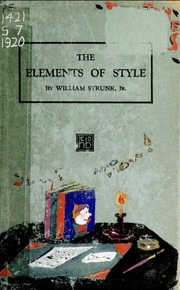
Numbered rules of English usage and composition, with examples, under 100 pages.
Recommended by: Nat Eliason, Patrick Collison, Ann Handley and 3 others

Recommended by: Patrick Collison
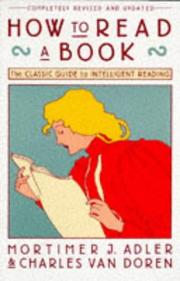
A method for reading hard books for understanding, not just information.
Recommended by: Mohnish Pabrai, Alex and Books and 3 others

Recommended by: Mohnish Pabrai

Recommended by: Patrick Collison

Recommended by: Eric Weinstein
Recommended by: Patrick Collison

Recommended by: Patrick Collison
Recommended by: Mohnish Pabrai


Quantum theory applied to atoms, molecules, solids, nuclei and particles.
Recommended by: Patrick Collison

Recommended by: Patrick Collison

Recommended by: Patrick Collison

Recommended by: Mohnish Pabrai

Recommended by: Patrick Collison

A 70-question test that sorts readers into 16 temperament types, like Myers-Briggs.
Recommended by: Mohnish Pabrai

Recommended by: Patrick Collison


Recommended by: Mohnish Pabrai

Recommended by: Eric Weinstein

Recommended by: Mohnish Pabrai

Recommended by: Patrick Collison
Recommended by: Laura Deming, Sam Altman

Recommended by: Patrick Collison
Second edition 2017 with Mark Etzkorn, titled A Complete Guide to the Futures Market.



Recommended by: Patrick Collison
Recommended by: Patrick Collison

Recommended by: Mohnish Pabrai

Recommended by: Patrick Collison
Recommended by: Patrick Collison, David Kadavy and 1 other


Recommended by: Eric Weinstein

A one- or two-semester modern physics course built on quantum theory and its uses.
Recommended by: Mohnish Pabrai
Performance data on over 6,000 stocks, 7,000 bonds and 700 mutual funds.
Recommended by: Mohnish Pabrai
Recommended by: Patrick Collison

Recommended by: Patrick Collison

Recommended by: David Kadavy

Recommended by: Mohnish Pabrai

Recommended by: Mohnish Pabrai

Recommended by: Mohnish Pabrai

Recommended by: Mohnish Pabrai
Recommended by: Mohnish Pabrai
Recommended by: Patrick Collison

Recommended by: Mohnish Pabrai

Recommended by: Mohnish Pabrai

Recommended by: Mohnish Pabrai


Recommended by: Patrick Collison
Plain-language guide to reading the three financial statements.
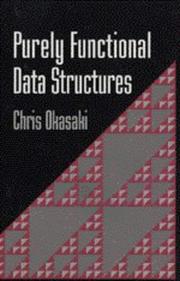
Techniques for designing data structures in functional languages, with examples.
Recommended by: Patrick Collison

Recommended by: Mohnish Pabrai

Recommended by: Stewart Brand

Recommended by: Mohnish Pabrai

Recommended by: Balaji S. Srinivasan
Recommended by: Patrick Collison

Recommended by: Mohnish Pabrai

Recommended by: Mohnish Pabrai

Recommended by: Mohnish Pabrai

Recommended by: Bill Gates

Recommended by: Mohnish Pabrai

Recommended by: Mohnish Pabrai

Recommended by: Patrick Collison

Recommended by: Patrick Collison
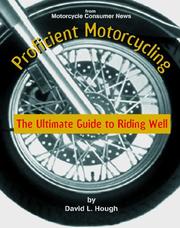
How to ride a motorcycle well on city streets and country roads and handle hazards.
Recommended by: Patrick Collison

Recommended by: Mohnish Pabrai

Recommended by: Mohnish Pabrai

Recommended by: Mohnish Pabrai

Recommended by: Mohnish Pabrai

Maps in sequence of peoples in Europe and the Near East, from 50,000 BC to AD 362.
Recommended by: Paul Graham

Recommended by: Mohnish Pabrai

Recommended by: Mohnish Pabrai


Recommended by: Mohnish Pabrai

Quantum field theory for students who have finished a course in quantum mechanics.
Recommended by: Patrick Collison
Recommended by: Mohnish Pabrai

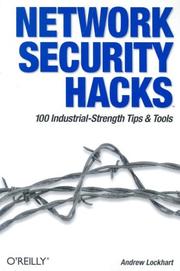
Tips and tools for securing Linux, Windows, BSD and Mac servers and networks.
Recommended by: Patrick Collison

How to get a mutual fund off the ground: what to do, what it costs, how it works.
Recommended by: Mohnish Pabrai


Recommended by: Mohnish Pabrai
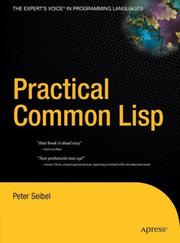
Practical Lisp programming, from language features to projects like an mp3 server.
Recommended by: Patrick Collison
Recommended by: Mohnish Pabrai

Recommended by: Mohnish Pabrai

Recommended by: Patrick Collison
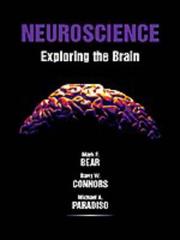
An introduction to the structure and function of the nervous system for students.
Recommended by: Patrick Collison
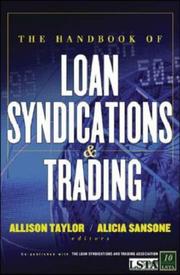
LSTA reference on how leveraged loans are originated, syndicated and traded.

Recommended by: Patrick Collison

Recommended by: Mohnish Pabrai
Recommended by: Patrick Collison

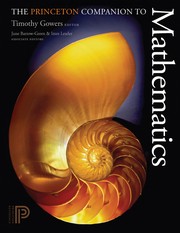
Nearly 200 entries by leading mathematicians on modern maths and its core ideas.
Recommended by: Patrick Collison, Balaji S. Srinivasan

Recommended by: Mohnish Pabrai


Recommended by: Mohnish Pabrai
A trader's technical primer on oil barrels, grades, refining and pricing.
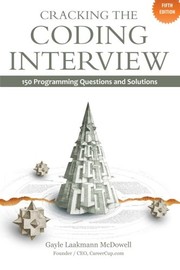
Recommended by: Patrick Collison

How the US economy really works, explained for lay readers without jargon.
Recommended by: Mohnish Pabrai

Recommended by: Sophie Bakalar

Recommended by: Patrick Collison

Study outlines and FAA questions for passing the private pilot knowledge test.
Recommended by: Patrick Collison


Recommended by: Patrick Collison
Recommended by: Mohnish Pabrai
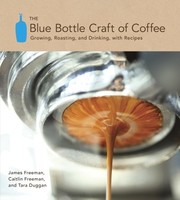
How to choose, brew and enjoy artisan coffee at home, with 40 recipes.
Recommended by: Patrick Collison

Recommended by: Nat Eliason

Recommended by: Mohnish Pabrai

Recommended by: Patrick Collison

Short illustrated catalogue of the common logical fallacies
Recommended by: Shane Parrish
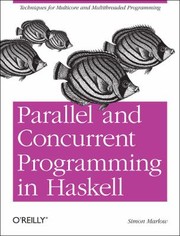
Mechanisms for writing parallel and concurrent programs in Haskell.
Recommended by: Patrick Collison
Recommended by: Patrick Collison

Recommended by: Eric Weinstein

Recommended by: Mohnish Pabrai
Short procedural handbook for funded claims in England.
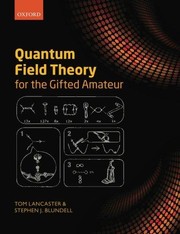
An introduction to quantum field theory for beginners and self-learners.
Recommended by: Patrick Collison

English-law practitioner text on funding agreements.


Expert entries on applied maths: concepts, modelling, simulation and applications.
Recommended by: Patrick Collison, Naval Ravikant


How to analyse and invest in small community banks that institutions ignore.

The only book-length treatment of aircraft leasing; a textbook.

Ethiopia's economy sector by sector: history, foreign exchange, agriculture and land.

Recommended by: Cynthia Johnson
Recommended by: Arianna Huffington


Recommended by: Mohnish Pabrai

Recommended by: Tim Ferriss

Recommended by: Tim Ferriss

Recommended by: Mohnish Pabrai


Recommended by: Mohnish Pabrai
Recommended by: Patrick Collison, Paul Graham


The official guide to the Nmap scanner, from port-scanning basics to pen testing.
Recommended by: Patrick Collison

How to split, stack and season firewood and build a fire, the Scandinavian way.
Recommended by: Patrick O'Shaughnessy
Ocean flying for small-plane pilots: navigation, weather, equipment and regulations.
Recommended by: Patrick Collison

Operating system principles, from processes to file systems, shown in the MINIX code.
Recommended by: Patrick Collison

The theory, techniques and uses of partial evaluation, which specialises programs.
Recommended by: Paul Graham
Recommended by: Mohnish Pabrai
Recommended by: Patrick Collison, Brian Armstrong
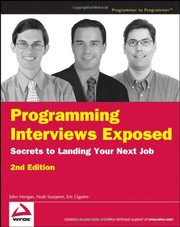
How to prepare for programming job interviews: languages, patterns and algorithms.
Recommended by: Patrick Collison

Quantum algorithms, teleportation, cryptography and error correction, from basics.
Recommended by: Patrick Collison


The foundations and methods of modern particle physics, through the Standard Model.
Recommended by: Patrick Collison

Quantum mechanics, its formalism and practice, through nearly 700 worked problems.
Recommended by: Patrick Collison


Recommended by: Mohnish Pabrai

Recommended by: Mohnish Pabrai
Recommended by: Mohnish Pabrai
Recommended by: Mohnish Pabrai

Recommended by: Chris Sacca
Scratch-and-sniff scents like butter and grass, and the wines in which they show up.
Recommended by: Chris Sacca

Recommended by: Stewart Brand


 Aswath Damodaranwrote 2 books here
 Stewart Brandwrote 2 books here
 Campbell R. Harveywrote 1 book here
 Michael E. Porterwrote 1 book here
 Kevin Kellywrote 1 book here
 Patrick Collisonrecommends 94 books here
 Mohnish Pabrairecommends 64 books here
 Paul Grahamrecommends 7 books hereStewart Brandrecommends 7 books here
 Tim Ferrissrecommends 6 books here
 Eric Weinsteinrecommends 5 books here
 Bill Gatesrecommends 3 books here
Show all 44
 Arianna Huffingtonrecommends 2 books here
 Balaji S. Srinivasanrecommends 2 books here
 Chris Saccarecommends 2 books here
 Tim O’Reillyrecommends 2 books here
 John Doerrrecommends 1 book here
 Guy Kawasakirecommends 1 book here
 Bob Igerrecommends 1 book here
 Brian Armstrongrecommends 1 book here
 Cynthia Johnsonrecommends 1 book here
 Ev Williamsrecommends 1 book here
 Garry Tanrecommends 1 book here
 Jamie Dimonrecommends 1 book here
 Kara Swisherrecommends 1 book here
 Kevin Systromrecommends 1 book here
 Laura Demingrecommends 1 book here
 Laura R Walkerrecommends 1 book here
 Matt Mullenwegrecommends 1 book here
 Naval Ravikantrecommends 1 book here
 Sam Altmanrecommends 1 book here
 Tobi Lütkerecommends 1 book here