Ran Segall
Designer who worked in advertising agencies, filmed his client work for YouTube, then launched courses; stopped client work around 2020 to run Flux Academy, which sells courses to web designers.
4 articles · 44 books they recommend
More 11


Source: ransegall.com — 'Gear & Book Recommendations by Ran Segall' (Recommended Reading section)
Also recommended by: Patrick Collison, Adam Robinson
Source: ransegall.com — 'Gear & Book Recommendations by Ran Segall' (Recommended Reading section)
Also recommended by: Patrick Collison
Source: ransegall.com — 'Gear & Book Recommendations by Ran Segall' (Recommended Reading section)
Also recommended by: Casey Neistat
The book that introduced affordances, signifiers, and feedback loops to a generation of designers. Norman's analysis of why doors, phones, and stoves confuse people is the clearest argument that bad design is a systems failure, not user error. Everything else on this list builds on this vocabulary.
Source: ransegall.com — 'Gear & Book Recommendations by Ran Segall' (Recommended Reading section)
Also recommended by: Andrew Chen, Garry Tan, George Hatzis and 8 others

A visual encyclopedia of 125 design principles from multiple disciplines — architecture, industrial design, psychology, communication. Not a cover-to-cover read but an essential reference for finding the principle name for something you already know intuitively, which matters when presenting to non-designers.

A novel in which industrialists vanish from an economy run by government directives.



Source: ransegall.com — 'Gear & Book Recommendations by Ran Segall' (Recommended Reading section)
Also recommended by: Nat Eliason
Marketing happens in the buyer's mind: find an open position there and own it.
Also recommended by: Patrick Collison, Aaron Levie, David Cancel and 3 others
Five disciplines to close the gap between brand strategy and its execution.
Also recommended by: Andy Budd
Also recommended by: Ann Handley, Daniel Burka, Michael Batko
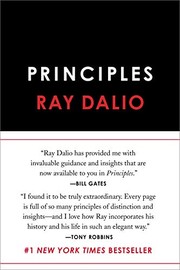
Decision rules from building Bridgewater: radical truth and radical transparency.
Also recommended by: Alfred Lin, Nat Eliason, Andrew Lokenauth and 27 others


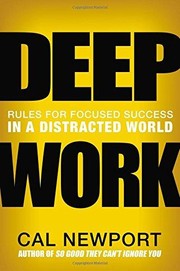
Why distraction-free concentration is rare and valuable, and how to train for it.
Also recommended by: Nat Eliason, Nir Eyal, Abi Tyas Tunggal and 5 others

A method for finding the few activities that matter and dropping the rest.

Big goals call for a fourth degree of action, massive action, beyond normal effort.
Also recommended by: David Cancel
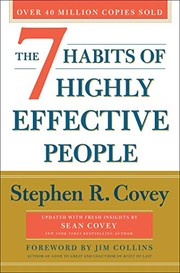
Seven habits, from being proactive to win-win, that build personal effectiveness.
Source: ransegall.com — 'Gear & Book Recommendations by Ran Segall' (Recommended Reading section)
Also recommended by: Andrew Wilkinson, Jim Collins and 9 others

Also recommended by: Tim Ferriss

Alfred Adler's psychology taught through five nights of dialogue.
Also recommended by: Ali Abdaal, Andrew Wilkinson, Tim Ferriss and 10 others

Source: ransegall.com — 'Gear & Book Recommendations by Ran Segall' (Recommended Reading section)
Also recommended by: Johnnie Gomez, Matej Latin, Steph Smith

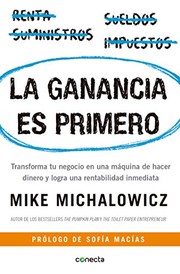
Cash discipline for small businesses; a system, not an accounting theory.
Also recommended by: Nat Eliason, John D Saunders
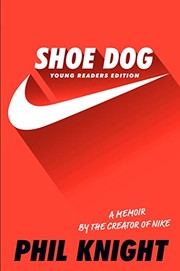
How a running-shoe importer became Nike, surviving one cash crisis after another.
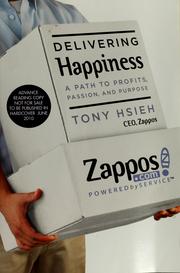
From LinkExchange to Zappos, and the case for building a company on its culture.
Also recommended by: Mohnish Pabrai, Ev Williams, Tim Ferriss and 1 other
Source: ransegall.com — 'Gear & Book Recommendations by Ran Segall' (Recommended Reading section)
Also recommended by: Ryan Hoover

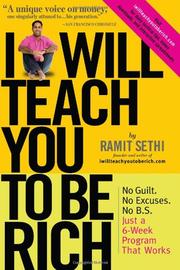
A six-week programme to automate banking, credit, saving and investing.
Also recommended by: Mohnish Pabrai, Nat Eliason and 2 others

Scott's two-axis framework — care personally, challenge directly — gives a practical vocabulary for the feedback conversations managers routinely avoid. The quadrant model (Radical Candor, Ruinous Empathy, Obnoxious Aggression, Manipulative Insincerity) is one of the most operationally useful tools in management writing.
Also recommended by: Aileen Lee, Brett Adcock, David Cancel and 6 others
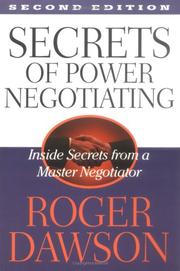
Source: ransegall.com — 'Gear & Book Recommendations by Ran Segall' (Recommended Reading section)
Also recommended by: Andrew Wilkinson, Tim Ferriss

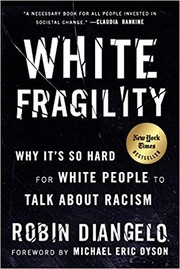
Also recommended by: Alexis Ohanian, Vlad Magdalin and 1 other
| The Loneliness Of The Freelance Designer | Medium | 2014-09-22 |
| What Rodriguez taught me about marketing | Medium | 2013-06-13 |
| Your startup acts like an obsessive girlfriend | Medium | 2013-06-04 |
| Congrats! It’s a baby app! | Medium | 2013-04-30 |