
 AngelList
More 24




Nine science-fiction stories, each working through one idea with care.
Also recommended by: Matt Mullenweg, Tim Ferriss, Andrew Chen and 1 other





A novel: a mathematician foresees an empire's fall and plans to shorten the dark age.
Also recommended by: Balaji S. Srinivasan, Adam Gazzaley and 10 others








A comic about Elijah Snow, a 100-year-old man among archaeologists of the impossible.

A novel of a Brahmin's son in ancient India who seeks understanding his own way.
A novel of a hacker in a corporate-run America and its virtual world, the Metaverse.
Source: Naval Ravikant — The Person I Call Most for Startup Advice (The Tim Ferriss Show #97)
Also recommended by: Nat Eliason, Alexis Ohanian, Austen Allred and 11 others


Eight science-fiction stories, each working out one premise with rigour.
Also recommended by: Patrick Collison, Tim Ferriss and 2 others

A novel of a nanotech future and a stolen copy of an interactive teaching book.
Also recommended by: Andrew Chen, Bill Gurley, Ev Williams and 1 other


Also recommended by: Richard Branson, Elon Musk, Sahil Lavingia



A novel of the quest to destroy a ring of power that corrupts all who use it.
Also recommended by: Reid Hoffman, Alexey Moiseenkov, Elon Musk and 4 others
The first book of a heroic fantasy trilogy, the Kingkiller Chronicle.
Source: Naval Ravikant — The Person I Call Most for Startup Advice (The Tim Ferriss Show #97)
Also recommended by: Michael Batko



A novel in which a scientist answers an alien warning and invites first contact.
Also recommended by: Nat Eliason, Sophie Bakalar and 8 others





Source: Naval Ravikant — The Person I Call Most for Startup Advice (The Tim Ferriss Show #97)
Also recommended by: Tim Ferriss



Twenty-three chapters, one per chromosome, each using a gene to open a subject.
“I highly recommend Genome as well, to figure out the rational basis behind ethics and the origin of virtue.” — Naval Ravikant
Source: Nav.al — 'Matt Ridley: How Innovation Works, Part 2' (Naval's podcast, edited transcript)
Also recommended by: Charlie Munger, Mohnish Pabrai and 1 other

Innovation is gradual, collective and bottom-up, not the work of lone inventors.
“It's a must-read for entrepreneurs and government officials who want to either be innovative themselves or foster innovation.” — Naval Ravikant
Source: Nav.al — 'Matt Ridley: How Innovation Works, Part 2'
Also recommended by: Balaji S. Srinivasan

How genes and experience interact, each shaping how the other acts.
Species change over time as natural selection favours heritable variations.
Source: Read What You Love Until You Love to Read
Also recommended by: Jim Collins, Mohnish Pabrai, Nick Sleep and 4 others


The nature of space, time and the quantum world, on the road to quantum gravity.


Six physics lectures with little maths: atoms, energy, gravity and quantum behaviour.

How genes and experience interact, each shaping how the other acts.

Knowledge can grow without limit through good explanations that are hard to vary.
Source: Read the Best 100 Books Over and Over Again
Also recommended by: Nat Eliason, Albert Wenger, Chris Anderson and 4 others

The history of molecular biology from the 1930s to the 1970s, told by its makers.
Big changes in human affairs emerge from the bottom up rather than by design.

Reality through four strands: many-worlds physics, computation, evolution, Popper.
Source: Read the Best 100 Books Over and Over Again
Also recommended by: Patrick Collison, Chris Anderson and 1 other
Lectures on physics, mainly mechanics, radiation and heat.
Also recommended by: Bill Gates
Lectures on physics, mainly electromagnetism and matter.
Also recommended by: Bill Gates
How cooperation and morality evolved from self-interest, via the prisoner's dilemma.
“I really highly, highly recommend picking up Genome, The Red Queen, Origins of Virtue, The Rational Optimist, and The Evolution of Everything.” — Naval Ravikant
Source: The Tim Ferriss Show — Naval Ravikant Q&A, full transcript
Also recommended by: Mohnish Pabrai, Ryan Holiday

Sex evolved as a defence against parasites, and that shapes human mating.
“I really highly, highly recommend picking up Genome, The Red Queen, Origins of Virtue, The Rational Optimist, and The Evolution of Everything.” — Naval Ravikant
Source: The Tim Ferriss Show — Naval Ravikant Q&A, full transcript
Also recommended by: Mohnish Pabrai, Seth Klarman, Nick Szabo
Selection acts on genes; bodies are vehicles that genes build to copy themselves.
Also recommended by: Balaji S. Srinivasan, Charlie Munger and 9 others

Science moves through long stretches of normal work broken by paradigm shifts.
Also recommended by: Nat Eliason, Charlie Munger, Mark Zuckerberg and 4 others

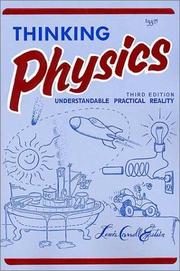
“There's another great book that's called Thinking Physics. I open this one all the time.” — Naval Ravikant
Source: The Knowledge Project (Farnam Street) — 'Naval Ravikant: The Angel Philosopher', full transcript

How ancient DNA has rewritten the story of human prehistory and migration.
Also recommended by: Balaji S. Srinivasan, Marc Andreessen and 1 other


Also recommended by: Matt Mullenweg, Peter Mallouk, Ran Segall and 1 other




Source: Naval Ravikant — The Person I Call Most for Startup Advice (The Tim Ferriss Show #97)
Also recommended by: Mohnish Pabrai


Campbell on the recurring stories cultures tell themselves
Also recommended by: Jim Collins, Nat Eliason, David Perell and 2 others

Suffering comes from identifying with the mind's chatter; freedom from living now.
Also recommended by: Mohnish Pabrai, Iman Gadzhi, Justin Kan and 2 others
Also recommended by: Ali Abdaal

You are the awareness watching your thoughts and feelings, not those thoughts.
Also recommended by: Claire Diaz-Ortiz, Daniel Gross, Mel Robbins and 1 other

Also recommended by: Jack Dorsey


Twelve rules for living, each drawn from clinical practice, biology and myth.
Also recommended by: Nat Eliason, Alex and Books, Ana Fabrega and 6 others


Incerto volume 4
Also recommended by: Mohnish Pabrai, Nat Eliason and 24 others

“I mean, there's ancient wisdom in Schopenhauer, read Counsels and Maxims.” — Naval Ravikant
Source: The Tim Ferriss Show #473 — Naval Ravikant, full transcript

Also recommended by: Andrew Wilkinson, Matt Mullenweg

Also recommended by: Mohnish Pabrai


Letters on how to live, a course in Stoic philosophy written to a friend.
Also recommended by: Mohnish Pabrai, Nat Eliason, Ryan Holiday and 2 others


Source: Naval Ravikant — The Person I Call Most for Startup Advice (The Tim Ferriss Show #97)
Also recommended by: Nat Eliason, Garry Tan, Mike Maples, Jr.

A short case against all lying, white lies included.
Source: Naval Ravikant — The Person I Call Most for Startup Advice (The Tim Ferriss Show #97)
Also recommended by: Nat Eliason, Vinod Khosla, Brian Armstrong and 2 others

A Roman emperor's private notes reminding himself to live by Stoic principles.
Also recommended by: Mohnish Pabrai, Nat Eliason, Ryan Holiday and 16 others

Incerto volume 5
Also recommended by: Nat Eliason, Ana Fabrega, Ben Horowitz and 11 others

825 aphorisms on 72 topics, from spirituality to personal liberation and family.
Source: Naval Ravikant — The Person I Call Most for Startup Advice (The Tim Ferriss Show #97)
Also recommended by: Nat Eliason


Naval Ravikant's ideas on building wealth and being happy, gathered from his talks.
Also recommended by: Balaji S. Srinivasan, Nat Eliason and 8 others
Aphorisms stating Taleb's ideas on randomness, knowledge and modern life.
Also recommended by: Nat Eliason, Ryan Holiday, Matt Mullenweg and 1 other

Also recommended by: Nat Eliason, Ryan Holiday, Tim Ferriss

Also recommended by: Nat Eliason, Ryan Holiday, Susan J. Fowler


Also recommended by: Mohnish Pabrai

Also recommended by: Andrew Wilkinson, Nat Eliason

How a mind could arise from parts, traced through Godel, Escher and Bach.
Source: Read the Best 100 Books Over and Over Again
Also recommended by: Nat Eliason, Demis Hassabis, Kevin Kelly and 2 others

How calculus works and how it made modern technology possible.
Also recommended by: Michael Mauboussin


A condensed course in the fundamentals of mathematics, physics and calculus.

How the science of cause and effect moved past 'correlation is not causation'.
Also recommended by: Bill Gates, Keith Rabois
A primer on the theory of games of strategy, written for non-specialists.
Computer tournaments of the prisoner's dilemma show why tit-for-tat wins.
Also recommended by: Patrick Collison

Expert entries on applied maths: concepts, modelling, simulation and applications.
Also recommended by: Patrick Collison

Francis Crick's life, from a lacklustre education to discovering DNA's structure.

Also recommended by: Jim O'Shaughnessy
Stories of a physicist's first marriage and his inquiry into the Challenger disaster.
Source: Naval Ravikant — The Person I Call Most for Startup Advice (The Tim Ferriss Show #97)
Also recommended by: Mohnish Pabrai, Larry Page
Six principles of compliance, from reciprocity to scarcity, and how sellers use them.
Source: Sell the Truth
Also recommended by: Andrew Wilkinson, Charlie Munger and 28 others
Life in Nazi concentration camps, and logotherapy: finding meaning to survive.
Also recommended by: Frank Martin, Mohnish Pabrai, Nat Eliason and 23 others

Hanson and Simler make the most provocative claim in this list: that self-deception is not a flaw but an adaptive strategy — we hide our real motives from ourselves so we can more convincingly hide them from others. If true, the entire bias-correction project has a ceiling. This book belongs at the end so it reframes everything before it.
Also recommended by: Nat Eliason, Ali Abdaal, Emmett Shear and 2 others

The theory that consciousness is learned, arising from a once two-chambered mind.
Also recommended by: Patrick O'Shaughnessy, Adam Robinson and 2 others
Also recommended by: Ali Abdaal, Iman Gadzhi, Nat Eliason
Kahneman's synthesis of behavioral economics is the cognitive science underpinning every negotiation tactic. Anchoring, loss aversion, framing effects, and the planning fallacy — understanding why these biases operate, not just that they exist, makes you harder to exploit and more honest about your own irrationality.
Also recommended by: Andrew Wilkinson, Charles de Vaulx and 31 others

Hazlitt's 1946 distillation of Bastiat's 'broken window' insight: good economic reasoning requires seeing both what is visible and what is made invisible by a policy. A short book that teaches a single analytical habit, and that habit is genuinely useful regardless of your politics.
Also recommended by: Christopher Bloomstran, Changpeng Zhao and 2 others

Prosperity grows as trade and specialisation let ideas meet and combine.
“I really highly, highly recommend picking up Genome, The Red Queen, Origins of Virtue, The Rational Optimist, and The Evolution of Everything.” — Naval Ravikant
Source: The Tim Ferriss Show — Naval Ravikant Q&A, full transcript
Also recommended by: Andrew Wilkinson, Bill Gates, Frank Martin and 9 others

Price theory in daily life: coffee near stations, supermarket tiers and used cars.
Also recommended by: Mohnish Pabrai

How the division of labour and free markets make a nation rich.
Source: Read What You Love Until You Love to Read
Also recommended by: Patrick Collison, Charlie Munger, Elon Musk and 5 others


Steven Pinker's 500-page empirical survey of progress across 15 dimensions: health, wealth, equality, safety, knowledge, quality of life. Explicitly frames market economies and Enlightenment liberalism as the institutional sources of that progress. Has been criticized for cherry-picking metrics and underweighting catastrophic risks; the data itself is worth engaging with regardless.
Also recommended by: Bill Gates, Andrew Wilkinson, Daniel Petre and 1 other

Harari's concern — that humans may cede decision-making to opaque systems through preference rather than coercion — reframes the alignment problem as a cultural and political challenge, not only a technical one. Less rigorous than Bostrom or Russell, but more widely read, making it a useful lens for understanding public discourse.
Also recommended by: Andrew Wilkinson, Bill Gates, Nat Eliason and 6 others

How shared fictions such as money, nations and gods let humans cooperate at scale.
“I'm rereading Sapiens again, because I love that book so much.” — Naval Ravikant
Source: The Knowledge Project (Farnam Street) — 'Naval Ravikant: The Angel Philosopher', full transcript
Also recommended by: Andrew Wilkinson, Bill Gates, Mohnish Pabrai and 37 others

Evidence that violence of nearly every kind has declined over history, and why.
Also recommended by: Bill Gates, Mohnish Pabrai, Morgan Housel and 5 others
Recurring patterns drawn from world history: biology, morals, religion, economics.
“I recently reread The Lessons of History by Will and Ariel Durant. It's a great little history book.” — Naval Ravikant
Source: The Knowledge Project (Farnam Street) — 'Naval Ravikant: The Angel Philosopher', full transcript
Also recommended by: Andrew Wilkinson, Balaji S. Srinivasan and 11 others

Why the advice that fat is bad and carbohydrates better may be wrong about health.
Also recommended by: Nassim Nicholas Taleb, Peter Attia and 1 other


The Dilbert creator's many failures and what they taught him about success.
Also recommended by: Mohnish Pabrai, Patrick O'Shaughnessy and 1 other

The habit loop of cue, routine and reward, and how to change a habit by its routine.
Source: Naval Ravikant — The Person I Call Most for Startup Advice (The Tim Ferriss Show #97)
Also recommended by: Mohnish Pabrai, Nat Eliason, Nir Eyal and 5 others

Routines, tools and advice from over 200 podcast guests on health, wealth and wisdom.
Also recommended by: Keith Rabois, Nat Eliason, Kevin Rose and 3 others

253 patterns for building, from the layout of towns down to a window seat.
Also recommended by: Patrick Collison, Sam Altman, Stewart Brand
Why people mistake luck for skill, above all in markets.
Also recommended by: Barton Biggs, Michael Mauboussin and 10 others
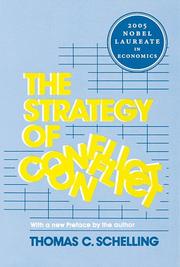
Conflict as bargaining: commitment, credible threats and focal points.

Eighty-one short chapters on the Tao, the founding text of Taoism.
Also recommended by: Nat Eliason, David Perell, Jack Dorsey and 5 others

Also recommended by: Nat Eliason, Susan Cain, Tim Ferriss

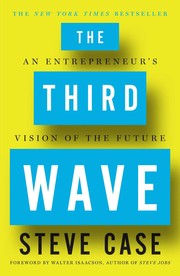
Also recommended by: Alfred Lin, Brad Feld, George Hatzis
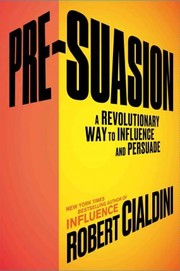
Where you direct attention just before a message shapes how it is received.
Also recommended by: Michael Mauboussin


Argument that online communities can become sovereign; crypto-native politics
Also recommended by: Balaji S. Srinivasan, Brian Armstrong and 3 others
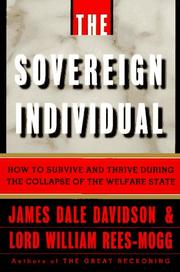
1997 forecast of digital money weakening the nation state
Also recommended by: Balaji S. Srinivasan, Nat Eliason and 10 others

Why machines smarter than humans pose a control problem to solve before they arrive.
Also recommended by: Patrick Collison, Brad Feld, Brett Adcock and 5 others

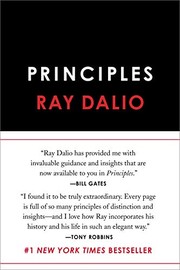
Decision rules from building Bridgewater: radical truth and radical transparency.
Also recommended by: Alfred Lin, Nat Eliason, Andrew Lokenauth and 27 others

Also recommended by: Mohnish Pabrai

Behavioural training methods for animals and people, explained with examples.
Source: Naval Ravikant — The Person I Call Most for Startup Advice (The Tim Ferriss Show #97)
Also recommended by: Nir Eyal, Tim Ferriss, Tristan Harris

Speeches making the case for a latticework of mental models from many fields.
Also recommended by: Andrew Wilkinson, Charlie Munger and 25 others
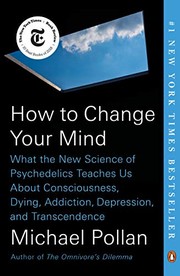
The history and revival of psychedelic research, and the author's own trips.
Also recommended by: Bill Gates, Bryan Johnson, James Cameron and 6 others
Rare, unforeseen, high-impact events drive history, explained only after the fact.
Also recommended by: Howard Marks, Marc Andreessen, Nat Eliason and 17 others
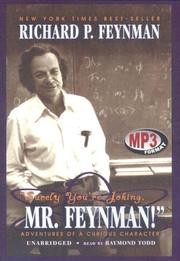
A physicist's stories, from fixing radios as a boy to Los Alamos and beyond.
Also recommended by: Brian Armstrong, Matt Mullenweg and 18 others
Also recommended by: Patrick Collison

| AngelList: A disruptor shakes up angel investing Paywall | Fortune | 2014 |
| This Man Is Putting Millions in Startups' Pockets -- and Scaring VCs to Death Paywall | Business Insider | 2011 |