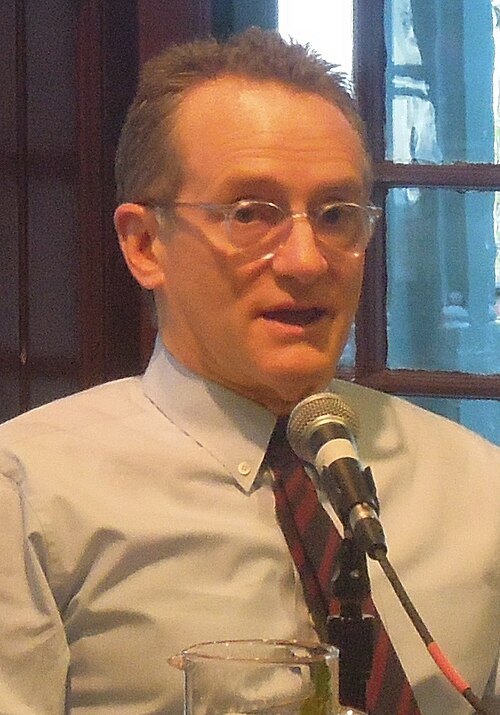
Howard Marks
His firm, Oaktree, is the world's largest investor in distressed securities; Forbes put his net worth at $2.2 billion in 2022.
 Oaktree Capital Management
His client memos, written continuously since 1990, are a primary source on risk, cycles and market psychology that other investors quote directly.
3 books of their own · 167 letters · 3 articles · 21 books they recommend · 43 appearances
Start here
Second-level thinking, risk and market cycles, drawn from Oaktree's client memos.
Recommended by: Matt Mullenweg, Mohnish Pabrai, Nat Eliason and 3 others
Second-level thinking on risk and cycles, with notes by Klarman and Greenblatt.
“…books I've recommended, highlighted to death, or forced on friends.” — Andrew Wilkinson
Source: Andrew Wilkinson's Bookshelf, neverenough.com
Recommended by: Andrew Wilkinson, Mohnish Pabrai and 3 others
Cycles can't be timed, but knowing where you stand in one lets you adjust risk.
Recommended by: Nat Eliason, Michael Bloomberg
 The Most Important Thing: Uncommon Sense for the Thoughtful Investor | Second-level thinking, risk and market cycles, drawn from Oaktree's client memos. | 2011 | T1 | Matt Mullenweg, Mohnish Pabrai, Nat Eliason and 3 others |
 The Most Important Thing Illuminated | Second-level thinking on risk and cycles, with notes by Klarman and Greenblatt. | 2012 | T1 | Andrew Wilkinson, Mohnish Pabrai, Nat Eliason and 2 others |
 Mastering the Market Cycle: Getting the Odds on Your Side | Cycles can't be timed, but knowing where you stand in one lets you adjust risk. | 2018 | T2 | Nat Eliason, Michael Bloomberg |
More 5
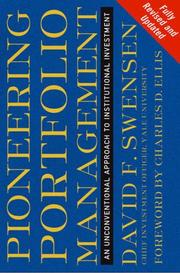
How the Yale endowment invests, and how institutions can build portfolios like it.
“As David Swensen wrote in his excellent book, "Pioneering Portfolio Management” — Howard Marks
Source: Oaktree memo 'Risk'
Also recommended by: Marc Andreessen, Mohnish Pabrai and 1 other
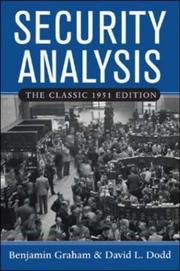
How to read financial statements sceptically and value bonds and stocks.
Also recommended by: Christopher Bloomstran, Joel Greenblatt and 10 others
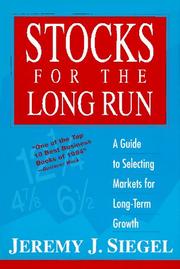
US returns since 1802 show stocks beat bonds and cash over every long period.
“his book "Stocks for the Long Run" contributed greatly to the bull market's middle years” — Howard Marks
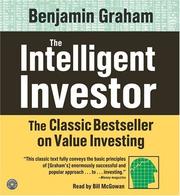
Treat stocks as parts of businesses and buy only with a margin of safety.
“In his book The Intelligent Investor, first published in 1949, Benjamin Graham” — Howard Marks
Source: Oaktree memo 'Mr. Market Miscalculates'
Also recommended by: Benjamin Graham, Christopher Bloomstran and 26 others

Markets as a game of crowd psychology, seen through 1960s go-go Wall Street.
“One of the great investment books of the 1960s was The Money Game by the pseudonymous Adam Smith.” — Howard Marks
Source: Oaktree memo 'Whodunit?'
Also recommended by: Barton Biggs, Mohnish Pabrai and 5 others
Buffett's method as tests of the business, its managers, its finances and price.
Also recommended by: Mohnish Pabrai, Bill Ackman, Joel Greenblatt
Why active investing became a loser's game, decided by errors, not by skill.
Also recommended by: Bill Miller, Mohnish Pabrai
The 1929 Wall Street crash: the greed and folly behind America's greatest collapse.
Source: What's Going on in Private Credit? memo
Also recommended by: Bill Gates
The recurring features of speculative booms, and why short memories bring them back.
Also recommended by: Rational Capital Investment Fund and 1 other
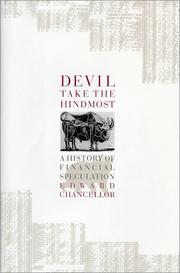
Speculation from ancient Rome and tulip mania to the 1990s, and its recurring traits.
Also recommended by: Mohnish Pabrai, Patrick O'Shaughnessy
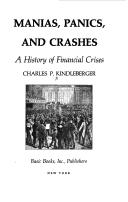
Financial crises follow a repeated sequence of boom, mania, panic and crash.
Source: What's Going on in Private Credit? memo
Also recommended by: Li Lu
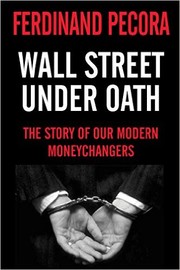
The 1933 Senate hearings exposing bankers' practices that led to securities laws.
“It's a passage from one of my favorite books, "Wall Street Under Oath.” — Howard Marks

Why people mistake luck for skill, above all in markets.
Also recommended by: Barton Biggs, Michael Mauboussin and 10 others

Rare, unforeseen, high-impact events drive history, explained only after the fact.
“The message of The Black Swan is how important it is to realize that the things everyone rules out can still come to pass.” — Howard Marks
Source: Oaktree memo 'The Limits to Negativism'
Also recommended by: Marc Andreessen, Nat Eliason and 18 others
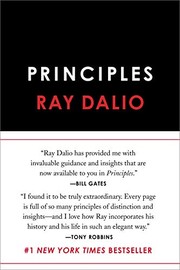
Decision rules from building Bridgewater: radical truth and radical transparency.
Also recommended by: Alfred Lin, Nat Eliason, Andrew Lokenauth and 27 others
How behavioural economics was built against economists who assumed rational agents.
“He opens his new book, Misbehaving, with Vilfredo Pareto's assertion” — Howard Marks
Source: Oaktree memo 'On the Couch'
Also recommended by: Peter Mallouk, Tyler Cowen
Twenty short essays on why behaviour matters more than knowledge with money.
Also recommended by: Andrew Wilkinson, Nat Eliason, Ali Abdaal and 9 others
The MIT blackjack team; dramatised and disputed in places.
Also recommended by: Mohnish Pabrai
How people learned to measure risk, from early probability to portfolio theory.
Also recommended by: Charles de Vaulx, Jim Collins and 7 others
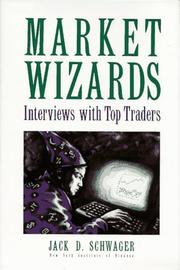
Interviews with traders such as Kovner, Dennis and Tudor Jones on their methods.
Also recommended by: Mohnish Pabrai
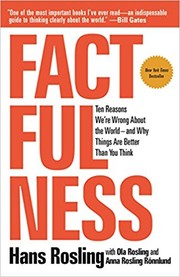
Hans Rosling was a global health professor, not an economist, which gives his data-driven case for human progress particular credibility. He shows, in meticulous detail, that almost every quantitative measure of human welfare has improved dramatically over the past century. He attributes this to global trade and economic development without being a polemicist.
Also recommended by: Bill Gates, Alfred Lin, Daniel Petre and 3 others
| What’s Going on in Private Credit? | Howard Marks traces how credit grew from a small field in 1968 into a major asset class, through leveraged buyouts and direct lending sold to individual and retirement investors. | 2 2026 | 2026-04-09 | |
| AI Hurtles Ahead | Howard Marks follows up his December memo, Is It a Bubble?, with what younger technologists and a tutorial from Anthropic's Claude told him about how fast AI is moving. | 1 2026 | 2026-02-26 | |
| Is It a Bubble? | Howard Marks asks whether AI investment is a bubble, weighing a transformative technology against the record sums companies are spending to build it. | 4 2025 | 2025-12-09 | |
| Cockroaches in the Coal Mine | Howard Marks reads the First Brands and Tricolor bankruptcies as possible warnings of wider weakness in private and leveraged credit. | 4 2025 | 2025-11-06 | |
| A Look Under the Hood | Howard Marks reports on a U.S. state pension fund's board survey and what it shows about how institutional investment processes and portfolios are built. | 4 2025 | 2025-10-28 | |
| The Complete Collection | Howard Marks collects every public memo from 1990 on, built around cycles, recurring investor behaviour and emotions that drive investors to act at the wrong time. | 4 2025 | 2025-10-12 | |
| The Best of . . . | Howard Marks marks 35 years of memos with a selection on second-level thinking, risk control, cycles and the dot-com bubble, the 2008 crisis and 2022's rate shift. | 4 2025 | 2025-10-12 | |
| The Best of . . . | Howard Marks marks 35 years of memos with a selection on second-level thinking, risk control, cycles and the major market events of three decades. | 3 2025 | 2025-08-14 | |
| The Calculus of Value | Howard Marks revisits bubble.com 25 years on to ask how price relates to value, written on a flight to South America in July 2025. | 3 2025 | 2025-08-14 | |
| More on Repealing the Laws of Economics | Howard Marks returns to Shall We Repeal the Laws of Economics?, arguing that economies follow laws of supply, demand and incentives that policy cannot repeal. | 2 2025 | 2025-06-18 | |
| Nobody Knows (Yet Again) | Howard Marks compares the 2025 tariff shock with Lehman's 2008 failure to argue that nobody knows how such events will play out. | 2 2025 | 2025-04-09 | |
| Gimme Credit | Howard Marks explains why rising interest rates since 2022 have made credit, private credit and spreads the questions clients ask most. | 1 2025 | 2025-03-06 | |
| On Bubble Watch | Howard Marks marks 25 years since bubble.com by assessing whether U.S. stocks, led by the largest technology companies, are in a bubble. | 1 2025 | 2025-01-07 | |
| Ruminating on Asset Allocation | Howard Marks combines old ideas on asset allocation into one framework, arguing that the only asset classes are ownership and debt. | 4 2024 | 2024-10-22 | |
| Shall We Repeal the Laws of Economics? | Howard Marks argues that U.S. election promises, from Trump's tariffs to Harris's price controls, ignore economic laws such as supply and demand. | 3 2024 | 2024-09-19 | |
| Mr. Market Miscalculates | Howard Marks uses Benjamin Graham's Mr. Market to show how investors' swings between optimism and pessimism misprice assets. | 3 2024 | 2024-08-22 | |
| The Folly of Certainty | Howard Marks uses a Biden campaign chair's lack of doubt to argue that certainty about the future is folly for investors and forecasters. | 3 2024 | 2024-07-17 | |
| The Impact of Debt | Howard Marks writes a short memo on how debt magnifies outcomes, drawing on practical philosophy and his earlier chess memo. | 2 2024 | 2024-05-08 | |
| The Indispensability of Risk | Howard Marks argues that investors cannot earn returns without bearing risk, prompted by a Wall Street Journal article Bruce Karsh sent him. | 2 2024 | 2024-04-17 | |
| Easy Money | Howard Marks recalls bubble.com and Edward Chancellor's Devil Take the Hindmost to examine how easy money fuels speculative excess. | 1 2024 | 2024-01-09 | |
| Further Thoughts on Sea Change | Howard Marks argues that the end of ultra-low rates is a sea change that calls for reallocating capital away from strategies that worked since 2009. | 4 2023 | 2023-10-11 | |
| Fewer Losers, or More Winners? | Howard Marks argues that consistent avoidance of losers, as in the General Mills pension fund's record, beats chasing winners. | 3 2023 | 2023-09-12 | |
| Taking the Temperature | Howard Marks reviews five memos from 2000 to 2020 that made market calls, and how he judged the market's temperature at each turning point. | 3 2023 | 2023-07-10 | |
| Lessons from Silicon Valley Bank | Howard Marks argues the failure of Silicon Valley Bank matters less as a sign of more bank failures than as a spur to wariness among investors and lenders. | 2 2023 | 2023-04-17 | |
| Sea Change | Howard Marks argues that the end of 40 years of falling interest rates is only the third sea change he has seen in 53 years, favouring credit over equity. | 4 2022 | 2022-12-13 | |
| What Really Matters? | Howard Marks separates what does not matter for investors, such as macro forecasts and short-term results, from what does. | 4 2022 | 2022-11-22 | |
| The Illusion of Knowledge | Howard Marks explains why useful macro forecasts are so hard to make, after decades of disregarding them. | 3 2022 | 2022-09-08 | |
| I Beg to Differ | Howard Marks argues that superior returns require differing from the consensus and being right, recalling the Nifty Fifty of 1969. | 3 2022 | 2022-07-26 | |
| Conversation at Panmure House | Howard Marks discusses the Market Mind Hypothesis with Patrick Schotanus at Adam Smith's Panmure House, on how investor psychology moves markets. | 2 2022 | 2022-06-23 | |
| Bull Market Rhymes | Howard Marks argues that bull markets rhyme: each follows the same psychological pattern of rising optimism and disregard for risk. | 2 2022 | 2022-05-26 | |
| The Pendulum in International Affairs | Howard Marks applies his pendulum concept to international affairs and Russia's invasion of Ukraine. | 1 2022 | 2022-03-23 | |
| Selling Out | Howard Marks argues that investors sell appreciated assets too readily, drawing on a 2020 conversation with his son Andrew. | 1 2022 | 2022-01-13 | |
| The Winds of Change | Howard Marks reflects on what changed and what stayed the same over 20 months of pandemic, and on shifts in the investment environment. | 4 2021 | 2021-11-23 | |
| Thinking About Macro | Howard Marks explains why Oaktree does not base investment decisions on macro forecasts, using Buffett's test that information must be important and knowable. | 3 2021 | 2021-07-29 | |
| 2020 in Review | Howard Marks reviews 2020's extremes, from the worst pandemic in a century and a record GDP fall to the fastest market recovery. | 1 2021 | 2021-03-04 | |
| Something of Value | Howard Marks recounts living with his son Andrew during the pandemic and their discussions of value investing, growth and technology stocks. | 1 2021 | 2021-01-11 | |
| Coming into Focus | Howard Marks sets out what came into focus for him in autumn 2020 on the economy, Covid-19 and markets, as the S&P 500 returned to its August level. | 4 2020 | 2020-10-13 | |
| Time for Thinking | Howard Marks explains why he paused memo writing after ten memos in 18 weeks of pandemic, and what he has been thinking about. | 3 2020 | 2020-08-05 | |
| The Anatomy of a Rally | Howard Marks examines the rally after the S&P 500 fell 34% in five weeks to its March 23, 2020 low, the day the Fed expanded its response. | 2 2020 | 2020-06-18 | |
| Not Enough | Howard Marks responds to the killing of George Floyd and the protests that followed, reflecting on racial inequality. | 2 2020 | 2020-06-11 | |
| Uncertainty II | Howard Marks adds a postscript to Uncertainty, prompted by an article his wife Nancy found. | 2 2020 | 2020-05-28 | |
| Uncertainty | Howard Marks devotes a memo to our inability to know the future during the Covid-19 pandemic. | 2 2020 | 2020-05-11 | |
| Knowledge of the Future | Howard Marks applies Marc Lipsitch's split of facts, informed extrapolations and speculation to what investors can know about Covid-19's effects. | 2 2020 | 2020-04-14 | |
| Calibrating | Howard Marks, after four memos in March 2020, calibrates how much to invest as markets fell and prices offered opportunity. | 2 2020 | 2020-04-06 | |
| Which Way Now? | Howard Marks asks which way markets go after six weeks of extremes in spring 2020, warning that long-term conditions rarely change quickly. | 1 2020 | 2020-03-31 | |
| Latest Update | Howard Marks updates clients after Oaktree cancelled its 2020 conferences as the coronavirus spread. | 1 2020 | 2020-03-19 | |
| Nobody Knows II | Howard Marks argues nobody knows how the coronavirus will affect the economy or markets, after a seven-day correction and a record one-day S&P 500 gain. | 1 2020 | 2020-03-03 | |
| You Bet! | Howard Marks argues investing is a bet on uncertain outcomes, recalling a book on oil drillers' decisions under uncertainty he read at Wharton in 1963. | 1 2020 | 2020-01-13 | |
| Mysterious | Howard Marks answers a colleague's request to explain the mystery of negative interest rates and what they mean for investors. | 4 2019 | 2019-10-17 | |
| On the Other Hand | Howard Marks adds Ruffer's question on whether central banks can keep rates low as a postscript to This Time It's Different. | 3 2019 | 2019-07-26 | |
| This Time It's Different | Howard Marks examines claims that this time is different, from Templeton's warning to 2019's low rates, slow growth and long expansion. | 2 2019 | 2019-06-12 | |
| Growing the Pie | Howard Marks confirms the memos continue after Oaktree's partnership with Brookfield Asset Management, and argues good deals grow the pie for all. | 2 2019 | 2019-04-01 | |
| Political Reality Meets Economic Reality | Howard Marks revisits his 2016 memos to argue that political promises, such as Medicare for All and free college, collide with economic reality. | 1 2019 | 2019-01-30 | |
| The Seven Worst Words in the World | Howard Marks introduces his book Mastering the Market Cycle and argues that the seven worst words are "too much money chasing too few deals." | 3 2018 | 2018-09-26 | |
| Investing Without People | Howard Marks examines how passive investing, quant funds and AI may change the functioning of markets for years to come. | 2 2018 | 2018-06-18 | |
| Latest Thinking | Howard Marks sets down his thinking on the 2018 market environment and the new U.S. tax law. | 1 2018 | 2018-01-23 | |
| Yet Again? | Howard Marks follows up on There They Go Again . . . Again, the memo that drew his biggest response, including criticism of his comments on digital currencies. | 3 2017 | 2017-09-07 | |
| There They Go Again... Again | Howard Marks warns in July 2017 that bullish trends have gone too far and risk aversion has disappeared, as before the dot-com and 2007 tops. | 3 2017 | 2017-07-26 | |
| Lines in the Sand | 2 2017 | 2017-04-18 | ||
| Expert Opinion | Howard Marks argues that "expert opinion" is an oxymoron, because experts cannot predict the future reliably. | 1 2017 | 2017-01-10 | |
| Go Figure! | Howard Marks reviews how polls and forecasts got the 2016 election wrong and how markets, after falling on the result, rallied. | 4 2016 | 2016-11-14 | |
| Implications of the Election | Howard Marks sets out the messages investors should take from the 2016 U.S. election, a week before the vote. | 4 2016 | 2016-11-07 | |
| Political Reality | Howard Marks follows Economic Reality by examining how 2016's political promises ignore the constraints economics imposes. | 3 2016 | 2016-08-17 | |
| Economic Reality | Howard Marks argues economics is the study of choice, and that candidates ignore the economic realities they promise to override. | 2 2016 | 2016-05-26 | |
| What Does the Market Know? | Howard Marks asks what the market knows after early 2016's sharp falls, and argues prices reflect psychology more than information. | 1 2016 | 2016-01-19 | |
| On the Couch | Howard Marks puts the market on the couch after a December 2015 day of falling stocks, credit and oil, examining investor psychology. | 1 2016 | 2016-01-14 | |
| Inspiration from the World of Sports | Howard Marks draws investing lessons from sports, following his 1995 and earlier memos on the parallels. | 4 2015 | 2015-10-22 | |
| It’s not Easy | Howard Marks builds on Charlie Munger's remark that investing is not supposed to be easy, and anyone who finds it easy is stupid. | 3 2015 | 2015-09-09 | |
| Risk Revisited Again | Howard Marks revisits risk, adding new thoughts to his earlier memos rather than rewriting them. | 2 2015 | 2015-06-08 | |
| Liquidity | Howard Marks examines liquidity, how it vanishes when most needed, and what that means for investors and funds. | 1 2015 | 2015-03-25 | |
| The Lessons of Oil | Howard Marks draws lessons from 2014's oil price collapse about forecasting and how markets react. | 4 2014 | 2014-12-18 | |
| Risk Revisited | Howard Marks revisits his 2006 memo on risk with new thoughts on what risk means for investors. | 3 2014 | 2014-09-03 | |
| Dare to Be Great II | Howard Marks revisits Dare to Be Great on how institutional investors can achieve superior results by daring to be different. | 2 2014 | 2014-04-08 | |
| Getting Lucky | Howard Marks examines the role of luck in investment outcomes. | 1 2014 | 2014-01-16 | |
| The Race Is On | Howard Marks warns in 2013 that capital markets are again racing toward risk, as in his 2007 memo The Race to the Bottom. | 4 2013 | 2013-11-26 | |
| The Role of Confidence | Howard Marks examines how confidence drives economies and markets. | 3 2013 | 2013-08-05 | |
| The Outlook For Equities | Howard Marks assesses the outlook for equities, prompted by a 2013 report on pension funds' long-term equity allocations. | 1 2013 | 2013-03-13 | |
| High Yield Bonds Today | Howard Marks and Sheldon Stone assess whether high yield bond prices are too high and yields too low in 2013. | 1 2013 | 2013-02-21 | |
| Ditto | Howard Marks repeats the opening of his 2003 memo Whad'Ya Know and argues the same caution applies in 2013. | 1 2013 | 2013-01-07 | |
| A Fresh Start (Hopefully) | Howard Marks hopes for a fresh start after the 2012 U.S. election and discusses the country's fiscal problems. | 4 2012 | 2012-11-19 | |
| On Uncertain Ground | Howard Marks argues the world in 2012 seems more uncertain than at any time in his life, and examines what that means for investors. | 3 2012 | 2012-09-11 | |
| It's All A Big Mistake | Howard Marks argues mistakes are inevitable in investing and discusses the different kinds investors make. | 2 2012 | 2012-06-20 | |
| Déjà Vu All Over Again | Howard Marks argues that history is one of investors' greatest aids, as patterns repeat. | 1 2012 | 2012-03-19 | |
| Assessing Performance Records A Case Study | Howard Marks uses a case study to show how to assess a manager's performance record over good years and bad. | 1 2012 | 2012-02-15 | |
| What Can We Do For You? | Howard Marks explains what Oaktree can and cannot do for clients, since nobody can predict economies and markets. | 1 2012 | 2012-01-10 | |
| It's All Very Taxing | Howard Marks examines the U.S. government's deficit, the debt ceiling and the tax choices needed to close the gap. | 4 2011 | 2011-11-16 | |
| What's Behind the Downturn? | Howard Marks explains what drove the 2011 downturn, three months after warning that investors had returned to risk despite macro worries. | 3 2011 | 2011-09-07 | |
| Down to the Wire | Howard Marks examines the 2011 U.S. debt ceiling standoff as it went down to the wire. | 3 2011 | 2011-07-21 | |
| How Quickly They Forget | Howard Marks warns that investors quickly forgot 2008's lessons and returned to risk, recalling Buffett's 2004 remark on junk bonds. | 2 2011 | 2011-05-25 | |
| On Regulation | Howard Marks examines financial regulation and its limits after the 2008 crisis, written after finishing his book. | 1 2011 | 2011-03-02 | |
| All That Glitters | Howard Marks weighs the case for and against gold in 2010. | 4 2010 | 2010-12-17 | |
| Open and Shut | Howard Marks argues history rhymes as investors forget lessons, showing how quickly credit markets reopened after 2008. | 4 2010 | 2010-12-01 | |
| Hemlines | Howard Marks describes the pendulum-like swings of investment styles between fear and greed, stocks and bonds, growth and value. | 3 2010 | 2010-09-10 | |
| It’s Greek to Me | Howard Marks examines Greece's debt crisis and the wider sovereign debt problem in 2010. | 3 2010 | 2010-07-19 | |
| Warning Flags | Howard Marks lists warning flags that the balance between the risk of losing money and the risk of missing opportunity is tilting toward risk-taking. | 2 2010 | 2010-05-12 | |
| I’d Rather Be Wrong | Howard Marks adds to Tell Me I'm Wrong, saying he would rather be wrong about the U.S. economy's prospects. | 1 2010 | 2010-03-17 | |
| Tell Me I’m Wrong | Howard Marks lists worries about the future of the U.S. economy in 2010 and invites readers to tell him he is wrong. | 1 2010 | 2010-01-22 | |
| Touchstones | Howard Marks identifies touchstones, lessons from the causes of the 2008 crisis, two years after it began. | 4 2009 | 2009-11-10 | |
| So Much That’s False and Nutty | Howard Marks applies Buffett's remark that there is so much that's false and nutty to 2009's markets. | 3 2009 | 2009-07-08 | |
| Will It Work? | Howard Marks answers his son Andrew's question of whether Treasury Secretary Geithner's rescue plans will work. | 1 2009 | 2009-03-05 | |
| The Long View | Howard Marks takes the long view of how innovation, risk tolerance and leverage in 2003 to 2007 caused the financial crisis. | 1 2009 | 2009-01-09 | |
| Volatility + Leverage = Dynamite | Howard Marks argues that volatility combined with leverage proved explosive in 2008, recalling his 1994 memo on risk. | 4 2008 | 2008-12-17 | |
| The Limits to Negativism | Howard Marks argues there are limits to negativism, as markets in late 2008 priced in extreme pessimism. | 4 2008 | 2008-10-15 | |
| Plan B | Howard Marks asks what replaces Plan A, reliance on free markets, after the 2008 crisis. | 3 2008 | 2008-09-24 | |
| Nobody Knows | Howard Marks insists that nobody knows the significance of the September 2008 events or what the future holds. | 3 2008 | 2008-09-19 | |
| What Worries Me | Howard Marks lists what does and does not keep him up at night during the 2008 crisis. | 3 2008 | 2008-08-28 | |
| Doesn’t Make Sense | Howard Marks argues that 2008's market prices made no sense, challenging academic theories of market efficiency. | 3 2008 | 2008-07-31 | |
| The Aviary | Howard Marks links several subjects of May 2008, from the dead duck of free-market reliance to the credit crunch, as birds of a feather. | 2 2008 | 2008-05-16 | |
| The Tide Goes Out | Howard Marks applies Buffett's line that only when the tide goes out do you see who has been swimming naked to the 2008 credit crisis. | 1 2008 | 2008-03-18 | |
| Whodunit | Howard Marks investigates who caused the subprime crisis, treating it as a whodunit. | 1 2008 | 2008-02-20 | |
| Now What? | Howard Marks asks what comes next after the 2007 credit boom and bust, following his summer memos. | 1 2008 | 2008-01-10 | |
| No Different This Time – The Lessons of ‘07 | Howard Marks draws the lessons of 2007, arguing that the excesses were no different this time. | 4 2007 | 2007-12-17 | |
| Now It’s All Bad? | Howard Marks marvels at how far and fast markets swung from all good to all bad in 2007. | 3 2007 | 2007-09-10 | |
| It’s All Good . . . Really? | Howard Marks follows up It's All Good as the upward cycle began to break in summer 2007. | 3 2007 | 2007-07-30 | |
| It’s All Good | Howard Marks argues in July 2007 that cycles are inevitable and that the universal optimism of the credit boom signals danger. | 3 2007 | 2007-07-16 | |
| Everyone Knows | Howard Marks argues that what the broad consensus of investors finds clear is almost always wrong. | 2 2007 | 2007-04-26 | |
| The Race to the Bottom | Howard Marks warns in February 2007 of a race to the bottom, as lenders compete by cheapening money and loosening terms. | 1 2007 | 2007-02-14 | |
| Pigweed | Howard Marks uses a Citibank skit to warn about 2006's pigweed, investments that offer little return for their risk. | 4 2006 | 2006-12-07 | |
| The New Paradigm | Howard Marks examines claims of a new paradigm in 2006's markets. | 4 2006 | 2006-10-19 | |
| Dare to Be Great | Howard Marks argues institutional investors must dare to be different, and accept being wrong, to achieve superior results. | 3 2006 | 2006-09-07 | |
| You Can’t Eat IRR | Howard Marks argues that private equity's IRRs can mislead: you can't eat IRR. | 3 2006 | 2006-07-12 | |
| Returns, Absolute Returns and Risk | Howard Marks examines what absolute return means, and how investors overpay for the promise of returns without risk. | 2 2006 | 2006-06-13 | |
| It Is What It Is | Howard Marks applies the phrase "it is what it is," first heard as Oaktree opened in 1995, to accepting realities in investing. | 1 2006 | 2006-03-27 | |
| Risk | Howard Marks examines what risk really is: the possibility of permanent loss, not volatility. | 1 2006 | 2006-01-19 | |
| Hindsight First, Please (or, What Were They Thinking?) | Howard Marks quotes Churchill to argue investors should study history first to avoid repeating its mistakes. | 4 2005 | 2005-10-17 | |
| A Case in Point | Howard Marks gives a case in point of investors repeating classic mistakes, following There They Go Again. | 2 2005 | 2005-06-06 | |
| There They Go Again | Howard Marks quotes Galbraith on the brevity of financial memory to warn of investors repeating classic mistakes in 2005. | 2 2005 | 2005-05-06 | |
| Oaktree at Ten | Howard Marks marks Oaktree's tenth anniversary since it opened on April 10, 1995. | 2 2005 | 2005-04-11 | |
| Risk and Return Today | Howard Marks calls the 2004 investment world lackluster, with modest returns and little to buy, and examines risk and return. | 4 2004 | 2004-10-27 | |
| Hedge Funds: A Case for Caution | Howard Marks makes a case for caution on hedge funds, an asset class in every headline in 2004. | 4 2004 | 2004-10-06 | |
| The Happy Medium | Howard Marks revisits his 1991 memo on the market pendulum and the rarity of a happy medium. | 3 2004 | 2004-07-20 | |
| Us and Them | Howard Marks argues the world is not divided into good guys and bad guys, us and them. | 2 2004 | 2004-05-07 | |
| Hey, Steward!! | Howard Marks examines what it means for investment managers to act as stewards of clients' money. | 1 2004 | 2004-03-16 | |
| The Feeling's Mutual | Howard Marks examines the 2003 mutual fund trading scandals, the industry having escaped earlier scandals. | 4 2003 | 2003-10-02 | |
| What’s Your Game Plan? | Howard Marks uses tennis and baseball to ask investors what their game plan is: offence, defence or both. | 3 2003 | 2003-09-05 | |
| The Most Important Thing | Howard Marks sets out the things he repeatedly calls the most important thing in investing, from risk control to buying below value. | 3 2003 | 2003-07-01 | |
| What's Going On? | Howard Marks discusses changes in the investment environment in 2003 and what they mean for investors. | 2 2003 | 2003-05-06 | |
| Whad’Ya Know? | Howard Marks argues that macro forecasts are of little use because nobody can know the future. | 1 2003 | 2003-03-11 | |
| Returns and How They Get That Way | Howard Marks explains where investment returns come from. | 4 2002 | 2002-11-11 | |
| Etorre's Wisdom | Howard Marks draws investing lessons from a remark by Ettore, a client, recalled on a ride with his son. | 3 2002 | 2002-09-04 | |
| Quo Vadis? | Howard Marks asks where the market goes after 2002's seesaw trading. | 3 2002 | 2002-07-26 | |
| The Realist's Creed | Howard Marks sets out a realist's creed for investing, from an article for Trusts & Estates. | 2 2002 | 2002-05-31 | |
| Learning From Enron | Howard Marks draws lessons from Enron's collapse, comparing it with the 1930s Pecora findings. | 1 2002 | 2002-03-14 | |
| You Can't Predict. You Can Prepare. | Howard Marks argues investors cannot predict but can prepare. | 4 2001 | 2001-11-20 | |
| What Lies Ahead? | Howard Marks considers what lies ahead after the September 11 attacks. | 4 2001 | 2001-10-04 | |
| Notes from New York | Howard Marks sets down his notes from New York after the September 11, 2001 attacks. | 3 2001 | 2001-09-16 | |
| What's It All About, Alpha? | Howard Marks explains alpha, the value a manager adds beyond market returns. | 3 2001 | 2001-07-11 | |
| Safety First . . . But Where? | Howard Marks asks where old-school investors can find safety after the 2000 to 2001 market fall. | 2 2001 | 2001-04-10 | |
| We're Not In 1999 Anymore, Toto | Howard Marks argues, after the dot-com peak, that "We're not in 1999 anymore, Toto." | 4 2000 | 2000-12-31 | |
| Investment Miscellany | Howard Marks follows bubble.com with miscellaneous investment thoughts, including on venture capital. | 4 2000 | 2000-11-16 | |
| Irrational Exuberance | Howard Marks reviews Robert Shiller's Irrational Exuberance and the great excesses of recent stock markets. | 2 2000 | 2000-05-01 | |
| bubble.com | Howard Marks warns on January 2, 2000 that internet and e-commerce stocks are a speculative bubble, drawing on Devil Take the Hindmost. | 1 2000 | 2000-01-02 | |
| How's the Market? | Howard Marks describes the euphoria of the 1999 bull market through an ordinary record-setting day. | 2 1999 | 1999-04-15 | |
| Genius Isn't Enough (and Other Lessons from Long-Term Capital Management) | Howard Marks draws lessons from Long-Term Capital Management's 1998 collapse: genius isn't enough. | 4 1998 | 1998-10-09 | |
| Who Knew? | Howard Marks argues in 1998 that a drop in investor confidence could trigger a market decline. | 1 1998 | 1998-01-08 | |
| Are You An Investor or a Speculator? | Howard Marks asks whether readers are investors or speculators, and argues what matters most is how risk is handled. | 3 1997 | 1997-09-03 | |
| Will It Be Different This Time? | Howard Marks asks in 1996 whether it will be different this time. | 4 1996 | 1996-11-25 | |
| The Value of Predictions II (or "Give That Man a Cigar") | Howard Marks revisits his 1993 memo on the value of predictions. | 3 1996 | 1996-07-22 | |
| How the Game Should Be Played | Howard Marks explains why he and his partners left TCW to form Oaktree, and how the game should be played. | 2 1995 | 1995-05-26 | |
| "How Does an Inefficient Market Get That Way?" | Howard Marks explains how inefficient markets arise and where Oaktree finds them. | 3 1994 | 1994-07-15 | |
| "Risk in Today's Markets" Revisited | Howard Marks revisits Risk in Today's Markets after early 1994's sell-off. | 2 1994 | 1994-04-11 | |
| Risk in Today's Markets | Howard Marks argues the Dow's fall on February 4, 1994 shows investors unprepared for bad news after strong risky returns. | 1 1994 | 1994-02-17 | |
| Random Thoughts on the Identification of Investment Opportunities | Howard Marks offers random thoughts on identifying investment opportunities. | 1 1994 | 1994-01-24 | |
| The Value of Predictions, or Where'd All This Rain Come From? | Howard Marks argues macro predictions have little value. | 1 1993 | 1993-02-15 | |
| Microeconomics 101: Supply, Demand and Convertibles | Howard Marks applies supply and demand to convertible securities. | 4 1992 | 1992-10-08 | |
| First Quarter Performance | Howard Marks's second memo, in April 1991, discusses the swing of the market pendulum between euphoria and depression. | 1 1991 | 1991-04-11 | |
| The Route to Performance | Howard Marks's first memo, in 1990, sets out the route to above-average performance through consistency and avoiding losers. | 4 1990 | 1990-10-12 |
| On Bubble Watch | Oaktree Capital Management | 2025 |
| I Beg to Differ | Oaktree Capital Management | 2022 |
| Sea Change | Oaktree Capital Management | 2022 |
 TThe Most Important Thing - Origins and Inspirations | Howard Marks | Talks at GoogleTalks at GoogleOCelebrating 35 Years of Memos with Howard MarksOaktree
| Time is ripe to snap up bargains, says debt investor Howard Marks Paywall | Financial Times | 2022 |