Daniel Petre
Co-founded the Australian venture firm Airtree in 2014 after decades running technology companies; has spent 20 years helping more than 50 founding teams and has advised the government on technology policy.
1 article · 15 books they recommend
More 3

Steven Pinker's 500-page empirical survey of progress across 15 dimensions: health, wealth, equality, safety, knowledge, quality of life. Explicitly frames market economies and Enlightenment liberalism as the institutional sources of that progress. Has been criticized for cherry-picking metrics and underweighting catastrophic risks; the data itself is worth engaging with regardless.
Also recommended by: Bill Gates, Andrew Wilkinson and 2 others

Harari's concern — that humans may cede decision-making to opaque systems through preference rather than coercion — reframes the alignment problem as a cultural and political challenge, not only a technical one. Less rigorous than Bostrom or Russell, but more widely read, making it a useful lens for understanding public discourse.
Also recommended by: Andrew Wilkinson, Bill Gates, Nat Eliason and 6 others

How shared fictions such as money, nations and gods let humans cooperate at scale.
Also recommended by: Andrew Wilkinson, Bill Gates, Mohnish Pabrai and 37 others

Churchill's first year as prime minister, from Dunkirk through the Blitz.
Also recommended by: Andrew Wilkinson, Bill Gates and 3 others
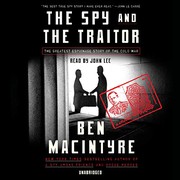
Also recommended by: Bill Gates, Casey Neistat
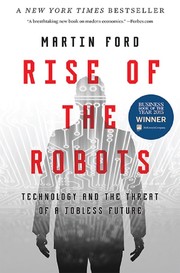
Also recommended by: Patrick O'Shaughnessy

Kurzweil's optimistic counterpoint to the safety literature. His law of accelerating returns and the vision of intelligence explosion as fundamentally benign is the premise that alignment researchers are most directly arguing against. Reading it gives the other side of the debate its strongest formulation.
Also recommended by: Brian Armstrong, Patrick Collison and 5 others


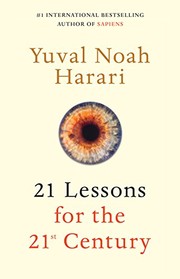
Twenty-one essays on today's challenges, from technology and politics to truth.
Also recommended by: Bill Gates, Alfred Lin, Anna Cheng and 3 others
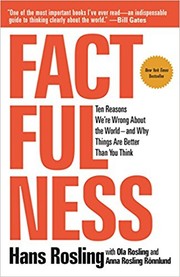
Hans Rosling was a global health professor, not an economist, which gives his data-driven case for human progress particular credibility. He shows, in meticulous detail, that almost every quantitative measure of human welfare has improved dramatically over the past century. He attributes this to global trade and economic development without being a polemicist.
Also recommended by: Bill Gates, Alfred Lin, Howard Marks and 3 others

Leonardo's life read through his notebooks, where art and science were one pursuit.
Also recommended by: Bill Gates, Austen Allred, Elon Musk and 6 others

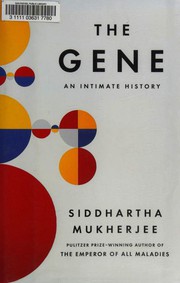
The gene from Mendel and Darwin to genome editing, beside a family's mental illness.
Also recommended by: Bill Gates, James Cameron, Reid Hoffman

Early specialisation works only where rules are stable; elsewhere breadth wins.
Also recommended by: Bill Gates, Abi Tyas Tunggal, Alex Lieberman and 10 others
| Investing in MetaOptima | AirTree Open Source VC | 2024-12-05 |