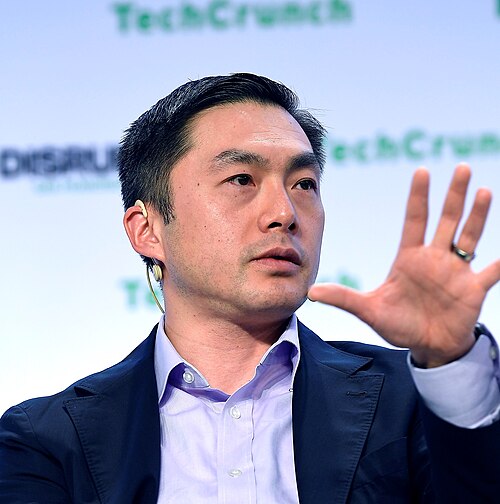
Alfred Lin
Joined Sequoia in 2010 and later ran its global investment operations with Pat Grady; earlier COO, CFO and chairman of the online retailer Zappos from 2005 to 2010.
 Sequoia Capital
 Zappos
57 books they recommend · 23 appearances
More 21
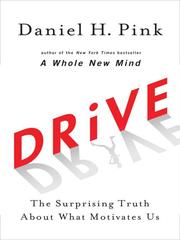
Rewards work for routine tasks; creative work runs on autonomy, mastery and purpose.
Also recommended by: Michael Mauboussin, Mohnish Pabrai, Nir Eyal and 1 other
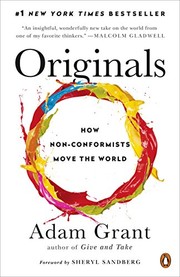
How people champion new ideas, and how leaders can encourage originality.
Also recommended by: Mohnish Pabrai, Tony Hsieh and 7 others
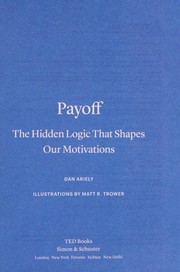
Experiments showing people work for meaning and recognition, not just money.
Also recommended by: Tim Ferriss
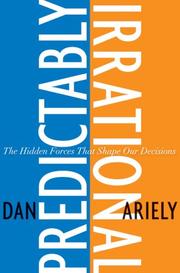
Experiments showing that people depart from rational choice in repeatable ways.
Also recommended by: Mohnish Pabrai, Anna Cheng, David Kadavy and 5 others
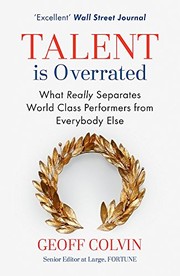
Deliberate practice, not innate talent, explains world-class performance.
Also recommended by: Mohnish Pabrai, Donald Trump
Michael Lewis's account of the Kahneman-Tversky collaboration works as intellectual biography and as a second path through the research for readers who find academic writing slow. The friendship and its eventual fracture clarifies how two very different minds produced work that neither could have done alone.
Also recommended by: Andrew Wilkinson, Mohnish Pabrai, Ray Dalio and 5 others
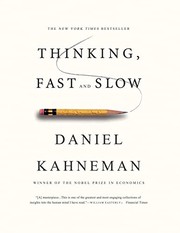
Kahneman's synthesis of behavioral economics is the cognitive science underpinning every negotiation tactic. Anchoring, loss aversion, framing effects, and the planning fallacy — understanding why these biases operate, not just that they exist, makes you harder to exploit and more honest about your own irrationality.
Also recommended by: Andrew Wilkinson, Charles de Vaulx and 31 others
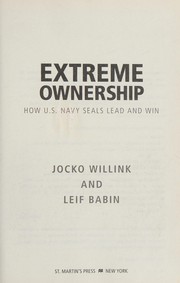
Navy SEAL leadership doctrine adapted to running teams and firms
Also recommended by: Nat Eliason, Austin Rief, Brant Cooper and 8 others
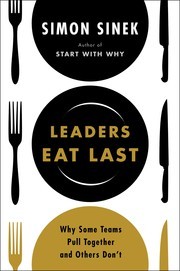
Sinek's second major book applies neuroscience — oxytocin, cortisol, dopamine — to explain why some work environments feel safe and others don't, and how leaders establish the Circle of Safety that determines whether teams will take the risks that produce performance. More substantive than Start With Why.
Also recommended by: Julie Stevanja, Tom Bilyeu, Vlad Magdalin
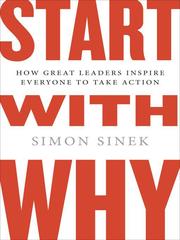
Sinek's Golden Circle (Why/How/What) is less empirically grounded than the rest of this list, but its core observation is accurate: people don't follow what you do, they follow why you do it. Useful for understanding how leaders communicate identity externally and why some inspire loyalty while others just manage compliance.
Also recommended by: Richard Branson, Tony Hsieh, Ann Handley and 3 others
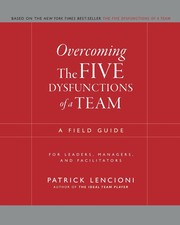
A fable of a failing executive team and a five-level model of what goes wrong.
Also recommended by: Chris Powers, Sarah Pritula, Sophie Bakalar
What eleven companies did to turn fifteen ordinary years into fifteen great ones.
Also recommended by: Brian Armstrong, Mohnish Pabrai, Nat Eliason and 15 others
What companies that beat their industries tenfold in turbulent times did differently.
Also recommended by: Mohnish Pabrai, Tony Hsieh
The stages by which great companies decline, and how to spot and reverse them early.
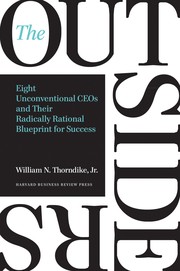
Eight CEOs who beat the market by allocating capital, not by running operations.
Also recommended by: Andrew Wilkinson, Dan Loeb, Francois Rochon and 11 others
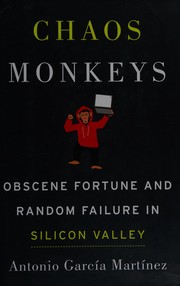
Insider account of Facebook's ads business by a product manager.
Also recommended by: Mohnish Pabrai, Nat Eliason and 3 others
Also recommended by: Reid Hoffman
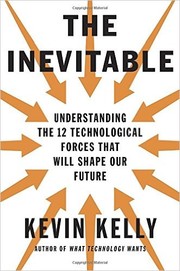
The technology trends that will reshape daily life over the next thirty years.
Also recommended by: Nat Eliason, Patrick Collison, Brad Feld
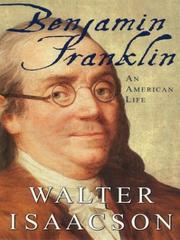
Franklin's life as printer, scientist, diplomat and founder.
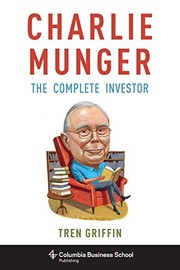
Synthesis of his mental-models framework, not a life.
Also recommended by: Andrew Wilkinson, Christopher Bloomstran and 6 others
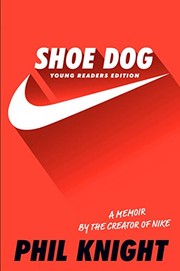
How a running-shoe importer became Nike, surviving one cash crisis after another.
Also recommended by: Andrew Wilkinson, Bill Gates, Mohnish Pabrai and 24 others
Four traps that ruin decisions, such as narrow framing, and a process to beat each.
Also recommended by: Andrew Wilkinson, Mohnish Pabrai and 3 others
Subtitled 'Building a Business When There Are No Easy Answers'
Also recommended by: Andrew Wilkinson, Balaji S. Srinivasan and 33 others
Also recommended by: Brad Feld, George Hatzis, Naval Ravikant
Why startups should build something new and own a small market before growing.
Also recommended by: Balaji S. Srinivasan, Eric Weinstein and 35 others
How Jho Low diverted billions from Malaysia's 1MDB fund into parties and politics.
Also recommended by: Alexis Ohanian, Anthony Pompliano and 4 others
How Iceland, Greece, Ireland, Germany and California each spent cheap credit.
Also recommended by: Mohnish Pabrai, The Barefoot Investor
Twenty-one essays on today's challenges, from technology and politics to truth.
Also recommended by: Bill Gates, Anna Cheng, Daniel Petre and 3 others
Hans Rosling was a global health professor, not an economist, which gives his data-driven case for human progress particular credibility. He shows, in meticulous detail, that almost every quantitative measure of human welfare has improved dramatically over the past century. He attributes this to global trade and economic development without being a polemicist.
Also recommended by: Bill Gates, Daniel Petre, Howard Marks and 3 others
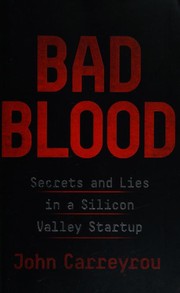
How Theranos reached a $9 billion value with blood tests that never worked.
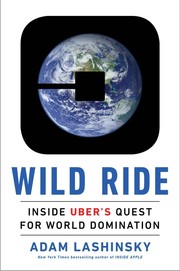
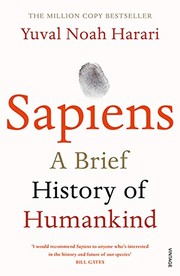
How shared fictions such as money, nations and gods let humans cooperate at scale.
Also recommended by: Andrew Wilkinson, Bill Gates, Mohnish Pabrai and 37 others
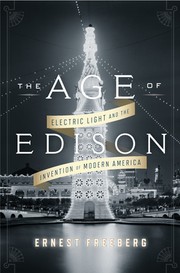
How Edison's electric light changed American life and marked a new age.
Source: Sequoia Capital — 'Seven Questions with Alfred Lin' ('What books are on your nightstand right now?')
Also recommended by: Patrick Collison
Also recommended by: Bill Gates, Mohnish Pabrai and 1 other
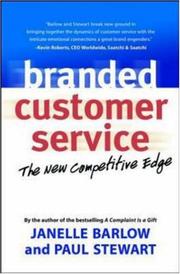
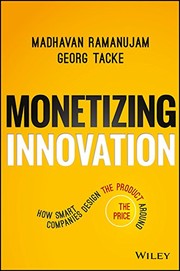
Set the price before you design the product, since most failures are pricing ones.
Also recommended by: Bill Gurley, Leo Polovets
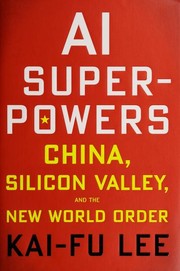
Why China may match the US in AI now that applying it matters more than research.
Also recommended by: Balaji S. Srinivasan, Arianna Huffington and 1 other
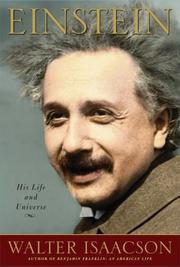
Einstein's life and science, from the Bern patent office to relativity.
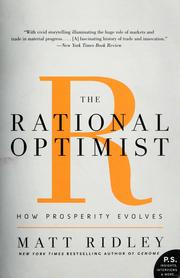
Prosperity grows as trade and specialisation let ideas meet and combine.
Also recommended by: Andrew Wilkinson, Bill Gates, Frank Martin and 9 others
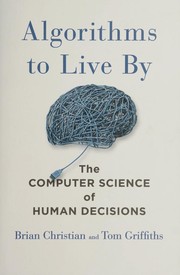
Brian Christian and Tom Griffiths translate classical computer science results — optimal stopping, explore/exploit tradeoffs, scheduling — into guidance for human decisions. The 37% rule for when to stop searching and commit is the most cited single insight.
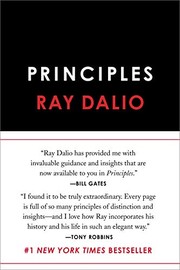
Decision rules from building Bridgewater: radical truth and radical transparency.
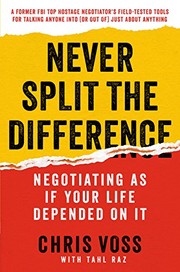
FBI hostage-negotiation tactics: labelling, mirroring and calibrated questions.

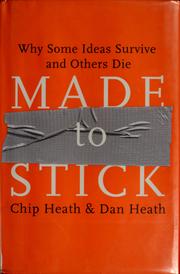
Six traits of memorable ideas, from simple and unexpected to emotional stories.
Also recommended by: Andrew Wilkinson, Mohnish Pabrai and 9 others
| How Sequoia's Alfred Lin scored one of the biggest IPO years in history Paywall | Fortune | 2021 |