Michael Mauboussin
Formerly director of research at BlueMountain Capital and head of global financial strategies at Credit Suisse, advising on valuation, competitive strategy and decision-making.
Counterpoint Global Morgan Stanley Investment Management
 Legg Mason
 Credit Suisse
Michael Mauboussin - Writing (complete archive, 1995-present)
His research reports and Expectations Investing are primary sources that other investors, academics and strategists build directly on.
5 books of their own · 181 letters · 33 articles · 52 books they recommend
Start here
Start from the share price and ask what results it expects a company to deliver.
Recommended by: Mohnish Pabrai

Essays on investing philosophy, psychology, competition and science.
Recommended by: Rational Capital Investment Fund

Eight mistakes experienced decision-makers repeat, and a correction for each.
Recommended by: Mohnish Pabrai and 1 other

How to separate skill from luck in business, sport and investing.
Recommended by: Mohnish Pabrai, Jessica Livingston and 3 others
The ten attributes of successful investors: how to think well, not what to think.
 Expectations Investing: Reading Stock Prices for Better Returns | Start from the share price and ask what results it expects a company to deliver. | 2001 | T2 | Mohnish Pabrai |
 More Than You Know: Finding Financial Wisdom in Unconventional Places | Essays on investing philosophy, psychology, competition and science. | 2006 | T4 | Rational Capital Investment Fund |
 Think Twice: Harnessing the Power of Counterintuition | Eight mistakes experienced decision-makers repeat, and a correction for each. | 2009 | T4 | Mohnish Pabrai, Rational Capital Investment Fund |
 The Success Equation: Untangling Skill and Luck in Business, Sports, and Investing | How to separate skill from luck in business, sport and investing. | 2012 | T4 | Mohnish Pabrai, Jessica Livingston, Josh Wolfe and 2 others |
| The Investing Mind | The ten attributes of successful investors: how to think well, not what to think. | 2026 | T4 | – |
More 17

Value is discounted future cash flow, not earnings per share or return on equity.
“I read that book and the light bulbs all went off for me personally.” — Michael Mauboussin
Source: The Tim Ferriss Show #659 — official transcript
Also recommended by: Mohnish Pabrai

How Pixar kept a creative company working after success, and the habits it used.
Also recommended by: Jim Collins, Alexis Ohanian, Allen Gannett and 10 others

Run a tech company for shareholder value by funding its core advantage.
“Moore's forthcoming book, Living on the Fault Line... is terrific and highly recommended.” — Michael Mauboussin
Source: Network to Net Worth: Exploring Network Dynamics (CS First Boston)

How judging firms by their results corrupts most business research and advice.
“Phil Rosenzweig's must-read book, The Halo Effect, shows this idea is alive and well in the business world.” — Michael Mauboussin
Source: Was Harry Potter Inevitable? Cumulative Advantage, Counterfactuals, and the Halo Effect (Legg Mason)
Also recommended by: Ev Williams, Matt Mullenweg

Keeping customers, employees and investors is what drives profit and growth.
“In his seminal book, The Loyalty Effect, Fred Reichheld shows that a 5 percentage point improvement in retention rate” — Michael Mauboussin
Source: The Economics of Customer Businesses (Legg Mason Capital Management)
Eight CEOs who beat the market by allocating capital, not by running operations.
Also recommended by: Andrew Wilkinson, Dan Loeb, Francois Rochon and 11 others
Insider account of Google's people operations by its SVP of HR.
Also recommended by: Mohnish Pabrai, Changpeng Zhao, David Cancel and 1 other

Explains an action by tracing its causes back from neurons to hormones to evolution.
Also recommended by: Andrew Wilkinson, Bill Gates, Bryan Johnson and 4 others

Behavioural genetics on how much of an outcome is inherited
Also recommended by: James Cameron

The founding of the Santa Fe Institute and the people who built complexity science.
Also recommended by: Bill Gurley, Jamie Dimon, Packy McCormick

How the sciences and humanities can be unified by causal links from physics up.
“I was inspired by E. O. Wilson's book Consilience, which came out in 1998 and is a book I'd recommend.” — Michael Mauboussin
Source: MOI Global interview with Michael Mauboussin
Also recommended by: Mohnish Pabrai

Honeybee colonies as a decentralised allocation and search system
“As Thomas Seeley writes in his delightful book, The Wisdom of the Hive” — Michael Mauboussin
Source: Capital Ideas Revisited (Legg Mason Capital Management)

“The first challenge to the centralized mindset comes from a delightful book by MIT Professor Mitchel Resnick, "Turtles, Termites, and Traffic Jams.” — Michael Mauboussin
Source: The Invisible Lead Steer: New Answers to Old Questions About the Stock Market (CS First Boston)

How ancient DNA has rewritten the story of human prehistory and migration.
Also recommended by: Balaji S. Srinivasan, Marc Andreessen and 1 other
A 20-year test of 28,000 expert forecasts: foxes with many models beat hedgehogs.
Also recommended by: Marc Andreessen, Patrick Collison and 1 other
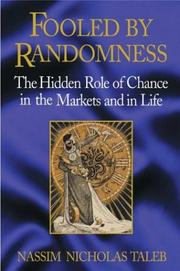
Why people mistake luck for skill, above all in markets.
“In his wonderful book, Fooled by Randomness, Nassim Taleb relates an anecdote that beautifully drives home the expected value message.” — Michael Mauboussin
Source: The Babe Ruth Effect: Frequency versus Magnitude (Credit Suisse First Boston)
Also recommended by: Barton Biggs, Mohnish Pabrai and 10 others
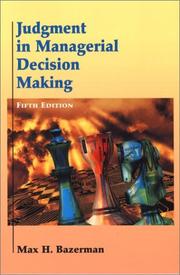
The biases that distort managers' decisions, with exercises that show them.
Also recommended by: Mohnish Pabrai, Charlie Munger
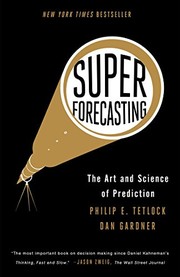
The Good Judgment Project; the practices that measurably improve forecasts.
Also recommended by: Patrick Collison and 8 others
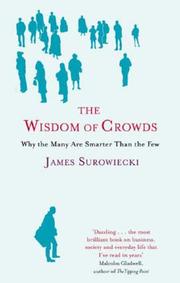
When groups judge better than experts, and the four conditions that make it work.
“Jim Surowiecki deftly articulated this line of thinking in his delightful book, The Wisdom of Crowds.” — Michael Mauboussin
Source: Contrarian Investing: The Psychology of Going Against the Crowd (Legg Mason Capital Management)
Also recommended by: Mohnish Pabrai, Ev Williams, Kevin Rose and 1 other

Judge decisions by their reasoning, not their outcomes, and think in odds.
Also recommended by: Ev Williams, Ana Fabrega, Jason Fried and 4 others
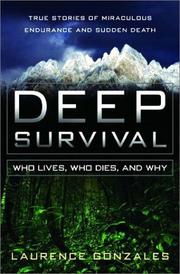
Why some people survive disasters that kill others in the same circumstances.
Also recommended by: Patrick O'Shaughnessy
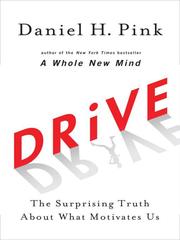
Rewards work for routine tasks; creative work runs on autonomy, mastery and purpose.
“In his excellent book, Drive, Dan Pink distinguishes between algorithmic tasks and heuristic tasks.” — Michael Mauboussin
Source: Blaming the Rat: Incentives, Motivation, and How They Interact (Legg Mason Capital Management)
Also recommended by: Mohnish Pabrai, Alfred Lin, Nir Eyal and 1 other
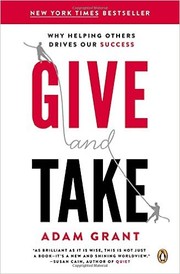
Givers, takers and matchers, and why givers end up both at the bottom and the top.
Also recommended by: Mohnish Pabrai, Alex Lieberman, Reid Hoffman and 2 others

Early specialisation works only where rules are stable; elsewhere breadth wins.
Also recommended by: Bill Gates, Abi Tyas Tunggal, Alex Lieberman and 10 others

Kahneman's synthesis of behavioral economics is the cognitive science underpinning every negotiation tactic. Anchoring, loss aversion, framing effects, and the planning fallacy — understanding why these biases operate, not just that they exist, makes you harder to exploit and more honest about your own irrationality.
“That this is the opus of the man who is likely the greatest living psychologist is reason alone to read it.” — Michael Mauboussin
Source: Farnam Street: Michael Mauboussin, Interview No. 4
Also recommended by: Andrew Wilkinson, Charles de Vaulx and 31 others
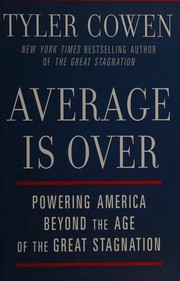
Work is splitting between those who work well with smart machines and the rest.
“Tyler Cowen... dedicates a chapter to freestyle chess in his terrific book, Average Is Over.” — Michael Mauboussin
Source: Lessons from Freestyle Chess: Merging Fundamental and Quantitative Analysis (Credit Suisse)
Also recommended by: Ryan Holiday

Living standards rise through learning, and how policy can make economies learn.
“For a wonderful book that builds on Arrow's research, see Joseph E. Stiglitz and Bruce C. Greenwald, Creating A Learning Society” — Michael Mauboussin

How economics copied the maths of 19th-century physics, and what that cost it.
“there's a wonderful book called More Heat Than Light by a professor named Phil Mirowski, which documents how economists mapped over equations from Newtonian physics” — Michael Mauboussin
Source: The Tim Ferriss Show #659 — official transcript
Also recommended by: Eric Weinstein

“his book An Engine Not a Camera (which I would highly recommend if you are interested in these topics)” — Michael Mauboussin
Source: The Wisdom and Whims of the Collective (Legg Mason Capital Management)

“In his excellent book, Inefficient Markets, Andrei Shleifer describes the three arguments that comprise the theoretical foundation for market efficiency.” — Michael Mauboussin
Source: Capital Ideas Revisited (Legg Mason Capital Management)
Twenty short essays on why behaviour matters more than knowledge with money.
Also recommended by: Andrew Wilkinson, Nat Eliason, Ali Abdaal and 9 others
How people learned to measure risk, from early probability to portfolio theory.
Also recommended by: Charles de Vaulx, Jim Collins and 7 others

How Jho Low diverted billions from Malaysia's 1MDB fund into parties and politics.
Also recommended by: Alexis Ohanian, Alfred Lin and 4 others
Five technological revolutions since 1771, and why each brings a financial bubble.
“Perhaps the best book on the topic is Carlota Perez, Technological Revolutions and Financial Capital” — Michael Mauboussin
Source: New Business Boom and Bust: How Capitalism Experiments (Consilient Observer, Counterpoint Global)
Also recommended by: Patrick Collison

The history and revival of psychedelic research, and the author's own trips.
Also recommended by: Bill Gates, Bryan Johnson, James Cameron and 6 others

How checklists stop experts in complex fields failing to apply what they know.
“In his wonderful book, The Checklist Manifesto, Atul Gawande... explains the value of using a checklist to improve outcomes” — Michael Mauboussin
Source: Methods to Improve Decisions: Five Common Mistakes and How to Address Them (Credit Suisse)
Also recommended by: Mohnish Pabrai, Nat Eliason and 8 others

Chronic stress and how it affects the quality of decisions.
“it's a wonderful title and it's a wonderful book about the idea of stress” — Michael Mauboussin

How calculus works and how it made modern technology possible.
Also recommended by: Naval Ravikant

The tricks companies use to inflate earnings, cash flow and key metrics, by case.
“Some of my favorites include Howard M. Schilit and Jeremy Perler, Financial Shenanigans” — Michael Mauboussin
Source: Thirty Years: Reflections on the Ten Attributes of Great Investors (Credit Suisse)
Also recommended by: Anu Hariharan
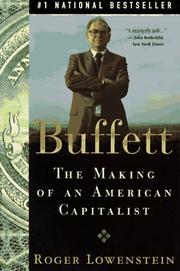
Buffett's life from Omaha and Graham's class to building Berkshire Hathaway.
“In Roger Lowenstein's excellent book on Warren Buffett, the author recounts the exchange between Buffett and the newly appointed president of Berkshire Hathaway” — Michael Mauboussin
Source: Plus Ca Change, Plus C'est Pareil (CS First Boston, Value-Based Strategy)
Also recommended by: Andrew Wilkinson, Christopher Bloomstran and 11 others
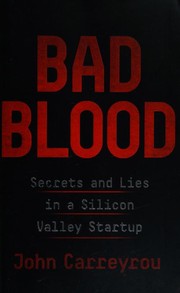
How Theranos reached a $9 billion value with blood tests that never worked.
Also recommended by: Alfred Lin, Bill Gates, Andrew Chen and 6 others

How venture capital works, from fund economics to term sheets, for founders.
Also recommended by: Benedict Evans, Eric Schmidt, Gaby Goldberg and 1 other

Steven Pinker's 500-page empirical survey of progress across 15 dimensions: health, wealth, equality, safety, knowledge, quality of life. Explicitly frames market economies and Enlightenment liberalism as the institutional sources of that progress. Has been criticized for cherry-picking metrics and underweighting catastrophic risks; the data itself is worth engaging with regardless.
Also recommended by: Bill Gates, Andrew Wilkinson, Daniel Petre and 1 other
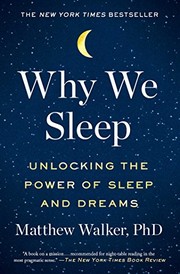
How lack of sleep damages nearly every system in the body, and what sleep does.
Also recommended by: Bill Gates, Abi Tyas Tunggal, Alexis Ohanian and 5 others
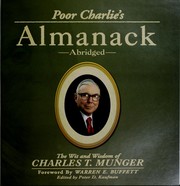
Speeches making the case for a latticework of mental models from many fields.
“Poor Charlie's Almanack, which is a great read and something that every serious investor should go back to read periodically.” — Michael Mauboussin
Source: MOI Global interview with Michael Mauboussin
Also recommended by: Andrew Wilkinson, Charlie Munger and 25 others
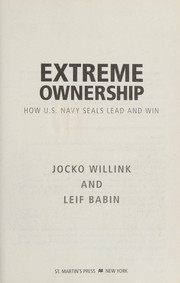
Navy SEAL leadership doctrine adapted to running teams and firms
Also recommended by: Nat Eliason, Alfred Lin, Austin Rief and 8 others
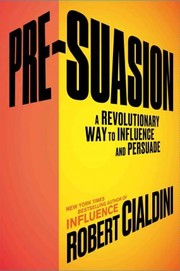
Where you direct attention just before a message shapes how it is received.
Also recommended by: Naval Ravikant

Why parents have less effect on how children turn out than people assume.
“the one thing that I found to be really interesting, and to some degree liberating, is the work of Judith Rich Harris” — Michael Mauboussin

Price is the strongest profit lever and the least managed; how to set it well.
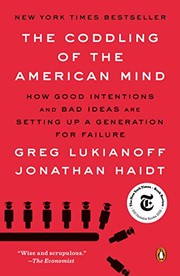
Three false beliefs taught to young Americans, and how they harm their minds.
Also recommended by: Eric Weinstein, Julian Shapiro, Vinod Khosla

Talent, training and genetics in elite athletic performance
Also recommended by: Bill Miller, Mark Cuban
| The Wisdom of Crowds in Markets: Crowd Behavior in Prediction, Betting, and Stock Markets | 2026 | |||
| Opportunities and Expectations: The Present Value of Growth Opportunities in Valuation | 2026 | |||
| Bayes and Base Rates 2.0: How History Can Guide Our Assessment of the Future | 2026 | |||
| Competitive Advantage Period: The Neglected Value Driver | 2026 | |||
| Bayes and Base Rates: How History Can Guide Our Assessment of the Future | 2026 | |||
| Who Is On the Other Side? A Framework for Understanding Market (In)Efficiency | 2026 | |||
| Capital Allocation: Results, Analysis, and Assessment (Updated) | 2025 | |||
| Cash Holdings: Data, Theory, and Alternatives | 2025 | |||
| Drawdowns and Recoveries: Base Rates for Bottoms and Bounces | 2025 | |||
| Probabilities and Payoffs: The Practicalities and Psychology of Expected Value | 2025 | |||
| Charts From the Vault: Pictures to Ponder | 2024 | |||
| Measuring the Moat: Assessing the Magnitude and Sustainability of Value Creation | 2024 | |||
| Which One Is It?: Equity Issuance and Retirement | 2024 | |||
| Stock Market Concentration: How Much Is Too Much? | 2024 | |||
| Valuation Multiples: What They Miss, Why They Differ, and the Link to Fundamentals | Michael Mauboussin explains what valuation multiples miss, why they differ across companies, and how they link to growth, return on capital and risk. | 2024 | ||
| Cost of Capital and Capital Allocation: Investment in the Era of "Easy Money" | Michael Mauboussin examines how U.S. companies allocated capital during the era of easy money, when financial capital was cheap and abundant. | 2024 | ||
| Increasing Returns: Identifying Forms of Increasing Returns and What Drives Them | Michael Mauboussin identifies forms of increasing returns, from Adam Smith's division of labour to network effects, and what drives them. | 2024 | ||
| Pattern Recognition: Opportunities and Limits | Michael Mauboussin examines the opportunities and limits of pattern recognition in investing, starting from ConAgra's 1990 purchase of Beatrice's food business. | 2023 | ||
| Total Shareholder Return: Linking The Drivers of Total Returns to Fundamentals | Michael Mauboussin breaks total shareholder return into its drivers and links each to a company's fundamentals and changing expectations. | 2023 | ||
| Trading Stages in the Company Life Cycle | Michael Mauboussin shows how a company's life-cycle stage shapes its capital allocation, financing cost, governance and valuation. | 2023 | ||
| Birth, Death, and Wealth Creation: Why Investors Need to Understand Corporate Demographics | Michael Mauboussin argues investors should understand corporate births and deaths, since valuations usually assume companies live forever. | 2023 | ||
| ROIC and the Investment Process: ROICs, How They Change, and Shareholder Returns | Michael Mauboussin explains return on invested capital, how it changes, and how those changes relate to shareholder returns. | 2023 | ||
| Stock-Based Compensation: Unpacking the Issues | Michael Mauboussin unpacks the accounting and economics of stock-based compensation and how investors should treat it. | 2023 | ||
| Confidence: Methods to Assess Confidence Under Uncertainty | Michael Mauboussin describes methods for judging confidence under uncertainty, since investing means finding gaps between expected value and price. | 2023 | ||
| Cost of Capital: A Practical Guide to Measuring Opportunity Cost | Michael Mauboussin offers a practical guide to measuring the cost of capital as the opportunity cost of investing. | 2023 | ||
| Capital Allocation: Results, Analysis, and Assessment | Michael Mauboussin explains how to assess a company's capital allocation, how it raises and spends money, as the central driver of long-term value creation. | 2022 | ||
| ROIC and Intangible Assets: A Look at How Adjustments for Intangibles Affect ROIC | Michael Mauboussin shows how treating intangible investments as assets rather than expenses changes measured return on invested capital. | 2022 | ||
| Return on Invested Capital: How to Calculate ROIC and Handle Common Issues | Michael Mauboussin explains how to calculate return on invested capital and handle common issues such as leases, goodwill and cash. | 2022 | ||
| Market Share: Understanding Competitive Advantage Through Market Power | Michael Mauboussin examines market share as a measure of market power and competitive advantage, since competition pushes returns toward the cost of capital. | 2022 | ||
| Good Losses, Bad Losses: All Losses Are Not Created Equal | Michael Mauboussin distinguishes good losses, from investments in intangibles that build value, from bad losses that destroy it. | 2022 | ||
| New Business Boom and Bust: How Capitalism Experiments | Michael Mauboussin examines booms and busts in new business formation as the way capitalism experiments. | 2022 | ||
| Wealth Transfers: Redistribution of Value via Capital Allocation | Michael Mauboussin shows how buybacks, issuance and M&A transfer wealth between groups of shareholders. | 2022 | ||
| Intangibles and Earnings: Improving the Usefulness of Financial Statements | Michael Mauboussin argues that expensing intangible investments distorts earnings, and shows how to adjust financial statements to make them more useful. | 2022 | ||
| Feedback: Information as a Basis for Improvement | Michael Mauboussin explains how feedback on process, not just outcomes, helps investors improve when luck clouds short-term results. | 2022 | ||
| Underestimating the Red Queen: Measuring Growth and Maintenance Investments | Michael Mauboussin shows how to split a company's investment into maintenance and growth spending, drawing on Geoffrey West's work on scaling. | 2022 | ||
| Categorizing for Clarity: Cash Flow Statement Adjsutments to Improve Insight | Michael Mauboussin shows how to reclassify cash flow statement items to separate operating, investing and financing activity for clearer insight. | 2021 | ||
| Turn and Face the Strange: Overcoming Barriers to Change in Sports and Investing | Michael Mauboussin examines why sports teams and investment firms resist changes that would help them succeed, and how to overcome those barriers. | 2021 | ||
| Everything Is a DCF Model: A Mantra for Valuing Cash-Generating Assets | Michael Mauboussin argues that every valuation of a cash-generating asset is a discounted cash flow model, whatever shortcut is used. | 2021 | ||
| The Impact of Intangibles on Base Rates | Michael Mauboussin examines how the rise of intangible investment changes base rates for sales growth and returns, starting from the Economist's 2017 Amazon cover. | 2021 | ||
| The Economics of Customer Businesses: Calculating Customer-Based Corporate Valuation | Michael Mauboussin explains customer-based corporate valuation, valuing a business from the economics of each customer. | 2021 | ||
| Market-Expected Return on Investment: Bridging Accounting and Valuation | Michael Mauboussin bridges accounting and valuation by calculating the return on investment the market expects from a company's stock price. | 2021 | ||
| WACC and Vol: Valuatoin for Companies with Real Options | Michael Mauboussin shows how volatility and real options raise the value of some companies beyond what a WACC-based DCF captures. | 2020 | ||
| One Job: Expectations and the Role of Intangible Investments | Michael Mauboussin argues the investor's one job is to judge expectations, and shows how intangible investment makes current earnings mislead. | 2020 | ||
| Public to Private Equity in the United States: A Long-Term Look | Michael Mauboussin traces the shift of U.S. equity from public markets to buyout and venture capital firms over the past quarter century. | 2020 | ||
| The Math of Value and Growth: Growth, Return on Capital, and the Discount Rate | Michael Mauboussin sets out the math linking value to growth, return on capital and the discount rate. | 2020 | ||
| Myth Busting, Popular Delusions, and the Variant Perception | Michael Mauboussin's Greenwich Roundtable talk on myths, popular delusions and the variant perception that lets skilled investors profit. | 2020 | ||
| Dispersion & Alpha Conversion: How Dispersion Creates the Opportunity to Express Skill | Michael Mauboussin argues that dispersion of returns creates the opportunity for skilled investors to convert skill into alpha. | 2020 | ||
| BIN There, Done That: How to Reduce the Sources of Forecasting Error | Michael Mauboussin explains how to reduce forecasting error by tackling bias, information and noise, since beating the market means anticipating revisions in expectations. | 2020 | ||
| Looking for Easy Games in Bonds | BlueMountain argues the rise of index funds has created easy games for active bond investors where passive funds follow fixed rules. | 2019 | ||
| Who Is On the Other Side? You Need Good BAIT to Land a Winner | BlueMountain argues active managers win by knowing who is on the other side of a trade, using its BAIT framework for market inefficiencies. | 2019 | ||
| What Does an EV/EBITDA Multiple Mean? | BlueMountain explains the economic assumptions an EV/EBITDA multiple implies, which investors often use without knowing them. | 2018 | ||
| Procyclicality and Its Extremes | Andrew Feldstein and Michael Mauboussin examine procyclicality, how behaviour that amplifies cycles drives markets to extremes. | 2018 | ||
| How Well Do You Compare? | BlueMountain argues that generating alpha comes down to comparing each investment with the right alternative, which takes thought and discipline. | 2017 | ||
| Winning the Easy Game: Skill and the Ability to Extract Value | Michael Mauboussin examines how skill lets investors extract value, and how a shrinking pool of weaker players makes the game harder. | 2017 | ||
| Assembling a Dream Team: How Gender Diversity Can Strengthen Your Team | Michael Mauboussin argues gender diversity can strengthen investment teams, as management has become far more team-based. | 2017 | ||
| Incredible Shrinking Universe of Stocks: Causes & Consequences of Fewer U.S. Equities | Michael Mauboussin explains why U.S. listed stocks have halved in 20 years: M&A flourished, IPOs faltered and regulation raised listing costs. | 2017 | ||
| To Buy or Not To Buy: A Checklist for Assessing Mergers & Acquisitions | Michael Mauboussin offers a checklist for judging whether a merger or acquisition will create value. | 2017 | ||
| Corporate Longevity: Index Turnover and Corporate Performance | Michael Mauboussin links S&P 500 index turnover to innovation and M&A, finding turnover comes in waves. | 2017 | ||
| Coming Clean with Energy Cost Curves: An Interview with MIT’s Jessika Trancik | Michael Mauboussin interviews MIT's Jessika Trancik on how solar and other clean energy costs fall along learning curves. | 2017 | ||
| Looking for Easy Games: How Passive Investing Shapes Active Management | Michael Mauboussin argues that as less informed investors move to passive funds, active management becomes harder for those who remain. | 2017 | ||
| Capital Allocation Outside the US: Evidence, Analytical Methods & Assessment Guidance | Michael Mauboussin extends his capital allocation analysis to companies outside the U.S. | 2016 | ||
| Measuring the Moat: Assessing the Magnitude and Sustainability of Value Creation | Michael Mauboussin offers a framework for measuring a company's moat, the size and sustainability of its value creation. | 2016 | ||
| Capital Allocation: Evidence, Analytical Methods, and Assessment Guidance | Michael Mauboussin sets out evidence, analytical methods and guidance for assessing how companies allocate capital. | 2016 | ||
| The Base Rate Book: Integrating the Past to Better Anticipate the Future | Michael Mauboussin's Base Rate Book shows how reference-class data on sales growth, margins and returns improve forecasts. | 2016 | ||
| Thirty Years: Reflections on the Ten Attributes of Great Investors | Michael Mauboussin reflects on 30 years in investing and the ten attributes of great investors. | 2016 | ||
| Global Industry Profit Pools: Visualizing Value Creation for an Industry | Michael Mauboussin maps profit pools for 65 global industries over ten years to show how economic profit shifts among companies. | 2016 | ||
| Form Follows Function: Organizational Structure and Investment Results | Michael Mauboussin argues that an investment firm's organisational structure shapes its investment results. | 2016 | ||
| Operating Leverage: A Framework for Anticipating Changes in Earnings | Michael Mauboussin offers a framework for anticipating earnings changes through operating leverage. | 2016 | ||
| Thoughts on Dividends and Buybacks: Clearing Up Some Common Misconceptions | Michael Mauboussin clears up misconceptions about dividends and buybacks among S&P 500 companies. | 2016 | ||
| The Base Rate Book - Gross Profitability: Integrating the Past to Better Anticipate the Future | Michael Mauboussin's Base Rate Book chapter on gross profitability shows how past distributions improve forecasts. | 2016 | ||
| What Makes for a Useful Statistic: Not All Numbers Are Created Equal | Michael Mauboussin explains what makes a statistic useful: it must be persistent and predictive, as in baseball's on-base plus slugging. | 2016 | ||
| The Base Rate Book - Sales Growth: Integrating the Past to Better Anticipate the Future_v2 | Michael Mauboussin's Base Rate Book chapter shows base rates of sales growth, the most important value driver, to counter optimistic forecasts. | 2016 | ||
| Celebrating the Summit: Making an Informed Decision After a Large Price Gain | Michael Mauboussin examines how to decide whether to sell or hold a stock after a large price gain. | 2016 | ||
| Corporate Governance and Capital Allocation: The Governing Objective, Corporate Governance and the Two Camps | Michael Mauboussin and Dan Callahan examine corporate governance and capital allocation, and the two camps on a company's governing objective. | 2016 | ||
| The Base Rate Book - Earnings Growth: Integrating the Past to Better Anticipate the Future | Michael Mauboussin's Base Rate Book chapter on earnings growth shows earnings' limits as a measure of shareholder value. | 2015 | ||
| What’s Going On in Your Brain? Common Investor Biases and Where They Come From | Michael Mauboussin explains common investor biases and where in the brain they come from. | 2015 | ||
| Sharpening Your Forecasting Skills: Foresight Is a Measurable Skill That You Can Cultivate | Michael Mauboussin argues foresight is a measurable skill that forecasters can cultivate, drawing on Philip Tetlock's work. | 2015 | ||
| Total Addressable Market: Methods to Estimate a Company’s Potential Sales | Michael Mauboussin sets out methods to estimate a company's total addressable market. | 2015 | ||
| Understanding Skill: A Paradox Plus Qualitative and Quantitative Approaches | Michael Mauboussin examines the paradox of skill and qualitative and quantitative ways to identify skilled investors. | 2015 | ||
| Triple Crown Teachings: Three Takeaways from the Quest for the Elusive Feat | Michael Mauboussin draws three lessons from horse racing's Triple Crown, as American Pharoah sought the feat in 2015. | 2015 | ||
| Capital Allocation - Updated: Evidence, Analytical Methods, and Assessment Guidance | Michael Mauboussin updates his guide to assessing corporate capital allocation. | 2015 | ||
| IQ versus RQ: Differentiating Smarts from Decision-Making Skills | Michael Mauboussin distinguishes IQ from RQ, the rationality quotient that measures decision-making skill. | 2015 | ||
| The Base Rate Book - Sales Growth: Integrating the Past to Better Anticipate the Future_v1 | Michael Mauboussin's Base Rate Book chapter shows base rates of sales growth to counter optimistic forecasts. | 2015 | ||
| Min(d)ing the Opportunity: Excess Returns Require the Chance to Apply Skill | Michael Mauboussin argues excess returns require both skill and the opportunity to apply it, which varies across markets and time. | 2015 | ||
| Animating Mr. Market: Adopting a Proper Psychological Attitude | Michael Mauboussin applies Ben Graham's Mr. Market to the psychological attitude investors need. | 2015 | ||
| Managing the Man Overboard Moment: Making an Informed Decision After a Large Price Drop | Michael Mauboussin offers a way to decide whether to buy, sell or hold after a stock's large price drop. | 2015 | ||
| Capital Allocation Outside the US: Evidence, Analytical Methods, & Assessment Guidance | Michael Mauboussin extends his capital allocation guide to companies outside the U.S. | 2015 | ||
| A Long Look at Short-Termism: Questioning the Premise | Michael Mauboussin questions the premise that corporate short-termism is widespread and harmful. | 2014 | ||
| Lessons from Freestyle Chess: Merging Fundamental and Quantitative Analysis | Michael Mauboussin draws lessons from freestyle chess for merging fundamental and quantitative analysis. | 2014 | ||
| Capital Allocation: Evidence, Analytical Methods, and Assessment Guidance | Michael Mauboussin's 2014 guide to evidence, methods and assessment of corporate capital allocation. | 2014 | ||
| Calculating Return on Invested Capital: How to Determine ROIC and Address Common Issues | Michael Mauboussin explains how to calculate return on invested capital and address common issues. | 2014 | ||
| Disbursing Cash to Shareholders: FAQ's about Buybacks and Dividends | Michael Mauboussin answers frequently asked questions about buybacks and dividends as ways to return cash to shareholders. | 2014 | ||
| Why Corporate Longevity Matters: What Index Turnover Tells Us about Corporate Results | Michael Mauboussin shows what index turnover says about corporate longevity and results. | 2014 | ||
| Methods to Improve Decisions: Five Common Mistakes and How to Address Them | Michael Mauboussin describes five common decision-making mistakes and how to address them. | 2014 | ||
| What Does a Price-Earnings Multiple Mean? An Analytical Bridge between P/Es and Solid Economics | Michael Mauboussin bridges the P/E multiple to the economics of growth, return on capital and cost of capital. | 2014 | ||
| Building an Effective Team: How to Manage a Team to Make Good Decisions | Michael Mauboussin explains how to manage a team to make good decisions. | 2014 | ||
| Economic Returns, Reversion to the Mean, and Total Shareholder Returns: Anticipating Change Is Hard but Profitable | Michael Mauboussin shows that economic returns revert to the mean and that anticipating that change is hard but profitable. | 2013 | ||
| Outcome Bias and the Interpreter: How Our Minds Confuse Skill and Luck | Michael Mauboussin explains outcome bias and how the mind's interpreter confuses skill and luck. | 2013 | ||
| Estimating the Cost of Capital: A Practical Guide to Assessing Opportunity Cost | Michael Mauboussin offers a practical guide to estimating the cost of capital. | 2013 | ||
| How to Model Reversion to the Mean: Determining How Fast, and to What Mean, Results Revert | Michael Mauboussin shows how to model reversion to the mean: how fast results revert and to what mean. | 2013 | ||
| Measuring the Moat: Assessing the Magnitude and Sustainability of Value Creation | Michael Mauboussin offers a framework for measuring a company's moat. | 2013 | ||
| Alpha and the Paradox of Skill: Results Reflect Your Skill and the Game You Are Playing | Michael Mauboussin explains the paradox of skill: as skill rises and evens out, luck shapes more of the results. | 2013 | ||
| Cultivating Your Judgment Skills: A Framework for Improving the Quality of Decisions | Michael Mauboussin offers a framework for improving judgment and the quality of decisions. | 2013 | ||
| The Importance of Expectations: The Question that Bears Repeating: What’s Priced in? | Michael Mauboussin argues investors must keep asking what expectations are priced into a stock. | 2012 | ||
| Share Repurchase from All Angles: Assessing Buybacks, No Matter Where You Sit | Michael Mauboussin assesses share buybacks from the view of companies, selling shareholders and continuing holders. | 2012 | ||
| Seeking Portfolio Manager Skill: Active Share and Tracking Error as a Means to Anticipate Alpha | Michael Mauboussin examines whether active share and tracking error can help investors find skilled managers and anticipate alpha. | 2012 | ||
| The Coffee Can Approach: Why Doing Less Can Leave You with More | Michael Mauboussin explains the coffee-can approach: buying stocks and leaving them alone can leave investors with more. | 2011 | ||
| Blaming the Rat: Incentives, Motivation, and How They Interact | Michael Mauboussin examines how incentives and motivation interact, and the unintended consequences incentives cause. | 2011 | ||
| Untangling Skill and Luck: How to Think About Outcomes - Past, Present, and Future | Michael Mauboussin explains how to separate skill from luck in outcomes past, present and future, to improve decisions. | 2010 | ||
| It's All about Managing for Value | Michael Mauboussin tells a CFO summit that managing for value and communicating with shareholders is what matters. | 2010 | ||
| The Colonel Blotto Game: Transitivity and How to Win When You’re an Underdog | Michael Mauboussin uses the Colonel Blotto game to show why crowning a best team is often impossible and how underdogs can win. | 2010 | ||
| Surge in the Urge to Merge: M&A: Trends and Analysis | Michael Mauboussin reviews M&A trends and evidence that acquirers moving early in an industry's acquisition wave outperform later ones. | 2010 | ||
| Long-Term Investing: How I Learned to Stop Worrying and Ignore Volatility | Michael Mauboussin tells the Greenwich Roundtable in December 2008 how long-term investors should stop worrying and ignore volatility. | 2008 | ||
| ROIC Patterns and Shareholder Returns: Sorting Fundamentals and Expectations | Michael Mauboussin sorts fundamentals from expectations, showing that obvious growth does not mean obvious profits for investors. | 2008 | ||
| Fat Tails and Nonlinearity: Diversity Breakdowns and Invisible Vulnerability | Michael Mauboussin explains how breakdowns in diversity create fat tails and invisible vulnerability in markets. | 2007 | ||
| Death, Taxes, and Reversion to the Mean: ROIC Patterns: Luck, Persistence, and What to Do About It | Michael Mauboussin examines ROIC patterns: how luck and persistence shape reversion to the mean. | 2007 | ||
| Was Harry Potter Inevitable? Cumulative Advantage, Counterfactuals, and the Halo Effect | Michael Mauboussin asks whether Harry Potter's success was inevitable, exploring cumulative advantage and the halo effect. | 2007 | ||
| Turtles in Omaha: The Mindset of Great Investors | Michael Mauboussin examines the mindset of great investors, using the Turtles and Omaha as examples. | 2007 | ||
| Explaining the Wisdom of Crowds: Applying the Logic of Diversity | Michael Mauboussin explains the wisdom of crowds through the logic of diversity. | 2007 | ||
| Importance of Diverse Thinking: Why the Santa Fe Institute Can Make You a Better Investor | Michael Mauboussin argues that the Santa Fe Institute's diverse thinking can make you a better investor. | 2007 | ||
| Interdisciplinary Perspectives on Risk | Michael Mauboussin offers interdisciplinary perspectives on risk to the Greenwich Roundtable. | 2006 | ||
| Long-Term Investing in a Short-Term World: How Psychology and Incentives Shape the Investment Industry | Michael Mauboussin examines how psychology and incentives push the investment industry toward the short term. | 2006 | ||
| Common Errors in DCF Models: Do You Use Economically Sound & Transparent Models? | Michael Mauboussin lists common errors in DCF models and how to build sound, transparent ones. | 2006 | ||
| Size Matters: The Kelly Criterion and the Importance of Money Management | Michael Mauboussin explains the Kelly criterion and why position sizing matters. | 2006 | ||
| Clear Thinking about Share Repurchase: Capital Allocation, Dividends & Share Repurchase | Michael Mauboussin offers clear thinking about share repurchases, dividends and capital allocation. | 2006 | ||
| Are You an Expert? Experts and Markets | Michael Mauboussin examines evidence that experts add little in markets. | 2005 | ||
| Aver and Aversion: What Two Recent Experiments Mean for Investors | Michael Mauboussin draws lessons for investors from two experiments on conformity and loss aversion. | 2005 | ||
| The Ecosystem Edge | Michael Mauboussin argues competition now happens between ecosystems of firms rather than individual companies. | 2005 | ||
| Capital Ideas Revisited - Part 2: Thoughts on Beating a Mostly-Efficient Stock Market | Michael Mauboussin offers thoughts on beating a mostly efficient stock market. | 2005 | ||
| Capital Ideas Revisited: The Prime Directive, Sharks, and The Wisdom of Crowds | Michael Mauboussin revisits market efficiency through the prime directive, sharks and the wisdom of crowds. | 2005 | ||
| Contrarian Investing: The Psychology of Going Against the Crowd | Michael Mauboussin explains the psychology of contrarian investing to the Greenwich Roundtable. | 2005 | ||
| M&M on Valuation | Michael Mauboussin revisits Modigliani and Miller's insights on valuation. | 2005 | ||
| The Economics of Customer Businesses | Michael Mauboussin explains the economics of customer businesses and why few firms can measure customer lifetime value. | 2004 | ||
| Exploring Network Economics | Michael Mauboussin explores network economics, which drive the information economy as scale drove the industrial one. | 2004 | ||
| Employee Stock Options: Theory and Practice | Michael Mauboussin examines the theory and practice of employee stock options. | 2004 | ||
| The Life of Game: Sports, Stats, and the Lessons they Teach Us | Michael Mauboussin draws lessons from sports statistics about uncertainty and skill. | 2004 | ||
| Decision-Making for Investors: Theory, Practice, and Pitfalls | Michael Mauboussin examines the theory, practice and pitfalls of investors' decision-making. | 2004 | ||
| I’ve Fallen and I Can’t Get Up: Mean Reversion and Turnarounds | Michael Mauboussin shows that turnarounds are rare because economic performance reverts to the mean. | 2004 | ||
| Mine Your Mind: Neuroscience and Investing | Michael Mauboussin explores what neuroscience teaches investors. | 2003 | ||
| The Pyramid of Numbers: Firm Size, Growth Rates, and Valuation | Michael Mauboussin examines how firm size limits growth rates and what that means for valuation. | 2003 | ||
| All I Really Need to Know I Learned at a Tupperware Party: What Tupperware Parties Teach You about Investing and Life | Michael Mauboussin uses Tupperware parties to show how persuasion techniques work on investors. | 2003 | ||
| Integrating the Outliers: Two Lessons from the St. Petersburg Paradox | Michael Mauboussin draws two lessons from the St. Petersburg paradox about outliers in portfolio theory. | 2003 | ||
| Measuring the Moat: Assessing the Magnitude and Sustainability of Value Creation | Michael Mauboussin's 2002 framework for measuring the size and sustainability of a company's value creation, its moat. | 2002 | ||
| The Janitor’s Dream: Why Listening to Individuals Can be Hazardous to Your Wealth | Michael Mauboussin argues that listening to individual market participants misleads, since markets are complex adaptive systems. | 2002 | ||
| Great (Growth) Expectations: On the Limits of Corporate Growth | Michael Mauboussin examines the limits of corporate growth and the expectations priced into growth stocks. | 2002 | ||
| A Tail of Two Worlds: Fat Tails and Investing | Michael Mauboussin explains fat tails in markets and what they mean for investors. | 2002 | ||
| A Process for Outperformance: Thoughts on Organizing for Investing Success | Michael Mauboussin offers thoughts on organising an investment process for outperformance. | 2002 | ||
| The Babe Ruth Effect: Frequency versus Magnitude | Michael Mauboussin explains the Babe Ruth effect: the magnitude of gains matters more than how often you are right. | 2002 | ||
| Ruminations on Risk: Beta Versus Margin of Safety | Michael Mauboussin contrasts beta with margin of safety as measures of risk for long-term investors. | 2001 | ||
| Diffusion Confusion: The Rising Role of the Replacement Cycle | Michael Mauboussin argues investors focus on new-customer diffusion and miss the rising role of the replacement cycle. | 2001 | ||
| Where’s the Bar? Introducing Market-Expected Return on Investment (MEROI) | Michael Mauboussin introduces market-expected return on investment (MEROI) to calibrate what a stock price demands. | 2001 | ||
| Thoughts On Valuation II: An Epistemological View | Michael Mauboussin offers an epistemological view of valuation. | 2001 | ||
| Fill and Kill: Succeeding with Survivors is Nothing New | Michael Mauboussin argues that succeeding by betting on industry survivors is nothing new. | 2001 | ||
| Nasdaq Blues and Clues - Part II: Expectations Analysis for the Nasdaq 100 | Michael Mauboussin applies expectations analysis to the Nasdaq 100 after its fall. | 2001 | ||
| Wanna Be GE: Creating Value Through Business Category Evolution | Michael Mauboussin examines how GE created value by evolving across business categories, and whether others can copy it. | 2001 | ||
| Innovation and Markets: How Innovation Affects the Investing Process | Michael Mauboussin examines how innovation affects the investing process. | 2000 | ||
| Nasdaq Blues and Clues: Expectations Analysis for the Nasdaq 100 | Michael Mauboussin applies expectations analysis to the Nasdaq 100 in December 2000. | 2000 | ||
| It's the Ecology, Stupid: How Breakdowns in Market Diversity Can Lead to Volatility | Michael Mauboussin argues breakdowns in market diversity lead to volatility. | 2000 | ||
| Still Powerful: The Internet’s Hidden Order | Michael Mauboussin argues the internet's hidden order, its power-law structure, remains powerful in 2000. | 2000 | ||
| Network to Net Worth: Exploring Network Dynamics | Michael Mauboussin explores network dynamics and how they turn networks into net worth. | 2000 | ||
| Counting What Counts: Cash Flow as a Universal Language | Michael Mauboussin argues cash flow, not earnings or P/Es, is the universal language of value. | 2000 | ||
| Absolute Power: The Internet’s Hidden Order | Michael Mauboussin argues that the internet follows a hidden order of power laws that concentrates value. | 1999 | ||
| The Triumph of Bits: Mental Models for Successful Investment | Michael Mauboussin offers mental models for investing in the triumph of bits over atoms. | 1999 | ||
| Atoms, Bits, and Cash: The ABCs of Investing in the New Economy | Michael Mauboussin shows that S&P 500 value creation is shifting from physical capital to intellectual capital, from atoms to bits. | 1999 | ||
| The Retailer's Dilemma: Revenge of the Nerds: How the New Value Network Challenges Incumbents | Michael Mauboussin examines how new value networks such as online retail challenge incumbent retailers. | 1999 | ||
| Get Real: Using Real Options in Security Analysis | Michael Mauboussin shows how to use real options in security analysis. | 1999 | ||
| Value Explosion: Exploring Barriers to Entry for Internet Companies | Michael Mauboussin explores barriers to entry for internet companies. | 1999 | ||
| Cash Flow.com: Cash Economics in the New Economy | Michael Mauboussin explains cash economics in the new economy. | 1999 | ||
| The (Fat) Tail that Wags the Dog: Demystifying the Stock Market’s Performance | Michael Mauboussin shows how a fat tail of a few large winners drives stock market performance. | 1999 | ||
| Rational Exuberance? Is There Method behind the Madness in Internet Stock Valuations? | Michael Mauboussin asks whether there is method behind the madness of internet stock valuations. | 1999 | ||
| The Invisible Lead Steer: New Answers to Old Questions About the Stock Market | Michael Mauboussin offers new answers to old questions about the stock market's invisible lead steer. | 1998 | ||
| On The Shoulders of Giants: Mental Models for the New Millenium | Michael Mauboussin offers mental models for investing in the new millennium. | 1998 | ||
| A Piece of the Action: Employee Stock Options in the New Economy | Michael Mauboussin examines employee stock options in the new economy. | 1998 | ||
| Why Strategy Matters: Exploring the link between strategy, competitive advantage and the stock market | Michael Mauboussin explores the link between strategy, competitive advantage and stock returns. | 1998 | ||
| To Buy or Not to Buy: Issues and Considerations Surrounding Share Repurchase | Michael Mauboussin examines when share repurchases create value, given high P/Es and stock options. | 1998 | ||
| Let’s Make a Deal: A Practical Framework for Assessing M&A Activity | Michael Mauboussin offers a practical framework for assessing M&A. | 1998 | ||
| Thoughts on Valuation | Michael Mauboussin sets out his thoughts on valuation in 1997. | 1997 | ||
| Shift Happens: On a New Paradigm of the Markets as a Complex Adaptive System | Michael Mauboussin proposes a new paradigm of markets as complex adaptive systems. | 1997 | ||
| What Have You Learned in the Past 2 Seconds? | Michael Mauboussin surveys the frontiers of finance in 1997. | 1997 | ||
| Competitive Advantage Period “CAP” - The Neglected Value Driver | Michael Mauboussin argues the competitive advantage period is the neglected driver of value. | 1997 | ||
| Plus Ça Change, Plus C’est Pareil: The More Things Change, the More They Stay the Same | Michael Mauboussin argues that in the food industry the more things change, the more they stay the same. | 1995 |
| What’s luck got to do with it? Paywall | Financial Times | 2012 |
| Is Your Fund Manager Skillful or Just Lucky? Paywall | The Wall Street Journal | 2012 |