Updates

  1. Person pages list letters, writing, profiles and links as sortable tables with filters, and show each person's companies as links; Fund letters show each letter's description in its own column.
  2. Experts show a checked job title and a short description of each person; 30 more people have photographs.
  3. Every company, fund, university and publication the experts work for has a page listing the people there.
  4. Fund letters show each letter's thesis and filter by it; 225 person pages list the essays, columns and newsletter issues the person wrote.
  5. Person pages list every essay and newsletter issue a person wrote, and their own books as a table in List view.
  6. Recommends shows the five largest kinds of book and the rest under More; browse pictures load sooner.
  7. Podcasts and talks link the original episode, filter by Audio and video or Press, and list each publisher once.
  8. Pages are wider, Recommends has List and Grid, and a filter clicked again turns off.
  9. Book cards sit in a ruled grid with Open Library and Goodreads links and each book's one-line note.
  10. Funds is now Investors; each investor's styles are buttons that filter the table.
  11. Podcasts and talks on a person's page filter by year and publisher and show as a list or a grid of pictures.
  12. Quotes show only people's own words: 472 summaries written by list sites are gone.
  13. Country pages open from Browse again, and every link on the shelf lands on a page.
  14. Subject and person pages show their sections as tabs, and each book appears once on a person's page.
  15. Book cards show the quote, who said it and the source; grids show five cards to a row.
  16. On a phone, a menu holds the sections, search, Updates, Feedback and dark mode.
  17. Feedback takes a screenshot of the page with no browser prompt, opens a screenshot full size when you click it, and clears itself once sent.
  18. Book cards are centred, search names the topic each book sits in, and any text cut short shows whole on hover.
  19. Search groups its results by kind: people, companies, geographies, subjects, topics, books, funds, fund letters and papers.
  20. The Books table lists who recommended each book by name, and the browser tab names the section you are in.
  21. Feedback can take a screenshot of the page, or one you paste or choose, and opens in the corner beside Updates.
  22. Each rail button reopens its section where you left it, and Browse, Table and People show on every book and subject page.
  23. Filters grey out choices that hold nothing instead of hiding them, and Books › People filters by authors or recommenders.
  24. Feedback takes a subject line and up to three screenshots.
  25. Biographies are grouped by the person they are about: 41 new pages, from Abraham Lincoln to Lee Kuan Yew.
  26. Sport splits into 23 sports, and Religion into one topic per faith.
  27. Book lists show as cards: the cover, one recommendation quote and every recommender by name.
  28. Seventeen subjects that had two or three pages under different names now have one page each.
  29. Every page lists its Experts as authors and recommenders, with a link to them on the Experts tab.
  30. Economics, Financial history, Financial panics and Accounting are subjects of their own, with one page per financial crisis.
  31. Book, person and subject pages open inside the app, so the tabs stay in view.
  32. 996 more book covers, and photographs or logos for 227 more people and companies.
  33. Books › Browse shows every subject as cards, and the rail holds Fund letters, Papers, Experts, Books and Funds.
  34. Every topic over 150 books splits into narrower topics, each with a page of its own.

Send feedback

What is it?
Screenshots, up to 3 (optional)
or paste one with Ctrl+V

We use your email only to reply to you.

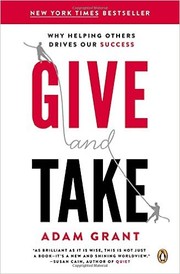
Give and Take

Give and Take

Adam Grant
2013
T2 314 pages · about 5h 14m to read Open Librarygoodreads

Reciprocity styles, and how givers outperform over long horizons

Summary

Grant divides people by reciprocity style into givers, who contribute more than they receive; takers, who extract more than they give; and matchers, who balance the two. His finding, drawn from research across sales, medicine, engineering and education, is that givers occupy both the bottom and the top of performance distributions, while takers and matchers cluster in the middle.

The explanation for the bimodal distribution is the book's core. Givers at the bottom are self-sacrificing, meaning they give without regard for their own interests, burn out and are exploited. Givers at the top are what Grant calls otherish, meaning they hold high concern for others and high concern for themselves simultaneously, help in ways that suit their strengths, and set boundaries against exploitation.

The mechanisms he identifies for giver success include broader and more valuable networks built through dormant ties and through helping without expectation; better collaboration, since givers take less credit and are therefore trusted with more; better talent development, since givers invest in people others have written off; and more effective influence through what he calls powerless communication, meaning asking questions and expressing tentativeness, which works better than assertiveness in most professional contexts.

He also covers the five-minute favour, meaning help that costs little and provides substantial value, and the identification of takers through observable signals. The research is Grant's own plus a synthesis of others, and some cited studies have replicated poorly. The three categories are cleaner than actual behaviour. The distinction between self-sacrificing and otherish giving is the practical contribution and answers the obvious objection to the thesis.

Key takeaways 8

  1. Givers occupy both the bottom and the top of performance distributions, while takers and matchers cluster in the middle.
  2. The difference between failing and succeeding givers is whether they hold high concern for their own interests alongside concern for others.
  3. Self-sacrificing giving produces burnout and exploitation, and is a distinct pattern from the giving that produces success.
  4. Dormant ties, meaning relationships that have lapsed, provide better new information than either close or current contacts.
  5. Givers develop talent that others overlook, because they invest in people whose potential is not yet visible.
  6. Asking questions and expressing tentativeness produces more influence in professional settings than assertive advocacy does.
  7. Small favours that cost the giver little and provide substantial value to the recipient are the efficient form of contribution.
  8. Takers can be identified from observable behaviour including how they speak about subordinates and how they take credit.

Who should read it

Operators and founders thinking about how helping others affects their own outcomes, particularly the boundary between generosity and exploitation.

About Adam Grant

Organisational psychologist and professor of management at the Wharton School, University of Pennsylvania.

Give and Take presents evidence that people who default to helping others cluster at both the bottom and the top of performance distributions, and identifies what separates the two groups - directly useful for anyone designing incentives or picking partners. Think Again and Originals cover how people revise beliefs against new evidence and how unfamiliar ideas get championed inside established organisations.

Who recommended it 6 · 1 direct

Reid Hoffmanreported
Simon Sinekreported
Steph Smithreported

Similar books 6

Chosen by shared topics, the entries that hold them, and the people who recommended both.

Liz Fosslien, Mollie West Duffy · 2019

Recommended by: Cal Newport

Where it sits in the reference 4

Academics
Business themes
Business themes
Business themes

Topics

Psychology and BehaviourBusiness and ManagementSocial psychology, persuasion and influence