
Simon Sinek
Speaker on business leadership who wrote Start with Why (2009) and The Infinite Game (2019).
Start with Why argues that organisations communicate, sell and recruit better when they lead with purpose ahead of product, and gives that argument a structure managers can apply to messaging and hiring. Leaders Eat Last and The Infinite Game extend it to how leaders create safety inside teams and how firms compete without a defined finish line.
3 books of their own · 31 books they recommend
Start here
- Start with WhySimon Sinek, 2009
- Leaders Eat LastSimon Sinek, 1900
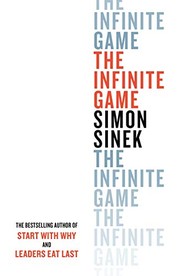
- The Infinite GameSimon Sinek, 2019
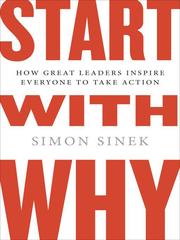
Sinek's Golden Circle (Why/How/What) is less empirically grounded than the rest of this list, but its core observation is accurate: people don't follow what you do, they follow why you do it. Useful for understanding how leaders communicate identity externally and why some inspire loyalty while others just manage compliance.
Recommended by: Richard Branson, Tony Hsieh, Alfred Lin and 4 others
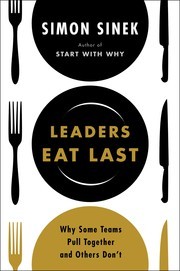
Sinek's second major book applies neuroscience — oxytocin, cortisol, dopamine — to explain why some work environments feel safe and others don't, and how leaders establish the Circle of Safety that determines whether teams will take the risks that produce performance. More substantive than Start With Why.
Recommended by: Alfred Lin, Julie Stevanja, Tom Bilyeu and 1 other
 Start with Why | Sinek's Golden Circle (Why/How/What) is less empirically grounded than the rest of this list, but its core observation is accurate: people don't follow what you do, they follow why you do it. Useful for understanding how leaders communicate identity externally and why some inspire loyalty while others just manage compliance. | 2009 | T3 | Richard Branson, Tony Hsieh, Alfred Lin and 4 others |
 Leaders Eat Last | Sinek's second major book applies neuroscience — oxytocin, cortisol, dopamine — to explain why some work environments feel safe and others don't, and how leaders establish the Circle of Safety that determines whether teams will take the risks that produce performance. More substantive than Start With Why. | 1900 | T3 | Alfred Lin, Julie Stevanja, Tom Bilyeu and 1 others |
 The Infinite Game | – | 2019 | T3 | Changpeng Zhao |
More 7

Also recommended by: Patrick Collison, Drew Houston

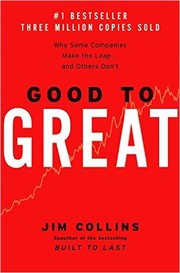
What eleven companies did to turn fifteen ordinary years into fifteen great ones.
Also recommended by: Brian Armstrong, Mohnish Pabrai, Nat Eliason and 15 others

Also recommended by: Nat Eliason, Ramit Sethi and 1 other
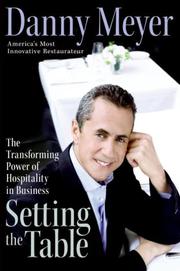
Enlightened hospitality: put employees first, then guests, community and investors.
Also recommended by: Patrick Collison, Fred Wilson, Niki Scevak and 1 other

Leaderless organisations, from Alcoholics Anonymous to file sharing, and their power.
Also recommended by: Mohnish Pabrai, Changpeng Zhao
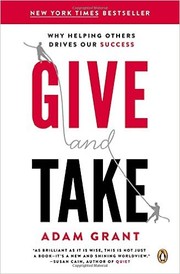
Givers, takers and matchers, and why givers end up both at the bottom and the top.
Also recommended by: Mohnish Pabrai, Alex Lieberman and 3 others
Life in Nazi concentration camps, and logotherapy: finding meaning to survive.
Also recommended by: Frank Martin, Mohnish Pabrai, Nat Eliason and 23 others
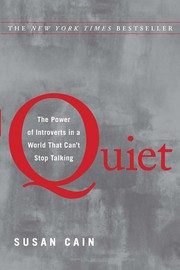
How schools and workplaces built for extroverts waste what introverts offer.
Also recommended by: Mohnish Pabrai, Brad Feld, Cristina Cordova and 4 others


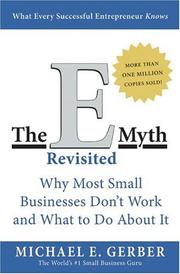
Small firms fail when technicians run them; build systems that run the business.
Also recommended by: Alex Lieberman, Ali Abdaal, Andrew Wilkinson and 5 others
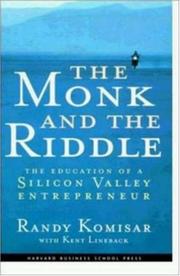
A venture adviser on startups and the trap of the deferred life plan.
Also recommended by: Nat Eliason, Patrick Collison, Ev Williams and 2 others

Also recommended by: Mohnish Pabrai, Guy Kawasaki
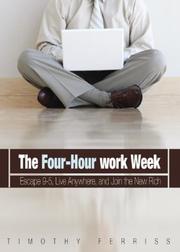
Tim Ferriss's book belongs on a personal-finance list not for its investment advice but for its income argument: the fastest way to reach financial independence may be redesigning how and where you work rather than cutting spending to the bone. The 'new rich' framework is deliberately provocative, and the specific tactics age poorly, but the income-side case remains underweighted in most FIRE writing.
Also recommended by: Andrew Wilkinson, Ev Williams and 19 others
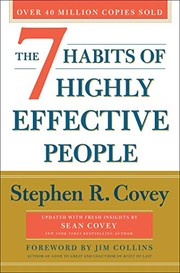
Seven habits, from being proactive to win-win, that build personal effectiveness.
Also recommended by: Andrew Wilkinson, Jim Collins and 9 others


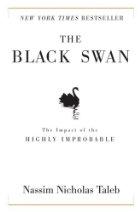
Rare, unforeseen, high-impact events drive history, explained only after the fact.
Also recommended by: Howard Marks, Marc Andreessen, Nat Eliason and 17 others
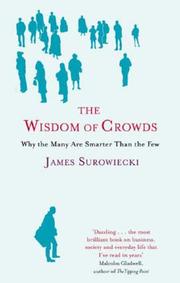
When groups judge better than experts, and the four conditions that make it work.
Also recommended by: Michael Mauboussin, Mohnish Pabrai and 2 others


Diamond's central question — why did some civilizations come to dominate others over 10,000 years? — is precisely the kind of question that requires long-term thinking to even ask. The answer, rooted in geography and biology rather than culture or intelligence, is a model for how to reason about slow causes and fast effects.
Also recommended by: Charlie Munger, Christopher Bloomstran and 13 others


Marquet's account of transforming the USS Santa Fe from the worst-performing submarine in the Navy to the best. The specific mechanism — moving from leader-follower to leader-leader by pushing control down while moving competence and clarity up — is one of the most rigorously documented leadership case studies in print.
Also recommended by: Brian Armstrong, Jason Fried
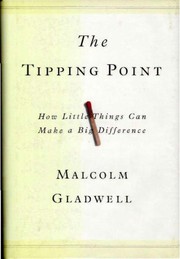
How ideas and behaviour spread like epidemics, and the three factors that tip them.
Also recommended by: Mohnish Pabrai, Tony Hsieh, Ev Williams and 1 other
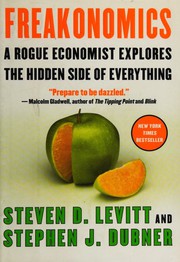
Incentives and data applied to cheating teachers, sumo wrestlers and other puzzles.
Also recommended by: Mohnish Pabrai, Andrew Lokenauth and 5 others
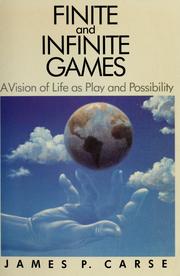
Finite games are played to win; infinite games are played to keep playing.
Also recommended by: Nat Eliason, Daniel Gross, Derek Sivers and 7 others
| Simon Sinek: the next generation must test leaders’ finite mindset Paywall | Financial Times | 2019 |