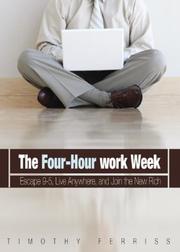
The 4-Hour Workweek
Tim Ferriss's book belongs on a personal-finance list not for its investment advice but for its income argument: the fastest way to reach financial independence may be redesigning how and where you work rather than cutting spending to the bone. The 'new rich' framework is deliberately provocative, and the specific tactics age poorly, but the income-side case remains underweighted in most FIRE writing.
Summary
Ferriss argues that people should design a life of mobility and free time now rather than defer it to retirement, and he gives a four-step method under the acronym DEAL: definition, elimination, automation and liberation. Definition replaces vague goals with dreamlining, which prices out a specific lifestyle in monthly cash terms. Elimination applies the Pareto principle and Parkinson's law to cut work and information intake. Automation builds an income source, which Ferriss calls a muse, that runs without the owner's daily involvement. Liberation removes the requirement to be in a specific location.
The tactical content is unusually concrete. Ferriss covers outsourcing to virtual assistants, negotiating remote work by proposing a trial period with measured output, testing product demand with cheap advertising before building anything, setting up drop-shipping and fulfilment, batching email and using autoresponders, and structuring mini-retirements instead of a single retirement. He includes scripts, price points and vendor names, most of which are now obsolete.
The underlying arguments have held up better than the tactics. The case for measuring output rather than hours anticipated a shift that remote work made mainstream. The case for testing demand with advertising before building product is now standard practice. The case for information restriction has become more relevant, not less.
The book has real problems. The title oversells, since Ferriss himself works constantly. Several tactics, including the arbitrage schemes and some of the negotiation advice, would fail or cause harm if applied literally. The muse businesses described are low-margin drop-shipping operations that no longer work as presented. The self-promotional tone and selective anecdotes make the evidence weak throughout. Read it as an argument about lifestyle design rather than as an operating manual.
Key takeaways 8
- People should distribute free time across working life through mini-retirements rather than saving it all for a retirement at the end.
- Wealth should be measured in what Ferriss calls relative income, meaning money per hour with control over when and where, not absolute annual income.
- Roughly eighty percent of results come from twenty percent of inputs, and the correct response is eliminating the rest rather than optimising it.
- Work expands to fill the time allotted, so shortening deadlines deliberately raises output per hour.
- Demand for a product should be tested with paid advertising and a landing page before any inventory or development spending.
- Remote work should be negotiated by proposing a measured trial rather than by asking for permission in principle.
- Selective ignorance, meaning a deliberate low-information diet, improves decision quality more than staying informed does.
- Doing something well matters less than choosing something worth doing, and most efficiency effort is applied to tasks that should be dropped.
Who should read it
Solo operators and early founders who want the lifestyle design argument and the demand-testing method, with the specific tactics treated as period pieces.
Who recommended it 22 · 4 direct
Similar books 6
Chosen by shared topics, the entries that hold them, and the people who recommended both.
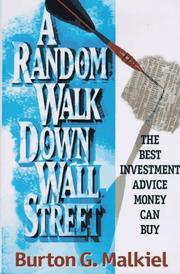
Stock prices follow a random walk, so a low-cost index fund beats stock picking.
Recommended by: Nat Eliason, Mohnish Pabrai
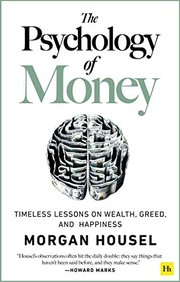
Twenty short essays on why behaviour matters more than knowledge with money.
“…books I've recommended, highlighted to death, or forced on friends.” — Andrew Wilkinson
Source: Andrew Wilkinson's Bookshelf, neverenough.com
Recommended by: Andrew Wilkinson, Nat Eliason, Ali Abdaal and 10 others

Vanguard's founder on costs, turnover and fund structure.
“Wonderful Book. I highly recommend all of John Bogle's writings to any investor.” — Mohnish Pabrai
Source: Mohnish's Bookshelf — Books on Investing & Capital Allocation, entry 50
Recommended by: Mohnish Pabrai, Jason Zweig and 3 others
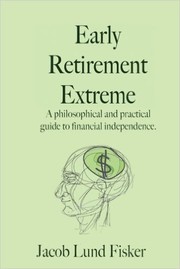
Jacob Lund Fisker's book is the most rigorous and demanding text on this list. A physicist by training, he builds a systems-theory framework for early retirement that requires roughly a 25% savings rate as a floor. It is less a personal-finance manual than a critique of consumer society, and it will unsettle readers who found the Bogleheads comfortable.
Recommended by: Nat Eliason
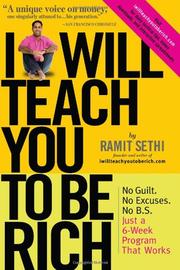
A six-week programme to automate banking, credit, saving and investing.
Recommended by: Mohnish Pabrai, Nat Eliason and 3 others

Recommended by: Mohnish Pabrai
Where it sits in the reference 1
Topics