Sophie Bakalar
Joined Collaborative Fund in 2016, first backing consumer brands such as Daily Harvest and OLIPOP, and now leads its later-stage investments; earlier co-founded the chart-digitising start-up digit.
 Collaborative Fund
23 articles · 99 books they recommend
More 18
A novel of a clerk who rewrites history under a totalitarian state that watches all.
Also recommended by: Richard Branson, David Heinemeier Hansson and 3 others



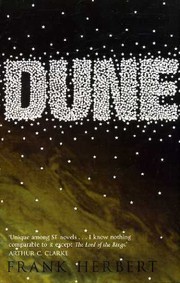
A novel of a feudal space empire fighting over a desert planet and its spice.
Also recommended by: Patrick Collison, Stewart Brand, Andrew Chen and 7 others





A novel of a planned Ohio suburb upset by the arrival of an artist and her daughter.
Also recommended by: Melinda Gates, Reese Witherspoon and 1 other
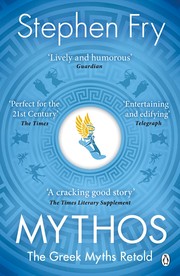
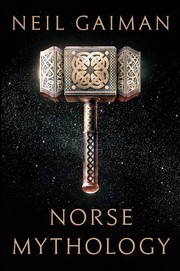
The Norse myths retold, with Odin and the other major gods of the northern pantheon.

A British nurse in 1945 walks through a standing stone into the Scotland of 1743.
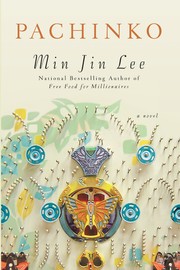


Also recommended by: Alexis Ohanian, Joel Connolly and 1 other
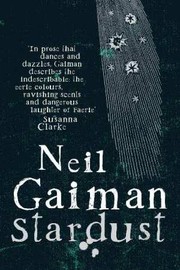

Also recommended by: Mohnish Pabrai, Nat Eliason, Daniel Ek and 8 others


A novel of a sixteen-year-old's days alone in New York after his school expels him.
Also recommended by: Mohnish Pabrai, Ryan Holiday, Bill Gates and 1 other




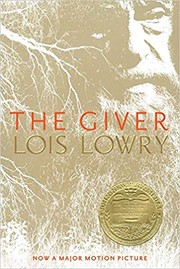

A novel of a rich man of unknown origin on Long Island and the woman he wants back.
Also recommended by: Mohnish Pabrai, Patrick Collison, Anna Cheng and 2 others


In the post-apocalyptic nation of Panem, sixteen-year-old Katniss fights to survive.
Also recommended by: Bill Gates


A novel of the quest to destroy a ring of power that corrupts all who use it.
Also recommended by: Reid Hoffman, Alexey Moiseenkov, Elon Musk and 4 others

A novel of nine people whose lives are bound up with trees and their defence.
Also recommended by: Andrew Wilkinson, Bill Gates, Tim Ferriss and 1 other






A novel in which a scientist answers an alien warning and invites first contact.


Also recommended by: Mohnish Pabrai, Shane Parrish

Also recommended by: Reese Witherspoon
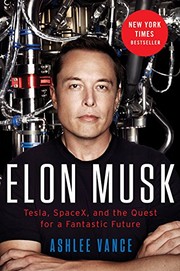
Musk's life from South Africa and PayPal to running SpaceX and Tesla at once.
Also recommended by: Mohnish Pabrai, Anthony Pompliano and 9 others

Leonardo's life read through his notebooks, where art and science were one pursuit.
Also recommended by: Bill Gates, Austen Allred, Daniel Petre and 6 others

Comic essays on a life from a Raleigh childhood to drink- and drug-filled college.
Theodore Roosevelt's life from his birth in 1858 to the presidency in 1901.
Also recommended by: Mohnish Pabrai, Ryan Holiday, Jamie Dimon



Also recommended by: Bill Gates, Mohnish Pabrai

The 1893 Chicago World's Fair: its architect, and a serial killer working beside it.
Also recommended by: Sahil Bloom
Subtitled 'Building a Business When There Are No Easy Answers'
Also recommended by: Andrew Wilkinson, Balaji S. Srinivasan and 33 others
Build, measure, learn: test what customers want with small experiments.
Also recommended by: Nat Eliason, Sheryl Sandberg, Andrew Chen and 16 others
A step-by-step guide to finding customers, a market and product-market fit.
Also recommended by: Patrick Collison, Matej Latin

Why startups should build something new and own a small market before growing.
Also recommended by: Balaji S. Srinivasan, Eric Weinstein and 35 others
Brian Christian and Tom Griffiths translate classical computer science results — optimal stopping, explore/exploit tradeoffs, scheduling — into guidance for human decisions. The 37% rule for when to stop searching and commit is the most cited single insight.
Also recommended by: Alfred Lin, Anthony Pompliano, Steph Smith


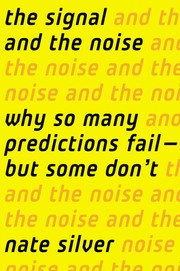
Why some forecasts succeed and most fail, from weather to earthquakes and economics.
Also recommended by: Bill Gates, Mohnish Pabrai

How scientists came to know what they know, from cosmology and geology to biology.
Also recommended by: Balaji S. Srinivasan, Jim Collins and 4 others


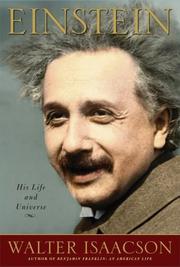
Einstein's life and science, from the Bern patent office to relativity.
Also recommended by: Alfred Lin, Bill Gates, Charlie Munger and 5 others
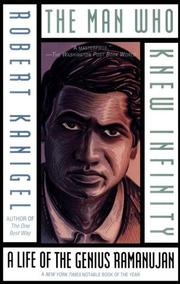
Also recommended by: Patrick Collison, Paul Graham
How Google hired and managed smart creatives, people who can't be told what to do.
Also recommended by: Mohnish Pabrai, Cynthia Johnson and 1 other
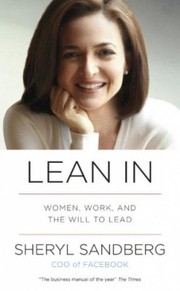
Why few women reach senior roles, and what women and firms can do about it.
Also recommended by: Mohnish Pabrai, Richard Branson and 2 others
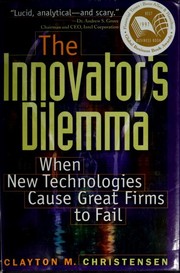
Why well-run firms lose to cheaper, worse products that enter at the market's bottom.
Also recommended by: Jim Collins, Mohnish Pabrai, Aaron Levie and 26 others
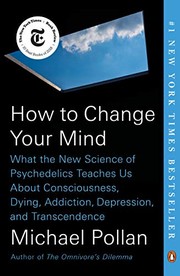
The history and revival of psychedelic research, and the author's own trips.
Also recommended by: Bill Gates, Bryan Johnson, James Cameron and 6 others


Investigations into Ebola and other African viruses, their strains and outbreaks.
Also recommended by: Safi Bahcall

A method for finding the few activities that matter and dropping the rest.

Tim Ferriss's book belongs on a personal-finance list not for its investment advice but for its income argument: the fastest way to reach financial independence may be redesigning how and where you work rather than cutting spending to the bone. The 'new rich' framework is deliberately provocative, and the specific tactics age poorly, but the income-side case remains underweighted in most FIRE writing.
Also recommended by: Andrew Wilkinson, Ev Williams and 19 others

The habit loop of cue, routine and reward, and how to change a habit by its routine.
Also recommended by: Mohnish Pabrai, Nat Eliason, Naval Ravikant and 5 others
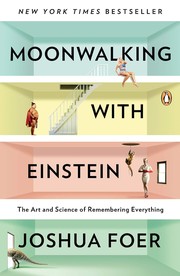
A journalist learns memory techniques and wins the US Memory Championship.
Also recommended by: Bill Gates, Mohnish Pabrai, Nat Eliason and 3 others
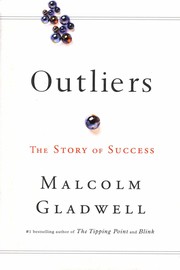
How timing, culture and accumulated advantage explain exceptional success.
Also recommended by: Mohnish Pabrai, Tony Hsieh, Bill Gates and 5 others

Kahneman's synthesis of behavioral economics is the cognitive science underpinning every negotiation tactic. Anchoring, loss aversion, framing effects, and the planning fallacy — understanding why these biases operate, not just that they exist, makes you harder to exploit and more honest about your own irrationality.
Also recommended by: Andrew Wilkinson, Charles de Vaulx and 31 others
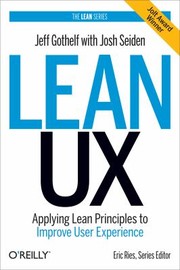

Tech firms' puzzle interview questions, and whether they pick good hires.


A fable of a failing executive team and a five-level model of what goes wrong.
Also recommended by: Alfred Lin, Chris Powers, Sarah Pritula
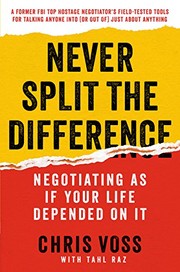
FBI hostage-negotiation tactics: labelling, mirroring and calibrated questions.
Also recommended by: Alfred Lin, Nat Eliason and 5 others
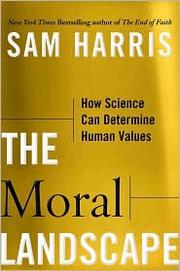
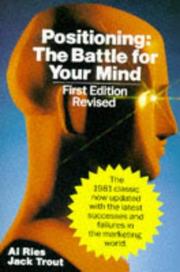
Marketing happens in the buyer's mind: find an open position there and own it.
Also recommended by: Patrick Collison, Aaron Levie, David Cancel and 3 others


A four-step model for habit-forming products: trigger, action, reward, investment.
Also recommended by: Nat Eliason, Alexis Ohanian, Andrew Chen and 5 others


Numbered rules of English usage and composition, with examples, under 100 pages.
Also recommended by: Nat Eliason, Patrick Collison, Ann Handley and 2 others