
Positioning: The Battle for Your Mind
The original argument that the category slot is the asset.
Summary
Ries and Trout argue that marketing operates in the prospect's mind rather than in the product, and that positioning means finding an unoccupied position in that mind and taking it. Their central claim is that people rank products mentally in ladders by category, that they can hold only a few positions per category, and that the first entrant into a category usually holds the top rung permanently.
The practical consequences are stated bluntly. If a company cannot be first in a category it should create a category in which it can be first, which they call the leader's alternative. If it is second, it should position explicitly against the leader, as Avis did with the statement that it was number two and tried harder, and as Seven Up did with the uncola position. They argue that attacking a leader's position directly fails, because the leader owns the word in the customer's mind and the attacker's advertising reinforces it.
They are hostile to line extension, arguing that extending a strong brand name into new categories dilutes the position without transferring it, and they give many examples of failures. They also argue for owning a single word, for naming products so the name carries the position, and against company names that describe nothing.
The book is from 1981 and the examples are almost entirely from that period, which makes many of them unrecognisable now. The tone is assertive and there is no evidence beyond cases. The line extension argument has been contradicted by successful extensions since. The core mechanism, that customers hold simple category rankings and that a company must decide which word it owns, remains the standard framework for positioning work.
Key takeaways 8
- Positioning happens in the prospect's mind rather than in the product, so the work is about perception rather than about features.
- Being first into a category secures the top position durably, and later entrants rarely displace it regardless of product quality.
- A company that cannot be first should define a new category in which it can be, rather than compete for a position already taken.
- The second-place company should position explicitly against the leader rather than claim leadership it does not have.
- A brand should own a single word in the customer's mind, and attempting to own several results in owning none.
- Extending a strong brand name into unrelated categories weakens the original position without transferring its strength.
- Attacking a leader head-on reinforces the leader's position, because the comparison reminds customers of the leader.
- The name of a product carries a large part of its position, which makes naming a strategic decision rather than a creative one.
Who should read it
Founders and marketers deciding what category their product competes in and what single idea it should own.
About Al Ries
Marketing strategist who developed positioning with Jack Trout and later ran the consultancy Ries & Ries; died in 2022.
Positioning: The Battle for Your Mind argues that a brand competes for one specific slot in a customer's memory rather than on a list of product attributes, and that a challenger wins by occupying an empty slot instead of attacking the leader head-on. Focus makes the connected case that companies lose pricing power when they stretch a brand across categories.
Who recommended it 7 · 1 direct
Similar books 6
Chosen by shared topics, the entries that hold them, and the people who recommended both.

Companies lose their position by broadening; narrowing the focus wins it back.
Recommended by: Mohnish Pabrai, Arianna Huffington and 3 others
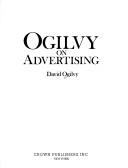
Rules for advertising that sells, drawn from direct-response testing.
“Ogilvy is a brilliant guy and a terrific writer. Really enjoyed this book and learned a lot.” — Mohnish Pabrai
Source: Mohnish's Bookshelf — Books on Sales & Marketing, entry 40
Recommended by: Mohnish Pabrai, David Cancel, Ev Williams and 1 other

Twenty-two rules of marketing, such as being first is better than being better.
Recommended by: Brian Armstrong, Mohnish Pabrai, Nat Eliason and 3 others

How to win and keep agency clients and write advertising that sells.
Recommended by: Mohnish Pabrai, David Cancel, Sam Parr
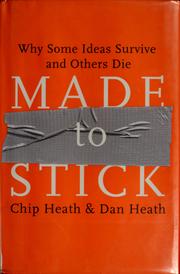
Six traits of memorable ideas, from simple and unexpected to emotional stories.
“…books I've recommended, highlighted to death, or forced on friends.” — Andrew Wilkinson
Source: Andrew Wilkinson's Bookshelf, neverenough.com
Recommended by: Andrew Wilkinson, Mohnish Pabrai and 10 others

How 1950s advertisers used psychological research to sway buyers.
Where it sits in the reference 4
Topics