
Updates

  1. Person pages list letters, writing, profiles and links as sortable tables with filters, and show each person's companies as links; Fund letters show each letter's description in its own column.
  2. Experts show a checked job title and a short description of each person; 30 more people have photographs.
  3. Every company, fund, university and publication the experts work for has a page listing the people there.
  4. Fund letters show each letter's thesis and filter by it; 225 person pages list the essays, columns and newsletter issues the person wrote.
  5. Person pages list every essay and newsletter issue a person wrote, and their own books as a table in List view.
  6. Recommends shows the five largest kinds of book and the rest under More; browse pictures load sooner.
  7. Podcasts and talks link the original episode, filter by Audio and video or Press, and list each publisher once.
  8. Pages are wider, Recommends has List and Grid, and a filter clicked again turns off.
  9. Book cards sit in a ruled grid with Open Library and Goodreads links and each book's one-line note.
  10. Funds is now Investors; each investor's styles are buttons that filter the table.
  11. Podcasts and talks on a person's page filter by year and publisher and show as a list or a grid of pictures.
  12. Quotes show only people's own words: 472 summaries written by list sites are gone.
  13. Country pages open from Browse again, and every link on the shelf lands on a page.
  14. Subject and person pages show their sections as tabs, and each book appears once on a person's page.
  15. Book cards show the quote, who said it and the source; grids show five cards to a row.
  16. On a phone, a menu holds the sections, search, Updates, Feedback and dark mode.
  17. Feedback takes a screenshot of the page with no browser prompt, opens a screenshot full size when you click it, and clears itself once sent.
  18. Book cards are centred, search names the topic each book sits in, and any text cut short shows whole on hover.
  19. Search groups its results by kind: people, companies, geographies, subjects, topics, books, funds, fund letters and papers.
  20. The Books table lists who recommended each book by name, and the browser tab names the section you are in.
  21. Feedback can take a screenshot of the page, or one you paste or choose, and opens in the corner beside Updates.
  22. Each rail button reopens its section where you left it, and Browse, Table and People show on every book and subject page.
  23. Filters grey out choices that hold nothing instead of hiding them, and Books › People filters by authors or recommenders.
  24. Feedback takes a subject line and up to three screenshots.
  25. Biographies are grouped by the person they are about: 41 new pages, from Abraham Lincoln to Lee Kuan Yew.
  26. Sport splits into 23 sports, and Religion into one topic per faith.
  27. Book lists show as cards: the cover, one recommendation quote and every recommender by name.
  28. Seventeen subjects that had two or three pages under different names now have one page each.
  29. Every page lists its Experts as authors and recommenders, with a link to them on the Experts tab.
  30. Economics, Financial history, Financial panics and Accounting are subjects of their own, with one page per financial crisis.
  31. Book, person and subject pages open inside the app, so the tabs stay in view.
  32. 996 more book covers, and photographs or logos for 227 more people and companies.
  33. Books › Browse shows every subject as cards, and the rail holds Fund letters, Papers, Experts, Books and Funds.
  34. Every topic over 150 books splits into narrower topics, each with a page of its own.

Send feedback

What is it?
Screenshots, up to 3 (optional)
or paste one with Ctrl+V

We use your email only to reply to you.

Confessions of an Advertising Man

Confessions of an Advertising Man

David Ogilvy
1963
T1 173 pages · about 2h 53m to read Open Librarygoodreads

How an agency is actually built and paid.

Summary

Ogilvy published this in 1963 after building Ogilvy Benson and Mather from nothing, and it covers both how to run an agency and how to make advertising that sells. It is shorter and more personal than his later Ogilvy on Advertising.

The agency management chapters cover how to get clients, how to keep them, how to handle clients you should resign, how to hire, and how to run a creative organisation. His hiring position, that a company that hires people smaller than itself becomes a company of dwarfs while one that hires people bigger becomes a company of giants, is the most quoted passage. He also states rules about firing, about promoting from within, and about the treatment of subordinates.

The advertising chapters state the rules he derived from direct response testing, including the primacy of the headline, the value of long copy for considered purchases, the requirement to understand the product thoroughly before writing, and his hostility to advertising judged by creative awards rather than by sales. He also writes about the agency's own new business practices, about the value of publicity for the agency itself, and about his own history including the Aga cooker sales manual, the Gallup research work and the tobacco farming period.

The book is from 1963 and the specific practices, media and client relationships are historical. Ogilvy is self-promoting throughout and the tone is confident to the point of arrogance. Its lasting value is the combination of advertising discipline with a candid account of how a professional services firm is actually built and managed.

Key takeaways 8

  1. An organisation that hires people smaller than itself becomes a company of dwarfs, and one that hires people larger becomes a company of giants.
  2. Advertising should be judged by whether it sells rather than by creative awards, and the two frequently diverge.
  3. Understanding the product thoroughly before writing anything is what produces the specific claim that makes the advertisement work.
  4. Headlines carry most of the value of an advertisement, since far more people read them than read the body copy.
  5. Long copy sells more than short copy for considered purchases, which contradicts the preference of most clients and agencies.
  6. A professional services firm should resign clients that damage it, and Ogilvy names the conditions under which he did so.
  7. New business should be pursued selectively and openly rather than through the speculative pitching that the industry normalised.
  8. An agency should promote from within and pay attention to how it treats its own people, since the product is entirely the people.

Who should read it

Founders of professional services firms and marketers who want both the agency management material and the earlier statement of Ogilvy's advertising rules.

Who recommended it 3 · 1 direct

David Cancelreported
Sam Parrreported

Similar books 6

Chosen by shared topics, the entries that hold them, and the people who recommended both.
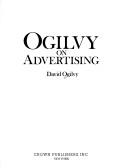
David Ogilvy · 1983

Rules for advertising that sells, drawn from direct-response testing.

“Ogilvy is a brilliant guy and a terrific writer. Really enjoyed this book and learned a lot.” — Mohnish Pabrai

Source: Mohnish's Bookshelf — Books on Sales & Marketing, entry 40

Recommended by: Mohnish Pabrai, David Cancel, Ev Williams and 1 other
Tim Hwang · 2020

The case that programmatic advertising is a mispriced market.
Tim Wu · 2016

How media from the penny press to social media capture attention and resell it.

Vance Packard · 1957

How 1950s advertisers used psychological research to sway buyers.
Randall Rothenberg · 1994

One agency account, followed in forensic detail.

Recommended by: Jason Fried

Al Ries, Jack Trout · 1981

Marketing happens in the buyer's mind: find an open position there and own it.

Where it sits in the reference 4

Business models
Business models
Industries
Business themes

Topics

Sales and MarketingArt and DesignBiography and MemoirGraphic Design, Typography and BrandingExecutives and Corporate InsidersAdvertising, copywriting and persuasion